NC test scores are up, but not to pre-pandemic levels. Is that the new baseline?
AI-generated summary reviewed by our newsroom.
- State tests show 55% student proficiency, still below 2018-19's 58.8% rate.
- Graduation rate climbed to 87.7%, the highest level in the past decade.
- Hurricane Helene caused major learning losses in some Western NC districts.
North Carolina’s public schools haven’t reached pre-pandemic achievement levels yet, but state leaders say this year’s gains are a “baseline” for the continuing academic progress.
New statewide test scores released at Wednesday’s State Board of Education meeting show that 55% of students were proficient on state exams during the 2024-25 school year. That’s up from 54.2% the prior year but still below the pre-pandemic proficiency rate of 58.8% in the 2018-19 school year.
But state education leaders pointed to positives such as how the graduation rate is up, passing rates on many state exams are up, fewer schools are receiving D and F performance grades, and fewer schools were labeled as low-performing.
In addition, Hurricane Helene’s devastation in Western North Carolina appeared to have an impact in scaling back the statewide gains.
“These results , I believe, represent more than just mere numbers,” State Superintendent Mo Green said at a news conference Wednesday. “They represent thousands of students who are better prepared for the next phase in life.
“I’m so pleased to make this presentation, even as we know that our goal is not to be where we are today. There is much work that has to be done for us to get to a place where we are best in the nation by 2030.”
The State Board of Education recently adopted a strategic plan calling for North Carolina to have the best public schools in the nation by 2030.
‘Roadmap’ for continued academic gains
Schools in North Carolina and the nation have been working to recover from the effects of the pandemic, which disrupted learning. North Carolina’s proficiency rate on state exams fell to a pandemic low of 45.4% in the 2020-21 school year.
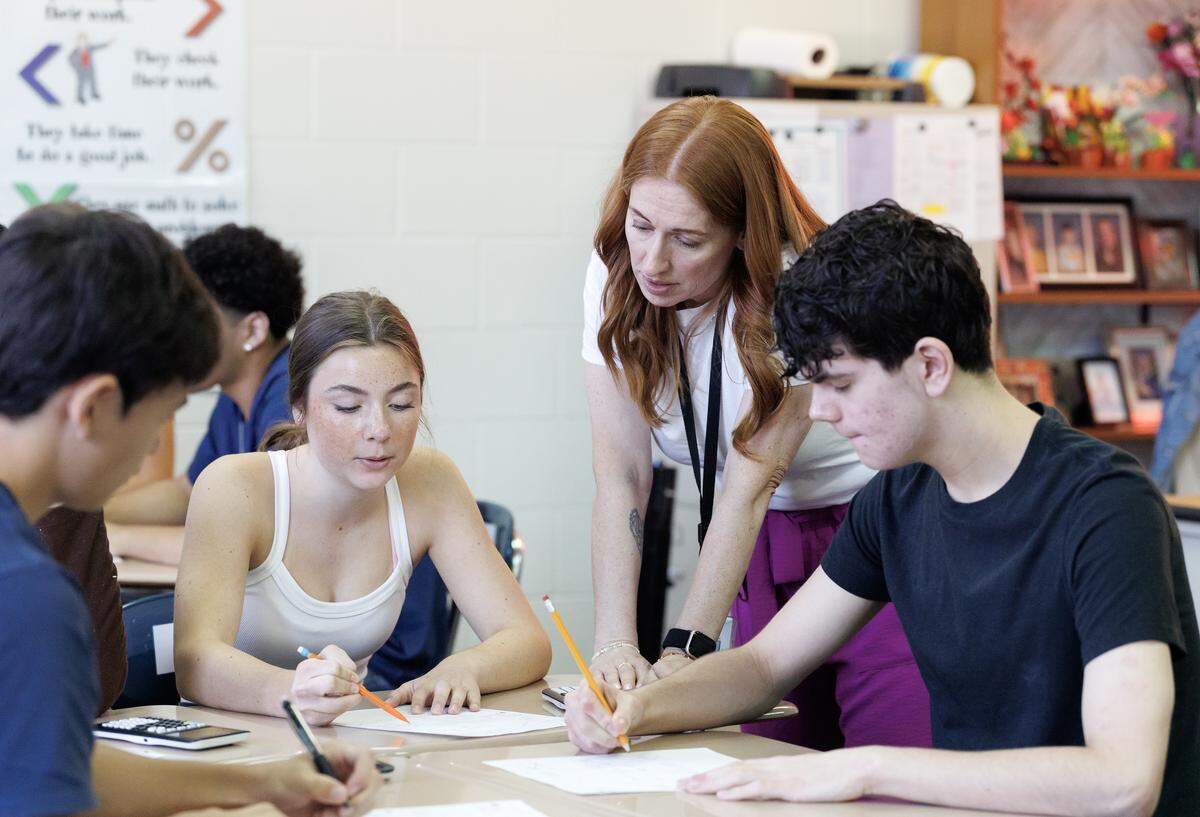
But now proficiency rates are up in 12 of the 15 state math and reading exams compared to three years ago. The exceptions were third-grade reading, English II and Math 1.
Proficiency rates on all state end-of-grade math tests — which are given in elementary and middle schools — increased last school year and the previous two years.
The continued overall gains mean 31.5% of schools received a D or F performance grade — a nearly two-percentage-point drop from the prior year. Almost 50 fewer schools than the prior year were identified as low-performing.
The four-year high school graduation rate rose to 87.7%, up from 87% the previous year. It’s the highest graduation rate in state history.
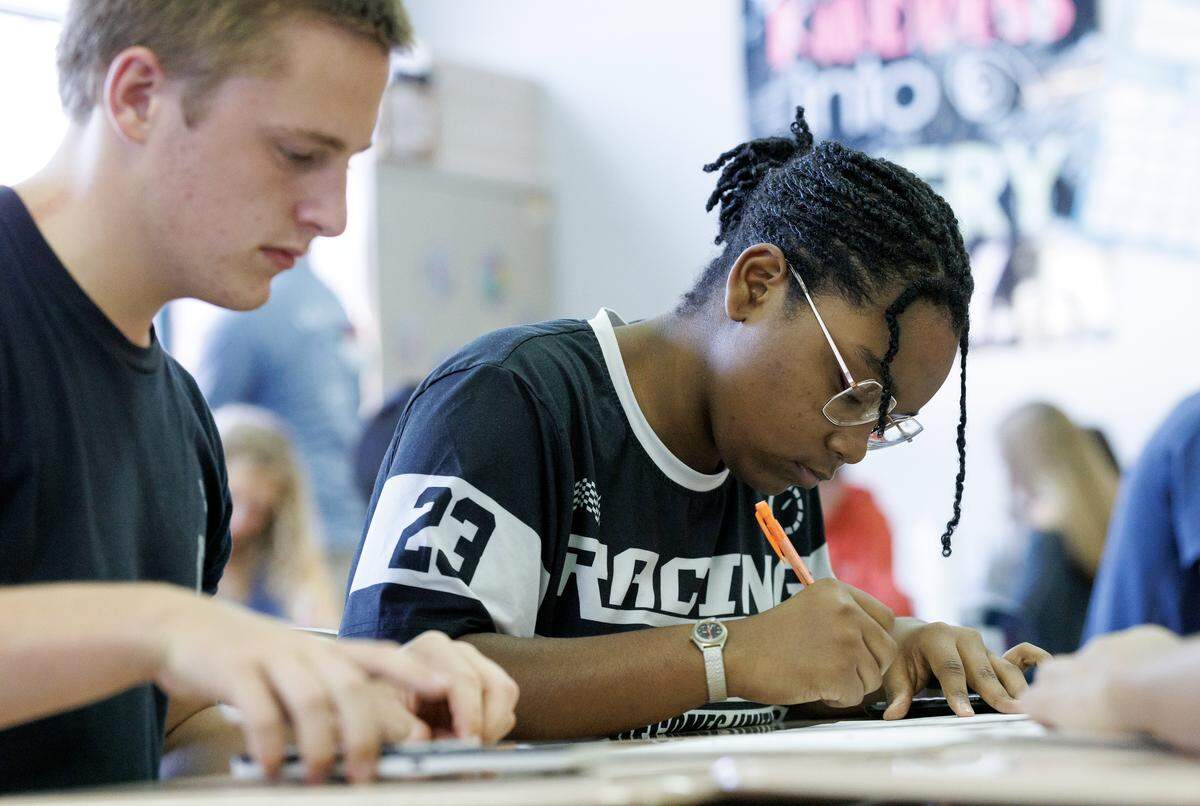
Green said the 2024-25 results should be a “benchmark” and a “road map” for the state to build on.
“I think it’s really important that we appreciate that our schools are doing incredible work,” Green said. “Always room for improvement. We certainly looked at our data.”
Call for more state spending on education
During Wednesday’s news conference, Green repreatedly said the new test results should be a call for more resources for public schools. He pointed to a national survey that ranked North Carolina 48th in the nation in per-pupil spending.
Green, a Democrat, has urged the Republican-controlled state legislature to increase education funding. The state Supreme Court is weighing whether to overturn a 2022 ruling in the Leandro case that had ordered an increase in state funding for education.
“We need additional resources, I think, to continue to make progress that we know that can be made,” Green said.
Drop in third-grade reading results
The drop in third-grade reading proficiency came despite the ongoing focus on improving literacy among young students.
Only 46.6% of third-grade students passed the state reading end-of-grade exam, down two percentage points from the prior year. The state needs to address third-grade reading because it’s an important milestone for future learning, according to Stacey Wilson-Norman, chief academic officer for the state Department of Public Instruction.
State leaders have previously said they expect early literacy skills to increase over time as teachers become more comfortable using their LETRS science of reading training. LETRS, which stands for “Language Essentials for Teachers of Reading and Spelling,” stresses phonics when teaching students how to read.
All of the state’s elementary school teachers completed the 160 hours of LETRS training last year.
“Reading takes a lot of time and a lot of training, and we’ve done the training,” said Wilson-Norman. “Now we want to align some of the other supports.”
Tammy Howard, senior director of DPI’s Office of Accountability and Testing, said they expect to see the impact this school year from the first groups of teachers who completed the LETRS training.
“Hopefully this time next year, we’ll be having a different conversation,” Howard said.
New science test results also reported Wednesday showed a passing rate of 62% in fifth grade, 60% in eighth grade and 48.3% on the biology end-of-course exam taken by high school students. The state Department of Public Instruction said the test results are aligned to the state’s new science standards so they shouldn’t be compared to prior years.
Impact of Helene on schools
The new test results also showed the academic impact that Hurricane Helene had when it led to massive flooding in Western North Carolina. Some school districts missed 30 out of the 180 days that were supposed to be in the school year.
The three districts with the biggest number of lost days saw noticeable one-year drops in academic proficiency:
- Yancey County lost 34 days of classes. The proficiency rate dropped from 60.8% to 52.1% passing.
- Mitchell County lost 30 days of instruction. The proficiency rate dropped from 51.5% to 43.9%.
- Avery County lost 28 days of classes. The proficiency rate dropped from 55.2% yo 50.2%.
The drop wasn’t quite as steep in Buncombe County Schools and Asheville City Schools, which both lost 19 days of classes. Buncombe County dropped from 54.2% to 53.7% and Asheville City Schools dipped from 58% to 57.9%.
Several other Western North Carolina schools that lost time to Helene also reported drops in proficiency rates.
.jpeg "FernLeaf_(1).jpeg")
The U.S. Department of Education granted a waiver to 10 Western North Carolina schools from counting fall semester state end-of-course exams.
“This was a really unusual year for us and even though you might not have opted in (for the waiver), these folks, the principals, the teachers in these districts are competitive and they want their kids to thrive,” said state board member John Blackburn, who represents many of the impacted districts. “I’d lift them up to say they’ve done a great job in extraordinary circumstances.”
All schools that lost time due to Helene will have that noted on state reports.
Legacy of pandemic learning
Students took the tests last school year, five years after the COVID-19 pandemic arrived in spring 2020. Their 2019-20 school year ended two months early, and students spent much of the following school year in remote learning.
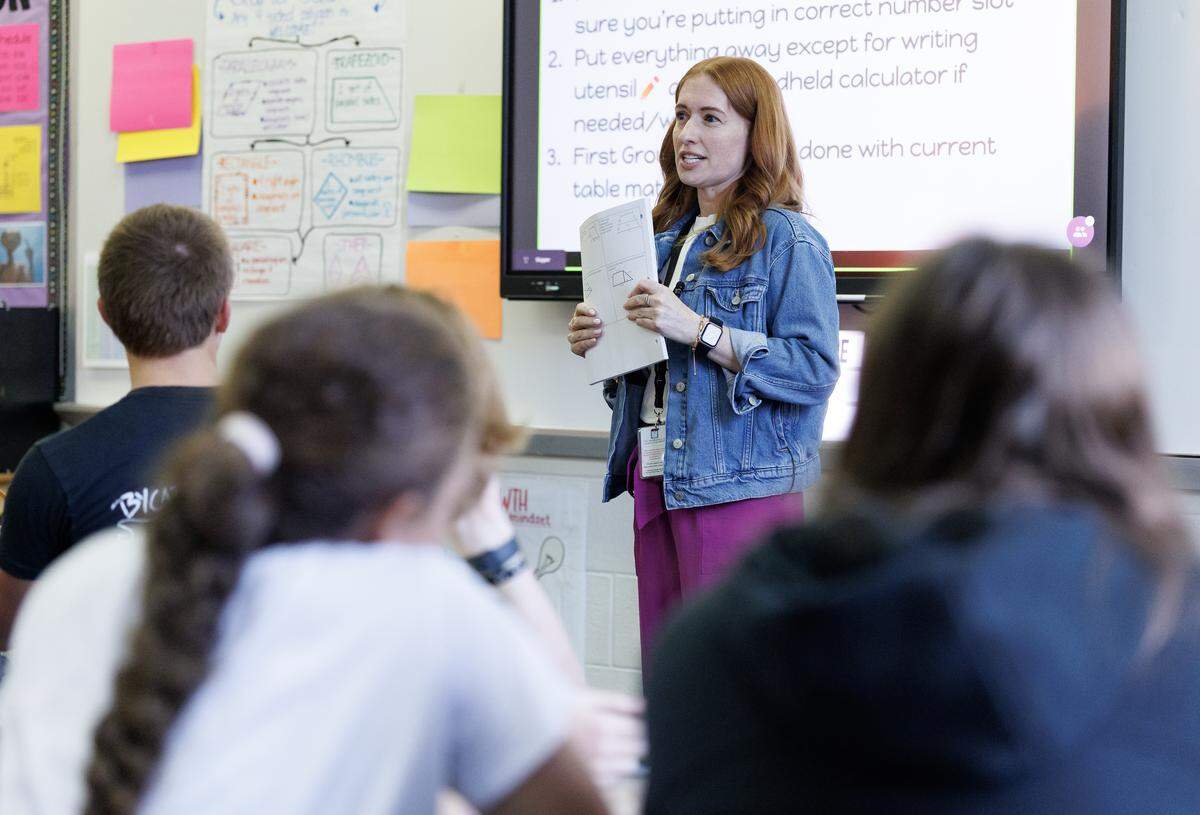
“We are coming back to what class should be like, and no longer, you know, being stuck at home online and not having anybody to lean on,” Rachel Skipper, a math teacher at Millbrook High School in Raleigh, told reporters.
The pandemic particularly hurt math instruction, according to Millbrook High Principal Brian Saunders, because it’s a subject where it helps when the teacher is there looking over a student’s shoulder. Five years later, Saunders said high schools are working again with students who had the benefit of being in middle school for three full years with a teacher present.
“So part of it is, is with math in particular, is climbing out of some of that shadow that we had with the pandemic instruction,” Saunders told reporters.
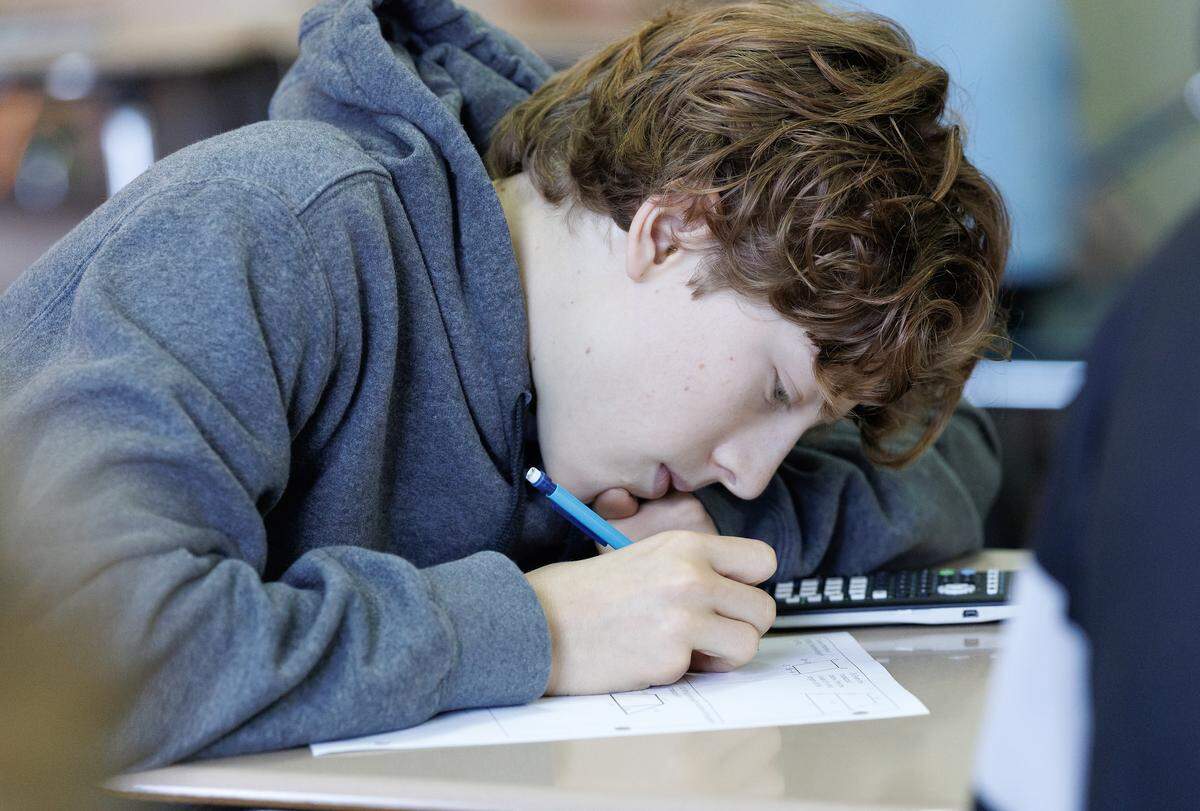
Jamar Smith 16, a Millbrook High junior, was one of those students who had part of his middle school experience spent in online classes. Nicole Smith, his mother, said Jamar struggled with remote instruction but has fought his way back academically.
“We were really proud of him, of the work that he put in because he recognized that he needed to put in his work,” Nicole Smith told reporters.
Search all schools in the state below.
This story was originally published September 3, 2025 at 10:13 AM.