Plans to close 1 Chapel Hill-Carrboro school and replace 3 could change
AI-generated summary reviewed by our newsroom.
- Board considers closing two elementary schools; five are under review.
- County warned of a possible $21M shortfall affecting school budgets.
- Feb criteria, March sessions, May recommendation/hearing, June 4 possible vote
Chapel Hill-Carrboro families and teachers learned Thursday night that budget and enrollment challenges could close two elementary schools and redistrict students by 2027.
The school board was only expected to talk about closing one of three older elementary schools: Seawell, Glenwood or Ephesus. But members added Estes Hills and Frank Porter Graham Bilingüe, which were supposed to be replaced in the next 10 years using $175 million in voter-approved bond money.
The district is already spending $5.3 million to plan a new, $47.7 million Carrboro Elementary School. No other money has been spent, and it looks like there may not be enough money to replace three schools, officials said.
Superintendent Rodney Trice warned future job cuts are possible, along with central office cuts. Some staff might find new roles, and the district could also renegotiate third-party contracts.
Families and staff need as much notice as possible, Trice said, as he pushed for a school closure decision by June.
It’s not a crisis, but the district is at a crossroads, he said, echoing a warning that he shared late last year.
Declining enrollment drags down funding
The district’s enrollment continues to fall, amplifying budget woes. County staff warned last month of a possible $21 million shortfall in next year’s budget.
The county commissioners have asked the city and county school districts to study changes that would allocate a specific amount of money each year on a per-student basis, instead of giving them a set amount.
CHCCS currently receives about $64.8 million in county funding, Chief Financial Officer Jonathan Scott said. The change, if it follows the average 3% increase in local funding, would mean $6,053 for every CHCCS student next year, or about $260,000 more than now, he said.
There could be less money in the future if enrollment continues to fall.
The district’has 1,545 fewer students than it did in 2020 and could lose 277 more students next school year. That would put enrollment at 10,741 students, costing the district about $2 million in state funding.
Elementary schools have seen the sharpest decline, in part because families have other options and birth rates are declining, Carolina Demography director Nathan Dollar has said. A News & Observer report found 105 of the state’s 115 school districts have fewer students.
Now is the time to create “a smaller, more innovative and high-quality district,” Trice said.
“Achieving that will require difficult tradeoffs — choices that may not feel good today but are necessary to preserve a stable and promising future,” he said.
Parents regret bond vote, praise schools
Ephesus, Glenwood and Seawell parents and teachers brought their tears and frustration to Thursday’s meeting.
Most said they understand the need to close schools, but urged the district to share its criteria. Some questioned their vote to support the bond, including Ephesus parent Sarah McDaniel, who called the situation “a big deal” that requires looking at all five schools.
“It’s really important to me that you realize when that school bond was approved that I really wanted it, because I love our schools,” she said, fighting back tears. “There was no talk publicly about imminent school closures.”
She and other Ephesus parents noted the diverse student body, Larry the crossing guard and other familiar faces, and the work that led to students achieving the district’s highest test score growth in 2025.
Sarah Roberts said she and her husband moved to Chapel Hill for the quality public schools. Their oldest son is neurodivergent, requiring classroom support and communication.
“Each and every educator, staff and administrator met us where we were, provided mutual support, and most importantly, met our son where he was,” Roberts said.
Glenwood parents also praised the education their children are receiving.
The school’s STEAM focus (science, technology, engineering, arts and mathematics) “is the future of this district,” said Rachel Rossi, a parent of two and PTA vice president, and the Mandarin dual language program “allows my children to learn Mandarin, not in isolation, but with real cultural context.”
“It’s not just symbols on a page, but the names of fellow students. The teachers greeting, ‘Zǎoshang hǎo,’ which means ‘good morning,’ in the car line. The glee waiting for the dumplings of the Lunar New Year event. A true culture exchange takes place every day at Glenwood,” she said.
Board advances school closing process
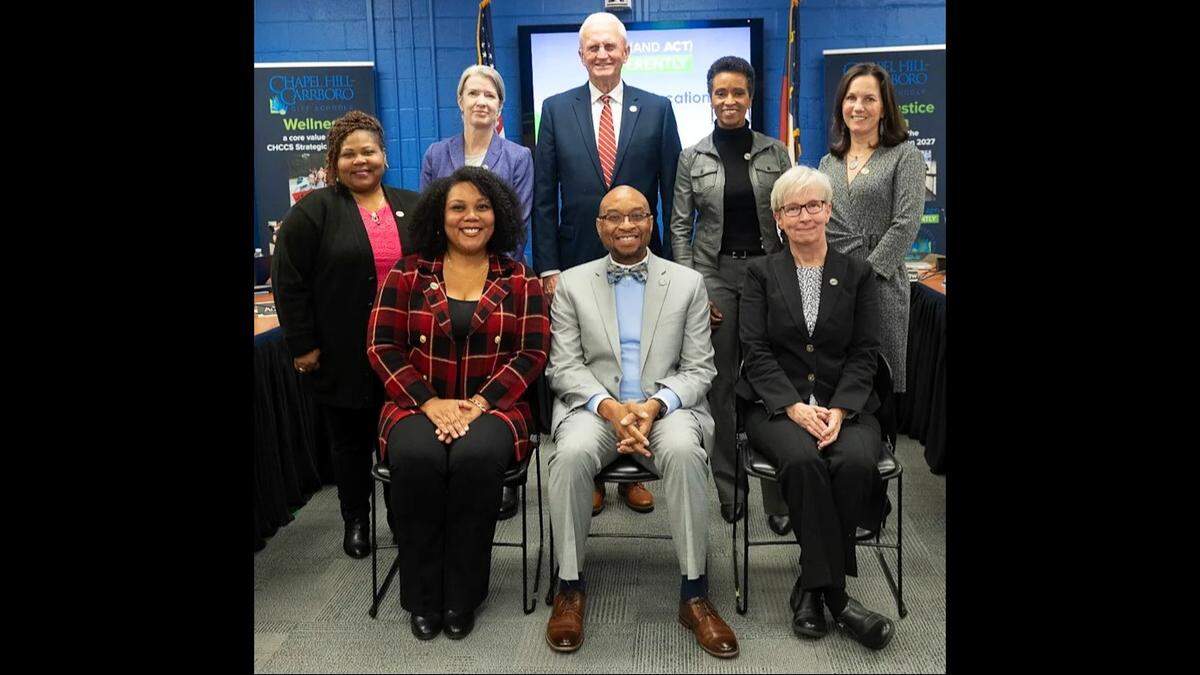
Board members wrestled over revisiting the future of Estes Hills and FPG elementary schools. Board member Rani Dasi got resounding public applause when she suggested putting them back on the chopping block.
Estes Hills parents were among the most vocal opponents of closing their school in 2024, but neither they nor FPG parents spoke during the meeting.
“We’ve talked a lot about our financial headwinds, and so I just think that it would make sense to consider what could lead to the biggest savings without restricting ourselves to decisions we made when we didn’t have full information,” Dasi said.
The 2024 bond referendum did not identify specific schools, but board Chair Riza Jenkins said “it was an understanding that we presented to the community and the county that it was going to be those three schools.”
Reopening the discussion “is going to unlock a whole nother can of worms,” she said before acquiescing to the board’s consensus.
The 2023 Woolpert report studied the condition and usefulness of every building in both school districts. More than half are over 50 years old, including the five in flux.
Age is only one factor in deciding to close a school, said Al Ciarochi, deputy superintendent for operations. Districts also consider failing buildings, financial pressures and declining enrollment, he said.
Closing a school could save $1.7 million a year, plus $10 million to $15 million in maintenance costs, he said. Selling a building and land could raise over $16.5 million, but he did not recommend that step.
Board member Vickie Feaster Fornville encouraged parents to consider the opportunities in a modern school.
“If a building has to close … our children are going to be in the best facilities with the best staff doing the best work, and they’ll have the state of the art outside and inside,” she said. “I want us to maybe consider embracing that.”
What happens next?
- Feb. 19: The board will suggest criteria for deciding which schools to close.
- March: At least four public sessions are possible — three in-person and one virtual.
- May 7: The school board could get a recommendation.
- May 21: The board could hold a public hearing.
- June 4: Potential vote.
This story was originally published February 6, 2026 at 10:54 AM.