
‘Exceptionally large’ flying prehistoric predator found in Syria for first time

Unlike in the advanced labs under the watchful eye of Jurassic Park scientists on the fictional Isla Nublar, much of paleontology isn’t so glamorous.
From days spent in remote desert landscapes to countless hours spent slowly removing a fossil from stone, paleontologists can spend years working on a single discovery.
Other times, lack of funding and local conflict means they bring their research to their own homes.
Back between 2003 and 2004, a local geologist discovered a prehistoric bone in a phosphate mine in Syria, according to a study published Oct. 16 in the peer-reviewed journal The Science of Nature.
The bone was massive and examined initially, but then was forgotten for the better part of two decades, according to a news release shared with McClatchy News by study author Felipe Pinheiro.
It was later rediscovered and studied by a research team led by Wafa Adel Alhalabi, a paleontologist from the University of São Paulo, according to the release, but with a lack of funding to dedicate research time to the fossil, Alhalabi had to get creative.
“I had to use my own money to travel to Latakia and study the … fossil. I prepared the specimen at home using only basic tools, which created so much dust and noise that it upset my family,” Alhalabi said in the release.

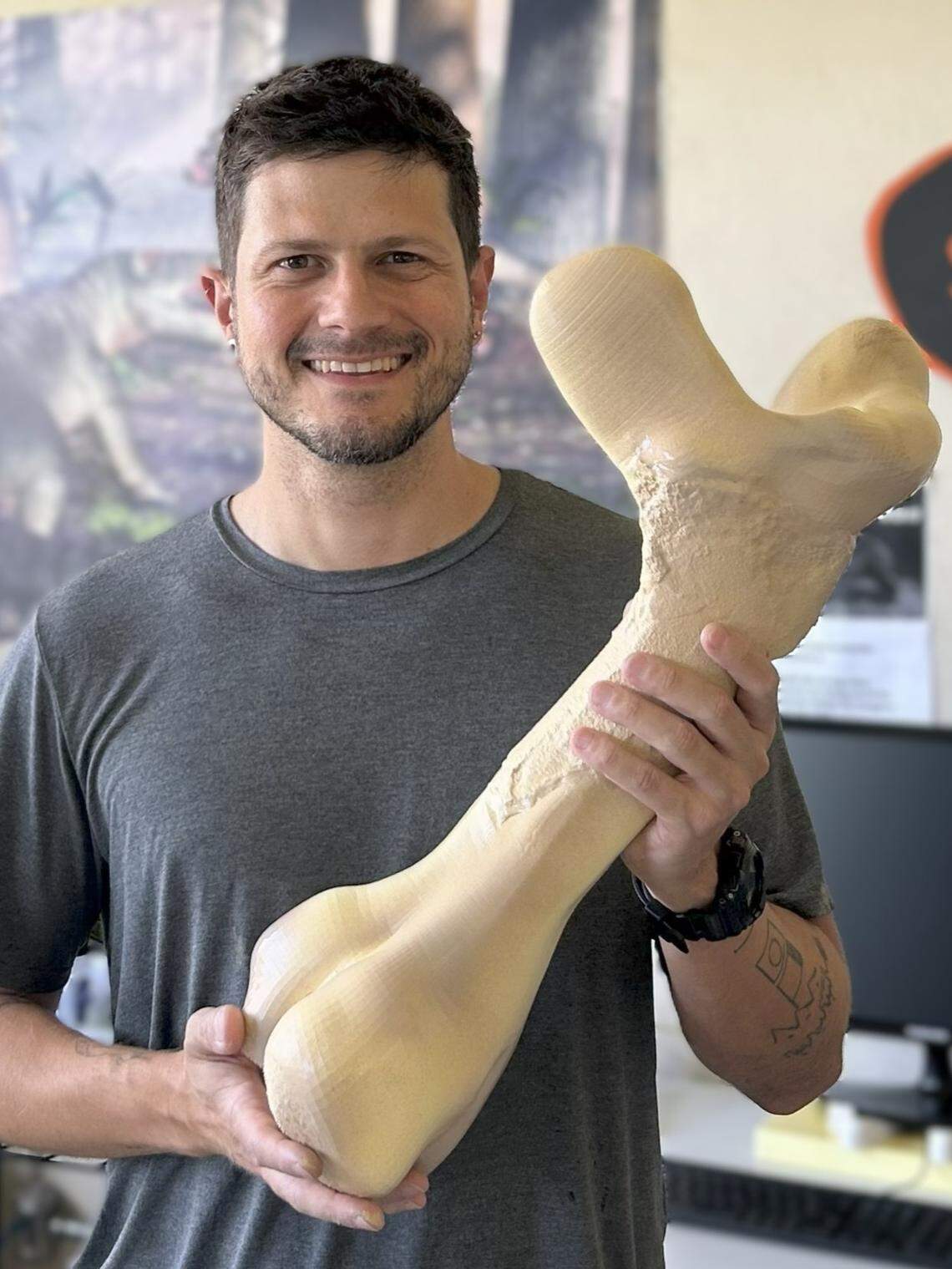
But as she studied the bone more, she realized she had in her hands the left humerus, or upper arm bone, of a pterosaur.
The bone measured more than 11 inches long and belonged to a pterosaur that was “exceptionally large,” researchers said.
It’s also the first pterosaur ever found in Syria.
Pterosaurs were large dinosaur relatives that were the first vertebrate species to evolve to have the ability of active flight, a trait we see now in species like birds and bats, according to the release.
Their specialized bones could handle large wing membranes, eventually leading to some pterosaurs being the largest animals to ever fly, researchers said.
Quetzalcoatlus northropi, for example, was a species of pterosaur with a wingspan of about 36 feet, rivaling small planes and considered the largest flying animal known to science, according to the release.
The bone from Syria was similar, leading researchers to believe the species reached similar sizes.
“We know that pterosaurs could reach gigantic dimensions, but it’s very rare to find individuals with wingspans exceeding (16 to 19 feet),” Pinheiro said in the release. “Our analyses indicate that the Syrian specimen could have reached up to (33 feet) in wingspan, placing it among the largest pterosaurs ever discovered.”
Because only a single bone was found, there is not enough data to confirm that the pterosaur fossil found in Syria belongs to a new species, though researchers suspect it may belong to an undiscovered species, according to the release.
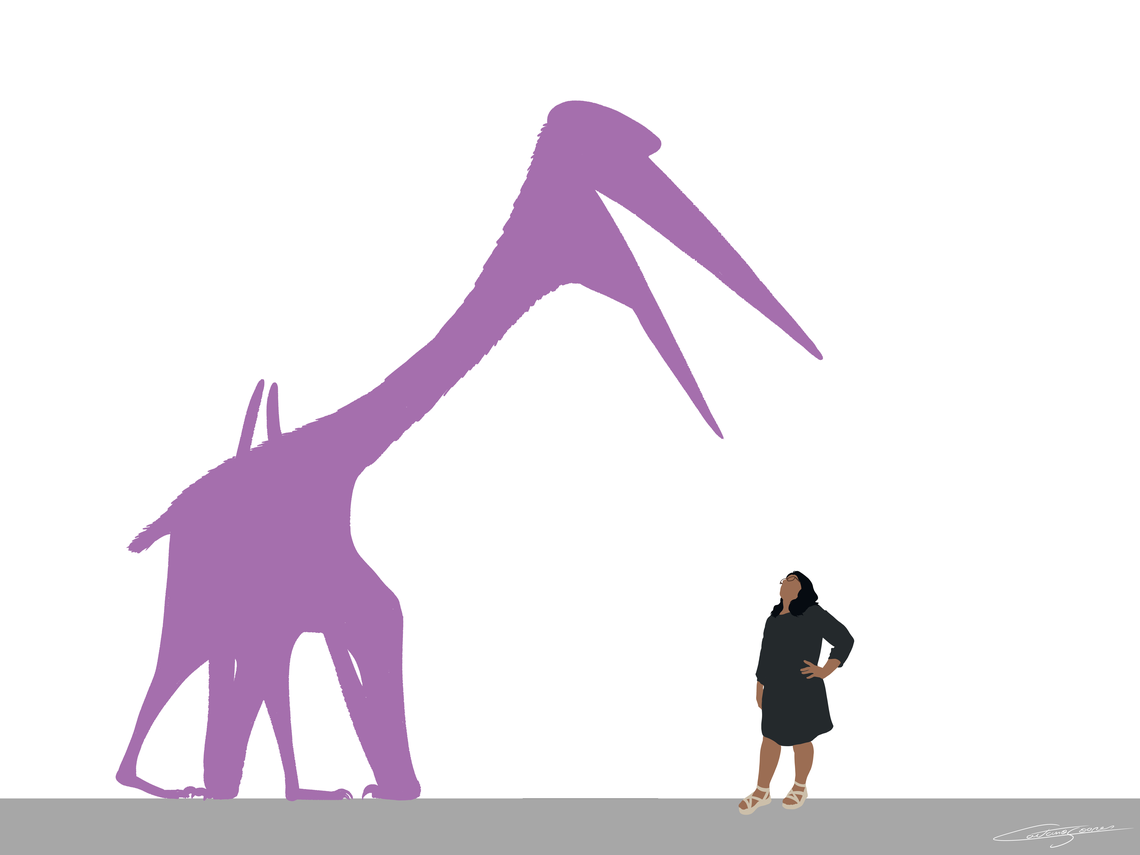
The bone was enough to identify the pterosaur as belonging to the Azhdarchidae group, the same group as Quetzalcoatlus.
“Like Quetzalcoatlus northropi, these pterosaurs were toothless, had long necks, and likely spent most of their time on land, using their long, sharp beaks to hunt small animals,” researchers said.
The group was one of the later iterations of pterosaurs, and they went extinct with their land-dwelling relatives in the mass extinction about 66 million years ago, according to the release.
“These animals are rare and are usually found in rocks formed in riverbeds,” researchers said. “The Syrian pterosaur, however, was discovered in marine rocks, suggesting that these giant fliers could also inhabit coastal environments.”
Latakia is on the western coast of Syria, on the Mediterranean Sea.
The research team includes Alhalabi, Pinheiro, Issam Bou Jaoude, Mohamad J. Ismail, Xabier Pereda Suberbiola, Nathalie Bardet and Max C. Langer.
This story was originally published October 21, 2025 at 4:08 PM with the headline "‘Exceptionally large’ flying prehistoric predator found in Syria for first time."
