
Cussing is not a crime, Alamance sheriff acknowledges in legal settlement
Editor’s note: Updated April 21 , 2021, with the latest developments.
The Alamance County sheriff, county commissioners and county manager have settled a lawsuit brought last summer in federal court alleging multiple violations of the First Amendment rights of Black Lives Matter protesters.
The terms of the deal with the local branch of the NAACP, as well as several individual protesters, include training on implicit bias and racial equity for sheriff’s deputies and county commissioners, and an acknowledgment that the pavement and lawns surrounding the historic courthouse in Graham are “traditional public fora,” where protest cannot be altogether banned, as was the case last summer. Several protesters were arrested for standing near the Confederate monument in front of the main courthouse entrance.
Additionally, Sheriff Terry Johnson agreed that swearing and “indecent” language are protected under the First Amendment unless they meet the definition of “fighting words” laid out by the U.S. Supreme Court. To meet the standard, the words must be found likely to incite immediate violence.
Last summer and fall, Johnson or his deputies were involved in arresting at least four protesters based on their language. Charges in two cases were dropped after an assistant district attorney found that the allegations did not amount to a crime. Two other protesters were found guilty on related charges; one of those cases has been appealed.
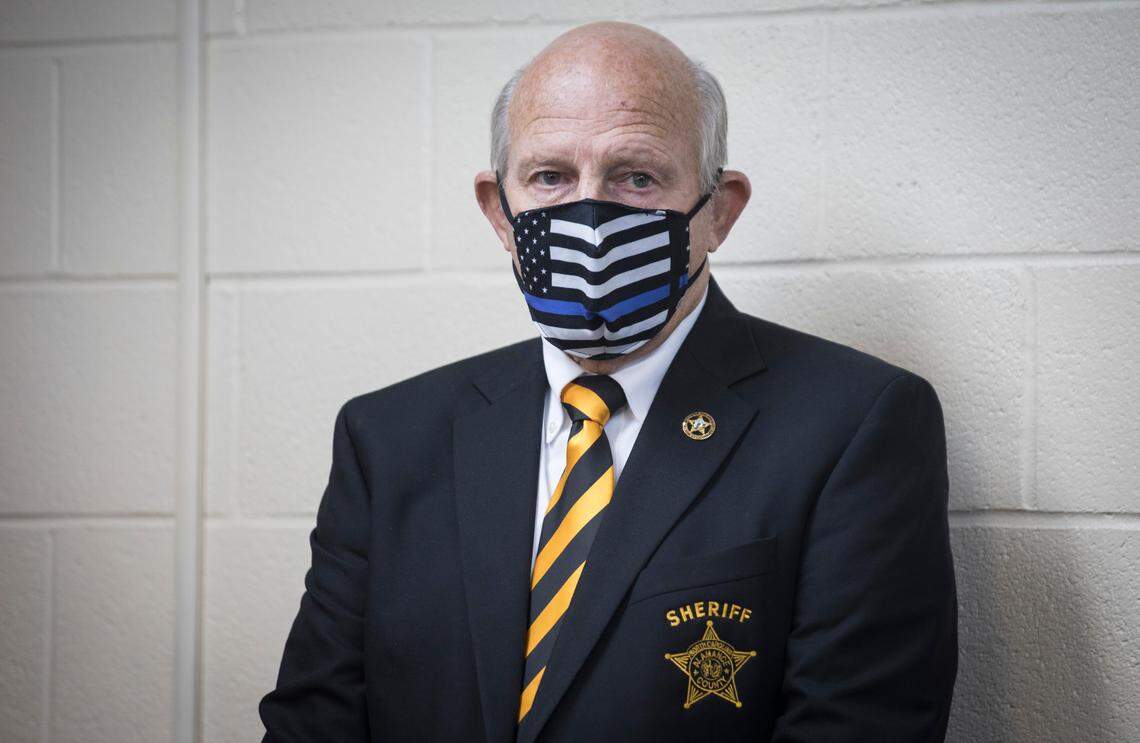
Alamance County took extreme steps to curtail political demonstrations in the wake of the death of George Floyd last May. Floyd’s death under the knee of a Minneapolis police officer, captured on video, set off protests across the country. But would-be protesters in Graham, the county seat, were threatened with arrest, even for standing alone on the sidewalk holding up a sign.
On July 2, the Lawyers’ Committee for Civil Rights Under Law, the national and state American Civil Liberties Union and the Lockamy Law Firm filed a suit against city and county officials. In response to the filing, city officials repealed an ordinance that required a permit for any demonstration involving two or more people and later settled their part of the case.
The settlement with county officials resolved the remaining claims, with the court retaining oversight for three years. Judge Catherine Eagles, of the U.S. District Court for the Middle District of North Carolina, approved the terms Tuesday.
“Throughout history, people exercising their constitutional rights to protest and assemble are often the catalysts for change,” Kristi Graunke, legal director for the ACLU of North Carolina, said in a prepared statement. “We are proud to support the people protesting in Alamance County seeking to dismantle white supremacy, calling for the removal of Confederate monuments, and standing up against powerful actors, including law enforcement, who sought to deny people their First Amendment rights.”
Elizabeth Haddix, managing attorney for the Lawyers’ Committee for Civil Rights Under Law, said in a statement that “if law enforcement officials had followed the U.S. Constitution this settlement would not have been needed in the first place. What those protesters experienced, just for pointing out that a confederate monument on public grounds is racist, is the sort of unacceptable policing that inspires much of the resentment and suspicion the Black community has towards some in law enforcement today.”
Barrett Brown, president of the Alamance NAACP branch, said his organization “and many others in our community are ready for a new day, one where we don’t have to see that monument in the middle of our public square celebrating white supremacy from the Jim Crow era.”
Clyde Albright, the county’s attorney, did not respond to a request for comment sent by email on Monday.
Two other federal lawsuits related to the treatment of Black Lives Matter protesters in Graham remain pending. Both of those cases involve a march to the polls on Halloween during which children and elderly people were repeatedly subjected to pepper fog. The complaints include allegations of excessive force and voter intimidation.
This story was originally published April 19, 2021 at 1:36 PM.