
NC House OKs budget with 5.5% raises for teachers, billions in other spending
The North Carolina House gave preliminary approval to its state budget bill Wednesday night after hours of debate. The vote was 72-41. A final vote will be taken Thursday.
The Republican-majority chamber’s budget spends $25.7 billion in taxpayer money over the next two years. The massive package includes tax cuts, teacher and other state employees raises, bonuses using federal funds, capital projects, infrastructure and broadband expansion. It also includes provisions that don’t have to do with money, including requiring the state’s public school teachers to post their lesson plans online.
Rep. Dean Arp, a Monroe Republican and one of the budget writers, called it “a smart and fiscally sound budget.” Rep. John Szoka, a Fayetteville Republican, called it a balance of sound fiscal policy and spending. House Speaker Tim Moore touted investment in capital projects at universities and spending money without having to borrow it. Plans for a bond were scrapped because of North Carolina’s sunny economic forecast and surplus.
In the House budget, the personal income tax rate would be reduced from 5.25% to 4.99% along with an increase in the standard deduction. The House budget also reduces the corporate income tax rate but does not phase it out completely like the Senate plan.
The House’s raises for teachers and other state employees are much more generous than the Senate’s plan, and the final result will end up somewhere in between. Teachers would get an average of 5.5% raises and most other state employees would get 5% raises over the next two years.
The Republican-written House budget has some education priorities that have been at the center of past teacher marches downtown and Democratic goals of increased teacher raises, restoring master’s degree pay and raising the minimum wage for non-certified school employees like custodians and cafeteria workers to $15 an hour. It also gives teachers who are new mothers eight weeks of paid parental leave.
North Carolina Association of Educators President Tamika Walker Kelly said in a statement Wednesday that “investments in school counselors, school construction, and veteran educator pay parity were a priority of the North Carolina Association of Educators and do show a tentative good faith commitment to the well-being of our educators, students and their families.”
However, Walker Kelly said the budget does not fully fund the Leandro court decision about education spending.
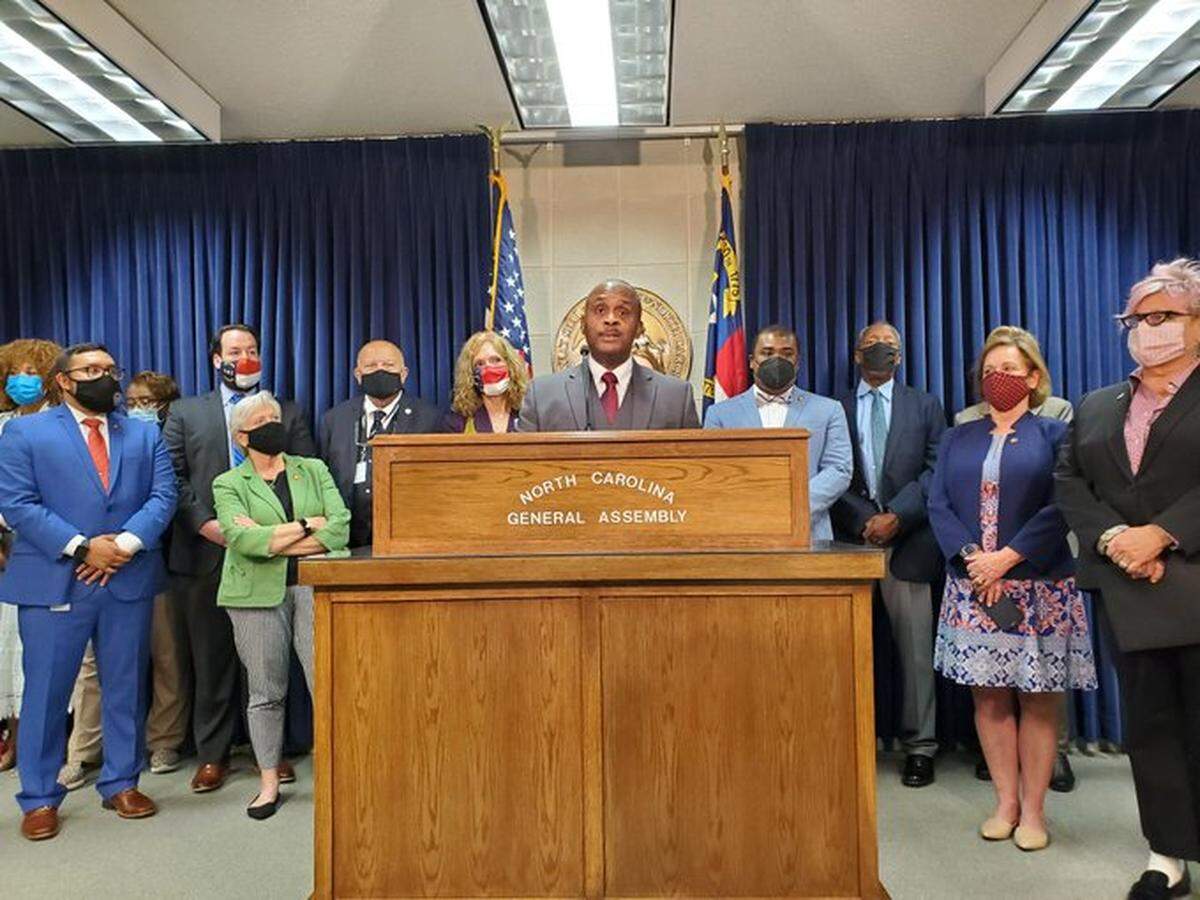
House Democrats held a news conference earlier in the day, repeatedly saying that the budget, which is written by the Republican budget chairs, fell short.
Democratic leader Rep. Robert Reives, of Chatham County, and other Democrats said the budget should have included Medicaid expansion and more funding for education.
During the floor debate, Reives said: “For good and for bad reasons, we’ve got a lot of money available right now and we’ve got opportunity.”
The state has a budget surplus and billions in federal American Rescue Plan Act coronavirus relief money to allocate, too. Reives called the raises “great,” but wants more to make up for loss over the past years when some state employees did not get raises.
He also said on the floor that the budget should have real inclusion in the writing process from Democrats, not just the Republican majority.
2019 House budget drama
This budget process, the House budget has several things that Democrats like better than the last time. In 2019, the Republican-majority House override Gov. Roy Cooper’s veto of the budget in dramatic fashion the morning of Sept. 11. Only a few Democrats were at the session, thinking it was a non-voting session. But many Republicans were there, and they successfully had the supermajority needed for the override. Rep. Deb Butler, a New Hanover County Democrat, called out House Speaker Tim Moore for taking the surprise vote in a video that went viral, shouting “I will not yield” as her microphone was cut.
On Wednesday, nearly two years later, Butler told reporters that whenever the chamber is open, she is there 15 minutes early. There are many sessions in both chambers that regularly do not have votes, and so only a smattering of lawmakers usually attend. That worked to the Republicans’ advantage for the 2019 budget veto override. Even so, the Senate did not override Cooper’s veto, and in the end there was no new comprehensive state budget — only piecemeal budget bills passed later, along with the state’s continuing resolution that allows funding levels from the previous budget to roll over if a new one does not become law.
That gives more pressure for this year’s budget process to result in a new budget becoming law, and the governor and legislative leadership have said they hope that will happen.
“I am encouraged by the dialogue,” Butler said about discussions, adding that she wants a budget negotiated between the parties.
“But we are not going to settle for scraps. North Carolina deserves better. I will be in the chamber to defend that,” she said. “I certainly hope we will not have to have that kind of antics again.”
Reives told reporters that no one issue would stop the budget from going forward, “but we need to negotiate in good faith.”
Republican leaders have said that Cooper’s office has been involved in the budget process and will be more so during the next step: the conference budget.
What’s next
The House is expected to take its third and final vote on the budget Thursday. Then the Senate will likely vote on the House’s version on Monday night, and reject it. Then the budget will go into “conference,” which is the days- or weeks-long negotiations between the chambers before they reveal, vote and pass a compromise budget to send to Cooper. Cooper has indicated he likes the House version better than the Senate version, but neither mirror his proposed budget that he announced in March.
.jpg)