
16 times NC Gov. Cooper used the veto stamp to block Republican bills in 2021
N.C. Gov. Roy Cooper vetoed 16 bills in 2021, adding to a cumulative veto list that surpasses any of his predecessors from both parties.
In 2021, the first year of his second term, the Democratic governor signed 147 bills into law.
The number of 2021 vetoes exceeds the 14 he vetoed in 2019 and the 11 bills he blocked in 2020.
Overall, Cooper has used the veto stamp on 69 bills since he began serving as governor in 2017. He has three years left on his term.
This matters in North Carolina because though Republicans control the House and Senate, they do not have the supermajorities required to override a veto, unless they get some help from Democrats.
Republicans haven’t had the votes to reverse any of Cooper’s vetoes in the years after they lost their supermajorities in the 2018 elections. They have overridden some of his 41 vetoes since 2019 in either the House or Senate, but not both chambers.
Democrats are under pressure to sustain Cooper’s vetoes, even though a few of them have occasionally voted to override them.
Compromise
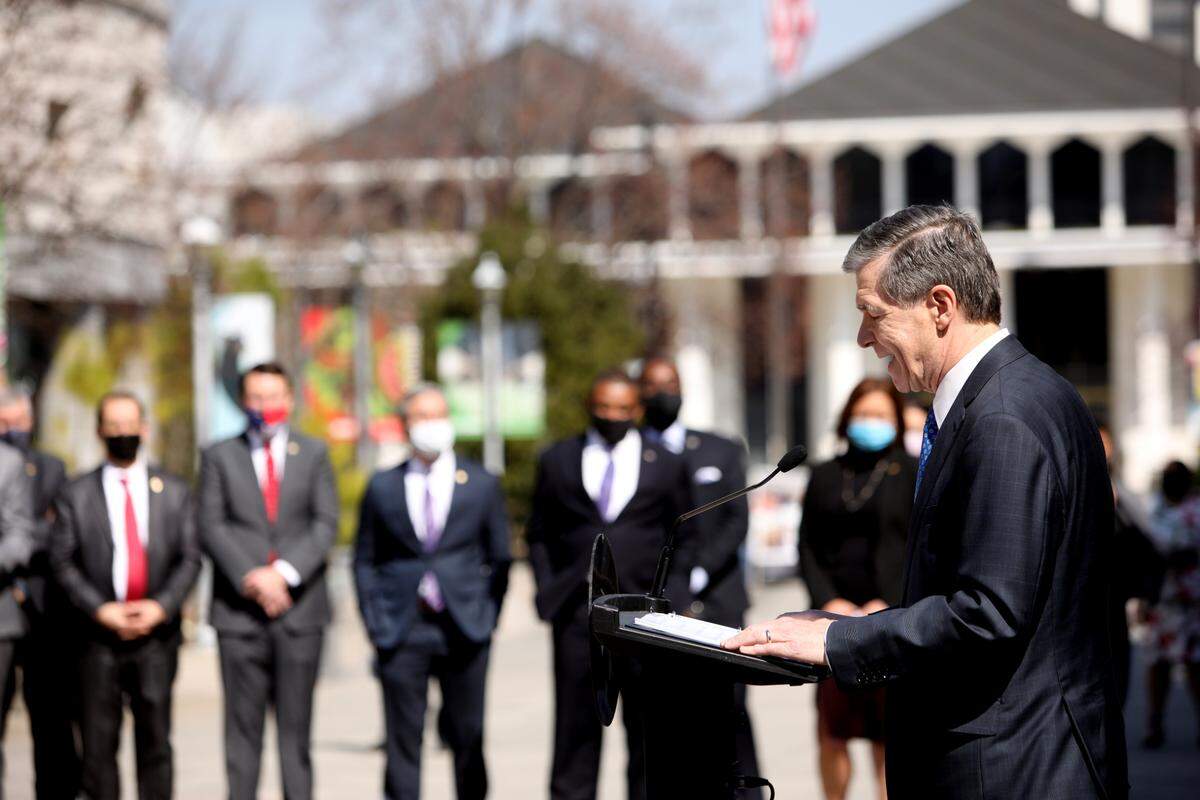
The three most powerful politicians in state government — Cooper, Senate President Pro Tempore Phil Berger and House Speaker Tim Moore — reached major compromises in 2021, including school reopening and the first state budget in three years.
Cooper told The News & Observer this month that he and the Republican leaders have built trust over time as they came to those agreements.
“Make no mistake, Republicans have the majority and I have the veto — and the ability to sustain that veto, so that puts us in a position if we’re going to get things done, that we have to negotiate and find ways forward,” Cooper said in an interview.
Cooper’s first veto of 2021 was in February with Senate Bill 37, which addressed the divisive issue of reopening all schools for in-person learning during the pandemic. The Senate held an override vote in early March that failed, but days later, Cooper and legislative leaders announced a deal.
The governor signed a new bill into law, sending thousands of K-12 public school students back to in-person learning to finish out the 2020-21 school year.
“Whether it’s getting children back in school in person safely, or whether it’s economic development, whether it’s setting a clean energy future for our state, or whether it’s passing the largest budget in state history that makes the most significant transformational investments, it was important for us to work together and we were able to do it,” Cooper said.
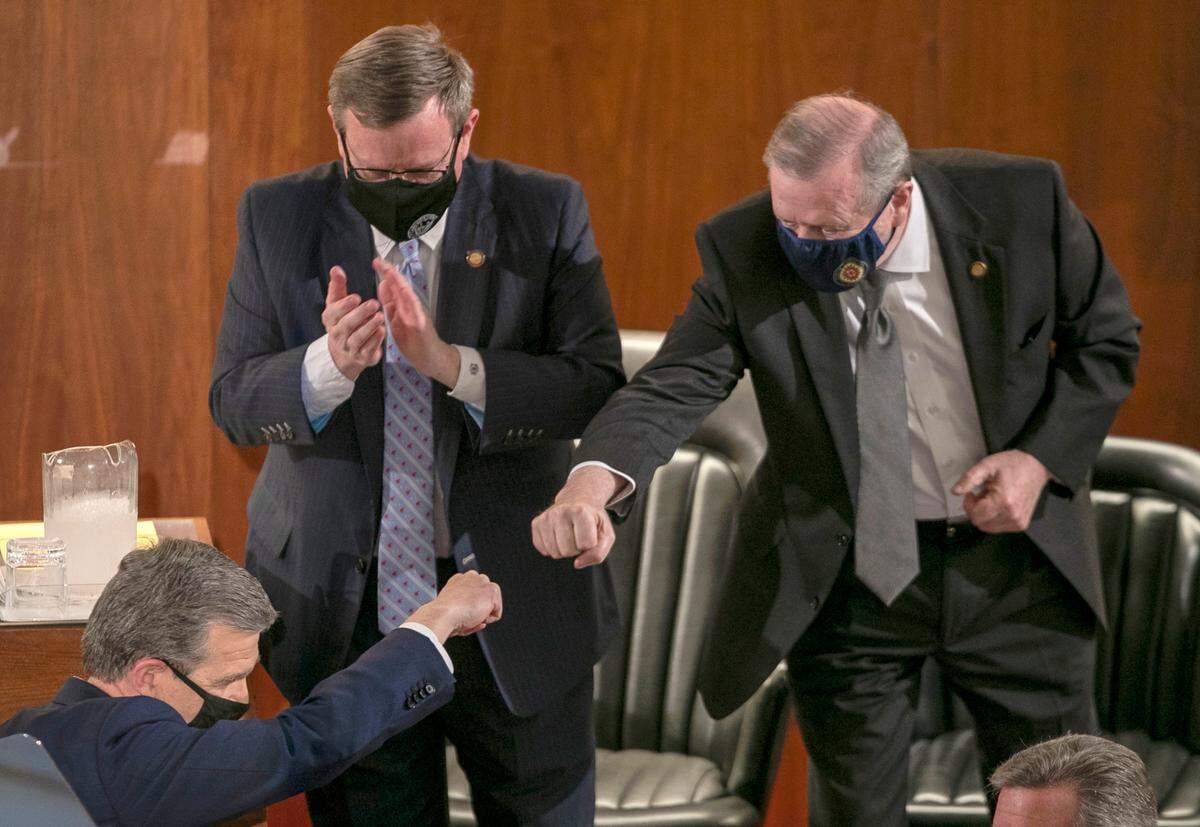
“We still have significant differences on policy, and I’m still regularly having to veto legislation that they pass, but I think it’s important for us to work together when we can, and I think the people expect that from us, because this is the result of their voting.”
A majority of voters re-elected Cooper in 2020 at the same they re-elected Republican U.S. Sen. Thom Tillis and the Republican majorities in the General Assembly.
NC veto history
North Carolina was the last state in the country to give its governor veto power, starting Jan. 1, 1996, after voters supported a constitutional amendment to grant the power.
But it wasn’t until 2002 that former Democratic Gov. Mike Easley became the first governor to issue a veto, according to the Department of Natural and Cultural Resources. Easley was governor from 2001 until 2009, and vetoed nine bills.
The first successful override was in 2008, according to statistics from the N.C. Legislative Library. Easley had vetoed a bill about the size of boats being transported on highways.
Cooper has vetoed more bills already than each of his predecessors.
Gov. Bev Perdue, a Democrat, served from 2009 to 2013, and vetoed 20 bills. The legislature overrode 11 of her vetoes.
Gov. Pat McCrory, a Republican, served from 2013 to 2017, and vetoed six bills, four of which were overridden.
When Cooper took office in January 2017, Republicans had a legislative supermajority. He vetoed 28 bills in 2017 and 2018, with 23 of them successfully overridden. Once Democrats broke the supermajority in the 2018 election, Cooper vetoed 41 more bills, and all have been sustained.
Controversial bills
One bill became law without Cooper’s signature in 2021, which is what happens after 10 days if the governor doesn’t sign or veto a bill. That was Senate Bill 722, which postponed some local government elections because of delays in Census data.
In September, Cooper vetoed an anti-Critical Race Theory bill, House Bill 324, titled “Ensuring Dignity and Nondiscrimination/Schools.” At the time of the veto, he said the bill “pushes calculated, conspiracy-laden politics into public education.” The Republican-sponsored bill was passed by all-white Republican lawmakers amid rebuke from Democrats during floor debates. Every Black lawmaker in the General Assembly is a Democrat.
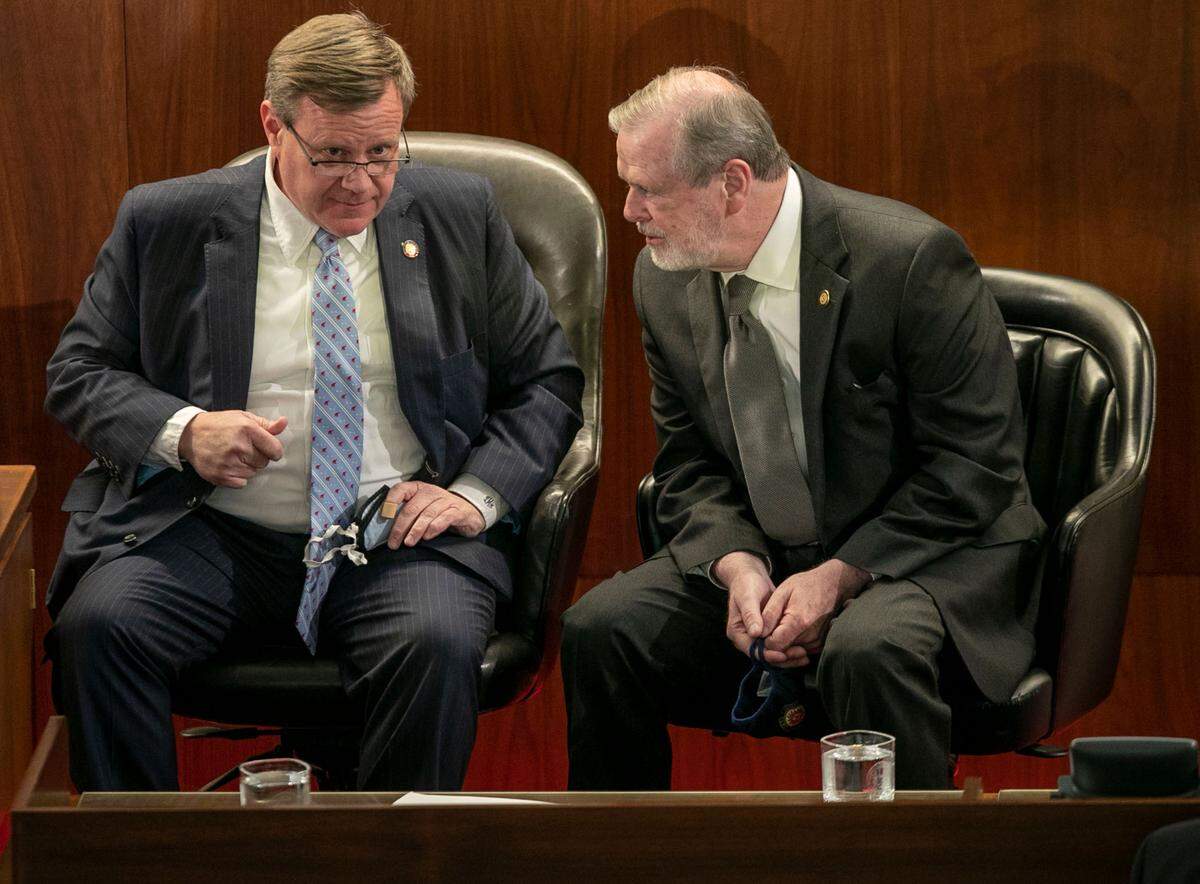
The same day, Cooper vetoed House Bill 805, known as “Prevent Rioting and Civil Disorder,” which would have created stricter penalties for people who riot. Moore filed the bill after the 2020 protests over George Floyd’s killing became destructive.
Moore called that veto a “slap in the face to the small business owners and residents of cities and towns across this state that were damaged by lawless riots.” Moore said Cooper was “pandering to the far left” by vetoing what he called a “common sense” bill.
Republicans found a way around two other vetoes — House Bill 264, “Emergency Powers Accountability Act,” and Senate Bill 360, “Prohibit Collusive Settlements by the Attorney General” — by including different versions of those bills in the final budget compromise bill, which Cooper signed into law in November.
More Cooper vetoes
Here are his 11 other vetoes of 2021:
▪ HB 398: Pistol Purchase Permit Repeal.
▪ HB 453: Human Life Nondiscrimination Act/No Eugenics.
▪ SB 326: Election Day Integrity Act.
▪ SB 43: Protect Religious Meeting Places.
▪ SB 116: Putting North Carolina Back to Work Act.
▪ SB 636: Donor Privacy.
▪ HB 729: Charter Schools Omnibus.
▪ HB 294: Sale of Salvage Vehicles.
▪ HB 220: Choice of Energy/Additional Provisions.
▪ SB 725: Prohibit Private Money in Elections Administration.
▪ HB 352: Hotel Safety Issues.
For more North Carolina government and politics news, listen to the Under the Dome politics podcast from The News & Observer and the NC Insider. You can find it at link.chtbl.com/underthedomenc or wherever you get your podcasts.
This story was originally published December 30, 2021 at 2:26 PM.
.jpg)