
Some North Carolina counties take days to certify election results. Why it takes so long.
Wake County elections board members sorted through votes Friday, Nov. 15, and found a problem: two ballots belonged to one person. One was cast early in person in Granville County, the other sent in by mail in Wake.
“This is why we canvass,” Wake County Board of Elections Chair Erica Porter said to a full audience at Friday’s board meeting.
While this circumstance raised eyebrows among attendees, Porter was anything but alarmed. “There are processes to ensure only one vote is counted.”
Wake County board director Olivia McCall revealed that the ballots were requested, with assistance, by a resident of an assisted living facility. The board voted unanimously to throw out the extra ballot.
Each county board of elections in North Carolina convenes to certify the election results 10 days after Election Day. Although many boards began the process on Friday morning or before, several dragged on past the deadline, with several counties still reporting unofficial results before a recount began on Wednesday in the race for a seat on the state Supreme Court.
Now, with a recount in motion, no county’s votes are finalized.
The state will conduct a recount in the Supreme Court race, in which Democrat Allison Riggs, the incumbent justice, held a 625-vote lead over Republican Jefferson Griffin, who was ahead by about 10,000 votes on Election Night. Griffin called for the recount Tuesday, a day after he launched a lawsuit against the North Carolina State Board of Elections claiming that incomplete state data did not give the campaign ample time to challenge the results.
Forsyth, Scotland, Yancey, Sampson, Randolph, Halifax, Dare, Cumberland, Craven and Chatham counties had not certified their election results as of Nov. 15. While most of the outstanding counties submitted finalized tallies to the state on Monday, delays in certifying the votes have opened the doors to skepticism over the canvass process.
Some referred to election results updated after the canvass deadline as “ballot dumps,” and pointed to Riggs’ growing lead as evidence of Democratic dishonesty.
One parody account called for audits of the vote in North Carolina and elicited agreement from some on X who were skeptical of the ongoing certifications. One user raised red flags about dead voters being counted, drawing agreement from Michele Morrow, the defeated candidate for state schools superintendent.
In reality, the canvass is a lengthy and hands-on process in which members of each county board of elections hear evidence, host debate and welcome public comment to remedy issues in the voting totals.
Wake County’s canvass kicked off on Wednesday, Nov. 13, with two days of preliminary meetings before votes were certified on Friday afternoon. Here’s what it was like.
WHAT HAPPENS AT THE CANVASS MEETINGS?
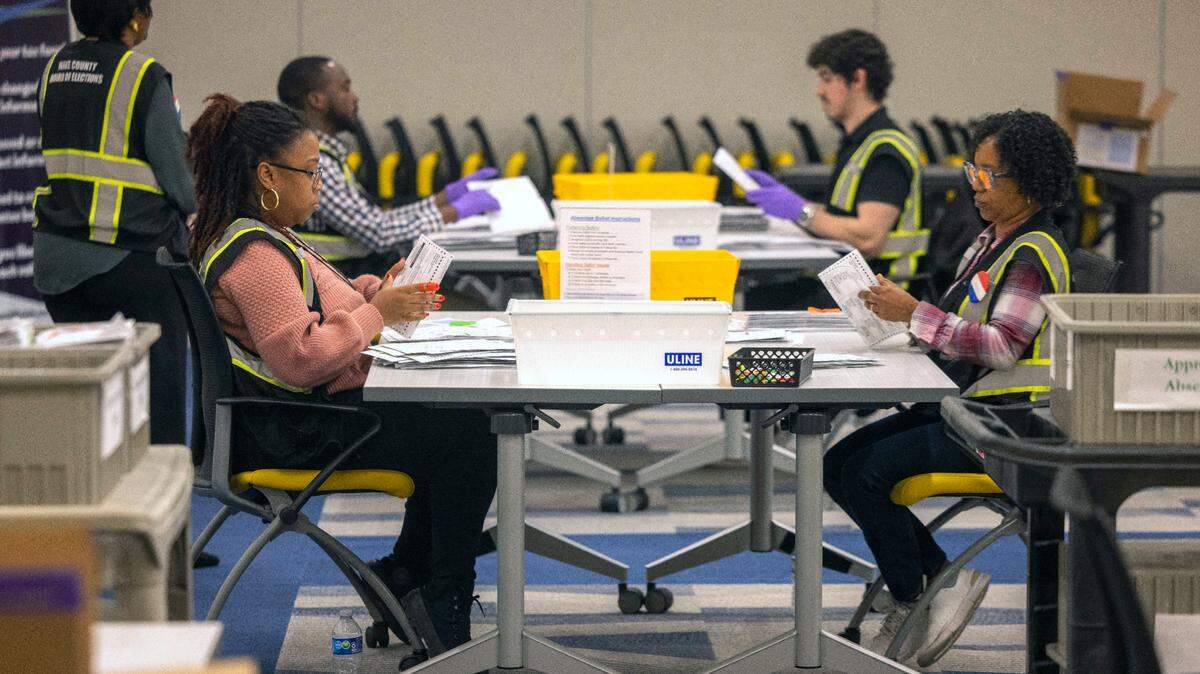
The board’s work to canvass votes officially began that day with the review of 4,846 absentee ballots.
The bipartisan board’s five members — Republicans Angela Hawkins and Keith Weatherly, and Democratic appointees Porter, Greg Flynn and Gerry Cohen — were in attendance for each day of the process, as was the board’s director, McCall.
The day began with the board reconciling discrepancies in the voter history at three early voting sites. This included motions to consider ballots found in “emergency bins” — votes not able to be processed by the tabulator, because of a jam or another problem — as well as a motion to manually remove a blank ballot that was counted.
Board members also sorted through absentee ballots to ensure they had all the necessary components: a copy of the voter’s photo ID or an exception form and witness signatures or a notary signature. While reviewing the ballots of 18 visually impaired voters, Porter said the board is not obligated to review each ballot individually, “but we’ve made a pledge as a board to look at least 90%”.
The period between Election Day and the canvass is also meant to give time to remedy — or “cure” — issues that arise with absentee ballots, such as expired IDs or missing witnesses.
The board saw 109 ballots that first day that had been “cured” — meaning the voter was made aware of the issue and solved it. Board members analyzed each cured ballot before they were sent to be tabulated.
On Thursday, the board decided on 6,213 more ballots — more than 3,000 of which election staff did not recommend the board approve for tabulating. These recommendations are based on state law, NCSBE directives and the county’s own precedent, McCall said.
When uncertainty arose, the board pulled six ballots aside for additional guidance from the state board of elections.
ELIGIBILITY OF DEAD VOTERS, DUPLICATE BALLOTS
Friday brought 70 challenged ballots on the agenda to be reviewed. These ballots were challenged for a variety of reasons, although most came from voters who had died before Election Day.
The board was presented with a packet of state laws and legal decisions that were relevant to the cases at hand. Audience members were called upon to testify on behalf of any of the challenges, and two Wake County residents whose family members’ ballots were challenged spoke. They were sworn under oath, as was McCall, before evidence was heard.
The board spent the first hour of Friday’s canvass debating the eligibility of dead voters — those who had cast an early vote, but died before Nov. 5. Disagreement arose between Republican and Democratic board members, with the split board ultimately voting to count three such votes.
Forty-two remaining ballots from dead voters were thrown out.
In one instance, the board reviewed the ballots of six voters who cast their vote by mail and then voted in person while their absentee ballot was still pending. Porter assured the meeting’s audience of the safeguards in place to ensure people only vote once.
“We have canvass to fix this,” she said. “If somebody votes early absentee and then votes again on Election Day — there are processes and checks, and this is why we are here to remedy this.” McCall expressed a willingness to work with the state board of elections to resolve issues like this earlier in the process.
In a press release on Friday, executive director of NCSBE Karen Brinson Bell explained: “The primary purpose of canvass is to ensure that the ballots of eligible voters are counted and those of ineligible individuals are not, that the county board followed all laws in the election and post-election processes, and that the certified results are accurate, no matter how long the process takes.”
Counties will continue to report their unofficial, Election Night results until the recount is completed.
This story was originally published November 19, 2024 at 4:56 PM.