Tricia Cotham makes claims about NC public schools, voucher applicants. Are they true?
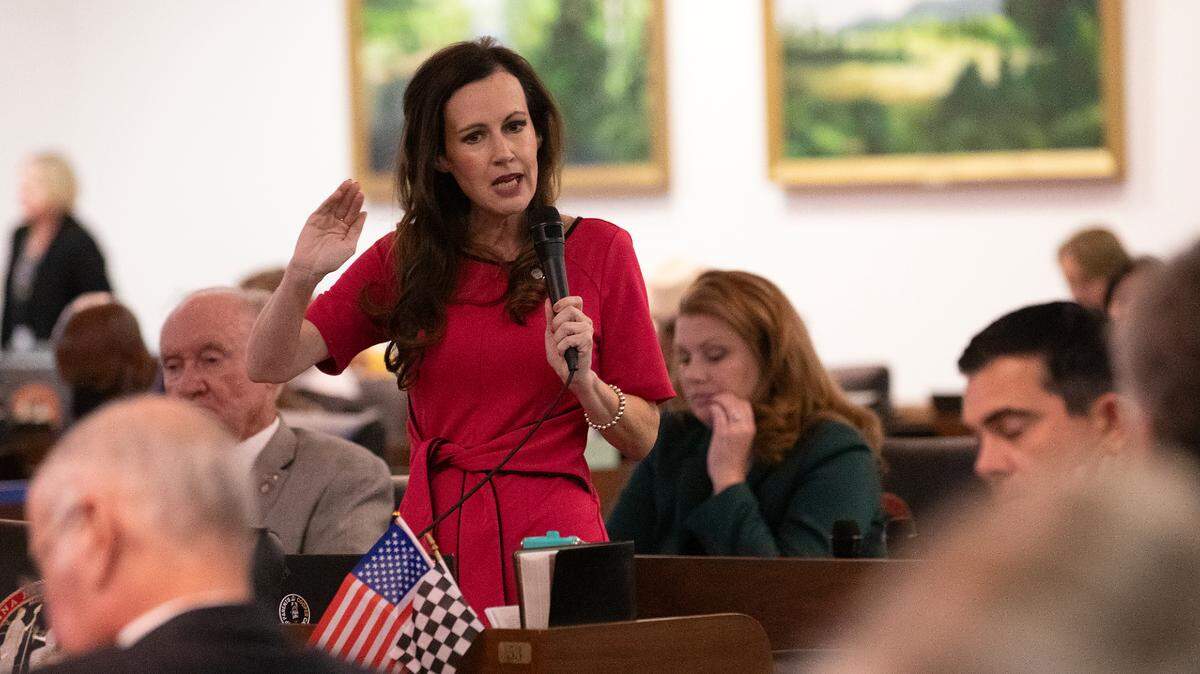
Rep. Tricia Cotham made some incorrect statements during Tuesday’s state House debate about expanding private school voucher funding over the veto of Democratic Gov. Roy Cooper.
Cotham, a Mecklenburg County Republican, argued that expansion of the Opportunity Scholarship program is needed because a “predominance” of North Carolina’s public schools have a D or F grade. She also claimed that the “predominance” of families seeking a private school voucher is from the lowest economic status.
Cotham’s defection from the Democratic Party in 2023 gave Republicans a supermajority in the House to override Cooper’s vetoes. She narrowly won reelection this year.
The House passed a veto override of the voucher bill on Tuesday. If the Senate also overrides Cooper, House Bill 10 would become law and provide an additional $463 million to clear a wait list of more than 50,000 students seeking an Opportunity Scholarship.
Here’s a deeper look at some of the statements Cotham made Tuesday on the House floor and whether or not they are true.
Poorest applicants are not in the minority
“We are not saying that this is all for wealthy children,” Cotham said. “That is factually inaccurate. The predominance of these children are in Tier 1, which is the highest amount.
“Those who reside are going to be in Mecklenburg and Wake County. The others, when you talk about wealthy and billionaires, you are wrong.”
Applicants were grouped into four tiers with Tier 1 being the families making the least income.
As of Sept. 2, a state report shows that Tier 1 applicants made up 11,315 of the 67,986 eligible applicants, or 16.6% Every Tier 1 applicant was offered an Opportunity Scholarship of $7,468 per student.
Tier 1 students do make up 82% of the new scholarship recipients so far because the N.C. State Education Assistance Authority ran out of money. But the share of Tier 1 students would shrink once money is given to the 54,132 students on the wait list.
Are wait list families wealthy?
How many of the families on the wait list are wealthy is subjective. More than 71% of the students on the wait list are in Tier 3 and Tier 4. Neither tier would have been eligible before this year because they earned too much money.
For a family of four, Tier 3 consists of an annual income of $115,440 to $259,740. Tier 3 accounts for 48.5% of the people on the wait list and 39% of all the applicants.
For a family of four, Tier 4 consists of an annual income of more than $259,740. Tier 4 accounts for 22.9% of the wait list and 18% of all applicants.
During the floor debate, Democrats said the Tier 3 and Tier 4 families shouldn’t get public dollars to cover private school tuition.
“We are spending it on private school vouchers for wealthy families that can already afford to send their kids to these schools and already likely are,” said Rep. Julie von Haefen, a Wake County Democrat. ”Three fourths of the people that receive funding from these vouchers make over $115,000 a year, and one-fourth of them make more than $259,000 a year.”
Most public schools don’t have D or F grades
Cotham argued Tuesday that school choice is needed because “there are many children who are trapped in public schools that are failing them.”
“We have a predominance of our public schools that are rated with Ds and Fs,” Cotham also said.
North Carolina public schools get an A through F performance grade each year that’s largely based on the percentage of students who pass state exams. For the last school year, 33.5% of schools had a D or F grade.
A plurality of schools (38.8%) had a C grade in the 2023-24 school year. A total of 27.8% of schools got an A or B grade.