
After 2 terms as governor, Cooper looks back at how NC became ‘a clean energy epicenter’
READ MORE
The Final Days of the Cooper Administration
After eight years in office, the tenure of North Carolina Gov. Roy Cooper is coming to a close. Here’s coverage from The News & Observer that looks at the Democrat’s two terms and what’s next.
Expand All
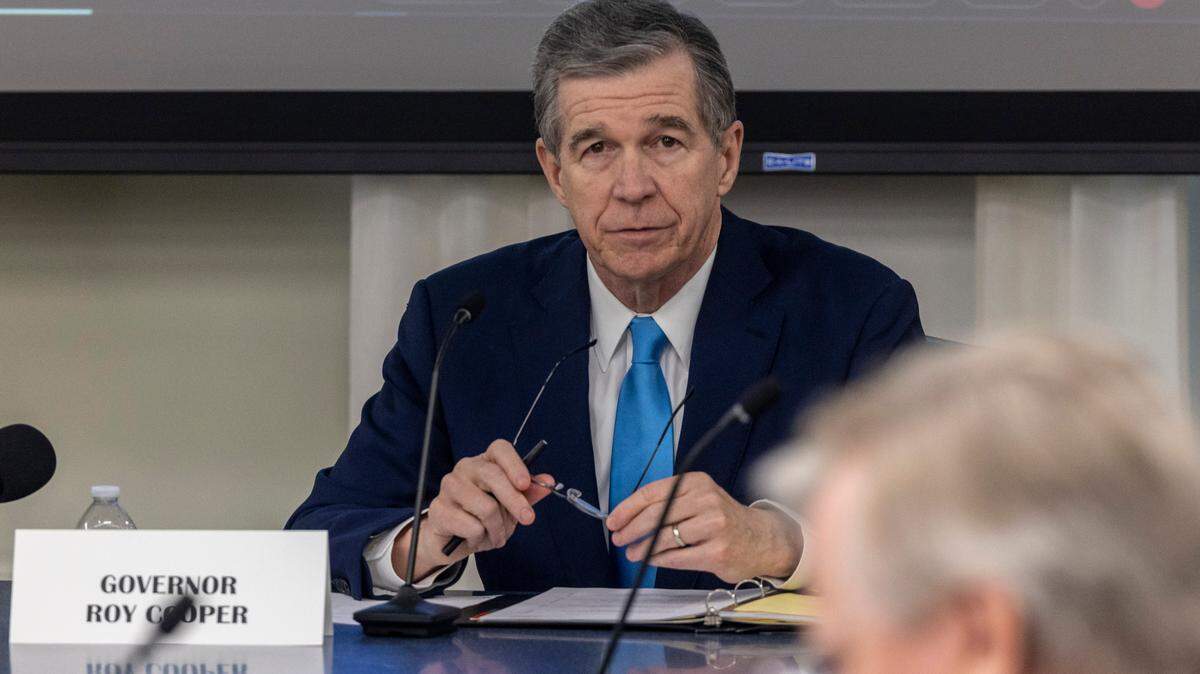
As Biden commutes death sentences, advocates hope Cooper will do the same in NC
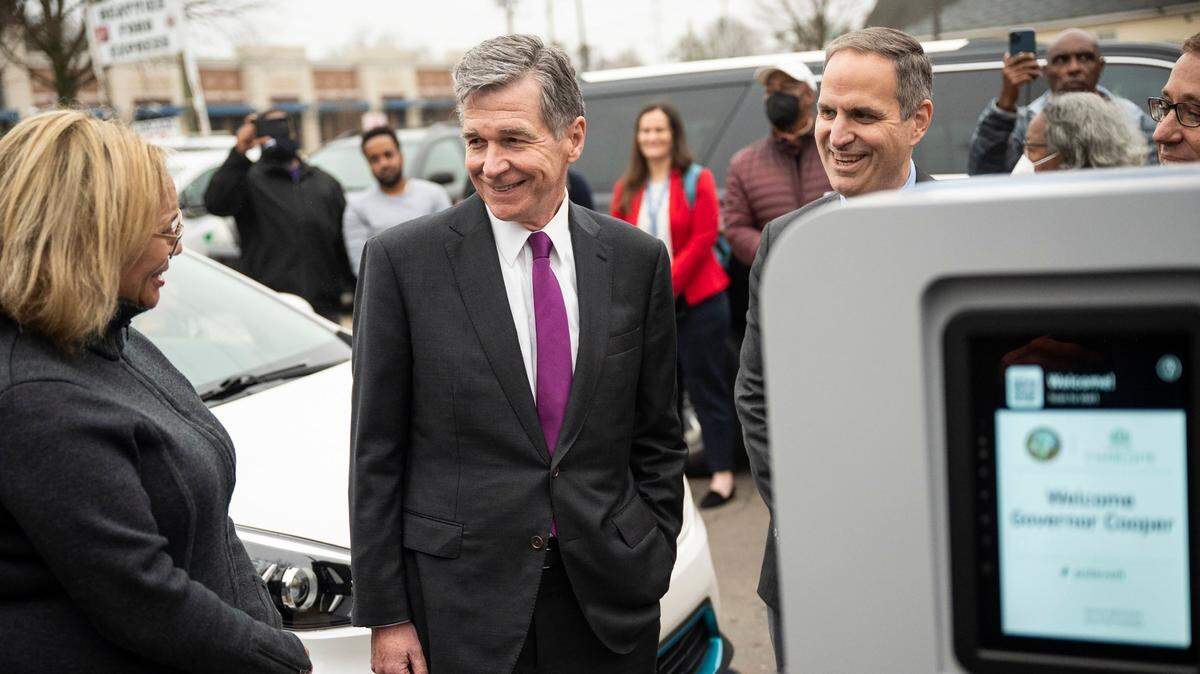
After 2 terms as governor, Cooper looks back at how NC became ‘a clean energy epicenter’
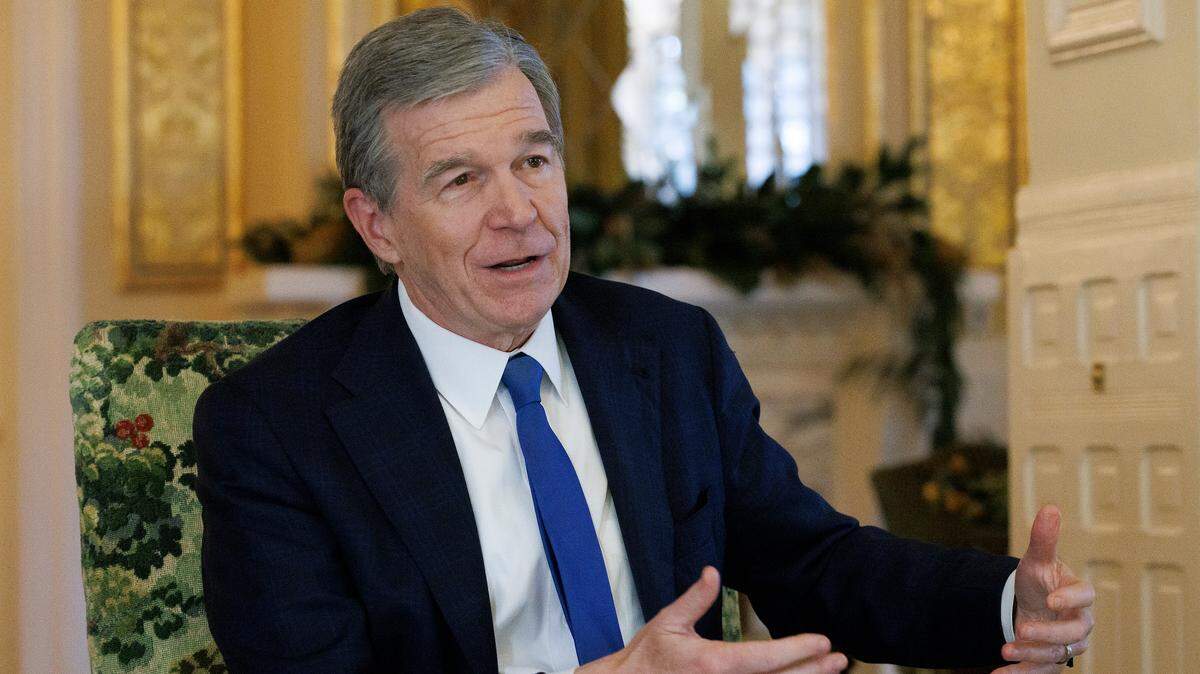
As NC Gov. Cooper leaves office, he’s learned from battles with legislature, business
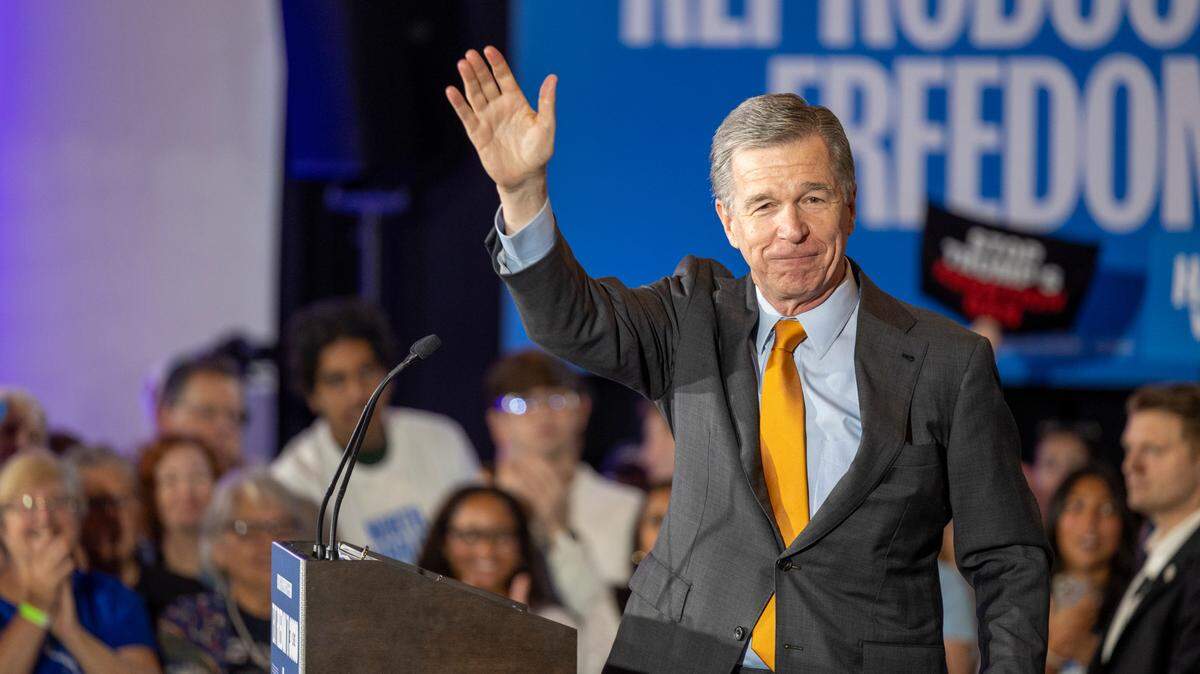
In his farewell address, Roy Cooper touts North Carolina’s ‘great comeback story’
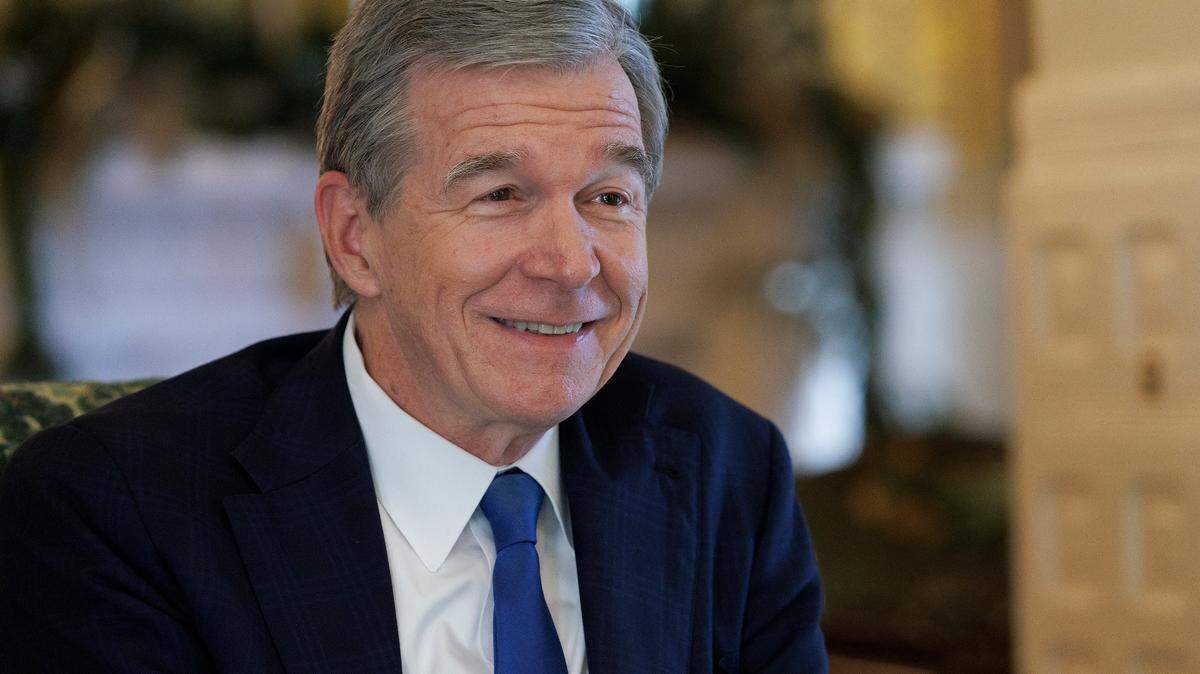
Roy Cooper’s life after the mansion: Sweaters, sports, driving and perhaps the Senate
Gov. Roy Cooper’s eight years in office have seen a wide variety of high-profile environmental issues.
When Cooper took office in 2017, North Carolina was just starting its recovery from Hurricane Matthew. Months later, stories broke about widespread contamination of the Cape Fear River Basin by “forever chemicals,” followed a year later by Hurricane Florence.
Then, Cooper used executive orders to kick-start negotiations that lasted more than two years and ultimately resulted in legislation directing Duke Energy to slash carbon dioxide emissions from the state’s power sector.
In the midst of all of this, Cooper touted a belief that slashing greenhouse gas emissions also brings economic opportunity.
Working with Department of Commerce officials, Cooper geared the state’s economic recruitment efforts toward clean energy. Ultimately, this resulted in a series of major announcements totaling $24 billion in investment and 20,000 new jobs.
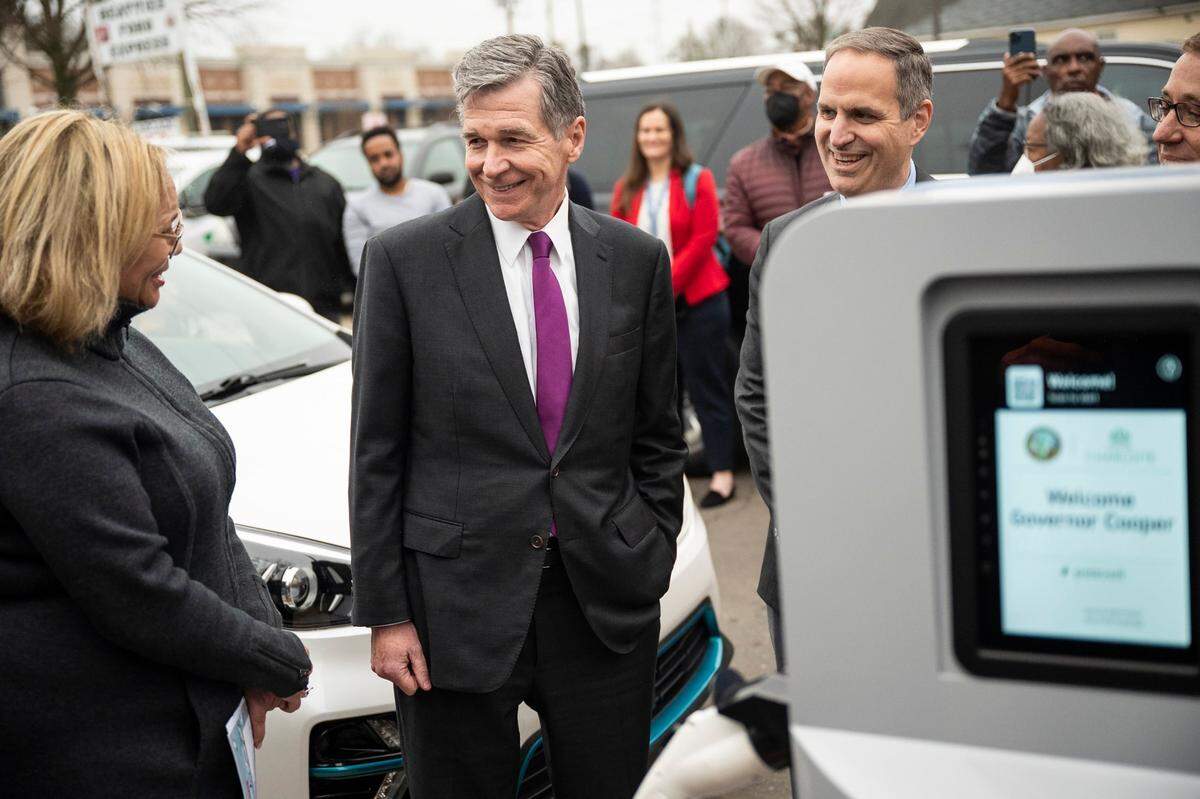
Those included Toyota’s $13.9 billion battery manufacturing facility that is expected to bring 5,000 jobs to Randolph County, Natron’s $1.4 billion sodium-ion battery facility set to bring 900 jobs to Edgecombe County, and Epsilon’s $650 million graphite anode manufacturing facility that is anticipated to create 500 jobs in Brunswick County.
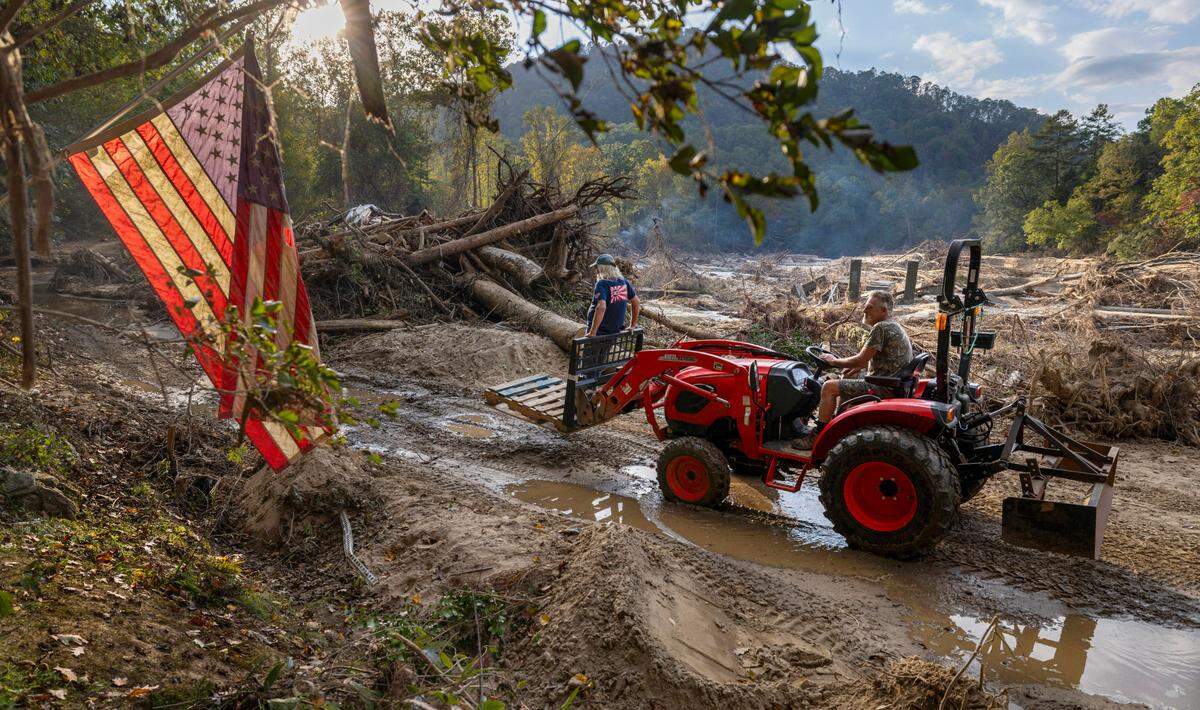
And then, just as North Carolina prepared to head to the polls to elect Cooper’s successor, the state was hit by the remnants of Hurricane Helene, a storm whose estimated $59 billion in damages easily dwarf those of any other in the history of this hurricane-prone state.
The News & Observer spoke with Cooper this week about his work on energy and environmental issues, as well as the direction he sees the state headed in. This interview has been lightly edited for length and clarity.
Q: When did you first start to make the link between environmental protection and economic opportunity?
It’s probably before I became governor, but when I became governor and got involved in economic recruiting I talked with so many companies that were ready to bring jobs to North Carolina as long as we were a good landing place for them.
These were clean energy companies. Electric vehicle manufacturers, battery manufacturers, making solar power, etc. So very early in the term, I wanted to find ways to protect our environment while growing our economy, and it’s pretty amazing how quickly it all occurred over the years of my term.
Q: I think we saw that with the “battery belt” development and all of the links there. Specifically relating to the battery belt, how durable do you think those gains are with up-and-down growth in electric vehicle adoption?
I think the trend continues to go up for EV, and I think that the private markets will end up taking us there. You only have to look overseas to see the success of this market that is headed to the United States. So even without the federal boost that we’ve received, I believe that the battery belt efforts will continue to grow and the supply chain from it will continue to grow.
I also believe that there’s going to be more that survives from Biden-Harris administration investments in clean energy than some people think because these announced jobs and factories have begun to take root all over the country, including in red states. I think there will be a lot of cries to continue these federal investments to help incentivize the growing clean energy economy that we’re seeing across the country.
Q: Are you making the argument that there won’t be a repeal of the industrial policy portions of the Inflation Reduction Act, but there could be of other portions?
Well, I don’t know yet. I think that clearly Donald Trump has said a lot of different things. He has made derogatory comments about clean energy, yet he says he wants to grow the economy. I believe that all of them have a chance to survive, and I think it will depend upon how loud the voices are across the country in wanting to preserve these investments.
Even if they were successful in wiping it all off the board, I believe you would see continued growth because i think the capital markets are taking us in that direction anyways.
Q: One of the things that came up at the event at Kempower was a shift in the state’s economic recruitment strategy, with a (Clean Energy Economic Development office) at Commerce. Were there other ways that consideration shifted under your administration to take the environment into account more?
We were very proud of the workforce development programs that we developed specifically for clean energy industries. We were able to draw down federal funds in order to make sure that we were training students for the jobs of today and tomorrow. We got about $20 million and set up these workforce resilience grants that more than 22,000 students have had an opportunity to take advantage of.
When businesses see that a state is not only accepting of clean energy — when you look at House Bill 951, when you look at our Clean Transportation Plan and the goals that have been set out, when you look at the way North Carolina has successfully drawn down a significant amount of federal funds in the clean energy arena ... businesses want to come.
We believe that companies’ applications to the federal government were strong. We would assist in endorsing those applications to say the state of North Carolina wants to work with this company here in our state to promote clean energy and to create jobs.
All of those things working together really showed those companies that North Carolina was serious about becoming a clean energy epicenter, and I believe that that’s where we are.
Q: There’s been some studies, including one from Duke, looking at battery plants and making a link with PFAS (a group of chemicals, linked with a spate of human health impacts, that are often dubbed “forever chemicals” because of their persistence in the natural environment). Is that something that’s being considered as part of the recruitment effort, the potential downsides or things that may need to be protected from with these companies?
I’m not familiar with what you’re saying. I don’t doubt what you’re saying, but I do know that North Carolina has led the way in working to try to prevent PFAS in our water and air, working with the federal government to set limits.
I don’t think that that necessarily works against recruiting and having these companies here because what we’re trying to do is to protect our natural resources. So I think PFAS is around us in a lot of ways. There are a number of industries that are using it and involved in it and what we’ve got to do is make sure that these companies pay (their fair share) in keeping the water clean and that’s going to be a tremendous lift in the coming years and decades.
I think North Carolina’s ahead of the curve right now, though.
Q: You mentioned House Bill 951 a little bit ago. (The 2021 legislation wrote into state law targeted 70% carbon dioxide emission reductions from Duke Energy’s power generation by 2030 and net zero by 2050.) How likely do you think it is that the original promise of that legislation can be met?
Well we’re already on our way, and although Duke Energy wants to move slower than the bill commands we’re making significant progress.
For example, we tripled the amount of solar production since January 2017, and the latest order laid out (in November) by the Utilities Commission continues to push that.
What I think the commission has signaled for the past year or so, at 2030 we aren’t going to hit the 70% reduction (from 2005 levels of carbon dioxide emissions). I believe there’s a way to do it. The commission has taken a little step back on that and hasn’t said specifically, but as quickly as possible. Many are talking about 2031 or ‘32 for getting that 70% reduction.
But here’s another situation where the momentum is going that way. Duke Energy and the noncompetitive system that we have in our state would say that the capital markets aren’t driving this decision as much as the law and Utilities Commission. But I think when we did Executive Order 80, we spent those 18 months in negotiations with Duke Energy right there at the table along with the other utilities, we figured out a way for us to get to a clean energy future.
I think the markets are responding positively to that, and obviously Duke Energy pays attention to their stock price. Even if the legislature is successful in changing the structure of the commission — which I believe the latest legislation is unconstitutional and we will see about that — I believe the momentum is enough to continue to push us toward a clean energy future in the power sector.
(Note: Here, Cooper is referring to a provision in Senate Bill 382 that takes majority appointment power on the Utilities Commission away from the governor. With the General Assembly overriding Cooper’s veto, the governor would appoint two members of the five-member commission, General Assembly leaders would appoint two more and incoming State Treasurer Brad Briner, a Republican, would appoint the fifth member.)
Q: So we’re going to get there but it might take a little bit longer, at least on the interim target?
Yeah, I think on the interim target. I think we can get to 2050, and I think there’s a way to get to the interim target by 2030 but this latest order by the commission did not push that.
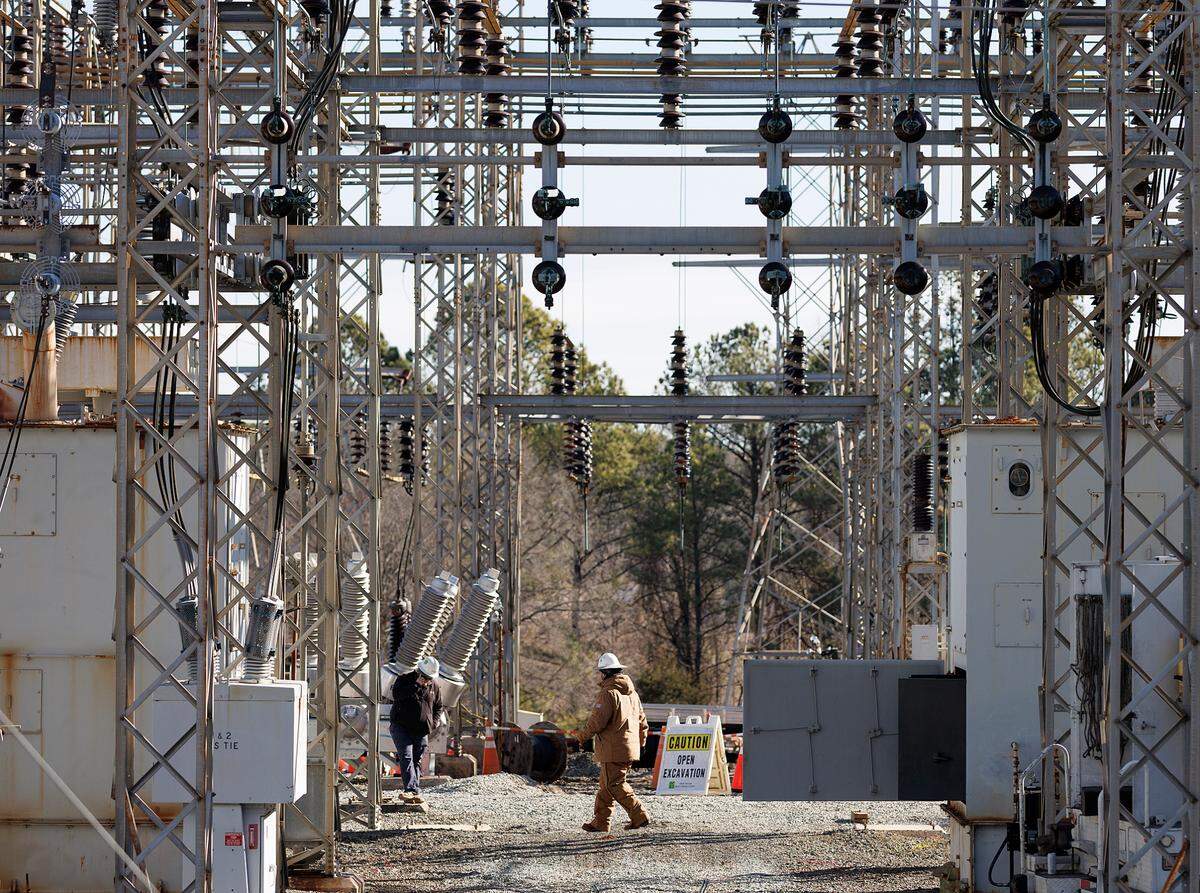
There were a lot of good things in it for the future of clean energy, but there’s no way we’d even be close to this without 951 pushing it and continuing to move us more toward a renewable future. We were able to secure significant federal money to help us with grid and transmission improvements to help get renewable on the grid in a better, more efficient, less costly way, which is positive.
I think Duke has invested both time and money to get there. They just want to do a little more gas along the way than I and many others believe is necessary.
Q: Were there environmental targets or tasks that have been left undone during your time in office or are still in progress? If so, why didn’t they get done?
I would like us to be moving closer to offshore wind than we have been able to get. We finally got a speed-up order in the Utilities Commission order this time, which I think is positive. But Duke Energy has put small modular nuclear reactors ahead of offshore wind in their efforts to get to carbon zero.
Offshore wind is commercially viable, and while we’re going to have a market at some point for small modular nuclear, they aren’t out there yet, and a bit unproven as to how they can be sited and how the Nuclear Regulatory Commission is going to react to them.
So I want North Carolina to do more on offshore wind. We tried mightily and have had some success because we have leases off the coast, we have this new order from the commission, we have a lot of interest. We also have made ourselves ready to be part of the offshore supply chain for jobs. Even if we didn’t get offshore wind off of our coast very soon with the actual power, we still have a great opportunity to harness jobs from the billions (in) investment that are going to happen up and down the East Coast.
We’ve done a lot of education, particularly with people on the coast. We’ve spent a lot of time getting ready, and I hope the Stein administration can push this issue. I do know the new Commerce secretary, Lee Lilley, is very familiar with it, as he was an integral part of my team on offshore wind. He knows the strong economic link that offshore wind can bring for jobs in North Carolina, as well as bringing clean energy.
Q: You just mentioned Gov.-elect Stein. What is your advice to him on Helene recovery? When you came in in 2016, it was on the heels of Hurricane Matthew, which was a different scale but was on a similar timeline as this.
He will do this, but he needs to be relentless in this effort to secure the funding.
When you look now at the fact that our second-most expensive storm is Florence at about $17 billion, the latest estimate for Helene is $59 billion. So he’s going to have to work with the federal government and the state legislature to provide significant funds.
Also, taking the time and making the investments to make sure that the rebuild is resilient and hardened and ready for future storms like this. That’s always hard to do, but I know for a fact that he’s making Helene recovery a priority in his administration.
Those are two pieces of advice that I have given him and that he already knows anyway.
This story was produced with financial support from the Hartfield Foundation and Green South Foundation, in partnership with Journalism Funding Partners, as part of an independent journalism fellowship program. The N&O maintains full editorial control of the work. If you would like to help support local journalism, please consider signing up for a digital subscription, which you can do here.
This story was originally published December 24, 2024 at 5:30 AM.