North Carolina wipes out $6.5B in medical debt for 2.5M residents. Here’s how.
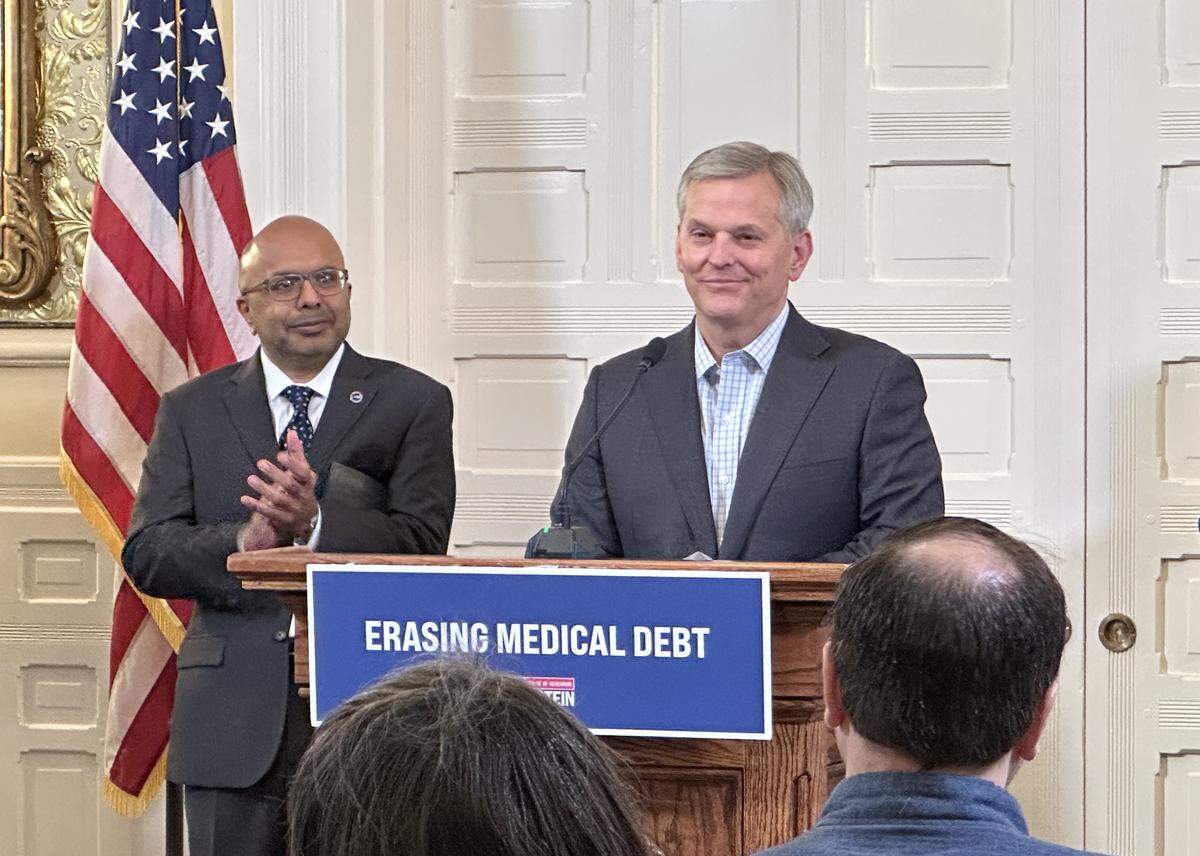
More than $6.5 billion in medical debt has been erased for about 2.5 million North Carolinians through the state’s Medical Debt Relief Program, Gov. Josh Stein and state Health and Human Services Secretary Devdutta Sangvai said Monday.
“So many credit reports wiped clean. This is life changing news for so many families. Medical debt is a tremendous burden that keeps families from financial security and emotional and physical wellbeing,” Stein said during a press conference at the North Carolina Executive Mansion.
North Carolina’s medical debt initiative was announced last year by former Gov. Roy Cooper and former health secretary Kody Kinsley, who said it could wipe away about $4 billion in hospital debt for as many as 2 million low- and middle-income residents, The News & Observer reported.
The initial $4 billion estimate grew after the program expanded, Stein said. When first announced, officials didn’t know all 99 hospitals would participate, he said. Hospitals reviewed their records and chose to forgive debt for some people beyond what had originally been negotiated with the state, the governor said.
“We expect, over time, it will likely be more,” Stein said. We want these hospitals “to have good policies on the front end, so they’re not putting people in a debt that they’ll never be able to afford because it’s bad for their long term health. Obviously, it’s bad for their financial situation.”
North Carolina has long had among the highest rates of medical debt in the nation, according to 2024 reporting by The Charlotte Observer and KFF Health News. As many as 3 million adults likely carried such debt at the time, KFF polling and credit bureau data suggested.
Sangvai said that the program is “not a one-time thing,” but “a sustainable model that will continue to reduce debt burden and improve access to care in the years ahead.”
Medical debt “is often uncollectible and more costly to manage than it’s worth, it represents a heavy burden on the individual,” said Sangvai, who was president of Duke Regional Hospital when the plan was announced in 2024.
Medical debt relief provided
People whose debt has been erased will hear from either the hospitals where they received care or from Undue Medical Debt, Stein said. More than 255,000 letters would be sent this week, said Jose Penabad, a co-founder of the nonprofit.
Undue Medical Debt works with hospital systems and other providers across the country to purchase and forgive past-due medical bills. It is working with hospitals here to carry out the state’s medical debt relief program.
When the debt-relief plan — approved by the Biden administration — was first announced, Cooper said that hospitals that opt in to the plan must implement the following to be eligible for enhanced payments offered under the plan:
- For those on Medicaid, erase all unpaid medical debt dating back to Jan. 1, 2014.
- Relieve all unpaid medical debt that has become virtually impossible to collect dating back to Jan. 1, 2014, for many lower-income people.
- Provide discounts on medical bills for for many lower-income people.
- Automatically enroll people into financial assistance, known as charity care.
- Not sell medical debt of many lower-income people.
- Not report debt covered by policies in the plan to a credit reporting agency.
How the plan works
Hospitals that participate in the debt-relief program receive enhanced payments through the state’s Healthcare Access and Stabilization Program, or HASP.
When North Carolina expanded Medicaid in late 2023, it also created HASP — a financial arrangement that helps the state cover its share of Medicaid expansion costs via hosptial taxes while bringing in more federal funding.
Here’s how it works: the state increases how much it pays hospitals for treating Medicaid patients. Those higher payments trigger a larger federal match, sending more federal dollars to North Carolina hospitals.
The state then recovers part of its share by collecting a provider tax, known as an assessment, from those same hospitals. The money from those taxes helps cover the state’s portion of expansion costs.
The medical debt plan builds on that system. Hospitals receive additional funding under HASP in exchange for agreeing to erase eligible medical debt and strengthen their charity-care and billing policies.
Asked about other states taking similar actions related to supplemental Medicaid funding, Penabad told reporters that “We see a lot of activity in different states. I would say different states all have different constituencies and different approaches on things, but we’re making a lot of progress with a number of states and cities.”
Federal impacts
Asked whether the reconciliation bill known as the “One Big Beautiful Bill” passed by Congress and backed by President Donald Trump could affect the medical debt program — considering its use of Medicaid funds — Sangvai said, “There are definitely things we’re going to need to follow with respect to that law.”
But “in the immediate setting, no direct impact,” he added.
“One of the advantages is that this program is already in place, and as we mentioned earlier, that it’s going to also have some policy changes at the hospital level that are independent of any state and federal action,” he said, pointing to eligibility for charity care.
States, including North Carolina, are projected to lose billions following cuts and changes to Medicaid made under the One Big Beautiful Bill.
Supporters of Medicaid cuts and changes have said the spending bill will eliminate wasteful spending and fraud.
Key changes under the bill include new federal work requirements for Medicaid expansion recipients, restrictions on provider taxes that fund expansion, elimination of the HASP program, and new state obligations to contribute to food assistance programs, Jonathan Kappler, deputy secretary for external affairs and chief of staff at DHHS, told The N&O in late July.
These pieces do not all take effect at once, with varying enactment dates.
Jay Ludlam, deputy secretary for NC Medicaid, also previously warned lawmakers that expansion could also collapse, stripping coverage from about 600,000 residents.
Bipartisan work
Stein, who is a Democrat, also said Monday that the debt relief achieved is “an example of innovation and collaboration to improve the health and economic well being of the people of North Carolina. That’s exactly what people want out of their government..”
Medicaid expansion and HASP, were approved with bipartisan support in the GOP-led legislature.
“We can do it again. That is why I am calling on the Senate and the House to put their non Medicaid disputes to the side and come back to the table to fully fund Medicaid in North Carolina,” he said
Officials in Stein’s administration said earlier this year they would impose cuts to provider payment rates effective Oct. 1 because they said Medicaid had been underfunded by lawmakers.
The House and Senate separately advanced bills in late September to provide more funding, but failed to reach an agreement.
Effects are already being felt by providers and patients.
He also said leaders from both parties in Congress “need to come together” to extend the enhanced Affordable Care Act subsidies. That dispute is at the center of the federal shutdown, with Democrats pushing for an extension and President Donald Trump and other Republicans accusing them of shutting down the government to provide free health care to immigrants in the country without legal status. Except in emergency situations, such immigrants are not eligible for federally funded health coverage.
This story was originally published October 13, 2025 at 12:40 PM.