More than 100 NC candidates switched parties. Here’s what they say about why
AI-generated summary reviewed by our newsroom.
- 140 North Carolina candidates changed party registration in 2025.
- Many switches were unaffiliated candidates joining GOP or Democratic ranks.
- Educators made several switches to challenge incumbents on school funding.
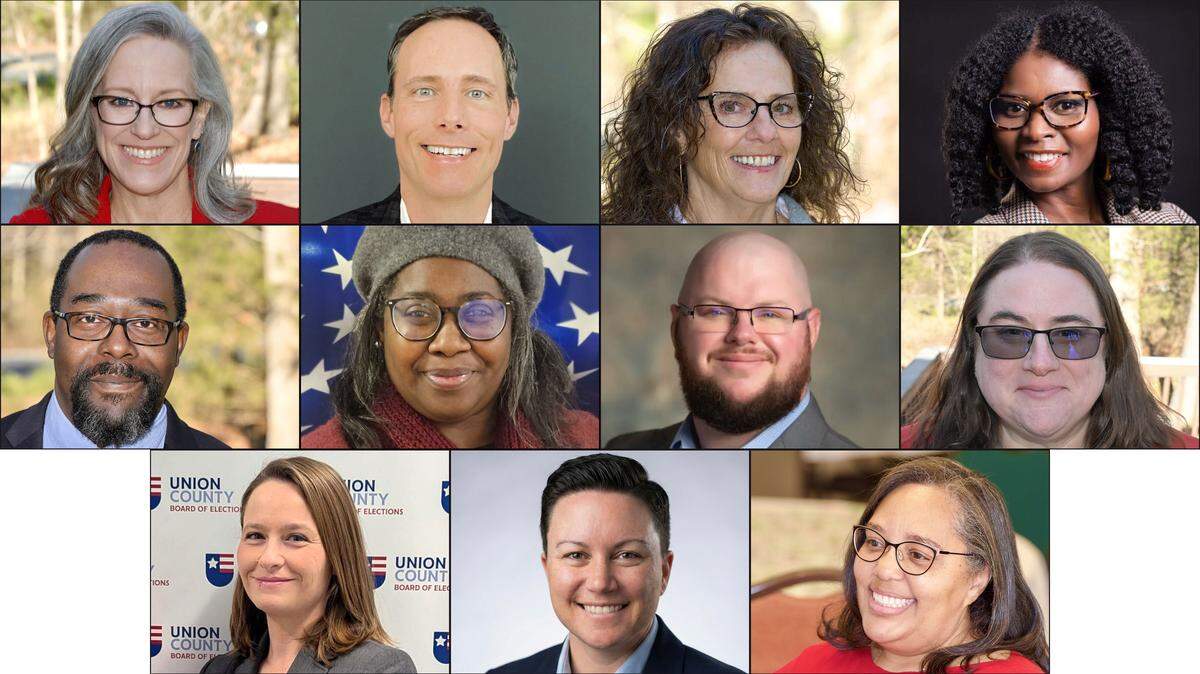
Control of North Carolina’s General Assembly largely comes down to math: which party has enough seats to move bills and, critically, override the governor’s veto.
But the numbers game could be complicated by a group of candidates running in the upcoming primary election who switched political parties last year.
In most districts, one party has a hefty advantage in the general election. That means the primary is often the most competitive stage of the race. If party-switching candidates win their primaries in those districts and ultimately take office, some may not reliably vote with their new party.
Republicans currently hold a supermajority in the state Senate, giving them the three-fifths support needed to override vetoes from Democratic Gov. Josh Stein, so long as members vote along party lines. In the House, Republicans are just one seat short of a supermajority.
That single-seat deficit in the House has had real consequences. During the 2024 session, Republicans who had a two-chamber supermajority were able to overturn all 11 vetoes from then-Democratic Gov. Roy Cooper in his final year in office.
This year, they overturned eight of Stein’s 15 vetoes. Many of those overrides occurred while some Democrats were absent or with the support of Democrats who crossed party lines.
Several party switchers
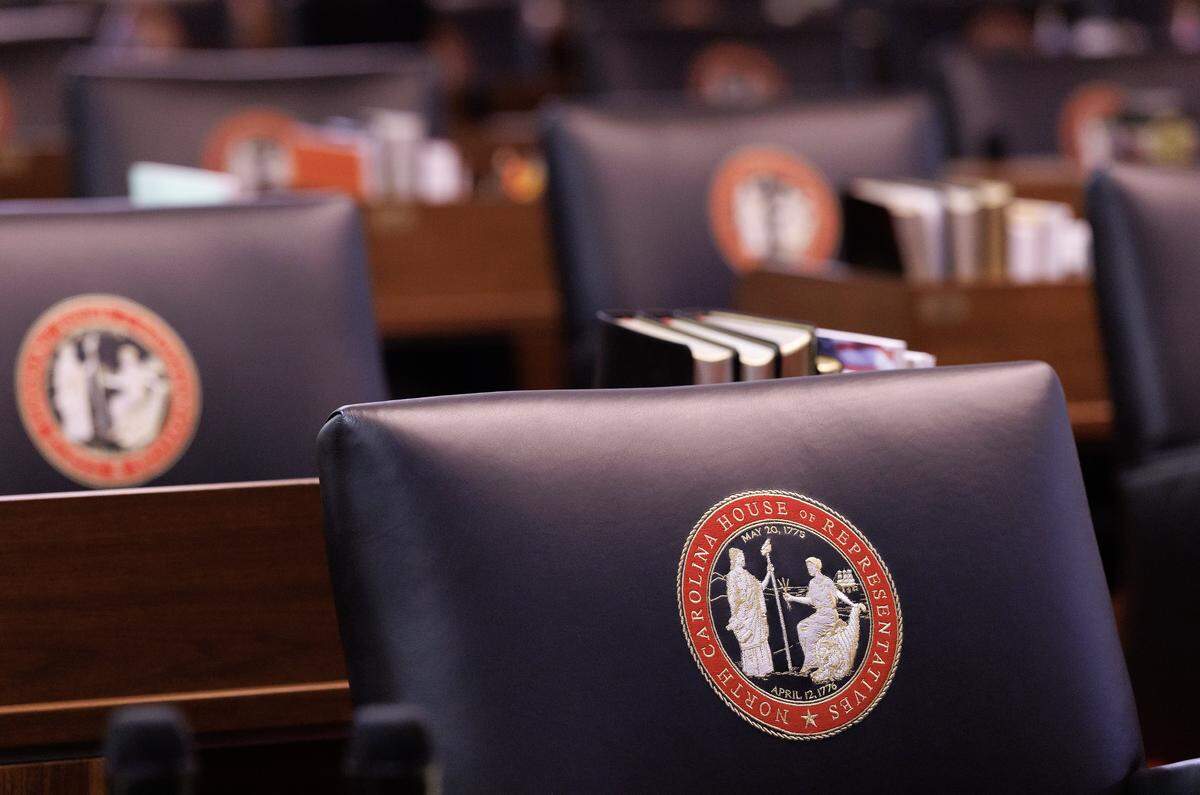
The News & Observer identified 26 people running for the legislature in 2026 who changed their party affiliation in 2025, including candidates who moved from unaffiliated status to a party. Up and down the ballot across all levels of government, 140 candidates changed their registration.
The N&O analysis involved combining several State Board of Elections data sets. There may be additional party-switching candidates, but the analysis used strict rules for matching candidates to voting histories.
Of those 140 candidates who changed their registration statewide, just 30 switched from one party to another. The other 110 were previously unaffiliated before joining a political party.
Of the 26 legislative candidates whose registration changed, six had been with another party while 20 were previously unaffiliated. Of those six party switchers, four changed from Democratic to Republican, one from Republican to Democratic, and the other from the No Labels Party — which is no longer a recognized party in the state — to the Republican Party.
North Carolina has a growing share of voters who register as unaffiliated. A candidate must be registered with a party to run in a party primary, according to state law.
Most candidates who changed their registration are running in down-ballot races, including contests for school boards and boards of commissioners. There were six district court judge candidates and two superior court judge candidates who changed their registration. All but two of those judges moved from unaffiliated status to a party. The remaining two — both district court judges — switched from Democrat to Republican.
A handful of congressional candidates also changed their registration, with all but one moving from unaffiliated status to a party. That party switcher was Kate Barr, who is running in the Republican primary against U.S. Rep. Tim Moore in North Carolina’s 14th Congressional District. Barr made national headlines when she ran as a Democrat in 2024 against longtime GOP state Sen. Vickie Sawyer, campaigning against gerrymandering and deeply partisan districts. Her slogan at the time was, “Clear eyes, full heart, can’t win.”
Barr said she switched parties because it was “the only way that makes sense within the jacked-up system that power-hungry politicians have built,” The Charlotte Observer previously reported.
Republican lawmakers passed new congressional maps in October that are expected to net the GOP another seat. Legislative maps also favor Republicans, meaning that in many deep-red districts, the March primary is effectively the only competitive election. This year, there are just under 50 competitive legislative primaries statewide.
The N&O contacted all 26 legislative candidates who changed their registration and reached 19 of them.
Educators on the ballot
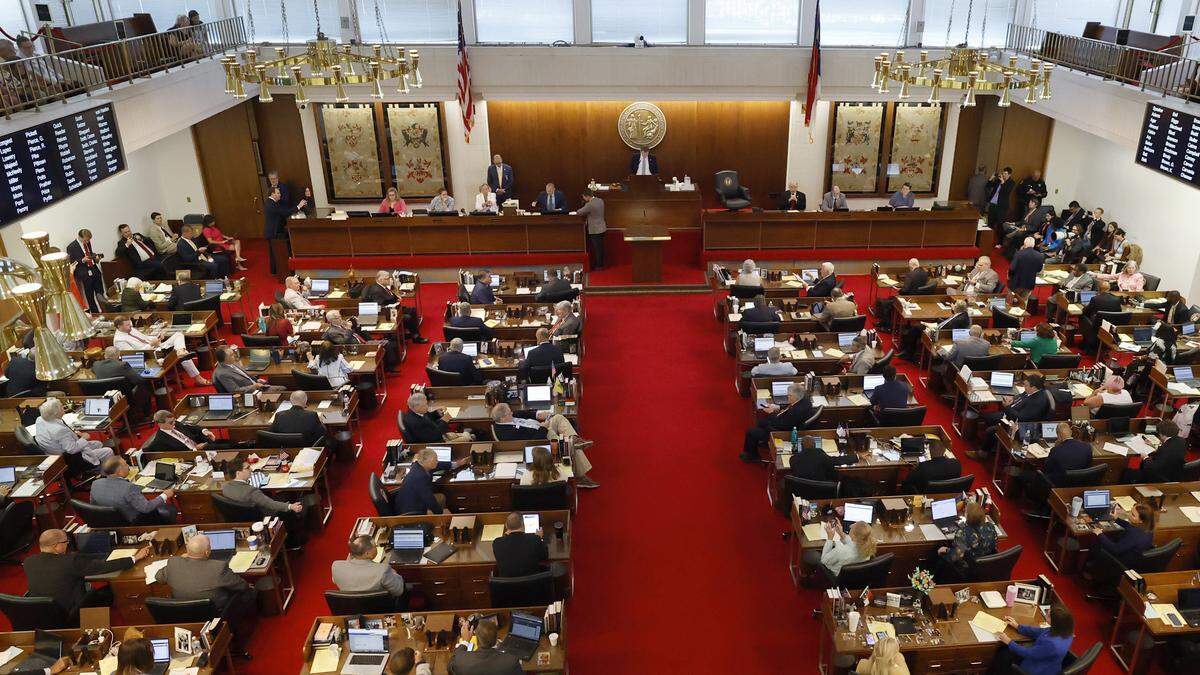
Among the most prominent party switchers are a group of six current and retired teachers who joined the GOP and are running with a focus on public school funding.
The candidates are part of NC Educators on the Ballot, a grassroots effort that recruited educators to run in Republican primaries in districts where the GOP nomination is likely to determine the general election outcome.
Chris Wilson, who is running in House District 117 in Henderson County against incumbent Rep. Jennifer Balkcom, said in late December during a roundtable in Durham with the other educators that his views were shaped by working in public, private and charter schools. He said he saw that funding rules disadvantage traditional public schools.
“I’ve worked in all three sectors,” Wilson said, and “I’ve seen it with my own two eyes.” When a student leaves a charter school, he said, the funding stays there.
Wilson changed his registration from unaffiliated to Republican.
Several candidates pointed to the expansion of private-school vouchers as reducing funding for traditional public schools and highlighted teacher pay as a central issue, calling for the restoration of compensation policies eliminated in recent years, including pay for advanced degrees. They also support the Leandro plan, a court-ordered roadmap for increasing public education funding that is on hold while GOP legislative leaders appeal rulings ordering the state to fund it.
Several candidates acknowledged that their views at times diverge from that of Republican legislative leadership.
“My question to the Republican Party would be, ‘Why isn’t this a concern for you? Why aren’t you doing everything you can to fund public schools?’” said Pamela Zanni, who is running in House District 81 in Davidson County against incumbent Rep. Larry Potts. Zanni switched from unaffiliated to Republican.
“A lot of the laws coming down the pipeline aren’t necessarily coming from people who understand what education is or what’s happening in our schools,” said Michele Joyner-Dinwiddie, who is running in House District 35 in Wake County against Rep. Mike Schietzelt. She said she wants to be at the table to explain how policies affect classrooms and whether they actually help students.
Patricia Saylor, who is a registered Democrat and the organizer of NC Educators on the Ballot, echoed that, saying that some lawmakers are not taking impact into account in making their decisions.
“I think there are people making decisions based on a philosophical or ideological perspective,” Saylor said. “I think change is possible within the Republican Party, and right now that’s where the decisions are being made.”
The campaign effort began over the summer after educators began discussing frustrations with education policy in a Facebook group composed of educators across the state called NC Teachers United. The group concluded traditional advocacy efforts were no longer producing results and narrowed its focus to a small number of House districts held by Republican incumbents, Saylor said.
She said she spent July and August learning the mechanics of running for office — including filing deadlines, party registration rules, pay, benefits and logistics — so she could help others understand what running would realistically involve. From there, she said, the group shared information, hosted Zoom meetings and circulated step-by-step guidance for educators who might consider running.
The group’s “minimal goal,” Saylor said, is to change the conversation around education policy. The “optimal goal” is to replace lawmakers they believe have not supported public schools.
Matt Townsend, head of candidate support and communications in the group, said there’s also interest in building an educator’s caucus within the legislature.
The other candidates in the group are:
- Pamela Ayscue, running in House District 32, which includes Granville and Vance counties, against incumbent Rep. Frank Sossamon.
- Lisa Deaton Koperski, running in House District 89, which includes Catawba and Iredell counties, against incumbent Rep. Mitchell Setzer.
- Kelly VanHorn, running in House District 105 in Mecklenburg County, against incumbent Rep. Tricia Cotham.
Deaton Koperski, Wilson and Zanni switched from unaffiliated to Republican. The remaining candidates switched from Democrat to Republican.
The North Carolina Republican Party has questioned the group’s motives, saying it is led by a registered Democrat seeking to interfere in GOP primaries and mislead voters, according to a statement previously provided to The N&O.
Other party switchers
Christine Winward, who is running in North Carolina Senate District 35, which includes Cabarrus and Union counties, changed her party registration from Republican to Democrat last year. She is running unopposed in the Democratic primary and is set to face longtime Republican incumbent Todd Johnson in the November general election. The district leans heavily Republican, according to Dave’s Redistricting, a website that allows users to draw imagined electoral districts and rates the political lean of existing ones.
Winward said in a call that before moving to North Carolina in 2022, she was registered as unaffiliated. After arriving, she registered as a Republican, believing it was required to vote in a primary she wanted to help influence, she said.
North Carolina allows unaffiliated voters to choose a party’s primary ballot, but registered party members may vote only in their party’s primary.
Winward said she switched to the Democratic Party last year to run for office, despite viewing herself as a moderate, because it more closely aligned with her views.
“My hope is that people can’t really tell if there’s a D or an R behind my name,” Winward said. “I feel like that’s more achievable in the Democratic Party right now in North Carolina than it is in the Republican Party.”
If elected, she said her priorities would include individual freedom, housing and education, as well as school safety and preventing school shootings.
“I don’t see why anyone would not cross party lines,” she added. “If a policy is good, it should be bipartisan.”
The other legislative candidate who changed party affiliation was LaKeshia Alston, a former Democrat now running as the only Republican candidate in North Carolina Senate District 22, which includes parts of Durham County and leans heavily Democratic. In an email to the N&O on the switch she said she had “developed a foresight beyond the Democratic party.”
Unaffiliated to a party
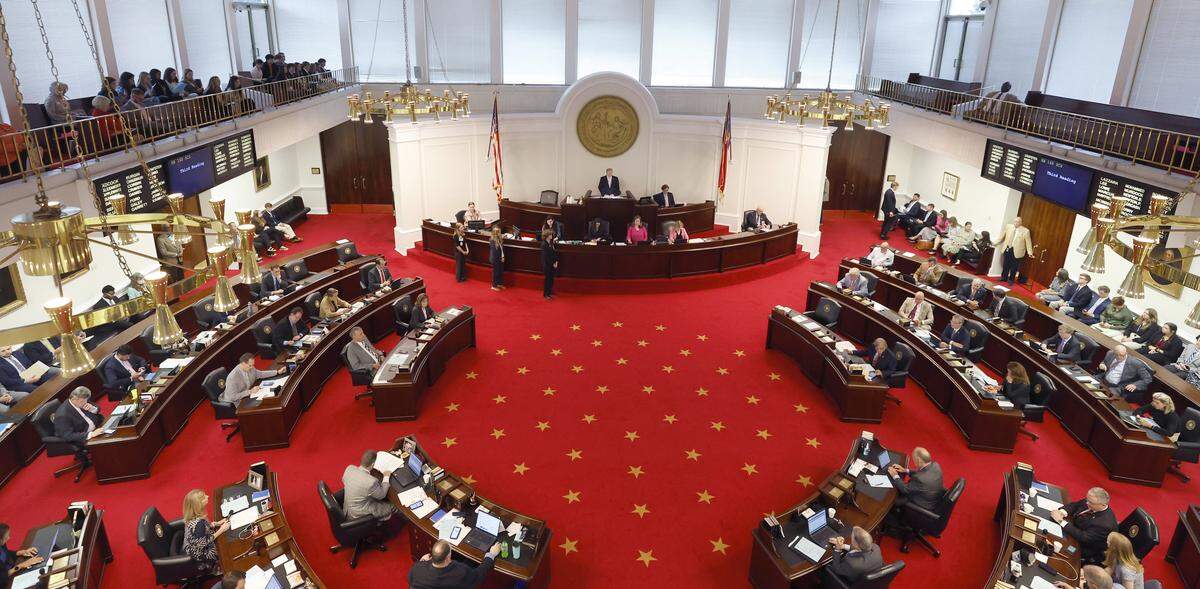
The remaining candidates switched from unaffiliated to a political party.
Many said that while they had been registered as unaffiliated, they had long identified with the party they are now running under.
Jessica Rivera, a Democrat running for North Carolina Senate District 4 — a slightly Republican-leaning district in Greene, Wayne and Wilson counties — said she had long voted for Democrats but remained registered as unaffiliated for years, partly because of guidance to avoid showing a political lean she followed while serving eight years in the Marine Corps.
“There’s also a very clear understanding of what the Republican Party has turned into, and it is not full of Republican ideations. It’s full of Trump ideations, and I did not want to enter the ballot as an independent and have any of that misconstrued,” said Rivera, who is running in an uncontested primary.
“I had a good conversation with myself, my wife, and some people that I look up to politically, and we decided to put it down as Democrat,” she said.
Latisha Grady, a Republican candidate for the North Carolina House of Representatives in District 18, a Democratic-leaning district in New Hanover County, said she had been a registered Republican for more than 20 years but changed to unaffiliated in what she described as an “act of protest” meant to hold her party “accountable.”
Grady, who is running in an uncontested primary, said in a call she was unhappy with Republican leadership at the time, particularly former Republican National Committee Chair Ronna McDaniel, who stepped down in March 2024.
“I would do it again if I felt as though the Republicans were not representing the values that they espouse,” she said. “The only thing that changed was my party affiliation, not my values.”
If elected, Grady said she would not hesitate to speak up.
“I’m definitely not afraid to make my voice known,” she said.
But “right now, I’m in alignment, and I’m proud. I would consider myself a constitutional Reconstruction-era Black Republican,” she said.
In a text message a few days later, Grady said she was referring to the “enterprising, innovative and problem solving mindset of Black Americans during that era.” She added that she sees her candidacy as picking up where Black leaders in Wilmington left off in 1875, before they were forced from office during the 1898 coup, heralding the start of the Jim Crow era in the state.
Several candidates also said they had views associated with both major parties, but that one more closely aligned with their priorities.
Andy Warren, who changed his registration from unaffiliated to Democrat and is running in House District 94 in Alexander and Wilkes counties, a heavily Republican, said in a call he sees “both sides as being correct on some issues,” but added that “with recent events, I just think I will never, ever vote Republican again.”
Warren, who is in an uncontested primary, said issues related to diversity and inclusion were a major factor in his decision, particularly as a gay man, along with concerns about health care, the environment and education. He said he decided to run because Republicans in his district often go unopposed and he wanted to offer voters an alternative.
Warren said he would not always vote along party lines if elected, citing gun policy.
“I am from the country. We love to hunt, and that’s part of our heritage, being able to spend the day out in a field or in the woods,” he said.
Mike Yow, who changed his registration from unaffiliated to Republican, said he did so to run for House District 119, a slightly Republican-leaning district with a contested primary. HD 199 is in Jackson, Swain and Transylvania counties. He said keeping an unaffiliated status had allowed him to vote in his primary of choice. He is running against Anna Ferguson and Rep. Mike Clampitt, the incumbent.
He said he identifies with conservative principles such as limited government. “Government should be limited to maintaining what works before regulating what doesn’t,” Yow said, pointing to public safety, roads, water and utilities, as well as ensuring residents have access to food, clean water and stable housing. “That’s the kind of small government I’m working for.”
But, he, added, “I am not MAGA, and I will say that openly.”
BEHIND THE STORY
MOREThe N&O identified candidates who changed their party affiliation by combining several State Board of Elections data sets. The analysis linked the board’s party change records with voter registration files, since the party change data does not include names and required additional matching to identify individuals. Next, the analysis compared those records with the official list of candidates kept by the board.
Each potential match was reviewed to confirm identity. Of 156 potential matches identified, The N&O confirmed that 140 were valid.
There could be additional candidates who changed parties but were not captured as the matching rules were intentionally strict: first and last names had to match exactly, the county or counties had to line up with where the candidate was running and more. Read more here.
This story was originally published January 11, 2026 at 6:00 AM.
CORRECTION: A previous version of this story misstated the party affiliation change of candidate Pam Zanni. She changed from unaffiliated to Republican.