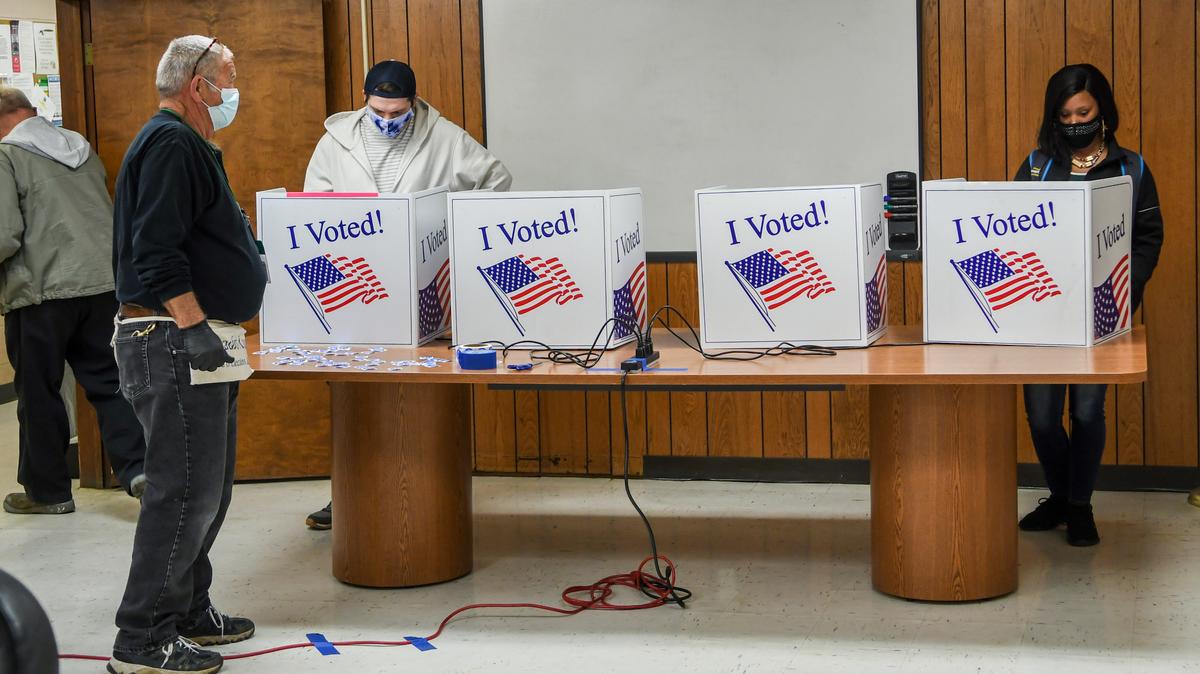
For the first time in NC history, registered Republicans now outnumber Democrats
AI-generated summary reviewed by our newsroom.
- Republicans now exceed Democrats in NC voter registration, per state data.
- Unaffiliated voters form largest bloc, about 39% of North Carolina electorate.
- Unclear swing of unaffiliated voters keeps North Carolina competitive.
READ MORE
NC Primary Election 2026
North Carolina’s primary election is March 3, 2026, with early voting starting Feb. 11, 2026. Here are stories on candidates, voting and issues to help voters as they head to the polls.
Expand All
For the first time in North Carolina’s history, registered Republicans now outnumber registered Democrats.
According to data from the State Board of Elections, the GOP surpassed Democrats on Saturday, with a total of 2,315,067 registered voters — about 2,000 more than Democrats.
“Across North Carolina, our volunteers and county leaders have done incredible work over the past several years to outvote and out-register Democrats,” Jason Simmons, chair of the NC GOP, said in a statement. “Republican policies have made our state the best place to live, work, and retire, and we are committed to showing North Carolina is a Red State in 2026.”
But though Republicans now outnumber Democrats, unaffiliated voters are still the largest group in North Carolina, by far.
“Ultimately, Republicans eclipsing the Democrats in terms of voter registration says more about the deterioration of the Democratic brand than the improvement of the Republican brand,” Chris Cooper, a political scientist at Western Carolina University, said. “... The real winner today is the only group whose brand is improving — none of the above.”
As of Jan. 3, nearly 3 million North Carolinians are registered as unaffiliated — accounting for about 39% of the state’s electorate.
The designation, which allows voters to choose to vote in either Republican or Democratic primaries, has skyrocketed in popularity in recent years.
As more voters choose to be unaffiliated, the North Carolina Democratic Party has gradually lost voter registrations in recent years, while Republicans have remained steady at around 30% of the electorate.
It’s difficult to predict how North Carolina’s massive bloc of unaffiliated voters will swing in any election — even if some of them still reliably support one party, a phenomenon Cooper calls “shadow partisans.”
2024’s elections reaffirmed North Carolina’s status as a purple state, with Democrats overwhelmingly winning the governor’s race even as the state solidly voted for Republican President Donald Trump.
This story was originally published January 3, 2026 at 9:52 AM.






.JPG)