Gov. Stein pushes for ‘a real pay raise for every teacher’ as lawmakers return
AI-generated summary reviewed by our newsroom.
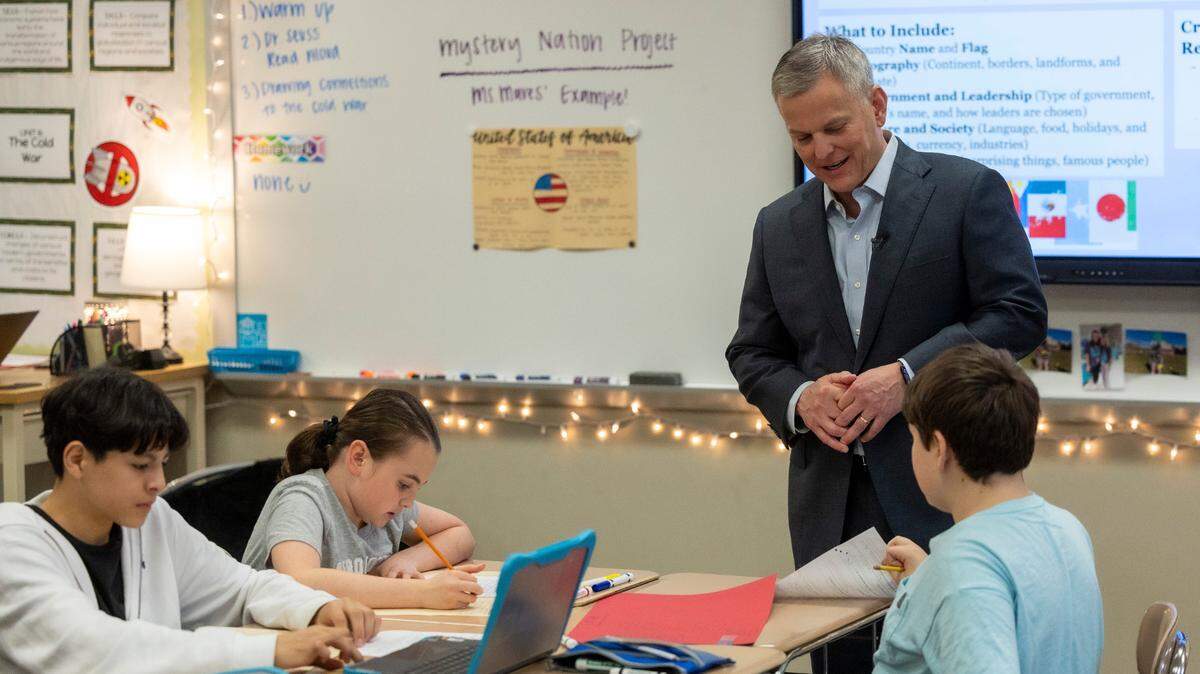
- Gov. Stein urges legislature to deliver a pay raise for every teacher.
- Stein proposed 13% starting boost to $49,518 including local supplements.
- House and Senate offer competing raise plans as short session opens April 21.
Good morning and welcome to our Under the Dome politics newsletter. I’m Capitol bureau chief Dawn Vaughan, and this edition focuses on the governor.
When the General Assembly starts its short session later this month, education will be at the forefront for several reasons.
Most visibly, and perhaps most acutely, is the lack of raises for teachers and other school personnel.
North Carolina lawmakers, led by Republican House Speaker Destin Hall and Republican Senate leader Phil Berger, failed to send a budget to Democratic Gov. Josh Stein in 2025.
While Hall and Berger debated, and then reached a stalemate, on raises last year, average teacher pay dropped by 1%, according to a Department of Public Instruction report. My colleague T. Keung Hui, who covers K-12 education, wrote about how the lack of a budget has impacted teacher salaries. The General Assembly sets base pay for the state, while some counties have their own supplemental pay and the state also provides supplements to rural counties.
Hui also wrote recently about the long awaited Leandro court decision from the N.C. Supreme Court, which reversed a previous ruling ordering the transfer of state funds to public schools as part of ensuring students’ constitutional right to a sound basic education.
In Stein’s comment on Leandro, he also talked about his most recent pitch to the legislature for educator raises, saying in a statement:
“Today’s news doesn’t change our state’s fundamental responsibility to its students. That’s why I continue to advocate for a real pay raise for every teacher, more support personnel in our schools, free school breakfast for all students, and proven investments in student outcomes like the Science of Reading and Advanced Teaching Roles. Our children are our future, and it’s long past time we invest in them.”
In March, Stein proposed raising starting teacher pay by 13% to at least $49,518, which includes both state pay and local supplements; a 5.8% average raise for experienced teachers, instructional support personnel, school psychologists, speech pathologists and audiologists; and a 2.5% raise for principals.
The General Assembly’s short session begins on April 21.
Berger also mentioned the upcoming session in his comments about the Leandro ruling, though not raises, saying:
“As we prepare for the short session, Senate Republicans will continue our ongoing focus on increasing parental involvement and educational opportunities for students.”
“Since 2011, the Republican-led General Assembly has worked to ensure that our state’s schools prioritize student outcomes that prepare the next generation for life outside academia. In doing so, we’ve reformed how core subjects are taught, substantially increased funding, and created pathways for all students to attend a school that best meets their needs,” Berger said in a statement.
Hall, who leads the state House of Representatives, did mention raises — at a higher rate than Stein’s — in his response, saying “House Republicans remain committed to investing in public education, including through our budget proposal to raise starting teacher pay to $50,000 and provide 8.7% average raises to our public school teachers.”
Council of State goes on the road
The Council of State will meet on Tuesday, but not at its usual location in the Department of Transportation building in downtown Raleigh. Instead, they’re taking their meeting on the road to the town of Halifax, about an hour-and-a-half away. It’s in honor of Halifax Resolves Day, April 12.
The state has the original resolves on loan from the National Archives. You can go see the document in Halifax next weekend during Halifax Resolves Day and for the next several months, before it returns to Washington in October.
More Council of State meetings at historic sites are coming this year.
Other #ncpol stories to catch up on
- NC Leandro case timeline: 32 years of legal battles over a ‘sound basic education’
- 4 bills backed by NC GOP Senate leader Berger that could become law in 2026
- New NC law bans students from using their phones in class. Is it working?
Thanks for reading. Be sure to listen to our Under the Dome politics podcast, too. I host a new episode every Tuesday. This week I’m joined by congressional impact reporter Danielle Battaglia to talk about her coverage of U.S. Sen. Thom Tillis.
Reach me at dvaughan@newsobserver.com or our entire politics team at dome@newsobserver.com.