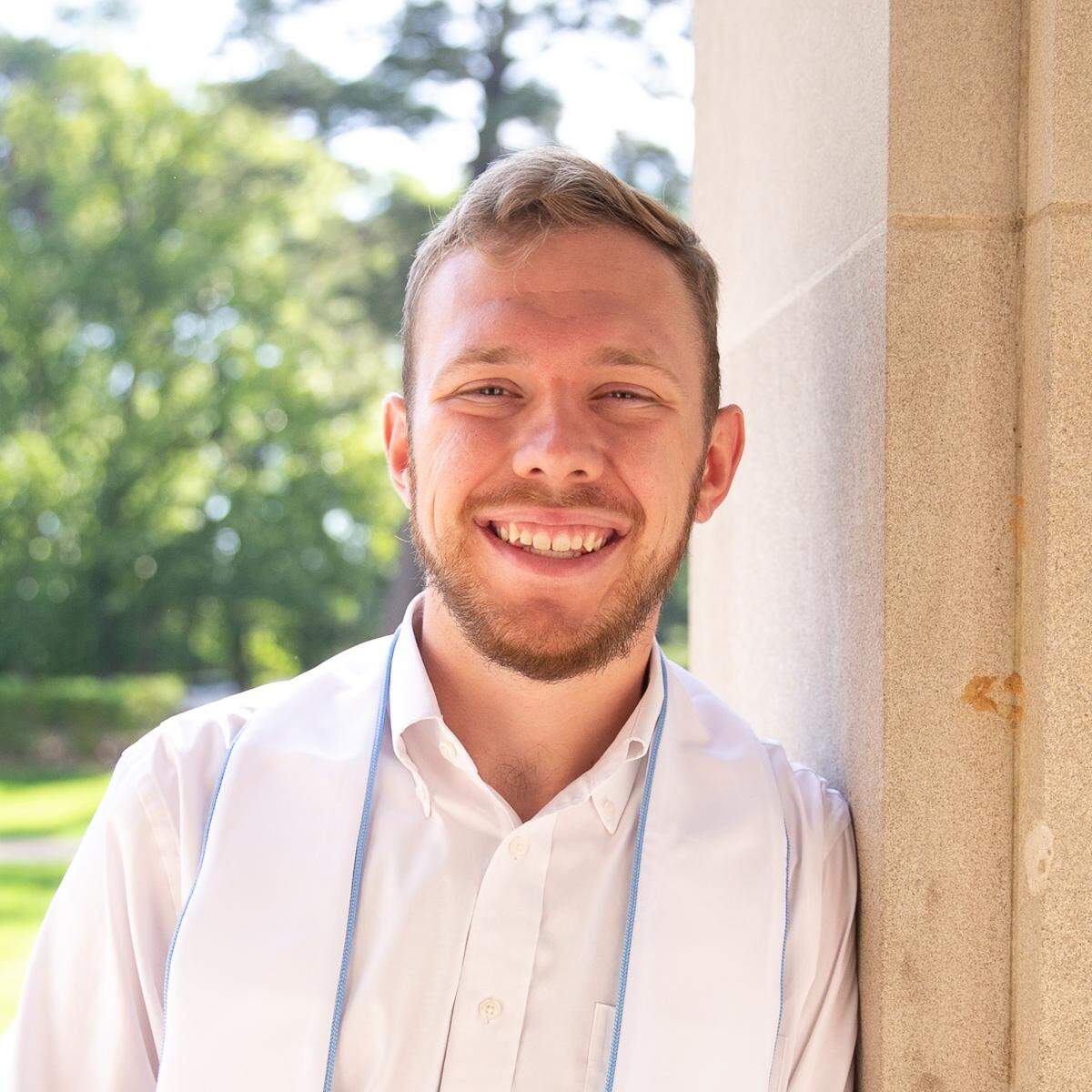
Cary elects first Asian American councilwoman and first-time political candidate Ya Liu

The town of Cary elected its first Asian American to the Town Council on Tuesday night, first-time candidate Ya Liu.
Liu, 38, immigrated to the U.S. from China in 2003 for graduate studies and quickly found a home in Cary, where she and her husband have three children. She is a board member of the Chinese-American Friendship Association of North Carolina and helped organize the Taste of China and LIGHTUP festivals in Raleigh and Chapel Hill.
More than 15% of Cary residents are of Asian descent, and Wake County has the largest Asian population in the state with 76,000 residents. The Asian population is the fastest-growing demographic in North Carolina, growing by 94,000 people from 2010-2017.
“I think the minority community really turned out for me,” said Liu, a Duke University School of Law faculty member who specializes in aging, caregiving, public health, judicial behavior, and government rule making.
Liu received 57.5% of the votes cast in Cary’s District D race, roughly 21 percentage points more than incumbent Ken George.
She jumped out to an early lead — 60% after early votes and absentee ballot results — and never fell below 54% throughout the night.
“When the early vote came in, we started to feel pretty good,” she said.
This was Liu’s first bid for political office and she was focused Wednesday morning on celebrating her volunteers more than anything.
“The efforts by the volunteers, they just made this possible,” she said. “We were praying for no runoff because I didn’t want my volunteers to have to work for one more month.”
Some of the main issues that she cares about are making Cary a more friendly town for an aging population and making development more environmentally sustainable.
Her victory came alongside the approval of both bonds on the ballot and the re-election of Mayor Harold Weinbrecht, and town council members Lori Bush and Don Frantz. Weinbrecht, the only of these three that had a challenger, won with 84% of the vote.
Weinbrecht told her it was “a stunning victory.”
Bush, who was re-elected as the town’s at-large council member, said, “I’m excited to have a new voice with a diverse set of backgrounds.”
Frantz, the re-elected District B council member, said he hasn’t had a chance to sit down with Liu yet, but “she ran a great campaign.”
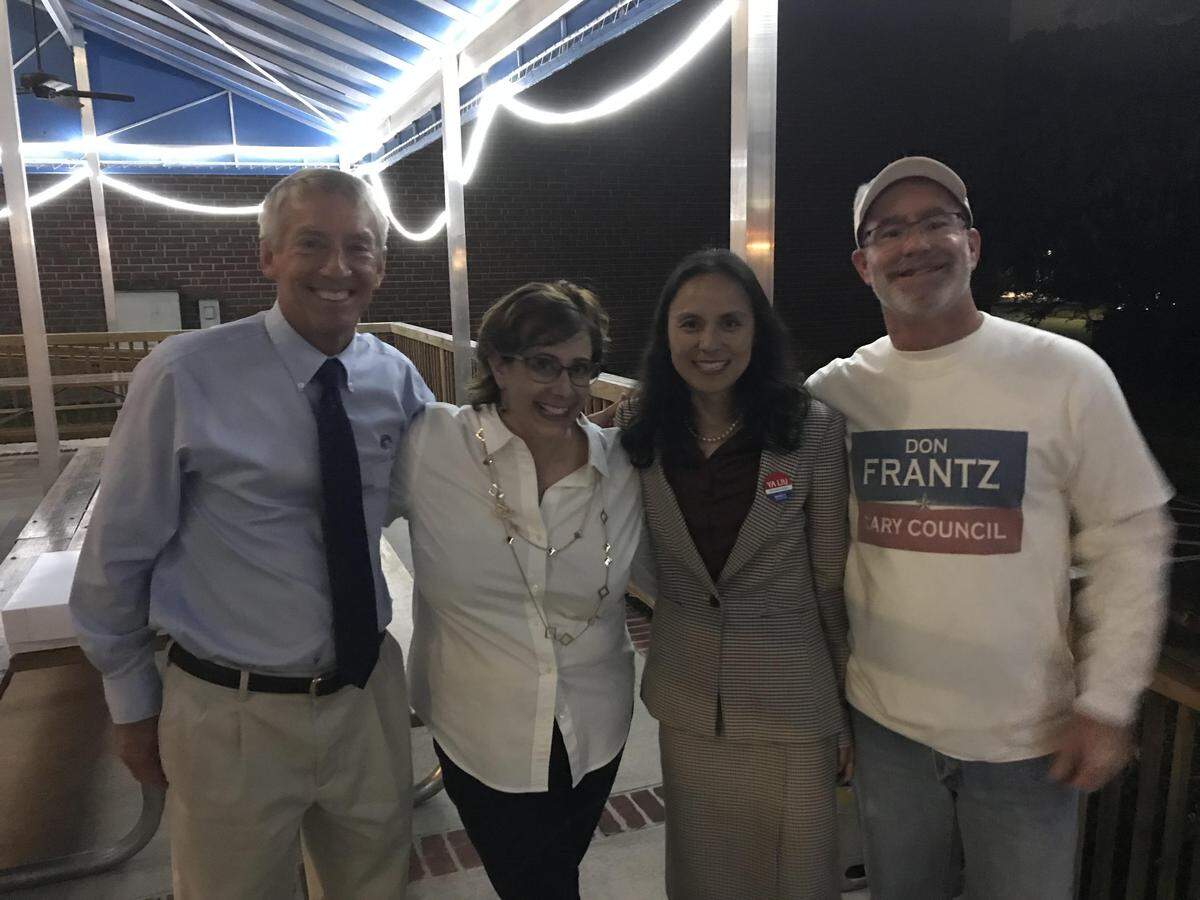
Liu won every precinct in District D and said George and fellow challenger Beth Friedrich both reached out to congratulate her and that George offered to help her with whatever she needed.
Liu said she’s “excited for the opportunity to work with an effective council” and that she’s thankful for the warm reception from Cary residents.
“They welcomed a new Cary.”
Bonds Pass Easily
The transportation bond and the parks and recreational facilities bond passed with 77 and 80 percent of the vote, respectively.
They total $225 million and will fund projects over the next decade, including:
Transportation
▪ Street and sidewalk improvements
▪ Green Level Church Road / O’Kelly Church Road / Carpenter Fire Station Road widening
▪ Downtown parking development
▪ Fenton Infrastructure
Parks and Recreational Facilities
▪ Phase 2 of Downtown Park
▪ Two new parks
▪ Historic Preservation
▪ Tennis court replacements
You can find more information on the projects the bonds will fund here. Some will be started and finished from 2020-2024, while others will happen from 2025-2029.
The town has yet to say how much property taxes may rise to support the bonds, but Cary chief financial officer Karen Mills told The News & Observer in August that the town’s tax rate, the lowest in Wake County, will go up.
“The amount and timing of tax increases remains to be determined,” she said, “however we are confident that future tax increases will be required to support operations, maintenance and capital projects to manage Cary’s transition from a growing community to a maturing community.”
This story was originally published October 9, 2019 at 5:01 PM.