NC redistricting and election confusion: How we got here and what’s next
READ MORE
Are you ready to vote?
The finer details of North Carolina’s 2022 primary election switch up as quickly as the weather. The final results will influence which party controls Congress and the legislature in coming years. This special N&O report breaks down what you need to know about the changing, confusing election.
Expand All
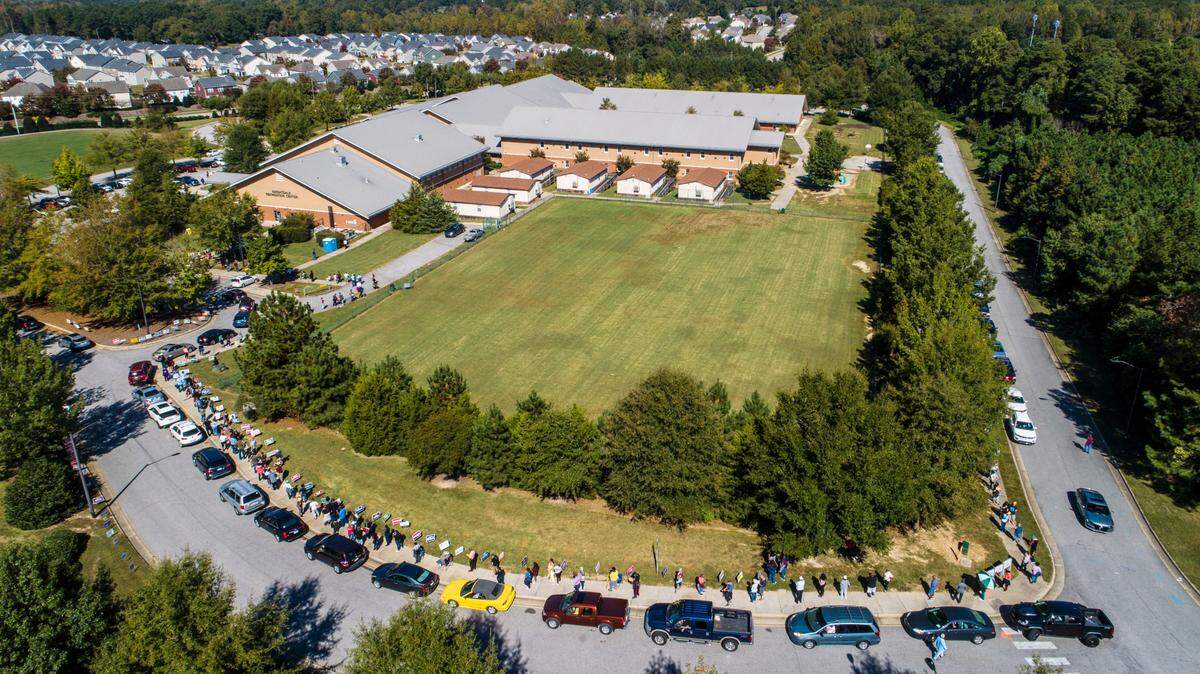
It’s only January. But already, this year’s midterm elections have gone through one major switch-up — with more uncertainty lingering as further changes could still happen.
It can be tough even for reporters and political insiders to keep up with, so the average voter might be feeling a bit overwhelmed.
But it’s worth paying attention. The primaries are going to be particularly important this year, and not just because there’s an empty U.S. Senate seat. There will be at least a few important primaries for seats in the U.S. House of Representatives, due to incumbents either retiring or running for another office, setting the stage for competitive primary elections to replace them. But exactly how many could depend on what the districts will look like, which is still very much anyone’s guess.
The uncertain fate of the U.S. House map is the reason for the uncertain election schedule. It’s currently in front of the N.C. Supreme Court, which will decide if it’s an unconstitutionally gerrymandered map, drawn for such lopsided partisan gain in favor of Republicans that it violates the state constitution.
The Supreme Court is expected to rule soon, after which we will know more about important election dates, districts and other decisions to be made. But in the meantime, here’s what we do know.
Important dates coming up
(A note on sourcing: Some of this information comes from the N.C. State Board of Elections, some from court orders in the gerrymandering case, some from a bill that recently passed the General Assembly and some from a synopsis created by Western Carolina University political science professor Chris Cooper.)
Here are some important dates to watch for, in rough order of when they’ll be happening. But with so much still up in the air, it’s possible that some of this could change.
▪ Oral arguments in the gerrymandering case: Feb. 2.
▪ N.C. Supreme Court ruling on the maps: Expected sometime in February.
▪ Deadline to finalize the maps: Either sometime between Feb. 14 and 23, if the primary is on May 17, or between March 7 and 16, if the legislature succeeds in moving the primary to June 7. (The exact deadline is unclear because there are normally 50 days of absentee voting before an election but the State Board of Elections can reduce that).
▪ Candidate filing: Will likely last from Feb. 24 to March 4, if the primary is on May 17, or from March 24 to April 1 if the primary is on June 7.
▪ Deadline to register to vote: Either April 22, if the primary is held on May 17, or May 13, if the primary is June 7. (And this only applies to people voting on Election Day itself or by mail. People who miss the deadline can still go to a polling place during early voting and register there.
▪ The 2022 primary election: Either May 17 or June 7.
▪ The primary runoff election, for local elections: Either July 5 if the first primary happens May 17, or July 26 if the first primary is June 7. (A runoff election would be held in the event that no candidate breaks 30% of the vote and the second-place finisher asks for one. It would then feature only the top two vote-getters from the first primary).
▪ The primary runoff election, for federal elections: Either July 26 if the first primary is May 17, or Aug. 16 if the first primary is June 7. (If there are any federal runoffs, then the non-federal runoffs could also happen on this date rather than the earlier date).
▪ Deadline to register to vote for the general election: Oct. 14.
▪ The 2022 general election: Nov. 8.
In case you missed it
A brief timeline of what’s happened in the redistricting process so far, and why there’s such a time crunch now.
Dec. 30, 2020: The Trump administration announces its report of 2020 Census data, needed to divide up congressional districts fairly for the next decade, will be delayed.
Aug. 12, 2021: The neighborhood-level Census data, showing which parts of the state shrank or grew and by how much, is finally released.
Sept. 8-30: State lawmakers hold a series of public hearings around the state, offering people the chance to speak about the redistricting process and what they hope to see the new maps reflect.
Oct. 5: Democrats ask for the 2022 primaries to be delayed from March to May, to give more time for public comment and analysis of the maps. Republicans decline, saying it would cause too much chaos to change the date of the primary. The two sides will later reverse their stances on primary delays, come January.
Oct. 6: Lawmakers start drawing the new maps.
Oct. 25-26: With the maps nearly finalized, lawmakers hold a final series of public hearings, overwhelmingly attended by critics of the maps.
Oct. 29: The North Carolina NAACP sues, arguing that any maps passed will be unconstitutional because GOP lawmakers didn’t use racial data to ensure that the maps contained majority-minority districts. Republicans argued they didn’t need to do that because they don’t believe voting is racially polarized anymore. The lawsuit is later dismissed, leaving the legal challenges to two other lawsuits that challenged the maps themselves, instead of the process.
Nov. 4: New congressional and legislative maps are passed into law, in party-line votes. Democratic Gov. Roy Cooper is banned from vetoing them — due to a provision in the state constitution he helped pass when he was a state senator in the 1990s.
Nov 16-18: Gerrymandering lawsuits are filed by the N.C. League of Conservation Voters as well as some of the same voters and groups who successfully sued over different-but-similar maps that were ruled unconstitutional in 2019.
Dec. 3: The legislature wins a pre-trial legal fight, as the three judges picked to oversee the case decline to issue a preliminary injunction against the maps that the challengers wanted.
Dec. 8: The N.C. Supreme Court orders the 2022 primary election to be delayed from March until May 17, in order to give more time for the lawsuits and any appeals to play out, with the judges citing “a need for urgency” to rule before the elections. They also set a massively sped-up schedule for the trial to happen in early January.
Jan. 3-6, 2022: A trial is held over the maps in front of three judges, two Republicans and one Democrat, who hear testimony from state legislators as well as political scientists, historians and mathematicians.
Jan. 11: The three-judge panel rules unanimously in favor of the legislature, saying the maps are gerrymandered to give Republicans an advantage but that doing so isn’t unconstitutional. They write: “Despite our disdain for having to deal with issues that potentially lead to results incompatible with democratic principles and subject our state to ridicule, this court must remind itself that these maps are the result of a democratic process.”
Jan. 11-12: The challengers in the lawsuit appeal to the Supreme Court, skipping the N.C. Court of Appeals
Jan. 19: In a party-line vote, the legislature passes a bill to delay the primary election further from May 17 to June 7. The two sides have now switched their arguments from October, with Republicans now favoring a delay and Democrats opposed. Several days later, it was still unclear whether the bill would become law and the date would actually change, or if Cooper would veto it.
Jan. 31: All briefs and other court filings from both sides must be filed with the Supreme Court, ahead of oral arguments.
Feb. 2: The Court will hear oral arguments in the case, with a decision expected quickly.
For more North Carolina government and politics news, listen to the Under the Dome politics podcast from The News & Observer and the NC Insider. You can find it at link.chtbl.com/underthedomenc or wherever you get your podcasts.
This story was originally published January 26, 2022 at 6:00 AM.