
Crime and racial justice rulings highlight Cheri Beasley’s record as an NC judge
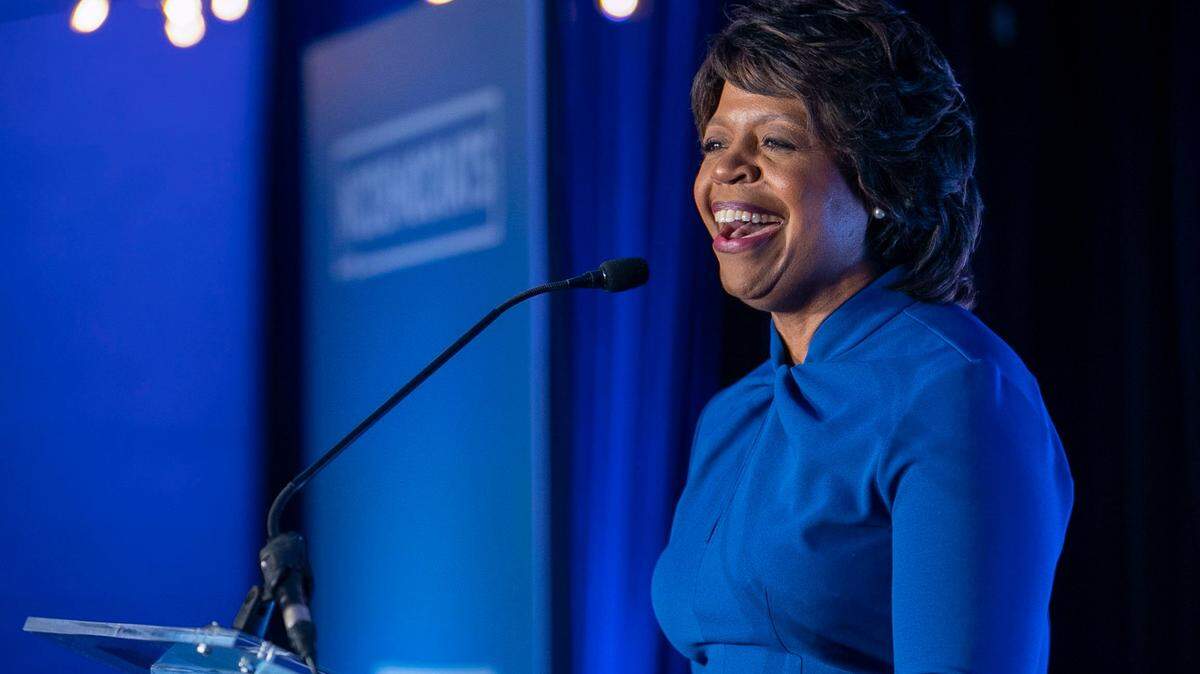
In 2020, it was Cheri Beasley’s job to tell North Carolinians she and her fellow justices had decided that giving the death penalty to a man convicted of murder was unconstitutional.
Beasley had to explain her reasoning: that the man and three others proved to the courts they received the death penalty based on the color of their skin.
When the courts had overturned their sentences and instead given them life in prison, the General Assembly had tried to repeal the Racial Justice Act — a law meant to protect them from racism in sentencing — and revert their sentences back to death. Beasley, and the North Carolina Supreme Court, instead ruled that trying to retroactively reverse their sentence violated protections against double jeopardy.
“Today, we are not asked to pass on the wisdom of repealing a statutory mechanism for rooting out the insidious vestiges of racism in the implementation of our state’s most extreme punishment,” Beasley wrote. “That decision is for the General Assembly. Instead, this Court must decide whether the North Carolina Constitution allows for that repeal to be retroactive. We hold that it does not.”
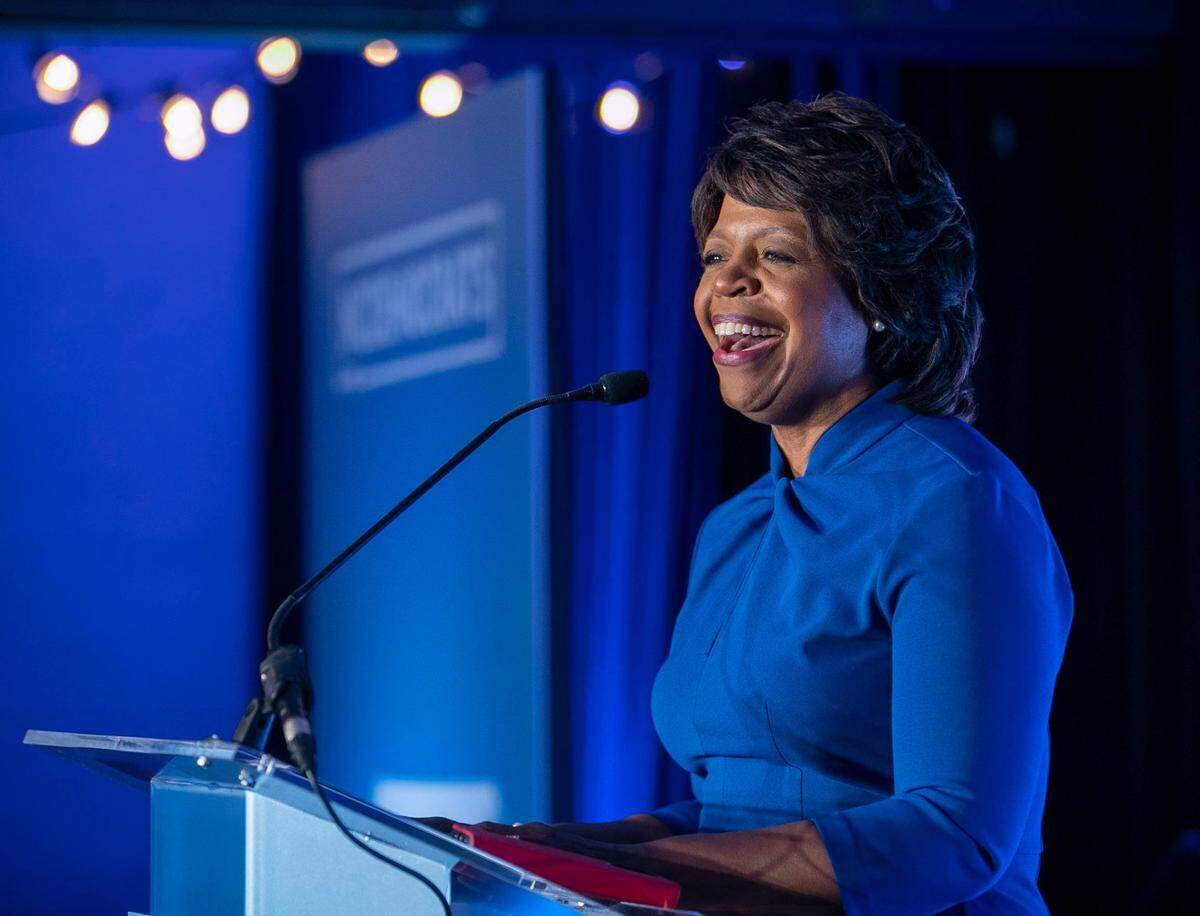
Beasley has spent more than two decades as a judge, and her work in the judicial system sheds some light on what North Carolinians could expect from Beasley if she’s elected to the Senate.
Beasley told McClatchy her work as a judge has affected people’s lives.
“I still see victims and defendants of crimes whose lives have just changed,” Beasley said. “Who’ve gotten advanced degrees and are doing well and have families on their own now.”
During Beasley’s tenure she’s heard thousands of cases and authored more than 400 opinions, not including those she dissented on. Now Beasley’s opponents use her time on the bench against her, launching attack ads accusing her of being soft on crime.
Representation and politics
Shattering glass ceilings, Beasley became the state’s first Black woman to be elected to a statewide office without first being appointed by a governor and the first Black woman to serve as the state Supreme Court’s chief justice.
If North Carolina elects Beasley to the U.S. Senate, she would be the first African American elected to the chamber from North Carolina and only the 12th African American senator in history.
“It’s not lost on me at all that representation matters,” Beasley told McClatchy. “It matters on the Supreme Court, and it matters to the Senate, and it’s important for our government entities to be reflective of the demographics of our state and our nation.
“And it’s really important for African American women to have a seat at the table.”
Beasley, 56, a Democrat, faces off against Republican nominee Rep. Ted Budd to replace retiring Republican Sen. Richard Burr. Polling between the two candidates fails to distinguish a clear frontrunner, and North Carolina’s largest voting group is the unaffiliated.
Both political parties are battling for control of the Senate, which the Democrats currently, but barely, maintain. If Beasley wins the election, held Nov. 8, she would be the first Democrat elected to the Senate from North Carolina since 2008.
Former Gov. Jim Hunt appointed Beasley to her first judicial position in 1999, as a judge in Cumberland County.
“If North Carolina elects Cheri Beasley to the United States Senate it will be a great glow of progress for this nation,” Hunt said. “She’s just a great asset for the nation and will be one of the best things we’ve ever done.”
Beasley’s career
Beasley is an alumna of Rutgers University-New Brunswick, the University of Tennessee College of Law and Duke University School of Law, where she received her master’s of law degree.
She worked as a public defender when Hunt picked her to serve as a district court judge. In 2008, North Carolina residents elected Beasley to serve on the state Court of Appeals. Four years later, former Gov. Bev Perdue appointed Beasley to the state Supreme Court.
In 2019, Gov. Roy Cooper appointed Beasley to serve as the court’s chief justice.
“Chief Justice Beasley is a person of integrity, intellect and impartiality,” Cooper said in a written statement to McClatchy. “As a judge, she showed her independence and commitment to doing what’s right, and that’s why I appointed her as chief justice of the North Carolina Supreme Court.”
Beasley said as a family court judge in Fayetteville she dealt with difficult and complicated situations, and she still runs into some of the families and sees children who have gone on to have success stories.
“It’s just immensely rewarding,” Beasley said.
Attack ads
Ads against Beasley say she let a child porn offender go free, tossed the conviction of an online predator, threw out the indictment of a sexual predator and struck down GPS monitoring of a man who sodomized a little boy.
The National Republican Senatorial Committee bought the ad making the first three accusations. But quickly after, the committee edited the ad because the television stations airing it determined it to be false.
The first claim in the ad accused Beasley of releasing James Howard Terrell, a man found to have child pornography on a thumb drive. The Supreme Court, including Beasley, determined that the officer violated Terrell’s rights by searching the thumb drive without a search warrant and sent the case back to a lower court to determine whether probable cause would have existed to obtain a search warrant to search the thumb drive had an officer not already seen the contents.
The next two accusations in the ad, though accurate, did not give viewers the entire story behind her decisions.
In one instance, the court ruled that a jury was not given full instructions before reaching a verdict about a man accused of being an online predator. The justices sent the case back to the lower court and directed a judge to instruct the jury about the possibility that the defendant had been entrapped by an officer to commit the crime. The suspect was still found guilty.
The third case in question was returned to the lower court because of a statutory error on the defendant’s indictment. That case is pending.
In the latest accusation, Club for Growth, a Republican super PAC, spent $400,000 attacking a 2019 Supreme Court decision that determined it was not constitutional to monitor a defendant’s whereabouts for the rest of his or her life based solely on the defendant committing another crime.
The ad accused Beasley of allowing a man convicted three times of sex crimes to get out of prison without being monitored by police. The man is a registered sex offender and is on probation.
Budd addressed the ads during a debate this month and not only accused her of tossing the indictments of sex offenders but also defending “cop killers.”
“Don’t take my word for it,” Budd said. “Take law enforcement organizations which at one point they had supported Ms. Beasley, but now they have supported me.”
Beasley also addressed the ads during the debate.
“It’s a sense of desperation, to spend that kind of money and to make up these kind of stories,” Beasley said. “It seems to me that the voters here in North Carolina really do care a whole lot about integrity, and they want to know that the next senator is going to be truthful to them about what’s happening, and these ads are not true.”
Racial justice
That same year she ruled against the death-penalty law, Beasley navigated a push for racial justice in the judicial system after the death of George Floyd at the hands of Minneapolis police.
“Much of the pain is grounded in the belief that justice is perpetually denied in cases involving African Americans,” Beasley said in a news conference following Floyd’s death. “It is essential to understand the root cause of the pain that has plagued African Americans and complexities of race relations in America.”
Beasley said then that the protests highlighted disparities and injustices in Black communities that resulted from policies, institutions, racism and prejudices that remained unresolved and resistant to change.
Beasley reminded people of a 2015 study that found African Americans were treated more harshly, punished more severely and were more likely presumed guilty in North Carolina’s courts.
Beasley helped form the Faith and Justice Alliance to bring the legal and faith communities together to help North Carolina’s low-income residents. The group planned to train clergy to identify legal needs, find attorneys to work pro-bono, educate the public on common legal problems and bring to communities in need programs like expunction services and driver’s license restoration clinics.
She also began the Chief Justice’s Commission on Fairness and Equity, hoping to eliminate disparate treatment, impacts and outcomes in the judicial systems.
The commission worked on addressing negative consequences based solely on being unable to meet legal financial obligations, and on preventing removal from a jury because of bias. It created educational programs for courthouse officials and the lawyers to understand systemic and implicit biases.
During her last year as a justice, Beasley also had to lead the courts through a worldwide pandemic and balance how to keep court personnel and the public healthy while still ensuring that due process rights and necessary court cases like domestic violence order hearings or juvenile custody reviews could continue. Despite the courts being far behind in technological advancements, Beasley ordered most necessary cases online and delayed others when she could.
Senate race
Beasley was up for reelection for her position as chief justice in 2020.
Paul Newby, a Republican, felt overlooked by the governor when Beasley received her appointment. Newby had served on the Supreme Court longer than any other justice and felt he deserved to be chief justice.
Newby filed to run against Beasley and won by only 401 votes.
Beasley went on to work for the law firm McGuireWoods before launching her U.S. Senate campaign.
Beasley told McClatchy that as a child, being an elected official was never in her plans.
The decision to jump from a judicial official to a Senate candidate, she said, came after a lot of thought about where the country stands and how she can best serve it.
“I certainly did not know that our fundamental freedoms would be under attack, but I certainly did know that there are real issues around voter suppression, around access to health care, around people working two or three jobs to take care of their families, around folks not being able to afford their medicines and knowing people who are missing those pills,” Beasley said. “I certainly knew that we were in a climate crisis, and I thought about how best I could serve, and with a lot of encouragement from folks across the state, I thought that it would be great to do it in this way.”
For more North Carolina government and politics news, subscribe to the Under the Dome politics newsletter from The News & Observer and the NC Insider and follow our weekly Under the Dome podcast at campsite.bio/underthedome or wherever you get your podcasts.
This story was originally published October 16, 2022 at 6:00 AM.
