
Williams vs. Bell: Two visions of Durham’s future clash on eve of election
AI-generated summary reviewed by our newsroom.
- Durham voters decide between Williams’ growth-focused agenda and Bell’s people-first vision
- Williams highlights development, endorsements and fundraising as proof of progress
- Bell argues for transparent, community-centered leadership amid rising home valuations
Durham voters head to the polls Tuesday to decide between contrasting visions for the Bull City’s future.
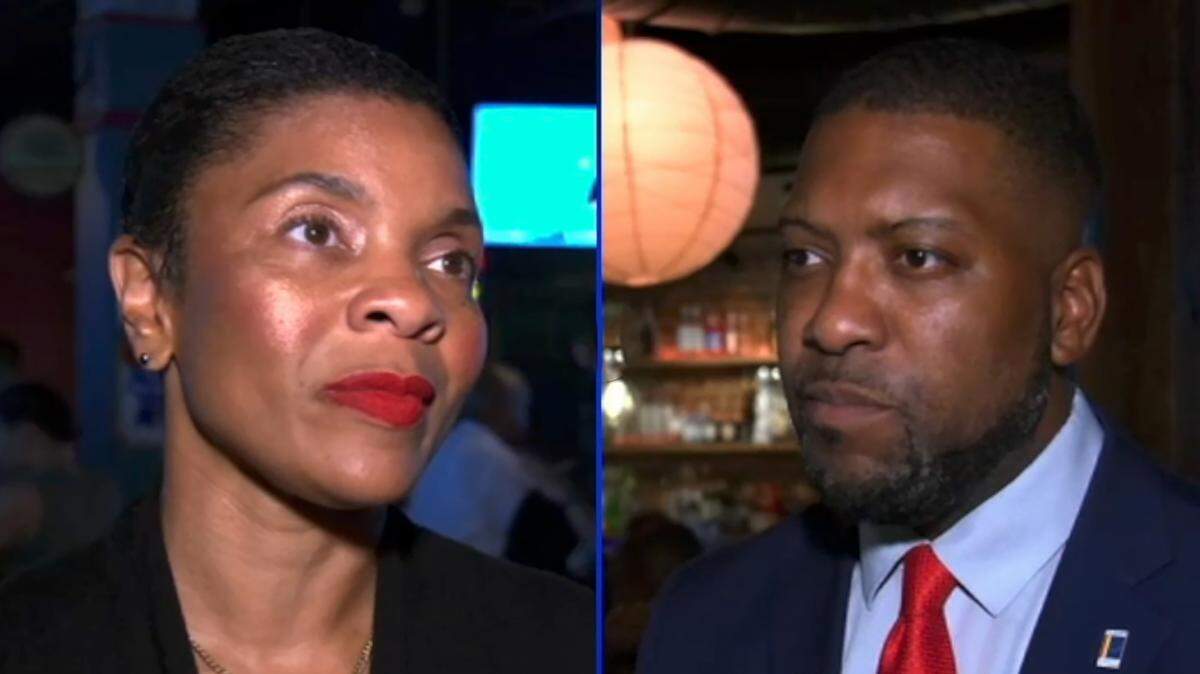
Among the eight candidates for four open seats are mayoral candidates incumbent Leo Williams, 44, who champions the city’s growth and national standing, and challenger Anjanée Bell, 48, who argues for a more people-centric approach that emphasizes accountability and quality development.
The candidates have disagreed on the best approaches to housing costs and gentrification, and the tone of leadership on the Durham City Council.
Williams, seeking his second term as mayor, finished first in the primary with 55% of the vote. He raised the most money of the five mayoral candidates and won the endorsements of all three of Durham’s major political groups.
Still, some residents criticize Williams for his stands on major development proposals, like the request to rezone 10 acres in Hayti for a life science project with apartments, which he said he would have voted for had the developers not withdrawn their application. Williams stands firm in his votes and track record, pointing to Durham’s successes and prioritizing the city’s progress.
“There’s always going to be people that spend more of their energy complaining about what’s wrong, but there are way more people who are interested in contributing to make our community better, and working directly with them has been a joy,” he said.
Bell, the daughter of longtime former Mayor Bill Bell, says the council’s frequent division shows a need for more present and transparent leadership. Growing up in a political family, she said, she had a “master class” in dealing with the complexities of leadership as a public official.
“Being out with people where I could see them, I can speak for myself, and [people] don’t have to assume, and you can ask me anything that you want to ask,” Bell said. “That’s important to me.”
The development divide
The biggest difference between the mayoral candidates is their philosophy on how Durham should handle its rapid growth and development, which critics say is driving up housing costs. This year, thousands of homeowners received new valuations, with some seeing increases of up to 70%.
Development is crucial to the city’s vitality, Williams says.
As one of the most educated cities and the second-fastest growing city in the Triangle region, he says Durham must “expand our tax base so that we can pay for the things we want and need.”
“If we don’t expand the tax base, then it’s going to come from those who are already here, only from those who are already here. That makes costs go up,” he said.
In response to critics of his development stances and the tone of his replies, Williams said some residents confuse development as the sole cause of displacement.
On the controversy over the Heritage Square rezoning in Hayti, Williams explained that when the developer pulled the proposal at the last minute, the council had to pre-empt a public hearing because there was no longer a case to present and the hearing would have been held without proper notice.
Bell said she would have voted against the Hayti rezoning.
Her HOPE framework stands for housing and healing, opportunity and ownership, people’s safety and people’s trust, and environment and education. Bell says she is “not anti-development,” but “pro housing and pro development done right.”
Development should have
The objections to the Hayti project stemmed from the neighborhood’s destruction during urban renewal and the construction of the Durham Freeway, which displaced thousands of residents and destroyed thousands of businesses. Advocates wanted the developer to deliver on promises that gave the Black community a larger stake in the project, including affordable apartments, ownership opportunities, and maintaining the Heritage Square name.
“The most important thing that has to be central is what is for the better of everyone in Durham, and if everyone isn’t aligned in that way, that must be addressed,” she said.
Consensus, accountability and tone
The News & Observer asked the candidates about the frequent 4-3 council split on major development cases, especially in southeast Durham.
Most recently, the City Council split on a project along Doc Nichols Road for new townhomes and the annexation of over 300 acres in Brier Creek. The projects will allow for new homes and retail and commercial space, attracting businesses and providing more options for residents. Opponents said the development exacerbates environmental concerns and puts strains on traffic and emergency services in the rural area.
Bell said to fix City Council divisions, members need to “really listen to one another.”
“You must evaluate intentions, and you have to know why people are choosing to serve, and whenever you’re choosing to serve self above people … that creates tensions,” she said.
Last week, during a mayoral debate at N.C. Central University, an attendee heckled Williams and was escorted out of the debate. Bell said a leader needs to “acknowledge those voices” instead of being “flustered and bothered.”
“That’s the mark of the type of leadership that truly is about people, and sometimes you have to mature and think in your skin for that too,” she said.
Williams, who said he was elected in part to bring order to an “extremely dysfunctional” City Council, defended his own conduct.
He believes his job is to “facilitate movement and progress,” by letting all voices be heard. But he expressed frustration over what he sees as a breakdown in communication with residents, saying he struggles to respond when people “conflate disagreement with disrespect.”
He said his commitment to being “direct, respectful and honest” is often taken as being condescending or “disrespectful” when he tries to educate residents on the financial realities of running a city. If reelected, he’d like to give people tools to better understand how a city runs and why certain decisions are made.
Personal ties to Durham
Both candidates stressed their deep connections to the Bull City.
Williams, an Eastern North Carolina native, former teacher and small business owner, said he loves that Durham is a “city of risk-takers,” and that he has enjoyed representing the city on a national scale. He came to Durham decades ago to attend NCCU.
He said his own restaurants, Ekhaya and Zweli’s, are his favorites in Durham but he also enjoys a cider beer garden where he can go on the back patio “with his dog and sit and just kind of hide out.”
Bell, a Durham native, said her parents taught their children the importance of community involvement by the fact that “we vote and we pay taxes.”
Her favorite restaurant in Durham is Bar Virgile, on South Mangum Street, a place she respects for its “spirit and entrepreneurship.”
Durham’s next mayor will serve on the City Council for two years. Polls will be open from 6:30 a.m. until 7:30 Tuesday.