Jeff Nieman, candidate for Orange-Chatham District Attorney

READ MORE
Candidates for Orange-Chatham District Attorney
Who is running for Orange-Chatham District Attorney? Get to know the primary election candidates in our 2022 Voter Guide.
Expand All
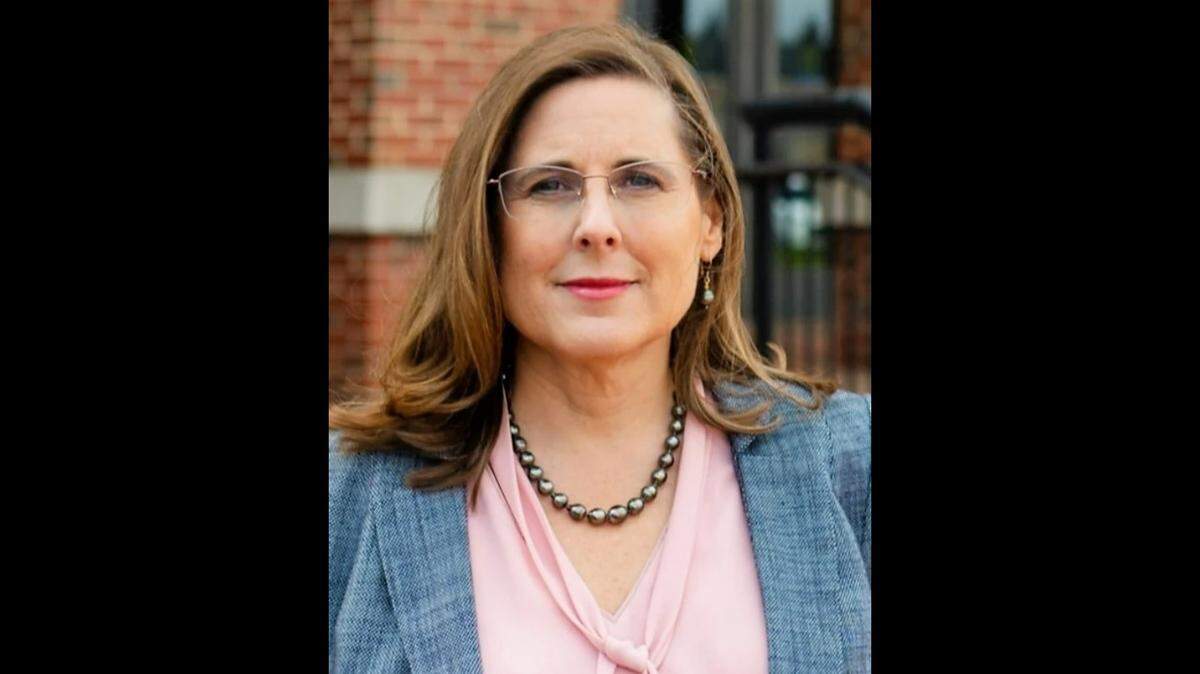
Two people are running in the May 17 primary to replace retiring Orange-Chatham District Attorney Jim Woodall.
Assistant District Attorney Jeff Nieman will go up against fellow ADA Kayley Taber for the top spot. Woodall is retiring this year after 16 years leading the prosecutor’s office.
There are no Republicans running for the office, meaning the winner of the primary race could assume the office following the Nov. 8, 2022, general election.
Early voting in the primary begins April 28 and runs through May 14.
To find polling places and full details on early voting, visit co.orange.nc.us/1720/Elections or contact the Board of Elections at 919-245-2350 or vote@orangecountync.gov.
Name: Jeff Nieman
Age: 45
Occupation: Assistant district attorney
Education: Bachelor of Arts, UNC-Chapel Hill; Juris Doctor, N.C. Central University School of Law
Political or civic experience: President-Elect, Susie Sharp Inn of Court; co-founder, N.C. Driver’s License Restoration Project; volunteer Teen Court judge, Volunteers for Youth diversion court program; member, Orange County NAACP Criminal Justice Committee; chair, Orange County Juvenile Crime Prevention Council; vice chair, Orange County Partnership to End Homelessness; adjunct professor, NCCU School of Law; member, F3 local fitness and civic group, through which I’ve helped lead fundraisers for local and global nonprofit organizations. I have also served as a high school Sunday School teacher at the United Church of Chapel Hill and a YMCA youth basketball coach for over 13 years.
Campaign website: jeffnieman.com
Who are your top three campaign contributors? Cathy Burnham, William Wofford, Sindhura Citineni
Why do you want to be the district attorney?
I’m running for district attorney because I want to create positive change in the criminal justice system. Our district deserves a DA with not only sufficient experience to do the job but also a proven track record of utilizing progressive approaches to criminal justice to achieve better outcomes for all. I have spent my 16-year career and personal time around local efforts to improve racial equity, end the criminalization of poverty and empower youth in our community.
As district attorney, I will continue to take action on my priorities of community, equity and justice. If elected, I have publicly committed not to seek the death penalty, which I believe would make our district only the second in North Carolina to enact such a policy, and have published on my campaign website about the many reasons behind that decision. Additionally, I have committed to expunge all juvenile criminal records eligible under the Second Chance Act. I want to make our DA’s office a model of community-oriented justice.
What is the District Attorney’s Office doing right? What could it do better?
Our district has led the state in its development and utilization of rehabilitative approaches to criminal justice, including several therapeutic courts that I helped launch during my 16 years as an assistant district attorney here. Upon seeing a revolving door of misdemeanor criminal charges for individuals with housing insecurity, I created our district’s Outreach Court, the first therapeutic court for individuals experiencing homelessness in the state. Outreach Court now better addresses underlying social problems and finds rehabilitative solutions that are more effective than any criminal punishments had been previously delivering. I also helped to launch the Misdemeanor Diversion Program for juveniles charged with adult crimes to help young people build rehabilitative paths to productive adult livelihoods. I’m proud of my personal involvement and our district’s engagement with the Misdemeanor Diversion Program and other diversion programs, like Teen Court, to create better societal results for youth charged with crimes.
I am also a big supporter of our district’s Recovery Court, a therapeutic court for those struggling with substance use disorder, and our district is again a leader in its utilization and effectiveness to create better societal outcomes for these cases. Drug abuse is a public health issue and should be addressed when possible through treatment, not incarceration.
There are many things that our district can do to improve and advance our approach to criminal justice, including:
▪ We need to improve the diversity of the DA’s office staff to help it better reflect the community served. I will make intentional efforts to encourage more applicants from under-represented communities to consider future careers in a district attorney’s office, especially in our district.
▪ We need to fight against systemic racism that affects every aspect of our society, including the criminal justice system. As one step, I will make implicit bias training mandatory for every member of the DA’s office staff.
▪ The court system places a disproportionate burden on the poor. While the NC Legislature sets court costs and fines at the state level, there are opportunities for the DA’s office to work with other stakeholders in local courts to try to reduce the financial burdens of involvement in the court system.
▪ In addition to the current juvenile crime rehabilitative and diversion programs, I will expunge all past juvenile criminal records eligible under the Second Chance Act.
▪ As a near-term issue, our courts face significant backlogs and delays of criminal cases due to the COVID-19 pandemic. We need to seek alternative approaches to resolve many of these cases in an efficient manner with a goal of prioritizing societal outcomes.
▪ We also need to lead. Our community’s support of progressive approaches to criminal justice gives our district the opportunity to serve as a model for new, better approaches across the state and beyond. There are opportunities for us to share more of our local results and become an advocate to influence progressive approaches for DAs in other districts and also with the state legislature in public policy.
How do you view justice and equity in the courts? What ideas would you bring to the table?
The duty of the district attorney, and of all prosecutors in the court system, is to look at the facts and to seek justice, not merely convictions. I am the son of a longtime public defender, and I believe that when a person has violated the law and sufficient lawfully obtained evidence exists to prove it, then justice may demand a conviction, but a DA should never lose sight of the primary objective of justice above all else.
I have a strong track record of prosecuting cases of every type of offense from driving while impaired to first-degree murder. I take the responsibility of listening to victims of crime and supporting them through difficult traumas very seriously. I’m also proud of my reputation for using the discretion entrusted in a DA to do that which is fair and just.
I believe that systemic racism and implicit bias affect nearly every aspect of our lives, including the criminal justice system. As district attorney, I will make implicit bias training mandatory for all DA staff. I also believe that hiring decisions should be made with an appreciation of the community served. I will make intentional recruiting efforts to encourage more applicants from under-represented communities to consider future careers in a district attorney’s office, especially in our district. For equity reasons and many other reasons, I have also made a public commitment not to seek the death penalty in our district.
As another important equity issue, I have also worked to fight against the criminalization of poverty. When I recognized the surprisingly high percentage of those whose driver’s licenses are revoked for financial reasons, I started the N.C. Driver’s License Restoration Project to help individuals become lawfully licensed. I then successfully advocated for a change in state law to make the system more fair for those revoked for financial reasons. The U.S. Department of Justice called on me to testify as an expert on this topic in a federal case that overturned North Carolina’s Voter ID law.
As DA, I will work to ensure that courts treat all people fairly, regardless of their race, identity and socioeconomic status. I will utilize our local community resources and equity considerations to seek justice.
How do you view the role of incarceration vs. the role of rehabilitation?
I have a 16-year career track record of creating, utilizing and advocating for rehabilitative approaches to criminal justice in lieu of traditional criminal justice consequences, including incarceration. Our U.S. criminal justice system is plagued by mass incarceration, which in many cases is not creating positive societal results for those convicted nor better outcomes for our broader communities.
I am a career advocate and practitioner in therapeutic and diversion courts, including many active, specialized court programs in our district. A therapeutic court is a type of specialized court program that seeks to focus on rehabilitation of underlying issues for individuals charged with crimes. This alternative path is especially important when traditional criminal justice system consequences (i.e. monetary fines, probation or incarceration) are not shown to likely address the core problems leading individuals to commit similar crimes in the future. When individuals charged with crimes are referred to a therapeutic court, they can have their criminal cases moved to a path where the court system offers them an opportunity to avoid incarceration or a criminal conviction, which often involves substance use disorder treatment, mental health treatment, and social services engagement.
I have personally witnessed better results for our Chatham County and Orange County communities in utilization of rehabilitative approaches in thousands of cases over my career. As district attorney, my priorities are community involvement, equity and justice. I will continue to engage community resources, including in therapeutic court programs, to create better outcomes for all.