Top NC lawmakers say budget talks are on schedule. Gov. Stein won’t bet on it
AI-generated summary reviewed by our newsroom.
- Lawmakers say they plan to pass the year‑late budget the week of June 15.
- Gov. Josh Stein says he will not bet the budget will arrive by the June 15 target.
- The framework cuts the 2027 income tax to 3.49% and grants teachers an average 8% raise.
In May, top Republican leaders at the North Carolina General Assembly announced a deal on the year-late state budget, and a plan to pass it the week of June 15.
That date is getting closer and closer. Lawmakers took off last week, and returned Tuesday for a flurry of committees and voting sessions. The clock is ticking on the budget.
House Speaker Destin Hall and Senate leader Phil Berger both said Tuesday negotiations are running on schedule as Republicans who control the legislature decide how to spend more than $30 billion in taxpayer money.
So is the budget coming in mid-June? Democratic Gov. Josh Stein isn’t betting on it.
He has been waiting a year for the legislature to send him a bill.
“I don’t know that there’s ever been a date set out a month beforehand, that has ever been met by any General Assembly,” Stein told The News & Observer as he talked to reporters after a Council of State meeting in downtown Raleigh on Tuesday.
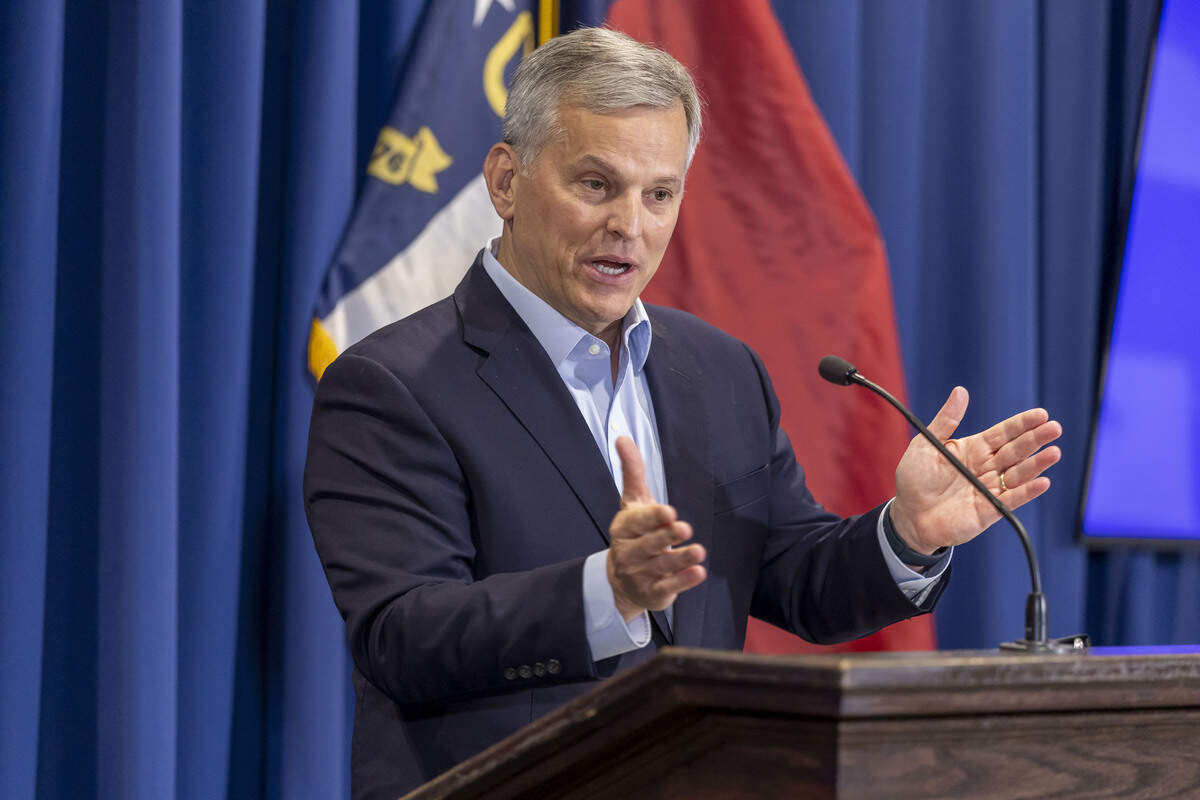
“If I were a wagering person, which I’m not — and there’s an executive order saying I cannot bet on prediction markets on matters that I have influence over — I just think it always takes more time than people wish it would,” he said. “That does not mean that they’re not having constructive conversations between the House and the Senate.”
Top House budget writer says only minor issues in dispute between House and Senate
Rep. Donny Lambeth, a top budget chair, told The N&O on Tuesday they are “right on schedule.”
The budget chairs continued to talk remotely last week, he said, when most lawmakers took the week off. He said that legislative staff also had a chance to keep up. Budget negotiators came to work Monday and worked on the budget all day and most of Tuesday, which was also a day with committee meetings and a late afternoon voting session. Lambeth, a Winston-Salem Republican, told The N&O after that session that top budget writers are meeting the rest of the week between other obligations.
“The next few days we’ll keep trying to tie down all the loose ends — we’ve still got salary provisions,” he said. Lambeth said he told the House majority leader to plan for Republicans to meet as a caucus on June 15 to talk about the final budget, then move it through committees and floor votes by the end of that week.
No casinos or meals tax changes in budget as of now
Lambeth said there aren’t major issues yet to send to the corner offices of Berger and Hall, compared to big debates like the one over casinos in 2023. He confirmed that legalizing non-tribal casinos will not be part of the 2026 budget.
“The issues that we’re hung up on are relatively minor, from what I’ve seen in the past. My guess is we might have a dozen items for the corner offices, but I just don’t see any of those major sticking points that’s going to take them days to resolve. I think they can resolve it pretty quick. It’s either yes or no, and let’s move on,” he said.
Lambeth did not specify what those minor issues are, but did confirm that changes to the meals tax are not in the budget, as of Tuesday.
Another House source with knowledge of talks in the budget room — where budget chairs and staff negotiate — told The N&O on Wednesday that while it hasn’t been discussed yet, the meals tax is still in play, and on the table.
Rep. Erin Paré, a Holly Springs Republican and a budget writer, proposed legislation in May that would change how the meals tax is allocated. She represents southern Wake County, and the proposal would make Wake County and Raleigh change their interlocal agreement “to include as parties to the agreement at least three other municipalities within the county,” meaning that the meals tax revenue from suburban towns in the county couldn’t all go to big projects like the Lenovo Center in Raleigh.
She later withdrew that part of the proposal, but often bills that don’t pass separately will end up as a budget provision. That’s not the case for the meals tax legislation, as of now.
Paré told The N&O on Wednesday that she will present her meals tax proposal to the budget committee chairs shortly.
No ‘stumbling blocks’ so far between House and Senate
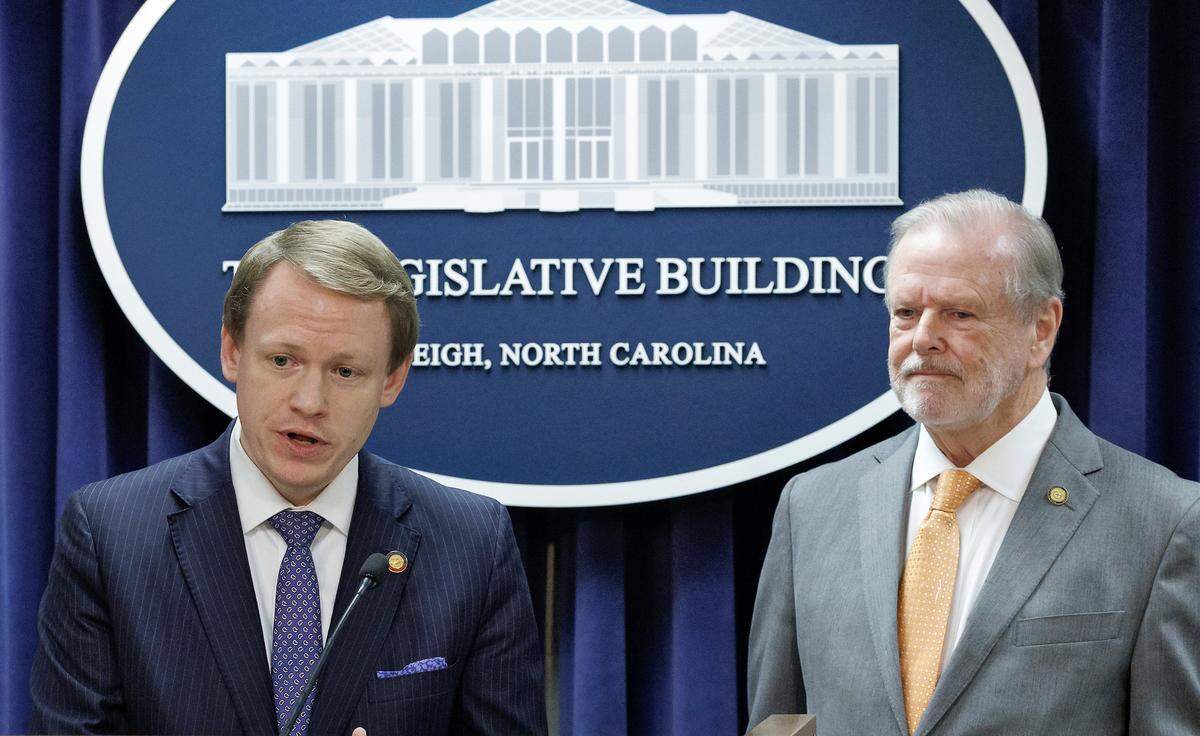
On the Senate side, Berger said one of that chamber’s top budget writers relayed that they are still “on track” for the week of June 15. Berger expects to meet with Hall next week, he told reporters after the Tuesday voting session.
“There are all kinds of potential stumbling blocks, but I haven’t seen any yet,” he said.
Lambeth said that Hall and Berger could meet as soon as June 9 to take a final look at the budget proposal and resolve what he described as minor issues to negotiate.
Similarly, Hall told reporters that budget talks are “still on pace, no major snags in the road. So I think we’re still on pace to get something done mid- to late June.”
Stein expects budget bill soon, won’t say if he’ll sign it
Stein is optimistic a budget is coming, even if not as soon as lawmakers hope.
“We’ve been having conversations with (lawmakers), making our pitch in the most convincing way we can for what the state needs to operate. So I’m hopeful that if it’s not by that deadline, it would be soon thereafter,” the governor said.
Berger said Tuesday that the Senate may wrap up its work ahead of the Fourth of July weekend, or come back again after a holiday break. Hall’s voting schedule sent to lawmakers includes expected votes through July 2.
Asked if he plans to sign the budget, Stein said there isn’t enough information or details yet to say either way.
“I don’t know what they’re ultimately going to have in it. They have a framework. There were some matters of the framework that I thought were good. There were some matters of the framework I thought were bad. We just have to see what the budget actually is. This is truly where the proof is in the pudding,” Stein said Tuesday.
The budget framework announced by Hall and Berger, both Republicans, includes cutting the personal income tax rate to 3.49% in 2027 as well as a constitutional amendment that will be on fall ballots to cap that income tax rate at 3.5%. Stein has said repeatedly he wants to freeze tax cuts. He also opposes the constitutional amendment, saying that it could shift the burden to a higher sales tax.
The proposal also has an average 8% raise for teachers and 3% for most state employees, with higher raises for those who work in law enforcement. But there still isn’t a budget bill, or any public document, laying out the budget plan.
The 3% raise for most state employees might not make much of a dent in state agencies’ needs. Secretary of State Elaine Marshall, a Democrat, said during a Council of State meeting that salaries aren’t competitive enough.
“Our staffing levels are sitting idle, our salaries are noncompetitive with the private sector and stagnant within state government, and barely competitive there,” Marshall said Tuesday.
State employees haven’t received new raises as the budget stagnated for a year because of a stalemate between the House and Senate.
“There becomes a breaking point when the challenge becomes a risk. We are at that point. We hope this General Assembly is hearing these calls,” Marshall said.
This story was originally published June 3, 2026 at 6:00 AM.