As candidate, NC senator lobbied for husband’s energy company amid federal probe
AI-generated summary reviewed by our newsroom.
- Chitlik and her husband met with congressional staff on behalf of American Efficient
- The meetings occurred in 2024. In 2026, federal regulators accused the company of fraud.
- The couple had legally separated in 2023, and Chitlik didn’t list work on disclosure form.
In a unanimous, bipartisan ruling this spring, the Federal Energy Regulatory Commission accused Durham company American Efficient of operating “one of the largest and most brazen fraud schemes” in the agency’s 49-year history.
“We have never been faced before with a scam that robbed ratepayers of hundreds of millions of dollars in this way,” FERC Commissioner Lindsay See, a Biden appointee, said. Another commissioner, Trump appointee David LaCerte, recommended that the attorney general open a criminal investigation.
American Efficient was ordered to pay $722 million in civil penalties — more than twice FERC’s previous record fine — and to return $410 million in profits, with interest. The company called the federal ruling “baseless and unprecedented.”
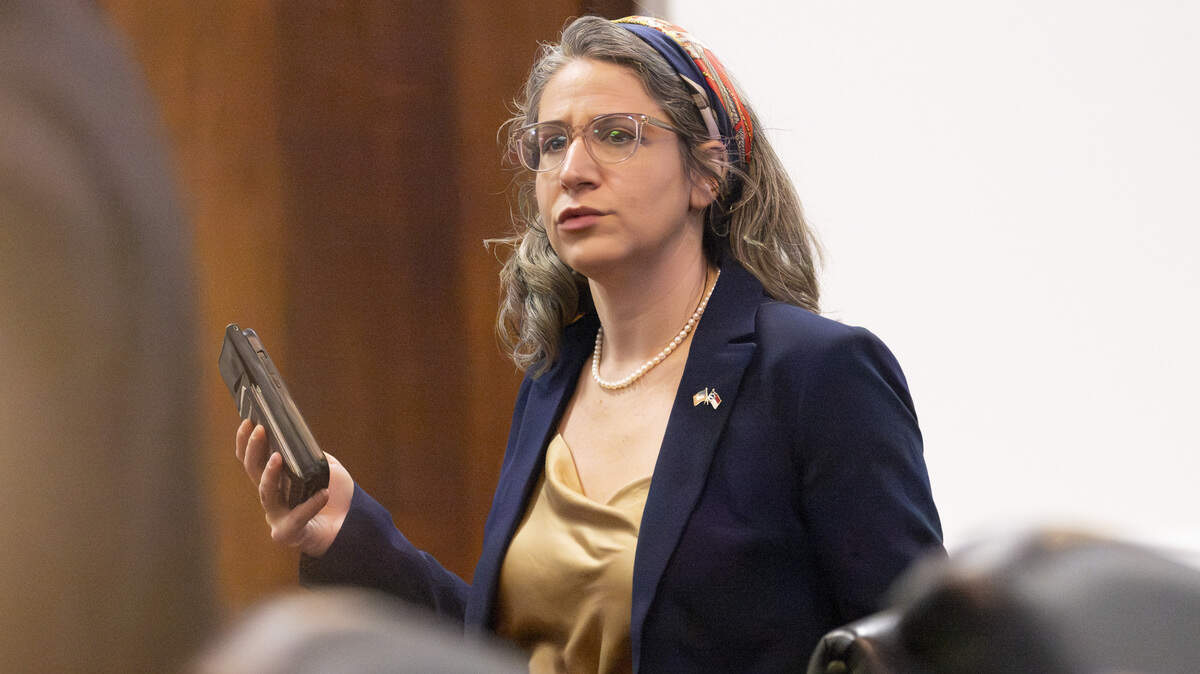
The company has a link to state politics. Benjamin Abram, cofounder of American Efficient and head of its parent Modern Energy, is married to North Carolina state Sen. Sophia Chitlik, a Democrat representing Durham County.
Local news outlets noted this connection when FERC issued its historic penalty in April. What hasn’t been previously reported is the lobbying Chitlik did alongside her husband on behalf of American Efficient during the FERC investigation. In 2024, the year she won a Democratic primary against incumbent Mike Woodard and was later elected to her first term, Chitlik joined Abram in meeting with the staff of members of North Carolina’s congressional delegation.
Chitlik spoke to staffers from at least three Republican offices, The News & Observer has confirmed. She was an active participant in these discussions, displaying knowledge of federal energy regulation policy while representing the company’s interests, according to one current and one former legislative aide who had direct knowledge of two separate meetings.
Meeting with congressional offices without registering as an official lobbyist is allowed when an individual is not paid for their work. In a statement to The News & Observer provided through a public relations firm, Chitlik wrote, “My involvement was brief and limited in scope, unpaid, and occurred entirely before I held public office.”
“Before I became a legislator, I helped Ben navigate a situation to be a supportive friend to the father of my child,” she said.
But her past work with American Efficient and continued economic ties to her husband, from whom she legally separated months before they lobbied Congress together, spotlight an inconsistency in North Carolina’s own public disclosure laws. They also show how family and finances can uniquely intertwine when a company is fighting to survive.
American Efficient under fire
The two legislative aides who described their respective meetings with Abram and Chitlik did not share precisely what regulatory topics were covered. One aide said that American Efficient leaders met with their office multiple times across March and April 2024 to discuss perceived bias in how the regional grid operator PJM Interconnection monitored energy efficiency programs. The nation’s largest grid operator, PJM covers parts of the Midwest, Mid-Atlantic and a small pocket of Eastern North Carolina.
The aides said no elected officials attended these meetings and that their offices didn’t act on any American Efficient request. The aides asked to speak anonymously to confirm meetings that are typically kept private.
What is clear is that American Efficient knew it was under investigation at the time. FERC began investigating the Durham company in 2021 and released preliminary findings in July 2023 that concluded the firm didn’t control the mass electricity use reductions it claimed responsibility for. American Efficient denied the findings in a September 2023 response. Chitlik did not answer an N&O question about her awareness of the investigation when she lobbied.
While FERC wouldn’t issue its $1.1 billion ruling until three years later, its probe by 2023 was already squeezing American Efficient. That June, PJM began withholding tens of millions of dollars the company had posted as collateral, citing the federal government’s “external inquiries.”
PJM was American Efficient’s biggest revenue source by far. Since entering PJM’s capacity market in 2014, the company has claimed more than 20,000 megawatts of energy savings and was paid $466 million.
PJM’s capacity market pays participants to be available during peak demand, either by generating power or by reducing use. American Efficient claimed “capacity” by paying retailers such as Lowe’s and Home Depot small amounts for the “environmental attributes” of energy-efficient products they sold, then aggregating those projected benefits into bids as large load reductions.
Some have questioned if those energy-efficiency (EE) resources should be treated like traditional supply. “There’s always been controversy about whether or not (EE) should be considered a supply resource in the market,” Ari Peskoe, director of the Electricity Law Initiative at Harvard Law School, said.
FERC argued American Efficient never controlled the energy savings it bid and that its “micropayments” didn’t drive additional sales of efficient products. The agency also accused the company of repeatedly misrepresenting its business model to PJM, including in a 2017 meeting. American Efficient denied wrongdoing, saying PJM “reviewed and approved” its participation “over 30 separate times” and that PJM never viewed itself as a victim.
By early 2024, American Efficient also faced the risk of losing PJM access entirely as the grid operator considered phasing out all EE resources. “There is no reason to continue to pay large subsidies to EE providers,” PJM’s independent monitor wrote in a 2024 policy report.
“The regulatory environment around energy efficiency was rapidly shifting,” Chitlik told The N&O regarding her meetings. “I discussed the potential impact on our local economy, affordability, the environment and national security.”
Family, finances and NC elected official disclosures
This spring, in a pair of newsletters published shortly after FERC ruled against American Efficient, a conservative political group named Carolina Partnership for Reform questioned possible omissions in Chitlik’s annual state economic interest filings.
This organization, which generally promotes ideas in line with Republican Senate leader Phil Berger, highlighted that she has never listed any income source above $5,000, dating back to her first candidate filing that covered all of 2024. Nor have her filings ever mentioned American Efficient or counted her husband as immediate family.
“We’re not some sophisticated investigatory body and we’re not a media outlet,” Carolina Partnership for Reform wrote. “But it seems like there are quite a few basic questions that ought to be asked here, assuming Chitlik and Abram were married in 2023.”
North Carolina requires all General Assembly candidates and elected members to disclose their financial interests and those of their “immediate family members” — including any for-profit businesses they manage.
In explaining why her husband is not included as an “immediate family member,” Chitlik told The N&O that she and Abram legally separated in October 2023, a fact the couple has not previously shared publicly. The N.C. Ethics Commission, which oversees candidate and elected official financial disclosures, doesn’t count spouses as immediate family if they are legally separated. Legal separations in North Carolina don’t require courts; to qualify, a couple must live in different residences and at least one party has to intend for the separation to be permanent.
It was several months into their separation when Chitlik and Abram jointly represented American Efficient in congressional office meetings. This is one of multiple business associations the two maintained. The Durham house Chitlik lists on her voter registration form is owned by HGATT LLC, an entity Abram manages. The home in the Trinity Park neighborhood is appraised at $1.2 million. And in her economic interest filing, Chitlik states she is an adviser to another Abram-run company, Factory of Good.
“I disclosed my advisory relationship with Factory of Good even though I hold zero ownership interest because of my formal role advising on impact investments and family philanthropy,” she told The N&O.
Abram has continued to donate to Chitlik’s campaign committee. His $18,000 loan in 2024 and $7,560 donation in February 2026 each would have exceeded the state’s maximum contribution limits, except that candidate spouses — like candidates themselves — can give unlimited amounts.
While the N.C. Ethics Commission doesn’t count separated spouses as immediate family, the N.C. State Board of Elections permits unlimited spousal donations so long as a couple remains married. This means North Carolina’s ethics rules and its campaign-finance rules are governed by two separate bodies with two different definitions of family.
“It could very well be that this is something that the law should be tweaked so things are as open and transparent as possible for all who are in public service,” said Bob Phillips, former executive director of the North Carolina branch of Common Cause, a national government watchdog group.
.jpeg "IMG_3401 (1).jpeg")
An N&O analysis of N.C. senators’ financial disclosures this spring found Chitlik was the only member to not list any source of annual income above $5,000. When this was brought to her attention, she informed The N&O that she would start to include her state Senate salary as an income source. The position pays roughly $14,000 a year, plus a daily per diem during legislative sessions. Chitlik, who is in her 30s, states she is an investor on her economic interest form but did not answer an N&O question about how she supports herself beyond her state salary.
(Four other state senators record no non-legislative income. When asked how they support themselves financially, Sen. Bob Brinson told the N&O that he and his wife have military pensions; Sen. Carl Ford said he and his wife are on social security; Sen. Todd Johnson already reported his role as president of an insurance firm elsewhere on his disclosure and told the N&O he would start listing this income; Sen. Norman Sanderson, who lists his wife’s income as a state legislative assistant, did not respond.)
Chitlik has also indicated that no immediate family members earned above $5,000 in 2024, 2025 or 2026. She said her legal counsel contacted the state ethics commission before her first campaign and confirmed “that a separated spouse’s financial interests do not need to be listed.”
In addition to the home, political contributions and advisory work, Abram and Chitlik remain married and coparent their young son.
“I can understand if someone’s legally separated and there’s not any kind of a financial connection, there’s really no need to have any disclosure,” Phillips said. “Principally (the State Government Ethics Act) was always about getting as much transparency as possible for the public to be able to know and understand potential conflicts of interest, and things that matter regarding a public servant.”
‘A billion-dollar incentive to do so’
Chitlik said that, as a state legislator, she does not oversee federal agencies like FERC. “But if any matter were to come before the State Senate that created a potential conflict, I would of course recuse if necessary, out of an abundance of caution,” she told The N&O.
States and FERC largely operate on different sides of a regulatory line. Overlaps exist due to the complexities of modern energy policies. The N.C. Utilities Commission, which gets its mandate from the General Assembly, advises PJM as a member of the Organization of PJM States. And more broadly, the laws North Carolina legislators pass influence how local utilities plan, which in turn can shape how those utilities participate in FERC-regulated capacity markets like PJM.
Chitlik won her primary in March against former Durham City Council member DeDreana Freeman and is expected to retain her seat this fall in a heavily Democratic district.
“I have tried to make a practice of explaining the work of the legislature clearly and directly to my constituents, especially when the details are complicated,” she said. “Legislators are real people, with real lives, and I am honored to do the work I do on behalf of North Carolina residents.”
American Efficient’s federal lobbying didn’t end with her meetings. In April 2024, the company hired Durham-based lobbyist Cole LaCroix to promote energy efficiency resources in capacity markets. This effort ultimately failed, as FERC approved PJM phasing out energy efficiency resources in September 2024.
Over the past two years, American Efficient has employed six lobbying firms in total as its congressional priorities shifted from the PJM market to defending against FERC. Former U.S. Rep. G.K. Butterfield, a North Carolina Democrat, represented the company in 2024 through the firm McGuireWoods Consulting. The next year, American Efficient hired Off Hill Strategies, which describes itself as “a boutique lobby firm with a commitment to conservative principles,” including “championing limited government.”
U.S. Senate lobbying disclosures show American Efficient paid the Washington, D.C., firm Capitol Counsel $80,000 in the final three months of 2025 and another $80,000 in the first three months of 2026 for “issues regarding litigation before the Federal Energy Regulatory Commission.”
During one 2025 meeting, American Efficient representatives argued Congress should grant President Donald Trump the power to fire FERC commissioners, one legislative aide told The N&O.
At least publicly, the U.S. Department of Justice has yet to follow the recommendation of Commissioner LaCerte and launch a criminal inquiry into the company. “Justice Department policy is generally to neither confirm nor deny the existence of an investigation,” a department spokesperson wrote to The N&O.
American Efficient has not paid FERC as it challenges the ruling in federal court. While FERC lambasted the company for “hijacking” the energy efficiency resource market into its own “ATM,” American Efficient contends it followed the law as written.
“American Efficient is going to continue to fight this because they have a billion-dollar incentive to do so,” Harvard Law’s Peskoe said.
The Durham company has also challenged FERC’s constitutional right to levy fines. In a blow to one American Efficient argument, the Supreme Court in June ruled (in a separate case involving the Federal Communications Commission) that federal agencies had the power to issue fines without jury trials.
The Supreme Court may have reaffirmed FERC’s authority to penalize, but the regulatory body still can’t force payments. It instead would now need to sue American Efficient to receive its record fine. Through a spokesperson, FERC said it did not “comment on court proceedings.”