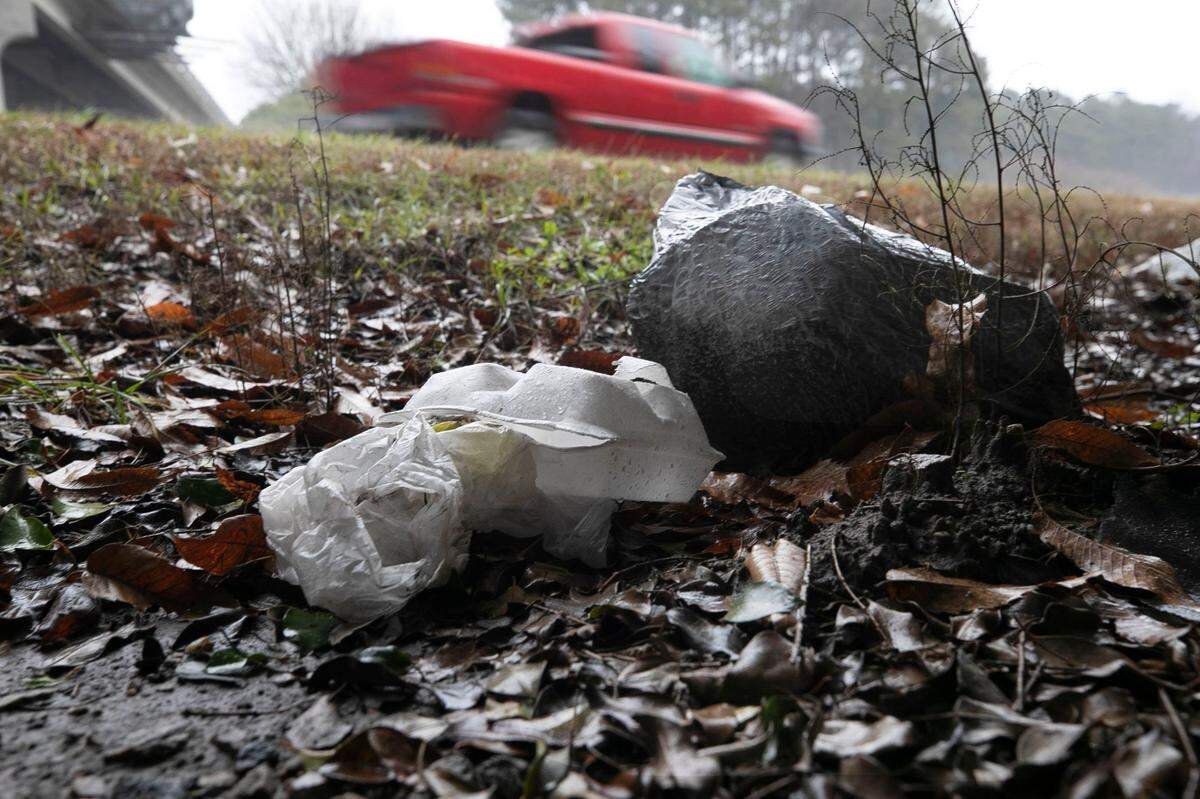
NC lawmakers again consider tougher penalties for littering. Fines would double.
The penalties for littering in North Carolina would get much harsher under a bill making its way through the General Assembly.
The bill would double the fines for littering, to at least $500 for a first offense for less than 10 pounds of trash. Fines for larger amounts and subsequent citations would be higher.
Sen. Tom McInnis says he crafted the changes because he’s tired of seeing so much paper, cans and other debris along the state’s highways.
“We have one of the most beautiful states in America,” McInnis, a Republican from Moore County, said in an interview. “But we have a lot of ugly out there when we have people who decide to throw trash out the window of their car.”
In addition to the blight, McInnis says litter costs taxpayers a lot of money. The N.C. Department of Transportation says it spent about $25 million last year collecting trash along its highways. McInnis says local governments spend tens of millions more.
McInnis, who leads the Senate Transportation Committee, inserted his proposal into a larger bill containing two dozen transportation-related policy changes. House Bill 199 still needs approval from the full Senate and agreement from the House, which passed an earlier version last year.
State law makes it illegal to litter on public land or waterways or on someone else’s private property. The penalties called for in McInnis’ bill include:
▪ Intentionally littering 10 pounds or less for the first time would bring a fine of $500 to $1,000, plus an optional eight to 24 hours of community service. Each subsequent violation would bring a fine of $1,000 to $3,000, plus a potential for up to 50 hours of community service.
▪ “Recklessly” allowing up to 10 pounds of trash to be “blown, scattered, spilled, or placed” where it shouldn’t be would bring a $200 fine and potentially up to 12 hours of community service.
▪ Intentionally dumping 10 to 500 pounds of trash would bring a fine of $1,000 to $3,000 and a potential for up to 50 hours of community service.
▪ Dumping 500 pounds or more or littering for commercial purposes, already a felony, would be punishable by a $5,000 fine and at least 100 hours of community service.
McInnis says the tougher penalties are needed as a deterrent.
“You throw something out and you get fined $1,000 or $500, you’re going to think about it next time,” he said. “That’s the whole point of it.”
Enforcement of litter laws has waned
Lawmakers have proposed doubling the fines for littering before without success. The Highway Cleanup Act of 2021, introduced by Rep. John Bell, a Republican from Wayne County and the House majority leader, also would have provided money for anti-litter campaigns and to help sheriffs in small counties pay deputies to pick up debris along rural roads.
Lawmakers dropped the stiffer penalties from the bill when they realized they didn’t know enough about how the state’s litter laws are enforced.
Enforcement of litter laws had been waning at that point, and the trend has continued in recent years. According to state court records, law enforcement agencies statewide issued 951 citations for littering not tied to a more serious crime in the year ending June 30, 2023. That’s down 26% over five years.
NCDOT says without enforcement tougher fines won’t do much good.
“The department supports any effort to reduce littering, and higher penalties do have the potential to be effective,” spokeswoman Bridgette Barthe wrote in an email. “However, without enforcement, fines alone won’t be enough. The key is finding ways to ensure people are being held accountable for their actions.”
Data journalist David Raynor contributed.