This live camera offers a ‘rare’ look at owls hatching in NC. How to watch
AI-generated summary reviewed by our newsroom.
- A live camera shows a barn owl nest in the North Carolina mountains.
- Six baby owls are expected to start hatching between April 9 and April 15.
- Barn owls are secretive and quiet but make distinct calls.
A pair of elusive creatures is welcoming babies — and a new camera will give you an up-close look.
The live feed offers a “24/7 window into the secret life of barn owls,” including eggs that are about to hatch, Sydney Brown, education development and evaluation supervisor with the North Carolina Wildlife Resources Commission, wrote in a Wednesday, April 1 news release.
Here’s what we know about the owls and how to watch the live feed.
Where and when will the owls hatch?
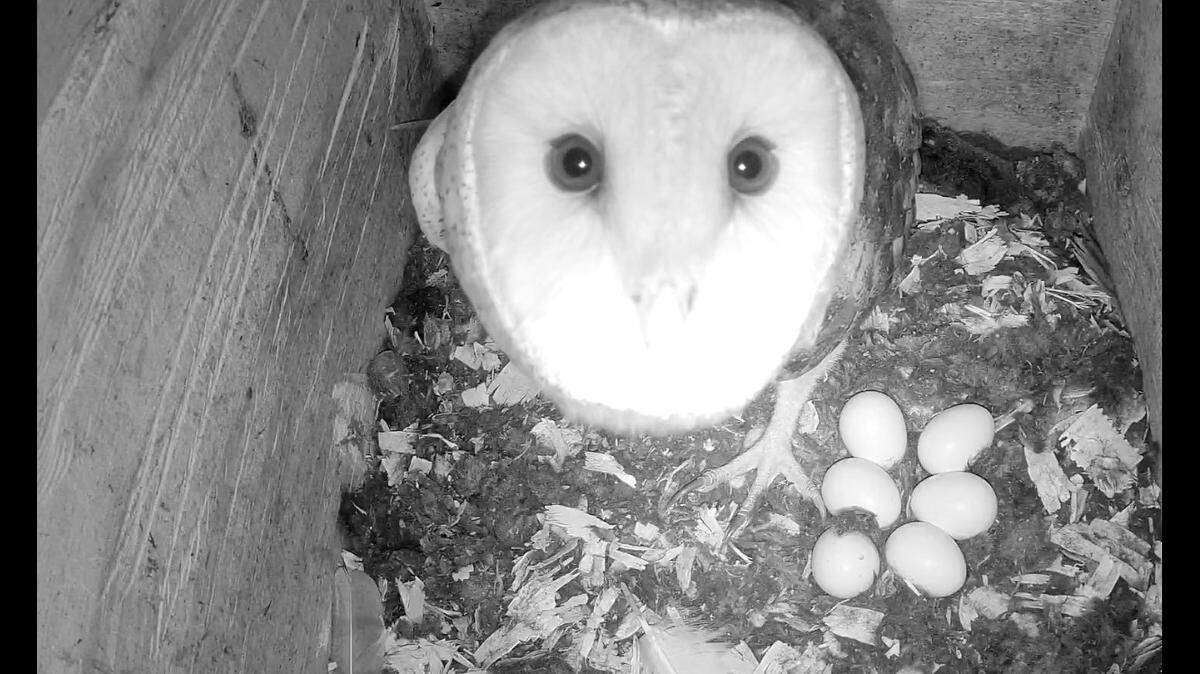
The audio and video feed are set up at an undisclosed location in the North Carolina mountains. The footage shows what happens inside a nest box, where a pair of barn owls is waiting for their six eggs to hatch.
As of early Monday, April 6, there were no hatchlings yet, Brown told The News & Observer in an email.
Wildlife officials said the female owl laid her eggs in the box in March. The chicks are expected to start emerging some time between April 9 and April 15, with the best estimate being Sunday, April 12.
“Usually once the first egg hatches, the others start hatching at about an every-other-day timeframe,” Joe Tomcho, a conservation biologist with the commission, said in the news release. “Barn owls typically lay around four to five eggs. Six eggs is an indication these are an experienced pair.”
After the chicks make their debut, you may see them getting fed, competing with their siblings or learning to fly.
“It’s a really exciting experience to watch them hatch, but then to also watch them hop around in the nest as they prepare for life outside the nest,” Tomcho wrote.
How can I watch the owls?
The solar-powered camera is currently streaming live. You can tune in online at ncwildlife.gov/outdoors/barn-owl-live-cam.
“Barn owls are most active after sunset, so the best viewing is often at night when infrared lighting makes their secretive behaviors visible,” the commission wrote on its website.
In addition to getting the “rare” opportunity to see the chicks hatch, wildlife officials said you may see other typical owl activities. Here’s a list of what else to expect on camera, including behaviors you may find disturbing:
- Roosting during the day
- Returns from hunts at night
- “Injury or death of chicks”
- “Lack of parental care in certain situations”
“We do not intervene in these natural processes,” the commission wrote on its website. “Our goal is to observe and learn from wildlife without disrupting their behavior or environment.”
What are barn owls?
Barn owls can live across much of the Southeastern United States. The species is a predator that needs grasslands, marshes or other open spaces to hunt, according to the National Audubon Society and the Cornell Lab of Ornithology.
“The barn owl population in North Carolina has declined in some regions due to habitat loss and some agricultural practices,” state wildlife officials wrote. “Human-made nesting boxes help biologists study nesting behavior, chick development and the species’ seasonal patterns.”
Barn owls are known for helping to control the rodent population. They have quiet feathers that let them sneak up on prey, but that doesn’t mean they go unnoticed.
“You can find them by listening for their eerie, raspy calls, quite unlike the hoots of other owls,” the Cornell Lab wrote on its website.