Carpenter bees can dig into your NC deck or porch. How to keep them away
AI-generated summary reviewed by our newsroom.
- Carpenter bees drill holes in the wood of North Carolina decks and porches.
- The stinging insects can be a nuisance but play an important role in pollination.
- To help keep the bees away, experts suggest painting, pest control and traps.
Spring temperatures may be drawing you outside, bringing you face-to-face with buzzing creatures.
Carpenter bees are known for drilling into the wood of North Carolina porches, decks and other structures, leaving behind holes that can be a headache for homeowners.
“Woodpeckers may damage infested wood in search of bee larvae in the tunnels,” the N.C. State Extension wrote on its website. “In the case of thin wood, such as siding, this damage can be severe. Holes on exposed surfaces may lead to damage by wood-decaying fungi or attack by other insects, such as carpenter ants.”
But the stinging insects don’t only spell trouble. They’re pollinators that play an important role in the state’s ecosystem, The Charlotte Observer previously reported.
Here’s what to know about carpenter bees, including where and when you may spot them, how to identify them and how you can try to get rid of them.
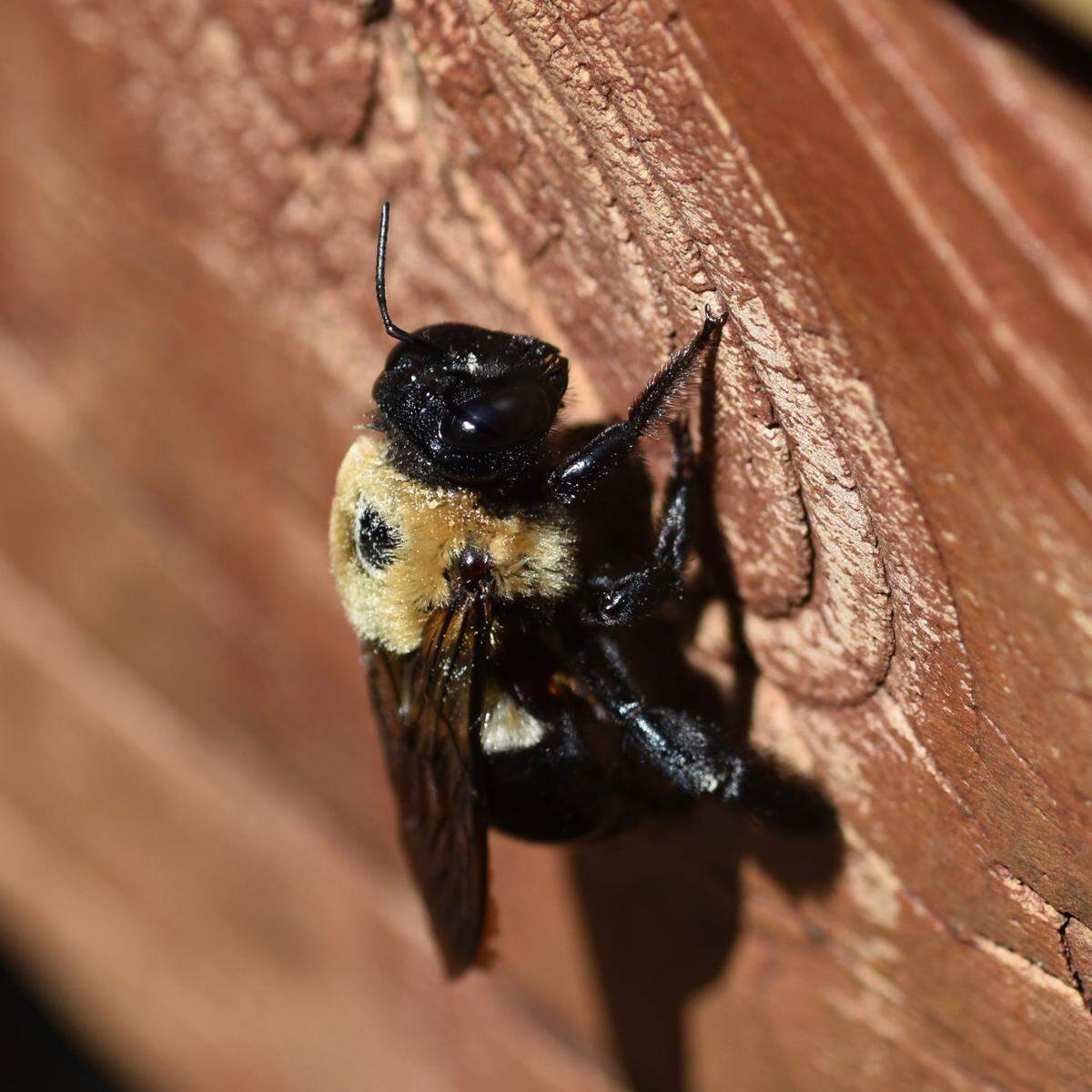
Where do carpenter bees live in NC?
Carpenter bees can be found throughout North Carolina.
The insects are often seen near “porch rails, decks, deck furniture, and underneath the eaves of houses.” One of their “prime targets” is exposed wood, though they can also dig into painted or treated wood, the N.C. State Extension wrote on its website.
The bees are most likely to be spotted in March and April. Their life cycle also calls for them to emerge again in the summer, around July, according to insect experts.
What do carpenter bees look like? Do they sting?
Carpenter bees are black and yellow. But unlike bumblebees, the species has a “hairless black abdomen,” the extension wrote on its website.
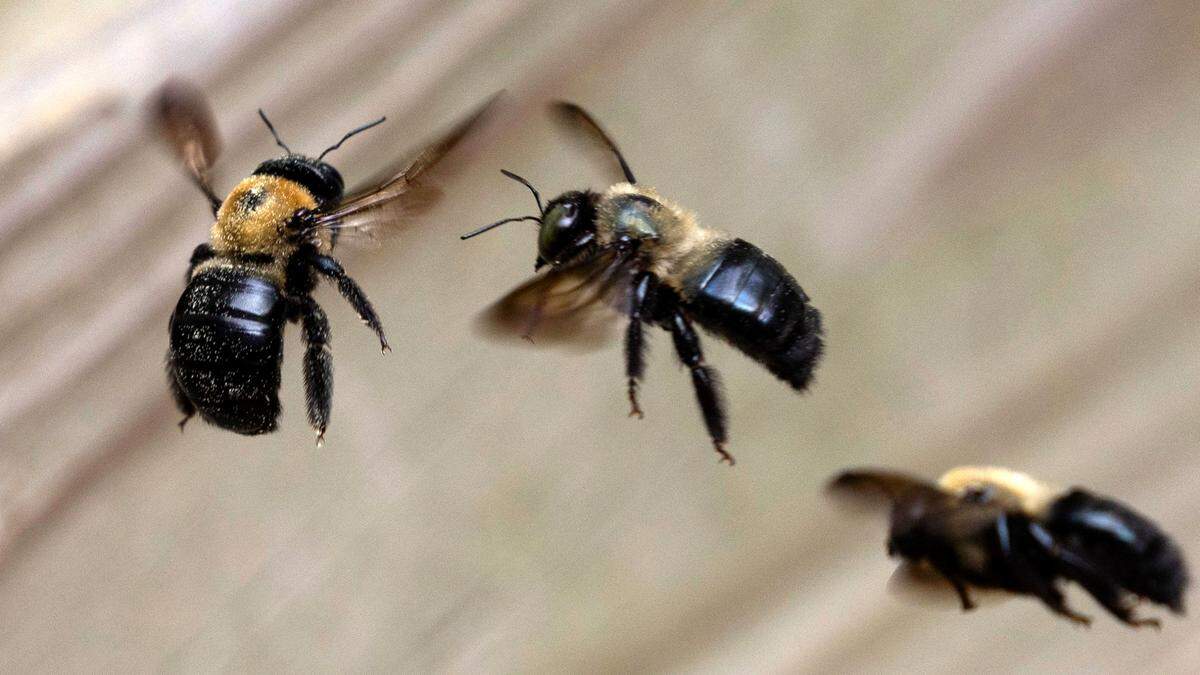
If you see a carpenter bee hovering near you or one with green eyes, it’s usually a male. And that’s important to know because females have stingers but males don’t.
“Females’ faces are fully black,” Christopher Hayes, assistant professor and extension specialist at N.C. State University, told The News & Observer in a Thursday, April 16 phone interview. “The males have a white to yellowish dot or circle in the middle of their face.”
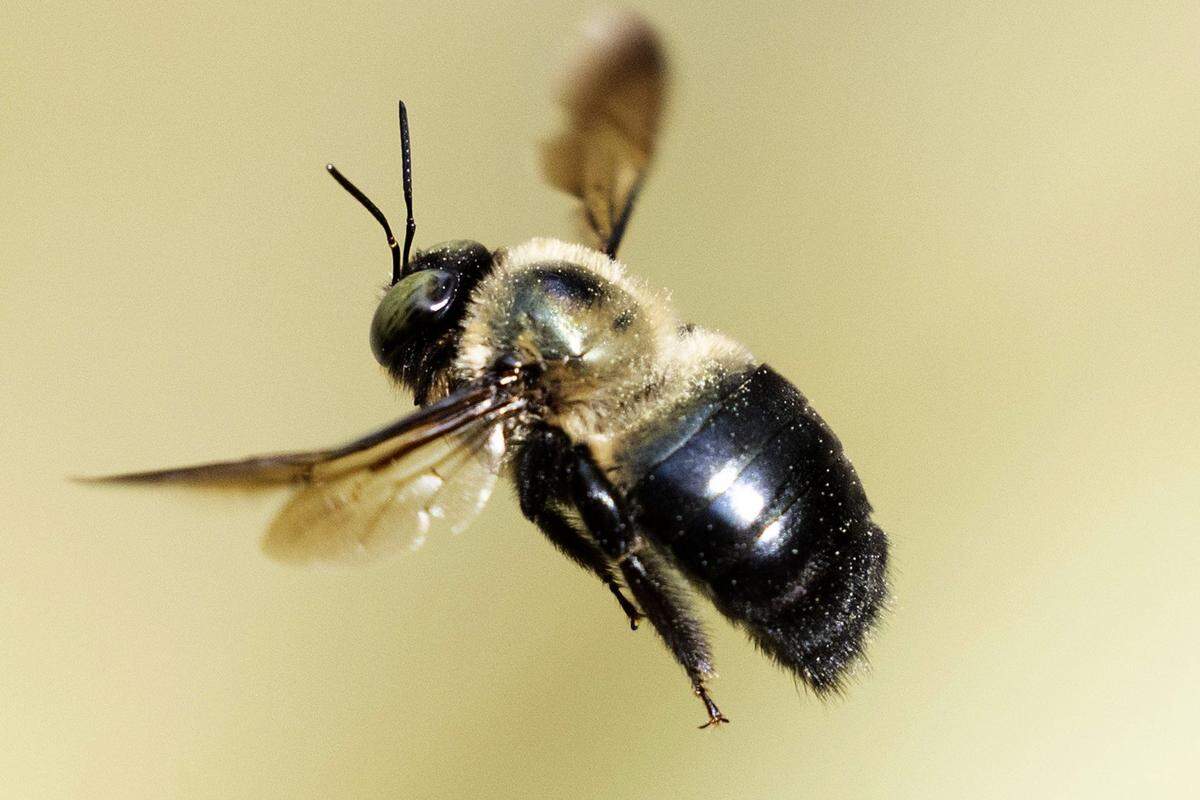
Female carpenter bees rarely sting people. But they will if they’re “confined in your hand or are highly agitated,” according to the extension.
“Carpenter bees are not aggressive,” Gabriela Garrison, Eastern Piedmont habitat conservation coordinator for the N.C. Wildlife Resources Commission, told The N&O in an April 16 phone interview. “I have them on my back porch, in my backyard. I love them, and they put holes in my back deck too.”
If a carpenter bee stings you, it’s recommended that you wash your skin and use a cold compress. Get medical help right away if you have trouble breathing or other serious symptoms, according to pest control company Terminix.
How to know if you have carpenter bees
Beyond seeing curious male carpenter bees flying near your face, there are some other signs the creatures may be digging in the wood around your home. Here’s what experts say to look out for:
- Dime-sized holes
- Piles of sawdust
- Yellow or brown poop splatter outside holes
So, how much damage can the bees do to your home? The females dig then branch off and lay eggs, so offspring can emerge from holes in other parts of the wood. While that could make repairs near your home expensive, it would take decades of intense activity to wear down a structure.
“I wouldn’t say they’re necessarily of concern from a structural integrity standpoint, but from value of your property, appearance of your property, certainly something to be concerned about,” Hayes said.

How to keep carpenter bees away
Though carpenter bees can be a nuisance, they have value. They feed on nectar and pollen, and their larvae is an important source of nutrition for birds.
“Carpenter bees are a native insect that is great to have in our ecosystem,” Hayes said. “They are pollinators. They are a wonderful thing to keep around, but we don’t want them to damage our home.”
The extension has advised against killing carpenter bees if they’re avoidable, The Observer previously reported. Experts shared these tips that may help to keep them away:
- Paint the wood outside your home.
- Place pieces of soft wood at the edge of your yard. The bees may burrow there instead of closer to your home.
- Put up fake wasp nests to deter the bees.
- Replace the wood with a harder material.
- Use carpenter bee traps.
- Call a pest control company.
But be warned: These methods don’t work for everyone. Also, the extension said it’s often difficult to prevent carpenter bee activity. That’s because it’s not effective to spray the bees while they’re in the air, and it’s impossible to pinpoint the part of the wood they may target next.
If you use an insecticide, try a liquid or dust one that contains pyrethroids. The products can be effective for carpenter bees, but you have to be cautious.
“If you spray these holes, they’re going to be mad,” Hayes previously told The Observer. “I always tell people to spray the holes then get out of Dodge, because the bees will sting you.”
Portions of this story were previously published in The Charlotte Observer.