Gabrielle is now a major hurricane. Here’s the latest forecast for NC
AI-generated summary reviewed by our newsroom.
- Hurricane Gabrielle, a Category 3 storm, is sending swells to North Carolina.
- Rip current risks vary along NC beaches, with high risk from Duck to Cape Lookout.
- NOAA tracks two other Atlantic disturbances with the potential to develop later this week.
Update: Find our latest story on Hurricane Gabrielle here.
Gabrielle, now a major hurricane, is producing swells that are reaching the U.S. East Coast and North Carolina.
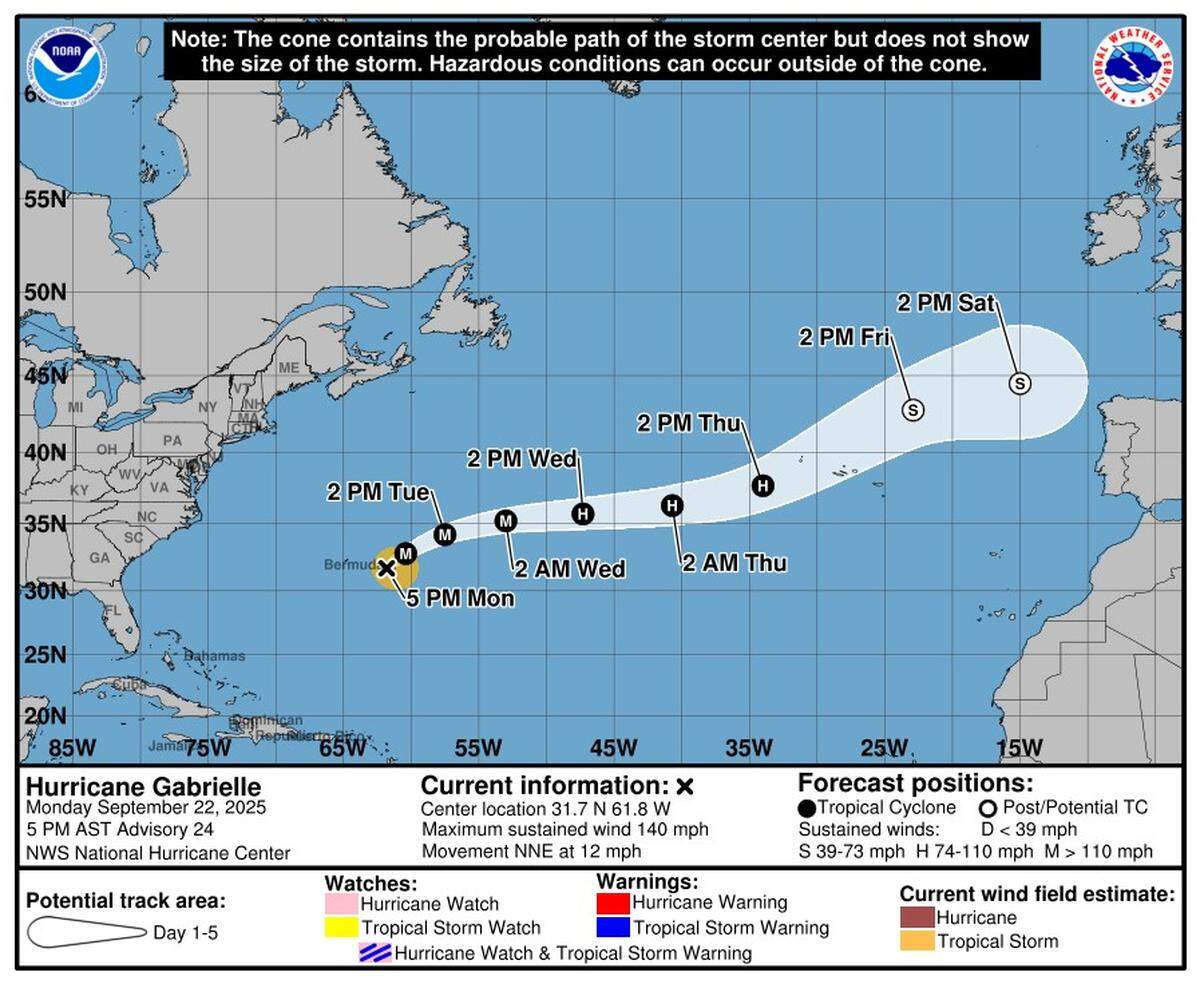
The storm is about 180 miles east-southeast of Bermuda, as of 5 p.m. Monday, Sept. 22, and has maximum sustained winds of 140 mph. It has intensified to a category 4 storm on the Saffir-Simpson Hurricane Wind Scale. Earlier in the day, it was a category 3 storm.
Gabrielle is moving toward the north-northeast at 12 mph and is expected to continue that motion Monday night, before moving faster northeastward or east-northeastward Tuesday and Wednesday, Sept. 23-24.
The center of the hurricane is expected to pass east of Bermuda on Monday night, according to the National Hurricane Center.
Gradual weakening is expected Tuesday and Wednesday, the NHC said in its 5 p.m. update.
Gabrielle’s impact on NC
While Gabrielle is not forecast to make landfall in the United States, it could still affect North Carolina.
Swells from Gabrielle have started to reach the North Carolina coast, and those conditions are expected to continue during the next couple of days, according to the National Hurricane Center.
The swells could cause life-threatening surf and rip currents.
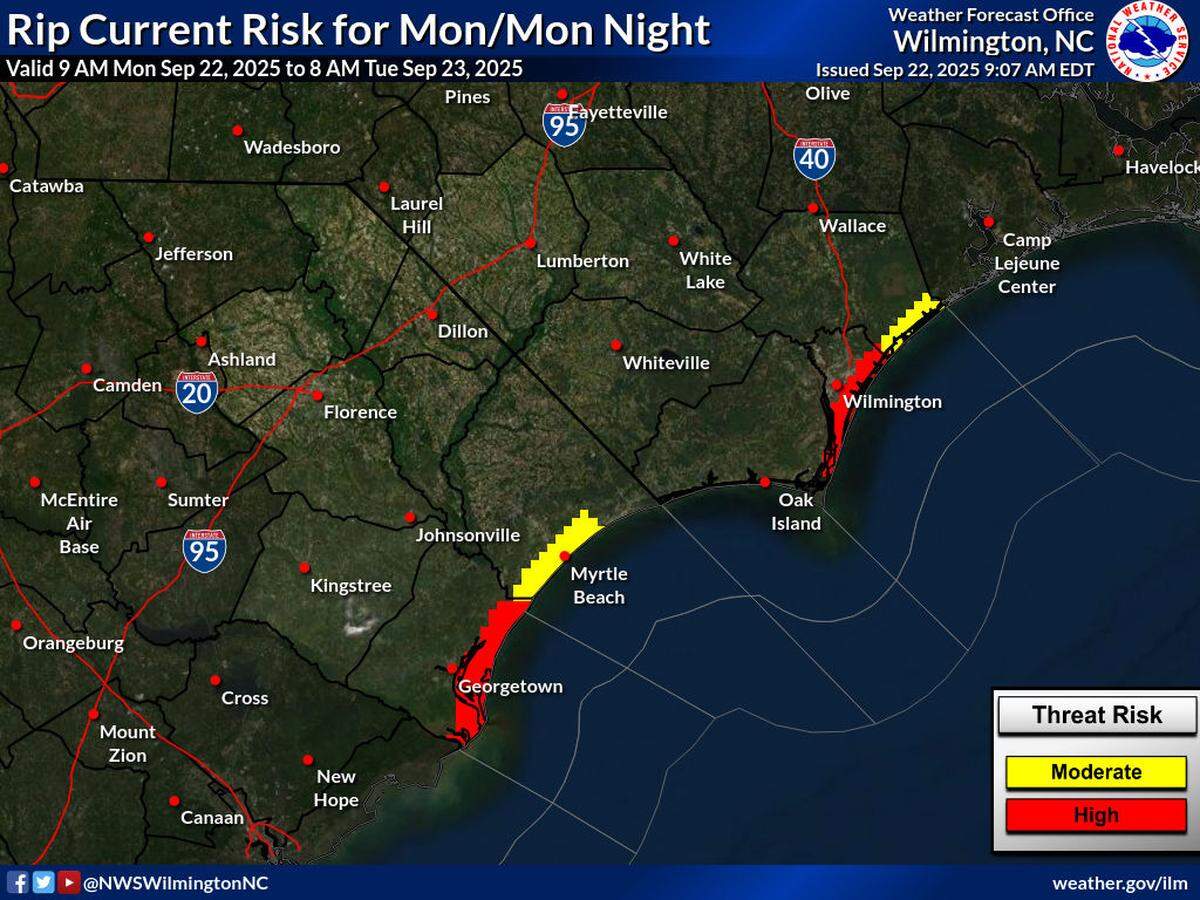
The National Weather Service Forecast Office in Newport/Morehead City issued rip current risks for the following areas:
- Duck to Cape Lookout: high risk
- Cape Lookout to Bogue Inlet: low risk
- Bogue Inlet to North Topsail: moderate risk
The National Weather Service Forecast Office in Wilmington also issued rip current risks for all southeast North Carolina beaches except Brunswick County.
More storms could be on the way
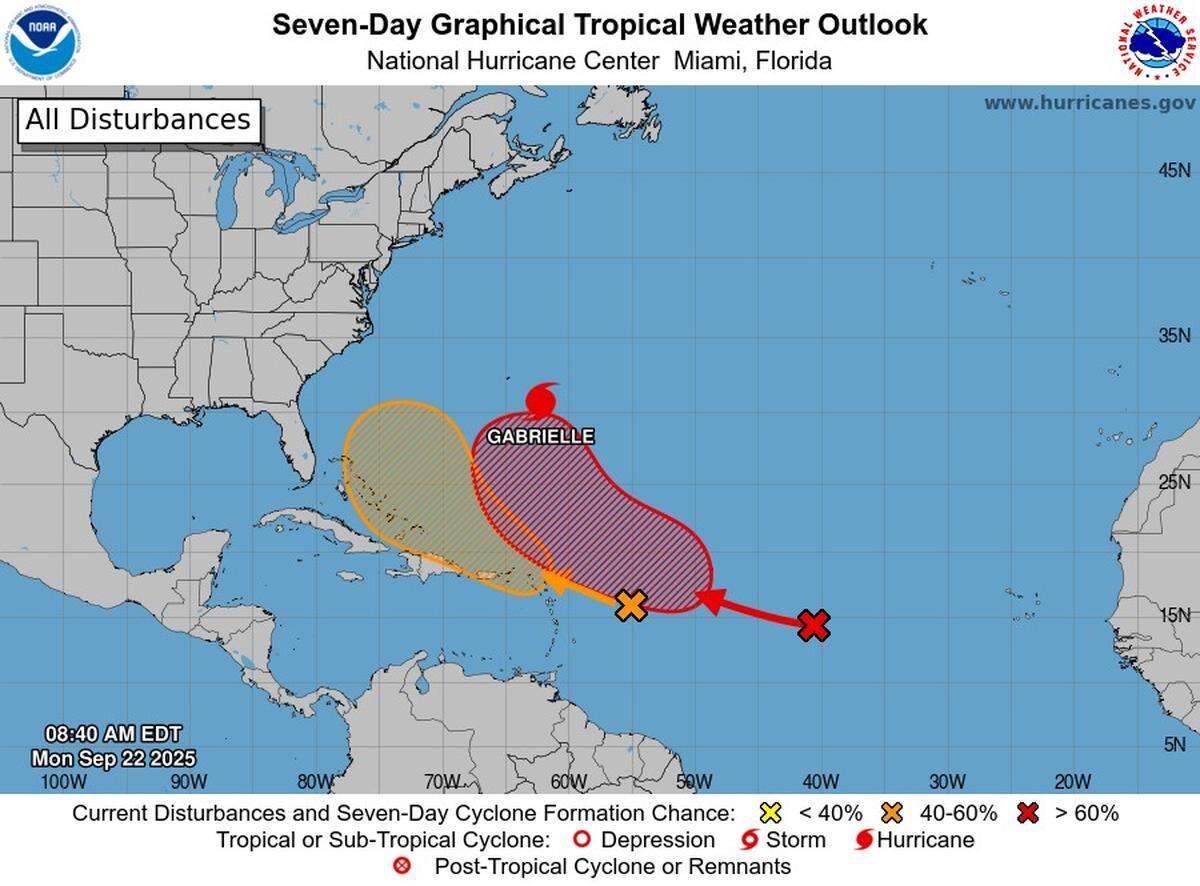
The National Hurricane Center is tracking two disturbances in the Atlantic, in addition to Gabrielle.
There is a tropical wave about 300 miles east of the Leeward Islands that has a low chance of developing within the next 48 hours but a medium chance of developing over the next seven days, as of Monday afternoon. The wave is producing disorganized showers and thunderstorms and could form a tropical depression late this week, when the system is over the southwestern Atlantic Ocean or near the Bahamas.
A second tropical wave, this one about midway between the Cabo Verde Islands and the Lesser Antilles, is likely to develop into a tropical depression Wednesday or Thursday. The system is expected to move west-northwestward to northwestward across the central Atlantic.
Hurricane season 2025
Gabrielle, which strengthened into a hurricane on Sunday, Sept. 21, is the seventh named storm of the 2025 Atlantic hurricane season, which runs through Nov. 30.
Erin was the first hurricane and first major hurricane of the 2025 season. It did not make direct landfall in the United States, but it caused dangerous coastal conditions along North Carolina’s Outer Banks.
Forecasters at the National Oceanic and Atmospheric Administration predicted that there will be above-normal activity this year, with between 13 and 18 named storms. Of those, between five and nine could become hurricanes, and between two and five could be major hurricanes, which have maximum sustained winds of at least 111 mph.
The next named storm would be Humberto.
This story was originally published September 22, 2025 at 10:23 AM.