Weather News

Brace for a repeat of Raleigh’s infamous ice storm of 2002 — with power outages

Key Takeaways
Key Takeaways

AI-generated summary reviewed by our newsroom.

Read our AI Policy.


  • Forecast projects freezing rain and significant ice Saturday evening to Sunday.
  • Ice accumulation could mirror 2002 impacts, snapping limbs and downing lines.
  • Prepare for multi-day outages; officials advise readiness for cold, limited services.

Triangle snow lovers started this week with fantasies of sipping hot cocoa by a fire while the kids built snowmen and sledded merrily down neighborhood hills. But the closer we get to the weekend, the winter storm coming is looking more treacherous and way less fun.

The current forecast, as of Thursday, Jan. 22, calls for less snow than some had hoped for and more freezing rain with an accumulation of ice — the heaviest precipitation expected between Saturday evening and Sunday evening. High temperatures will be the 20s and 30s in the Triangle, with lows in the teens and 20s Saturday and Sunday nights, and in the single digits Monday night. Wind chill values could make it feel like zero or even colder.

For many, it brings to mind a truly awful two-day ice storm that landed in the Triangle on Dec. 4, 2002. It started with a morning of snow, sleet and freezing rain, and by midafternoon, traffic came to a standstill as snow and ice transformed “highways into skating rinks,” The News & Observer reported at the time.

By 10 p.m. that first night, the N.C. State Highway Patrol reported 540 wrecks in the area, as vehicles slid and skidded across exit ramps and bridges.
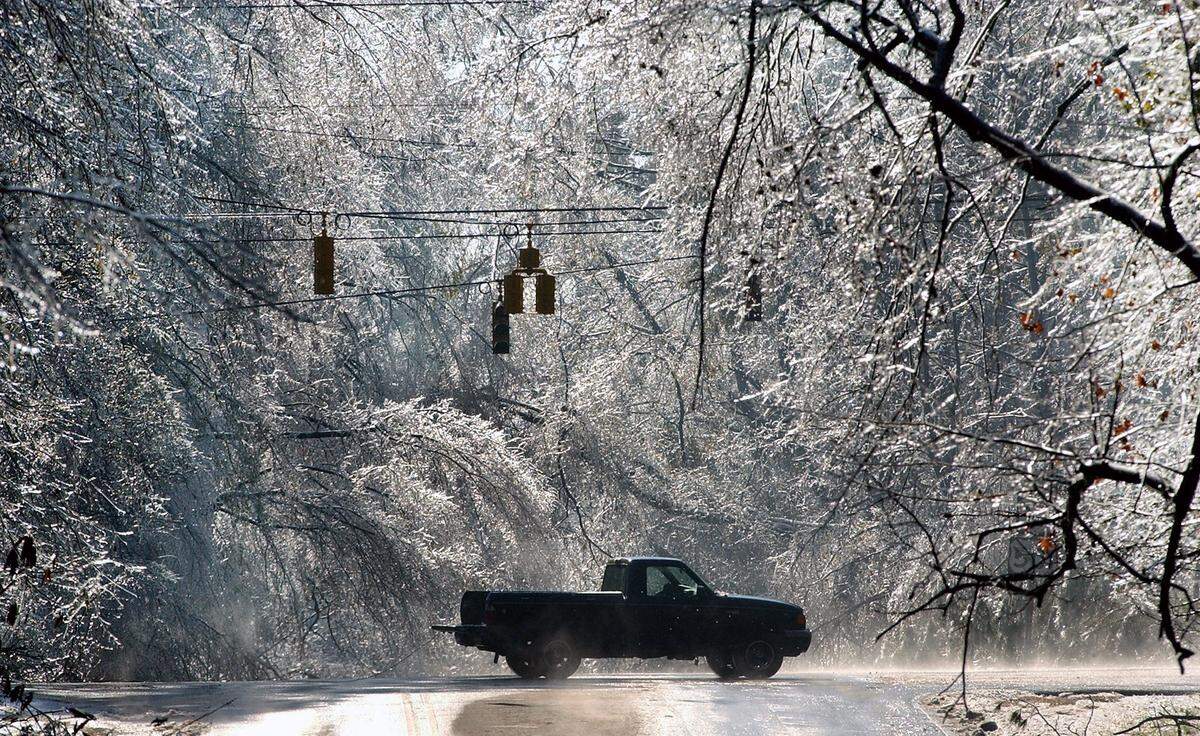
A truck is silhouetted under inactive traffic lights and downed power lines after an ice storm coated much of the Triangle leaving many residents without power for up to a week.
A truck is silhouetted under inactive traffic lights and downed power lines after an ice storm coated much of the Triangle leaving many residents without power for up to a week. Chuck Liddy cliddy@newsobserver.com

Schools dismissed, stores closed. Area shelters went into “white flag” mode, with temperatures stuck below freezing.

Ice-covered tree limbs snapped and brought down power lines, leaving nearly half a million CP&L (now Progress Energy) customers — mostly in Raleigh — in the dark for days, along with another 142,000 Duke Power customers in Durham and Chapel Hill.

Power crews working on Dec. 5 told The N&O that the outages could get worse. “The worst thing that can happen is wind,” CP&L field supervisor Eddie Dunnagan said. “If we get any wind, we’ll have (Hurricane) Fran-like conditions before the ice even melts.”

Luckily, high wind didn’t kick in. But still, wireless phone services went down, the sound of chainsaws filled the air and auto body repair shops were overwhelmed with busted cars.
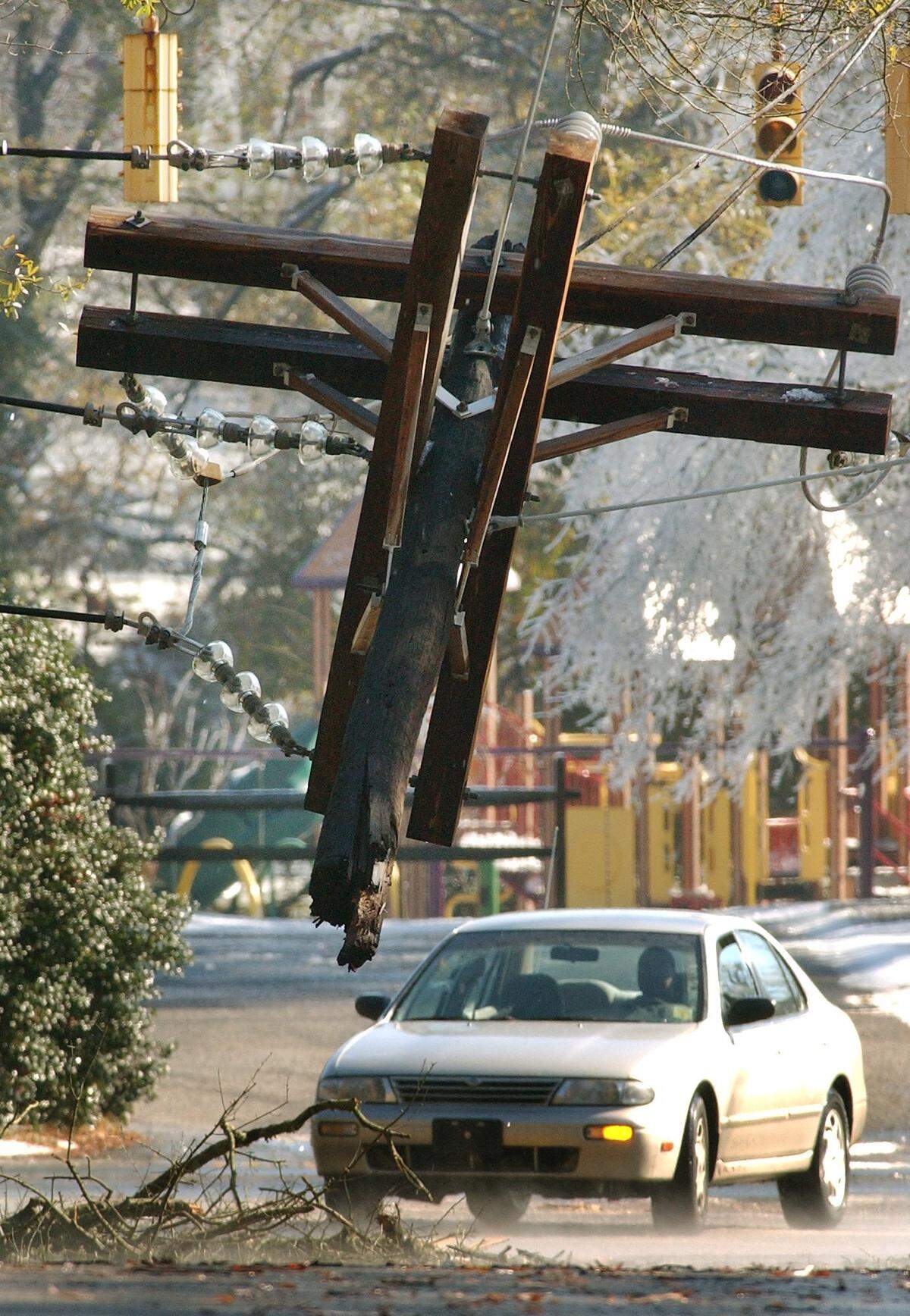
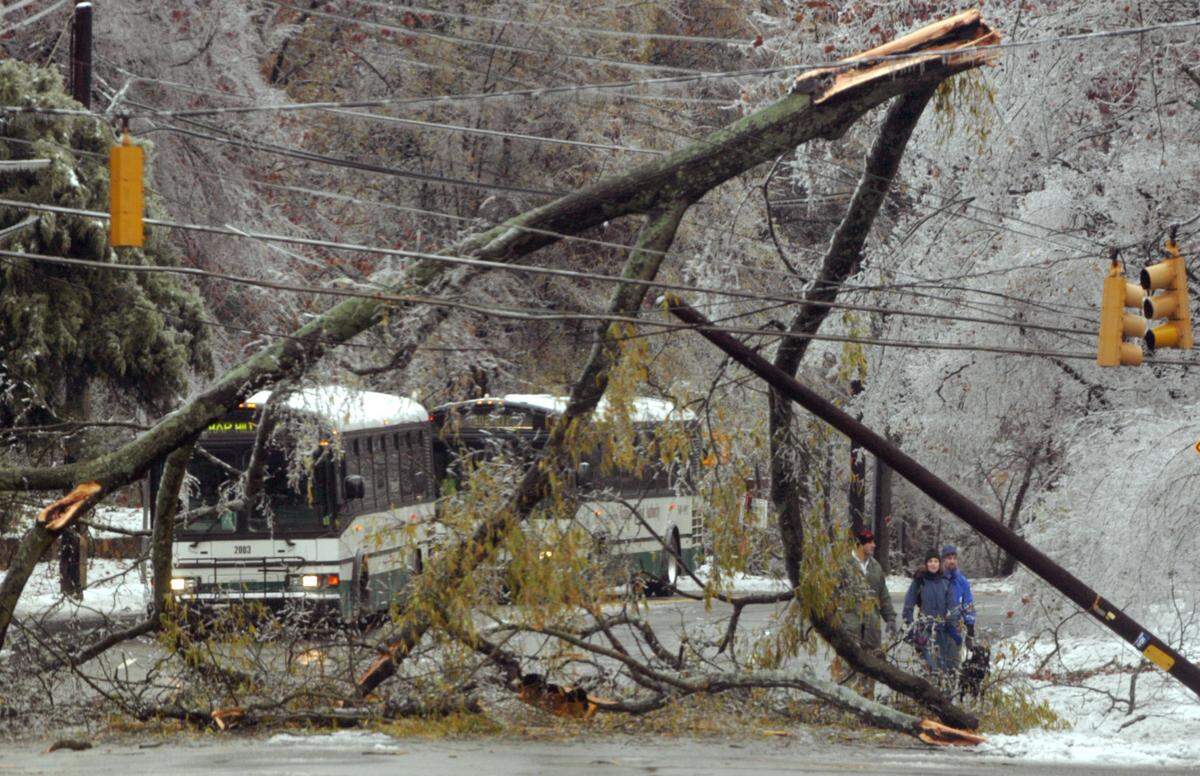
A driver decides whether or not to chance driving under broken power lines near Forest Hill Park Friday after the devastating ice storm. Line problems such as this promise to make the recovery more difficult for the thousands stranded in their homes without power.
A driver decides whether or not to chance driving under broken power lines near Forest Hill Park Friday after the devastating ice storm. Line problems such as this promise to make the recovery more difficult for the thousands stranded in their homes without power. Chuck Liddy File photo

Why was the 2002 storm system so bad?

At the time, Rod Gonski, a senior forecaster with the National Weather Service, told The N&O that it was a result of enough dry, frigid air hitting enough warm, wet air.

A northern jet stream pushed frigid air from central Canada south into central North Carolina. That sent December temperatures, usually in the 50s here, down into the 30s.

Then a highly active southern jet stream, energized by El Nino, dispatched warm moist air this way, which was driven up over the cold mass. When the moist air reached the dry air, it dropped rain. At first, the rain froze, sending sleet and, for a short time, snow to the earth. But as the cold mass eroded, the water dropped through as chilly rain, The N&O reported.

When it struck below-freezing temperatures on the earth’s surface, it froze on whatever it struck, including roadways and “so many trees and power lines unable to carry the burden.”
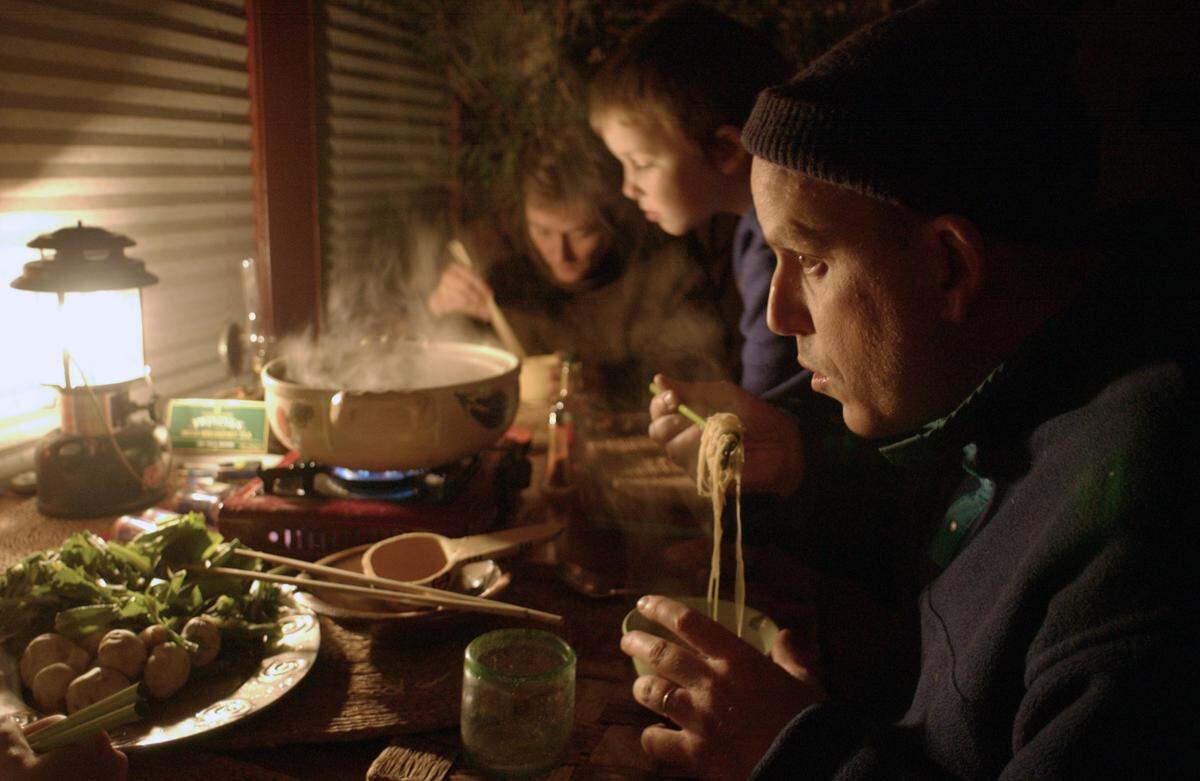
Matt Goodall’s family dines on homemade soup stewed on a camping stove as chilly darkness falls on downtown Raleigh, NC, Dec. 5, 2002. The family was waiting for power crews to repair the electrical lines to their house.  The family was housebound after the  major storm.
Matt Goodall’s family dines on homemade soup stewed on a camping stove as chilly darkness falls on downtown Raleigh, NC, Dec. 5, 2002. The family was waiting for power crews to repair the electrical lines to their house. The family was housebound after the major storm. Mel Nathanson File photo

This year’s storm could be as bad as the 2002 storm

This year’s storm is a little different than the 2002 situation, but the results could be much the same.

Meteorologist Don “Big Weather” Schwenneker at ABC11, The News & Observer’s newsgathering partner, told The N&O on Thursday that a big difference with this weekend’s storm is that we won’t likely start out with as much snow.

Read Next

“This could be more of just a straight ice event or a sleet event,” Schwenneker said. “Sleet would be great for us.”

Freezing rain is what we don’t want, he explained, because when freezing rain touches the cold ground, it freezes and becomes ice, whereas sleet hits the ground as little frozen balls.

Not-so-fun-fact from Schwenneker: One inch of ice can equal 500 pounds on a power line. If we see a half-inch of ice, we’ll be on par with that 2002 storm, he said — and current models are calling for a “significant” accumulation of ice.

“That’s why I’m telling people to be prepared to go several days without power,” he said. “I would be so happy to be wrong because I don’t want people to go through what they will go through with a massive ice storm and power outages.”
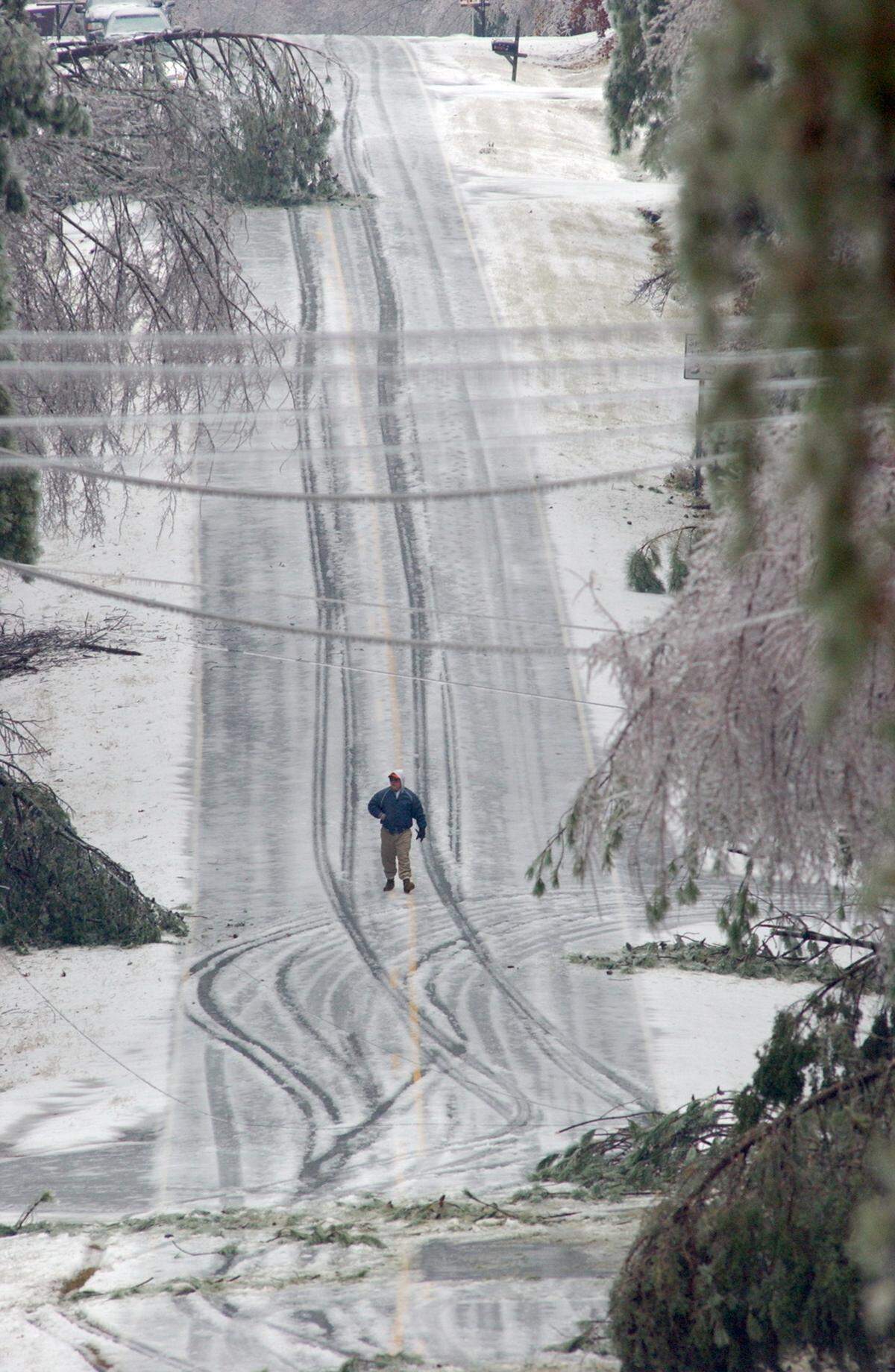
Bill Harvey walks down Matthews Road in north Durham County among downed trees  as he checks his neighborhood, which is off Mason Road.  The ice buildup caused power lines to break as well as tree limbs and whole trees to fall on the lines, causing widespread power outages in the Triangle area.
Bill Harvey walks down Matthews Road in north Durham County among downed trees as he checks his neighborhood, which is off Mason Road. The ice buildup caused power lines to break as well as tree limbs and whole trees to fall on the lines, causing widespread power outages in the Triangle area. John Rottet File photo
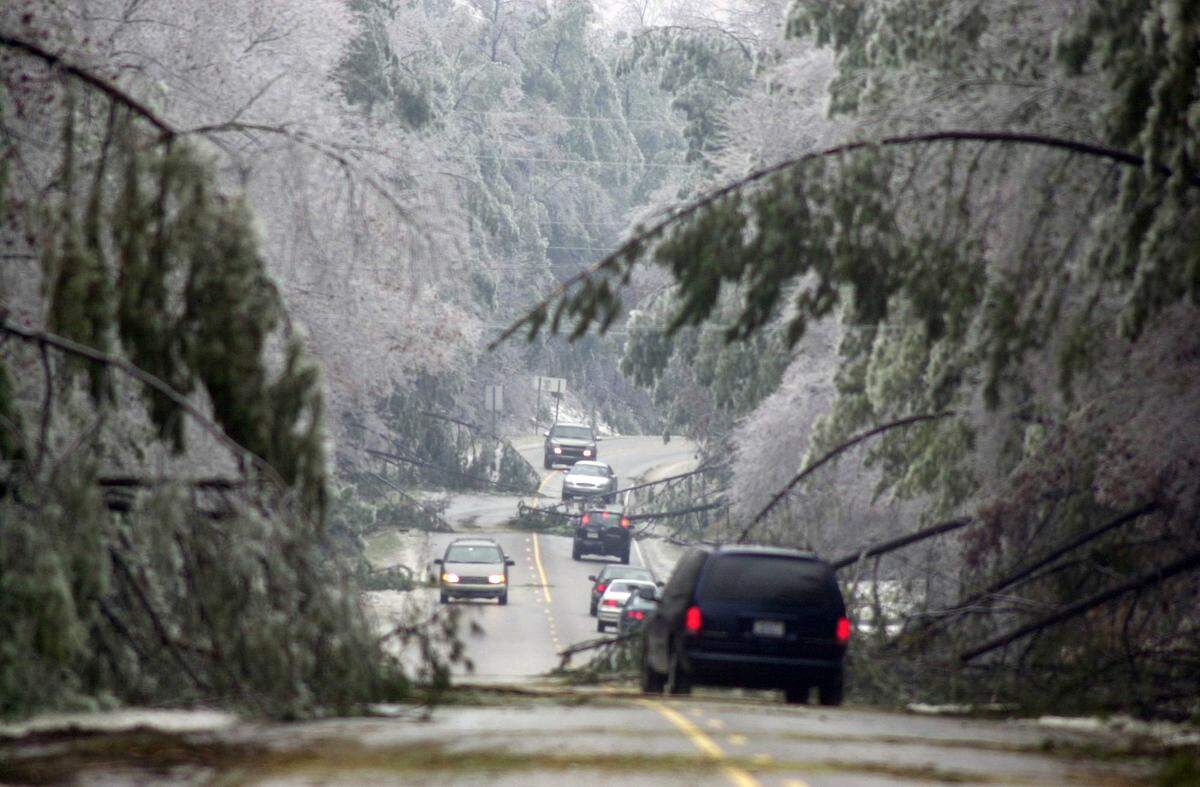
Looking northbound, traffic in both directions along NC Hwy. 55 south of Durham winds its way around fallen and drooping ice-laden trees Thursday afternoon after a major ice storm hit the area in December, 2002.
Looking northbound, traffic in both directions along NC Hwy. 55 south of Durham winds its way around fallen and drooping ice-laden trees Thursday afternoon after a major ice storm hit the area in December, 2002. Harry Lynch File photo
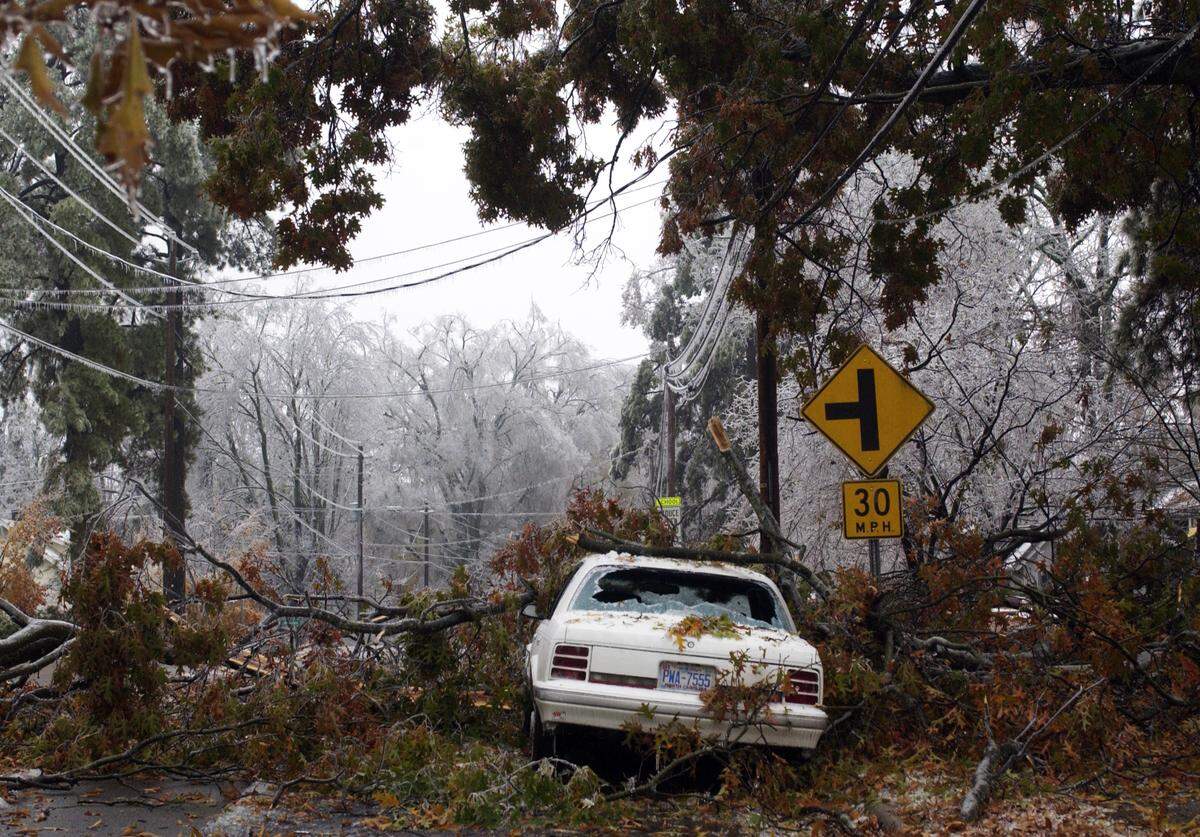
A car suffered the consequences of being on the path of falling tree branches on Brooks Ave. in Raleigh Thursday morning. The ice-storm that hit the Triangle on Wednesday created many scenes like this one on Thursday.
A car suffered the consequences of being on the path of falling tree branches on Brooks Ave. in Raleigh Thursday morning. The ice-storm that hit the Triangle on Wednesday created many scenes like this one on Thursday. Susana Vera Susana Vera
Afternoon traffic creeps in the eastbound lanes of I-40(right) toward Raleigh as seen from the Harrison Avenue overpass as icy conditions from a winter storm slowed the commute to a crawl.  A mixture of snow, sleet and freezing rain quickly stuck to roads Thursday afternoon, Dec. 4, 2002, and then begin to freeze into a sheet of ice, making travel difficult.
Afternoon traffic creeps in the eastbound lanes of I-40(right) toward Raleigh as seen from the Harrison Avenue overpass as icy conditions from a winter storm slowed the commute to a crawl. A mixture of snow, sleet and freezing rain quickly stuck to roads Thursday afternoon, Dec. 4, 2002, and then begin to freeze into a sheet of ice, making travel difficult. Scott Sharpe ssharpe@newsobserver.com
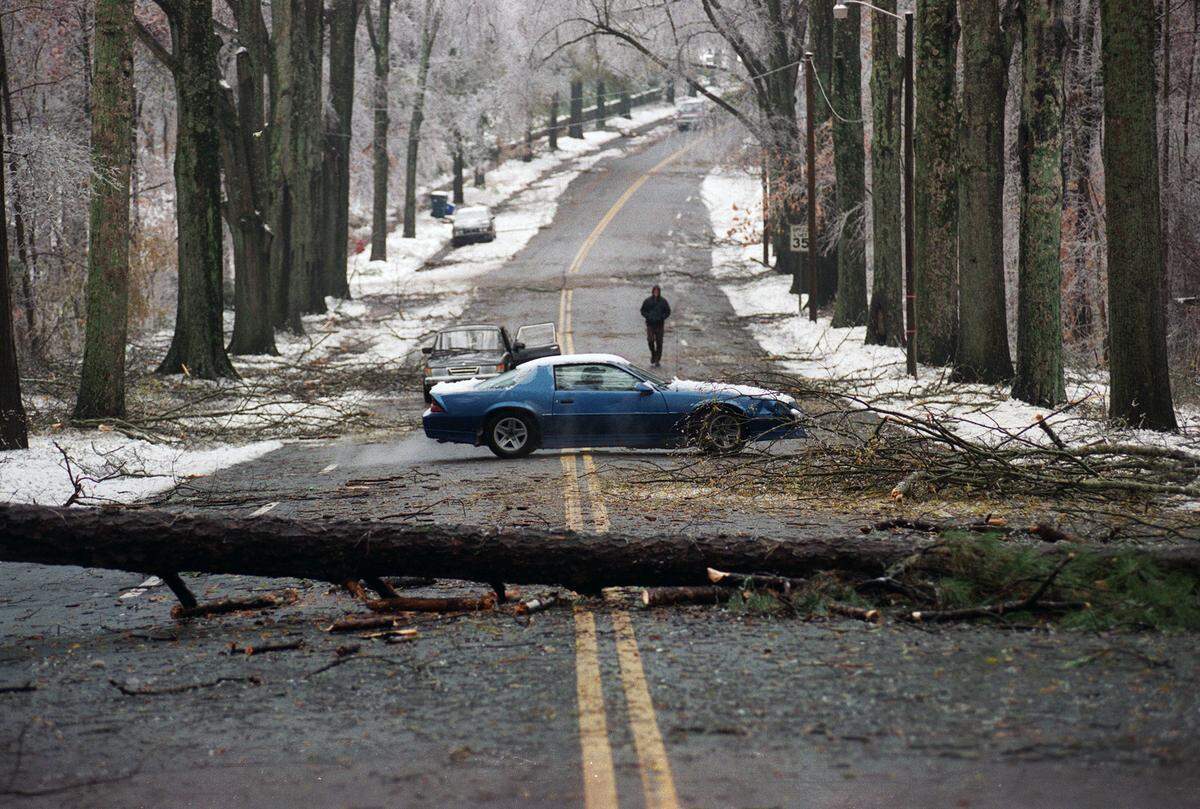
Motorists were stymied by  a fallen pine on Duke University Rd. in Durham. Normally a busy artery it was deserted and impassable after the ice storm in 2002.
Motorists were stymied by a fallen pine on Duke University Rd. in Durham. Normally a busy artery it was deserted and impassable after the ice storm in 2002. File photo
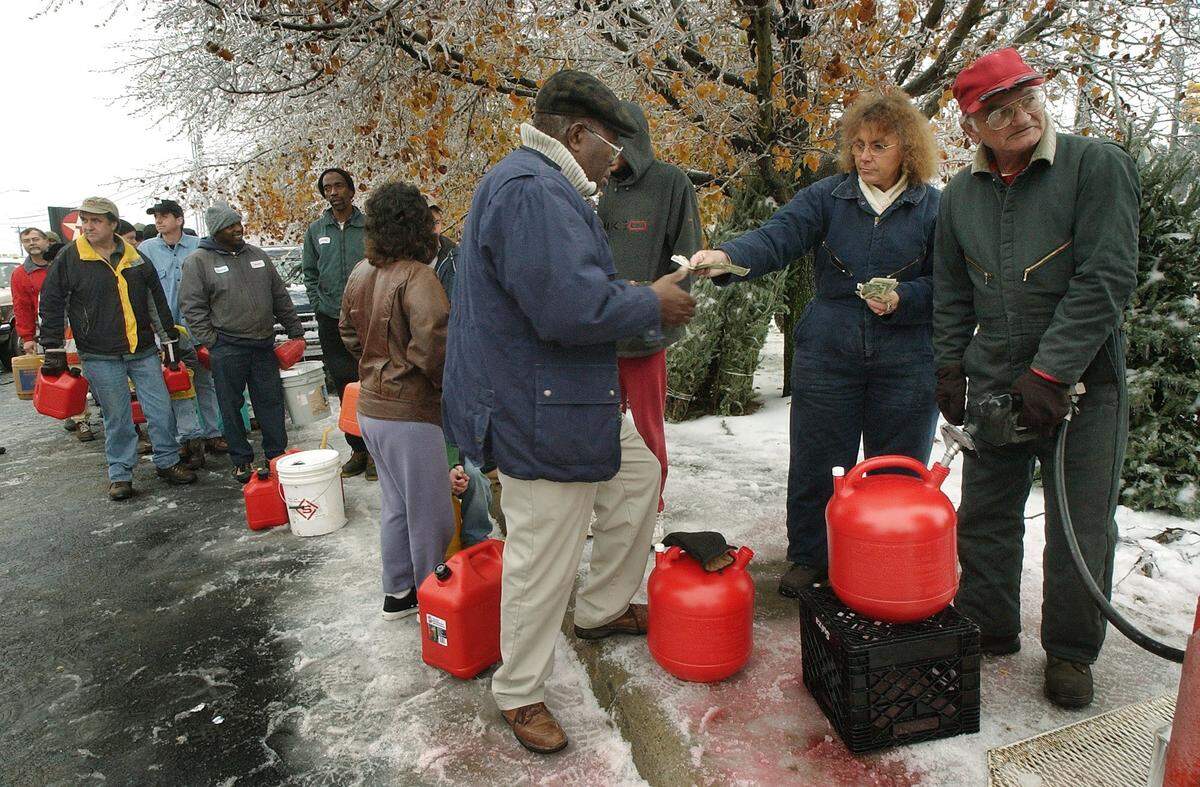
Ben Robinson, of Durham, (at left) pays Bonnie Bowen for kerosene as her husband Tom Bowen watches the gauge at the Texaco Food Mart on Hillsborough Road in Durham. It was a popular spot as folks lined up to purchase fuel after Thursday's ice storm. The Bowen's had been selling Christmas trees but started helping the harried convenience store owner when the crowds overwhelmed the store. The Bowen's had pumped the tank dry once and it holds 350 gallons.
Ben Robinson, of Durham, (at left) pays Bonnie Bowen for kerosene as her husband Tom Bowen watches the gauge at the Texaco Food Mart on Hillsborough Road in Durham. It was a popular spot as folks lined up to purchase fuel after Thursday's ice storm. The Bowen's had been selling Christmas trees but started helping the harried convenience store owner when the crowds overwhelmed the store. The Bowen's had pumped the tank dry once and it holds 350 gallons. CHUCK LIDDY File photo
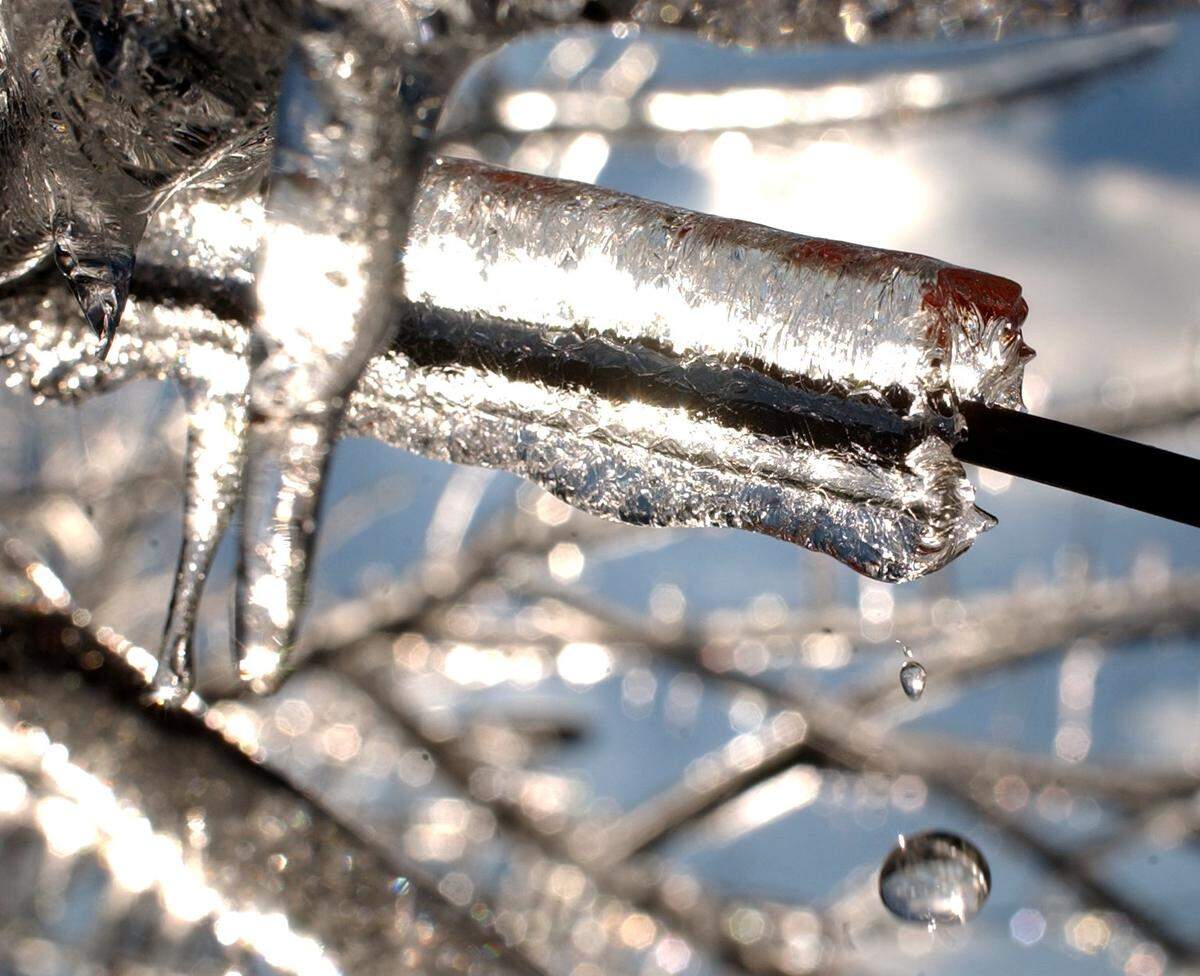
The bright Friday morning sunshine thaws the ice encapsulated limbs of a tree outside Dorton Arena on the N.C. State Fairgrounds
The bright Friday morning sunshine thaws the ice encapsulated limbs of a tree outside Dorton Arena on the N.C. State Fairgrounds Robert Willett File photo
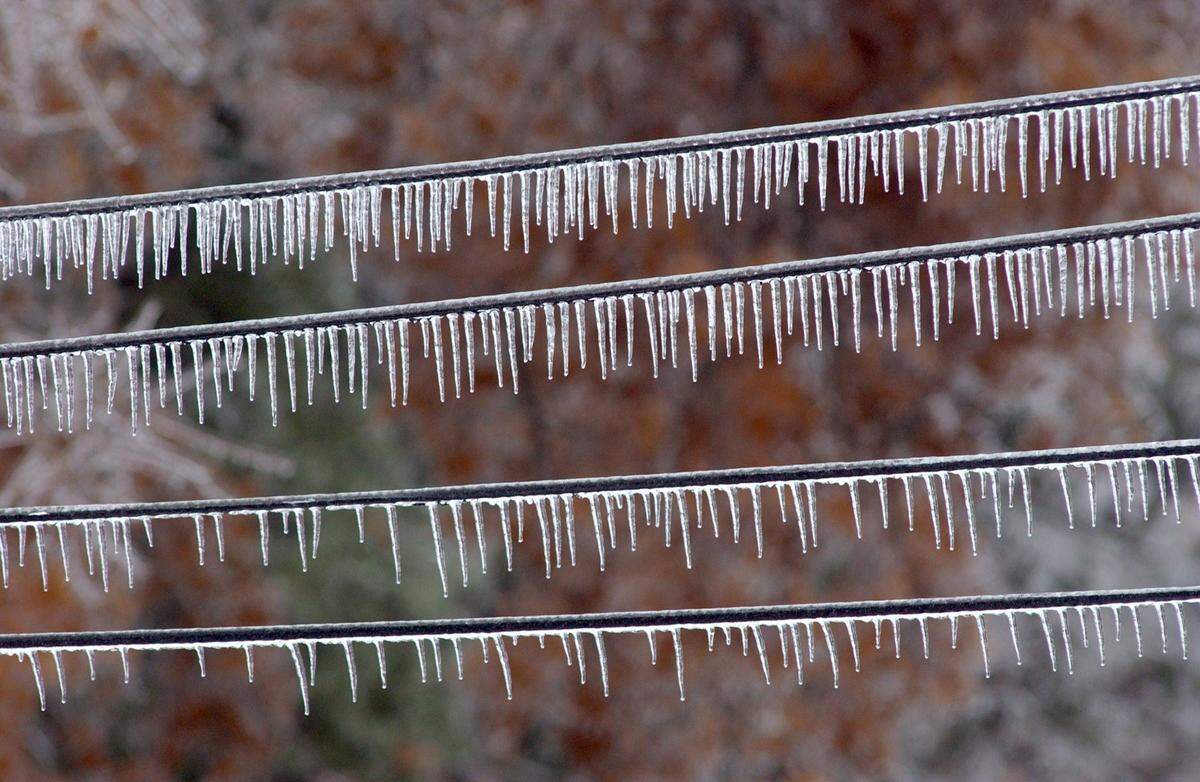
Ice coats power lines in northern Durham County. The ice build up has caused power lines to break as well as tree limbs to fall on the lines, causing widespread power outages in the Triangle area.
Ice coats power lines in northern Durham County. The ice build up has caused power lines to break as well as tree limbs to fall on the lines, causing widespread power outages in the Triangle area. John Rottet File photo
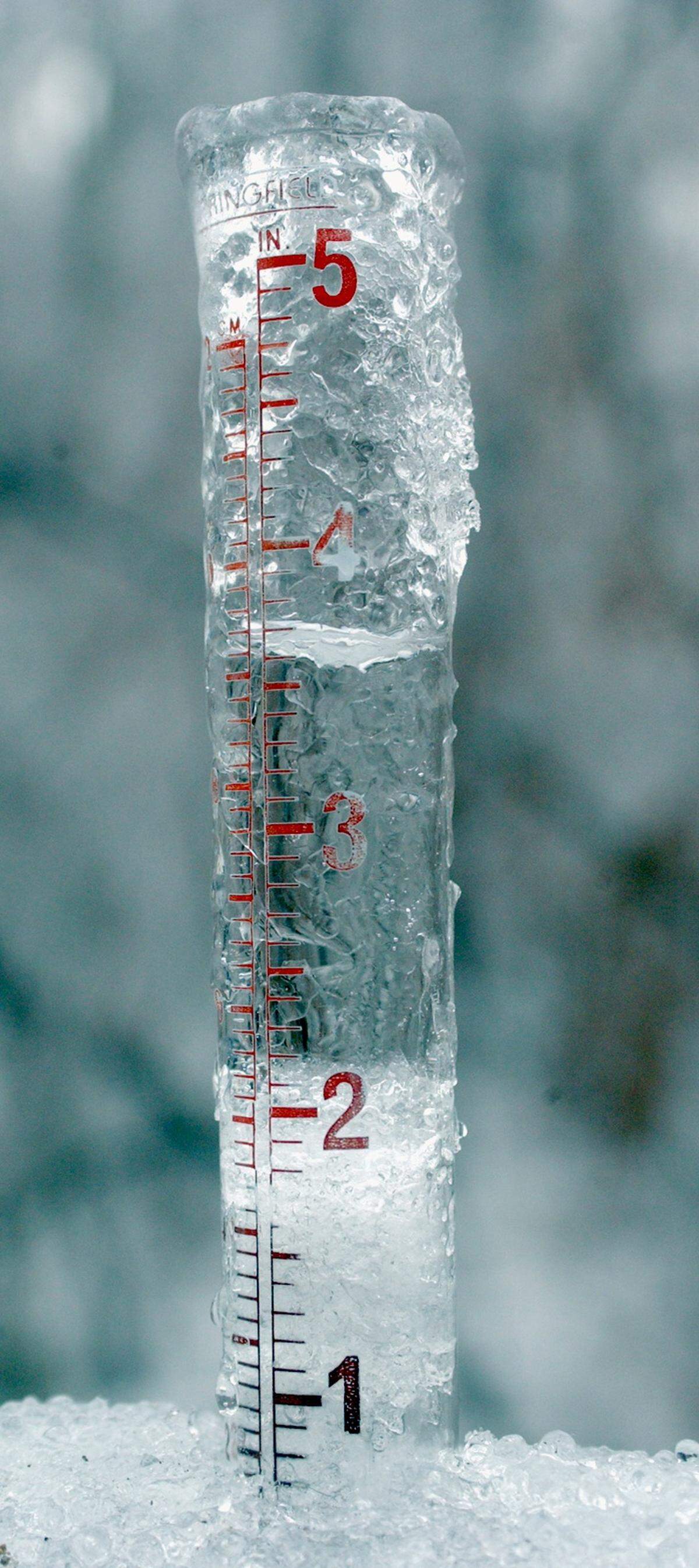
This rain gauge in north Durham County tells the story: frozen solid at the 2 inch mark and liquid water up to the 3 and three-quarter inch mark shows the weather we've had in the last 24 hours.  The ice build up has caused power lines to break as well as tree limbs and whole trees to fall on the lines, causing widespread power outages in the Triangle area.
This rain gauge in north Durham County tells the story: frozen solid at the 2 inch mark and liquid water up to the 3 and three-quarter inch mark shows the weather we've had in the last 24 hours. The ice build up has caused power lines to break as well as tree limbs and whole trees to fall on the lines, causing widespread power outages in the Triangle area. John Rottet File photo
Half a tree felled by the weight of accumulated ice lies on East Franklin St as the other half (not shown) blocks off Boundary St. in Chapel Hill early Thursday morning. The extent of other area damage caused by the winter storm was such that Duke Power crews weren't able to start removing this one until about 4pm.
Half a tree felled by the weight of accumulated ice lies on East Franklin St as the other half (not shown) blocks off Boundary St. in Chapel Hill early Thursday morning. The extent of other area damage caused by the winter storm was such that Duke Power crews weren't able to start removing this one until about 4pm. Shawn Rocco File photo
Read Next
Read Next

This story was originally published January 22, 2026 at 1:56 PM.

Related Stories from Raleigh News & Observer
Brooke Cain
The News & Observer
Brooke Cain is a North Carolina native who has worked at The News & Observer and McClatchy for more than 30 years as a researcher, reporter and media writer. She is the National Service Journalism Editor for McClatchy. 
Get unlimited digital access
#ReadLocal

Try 1 month for $1

CLAIM OFFER