Duke-UNC remains priceless in football-crazed, money-obsessed college sports — but it’s at risk
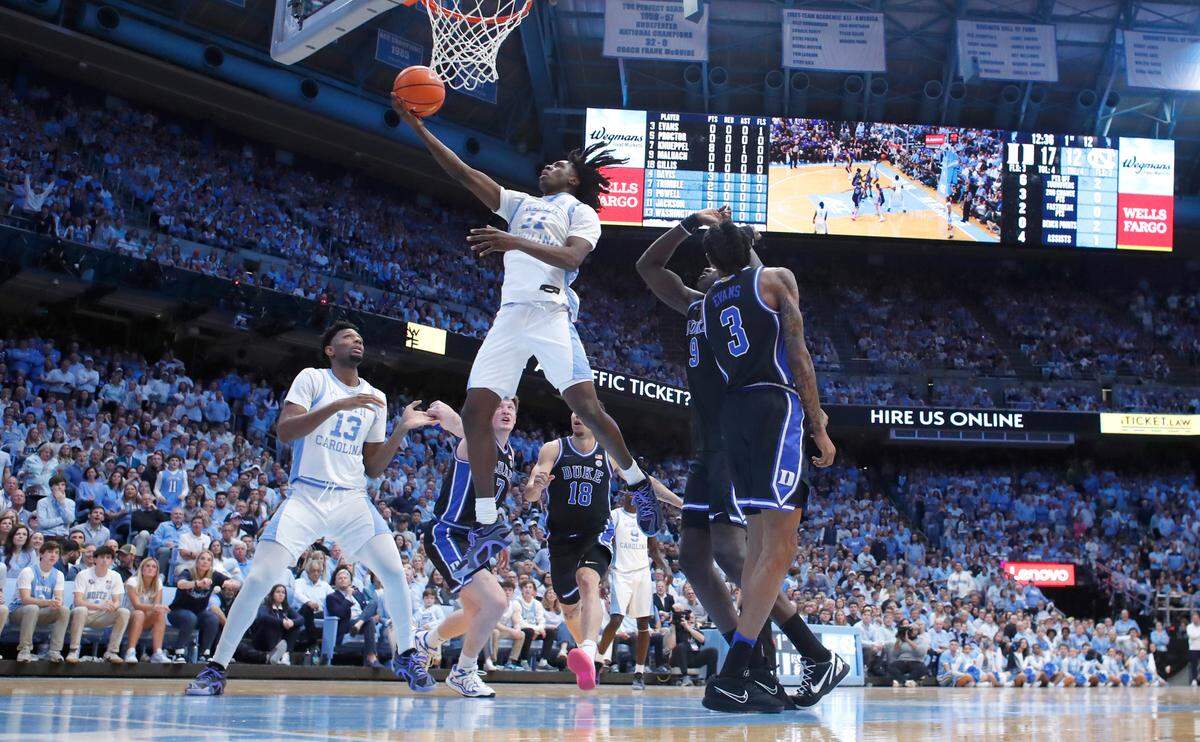
For a few minutes on Saturday night here in the Smith Center, the building was about as loud as it gets. It was peak delirium and madness, in this maddest of college basketball months. North Carolina then had opened the second half against Duke on a frenetic run to take a five-point lead. Veteran Tar Heels guard RJ Davis, playing for the final time on this floor, couldn’t miss.
Jon Scheyer had seen enough. The Blue Devils’ third-year head coach called timeout and his players, in a bit of a daze that proved only fleeting, walked back to the bench while the arena speakers thumped with a heavy bass and while most in a capacity crowd of almost 22,000 rose from their seats. For a few seconds, it felt like the building shook.
It was the kind of scene this rivalry has replicated hundreds (thousands?) of times over the years, and yet you had to be here to see it and feel it. The ESPN broadcast had gone to break. The millions watching on television could not have had a sense of it. It was, for a time, a collective sensory experience — and exactly the sort of thing that underscores this rivalry’s enduring hold.
For all the constant talk surrounding college athletics about football — football, football, football — there’s still very little anywhere, in any sport, that comes close to the energy Duke and Carolina produce when they meet in men’s basketball. By the lofty standards of this rivalry, the Blue Devils’ 82-69 victory ultimately came in a pretty average game, all things considered. Below average, perhaps.
Duke didn’t need any buzzer beaters. There wasn’t any late-game drama. A good number of Carolina fans, so amped early in the second half, amid that hopeful run, left before it ended. This wasn’t the sort of game that anyone will pass down to the next generation. And yet, still, in the football-obsessed, TV-controlled, big-money-addled world of college sports, Duke-Carolina can’t be duplicated, even when it meanders into the mundane.
Indeed, it’s one-of-a kind — but also at risk in the longterm, too, like a lot of other things that have made college athletics special, and differentiated them over the years. Year after year, it seems, more and more is lost throughout college sports. This is the first academic year without the Pac-12. The first with an ACC Tournament (men’s and women’s) that doesn’t include every conference team (hello, N.C. State men).
Rivalries have been lost and airline miles gained. There’s no Oklahoma-Oklahoma State anymore, and Kansas and Missouri don’t play nearly as often and an entire geographically-constrained major college athletics conference just went ... poof! ... but, hey: at least Cal and Stanford each get to make four week-long trips to the East Coast to play some ACC basketball games.
Five trips East, actually, given that both qualified for the ACC Tournament.
As for Duke and UNC, Saturday night was mostly average and somewhat forgettable by their combined standard but, in moments, it was also awesome. The Smith Center rocked like it hasn’t all season — like it rarely ever does these days, in fact — when the Tar Heels looked capable during that run before and after halftime. And of those thousands of people on their feet, screaming, how many were concerned with the ratings of the television broadcast? That’s the real thing that matters in college sports, after all: how many people are watching at home.
The ACC last week announced the settling of its litigation against Florida State and Clemson (and those schools did the same, concerning their lawsuits against the league) after conference members agreed to a new revenue-distribution model based in large part on how many people watch football games. The most-watched teams will make more money and the least-watched less, which adds a Mr. Beastian-like dynamic to fall Saturdays in the ACC.
To the viral go the spoils. Er, the victors. The years 2030 or 2031 also suddenly look like potential doomsday dates, given the fee to exit the ACC drops to bargain-basement level of only $75 million.
Anyone who believes that Duke-UNC is safe simply because it’s Duke-UNC doesn’t understand college athletics, the people running them (network executives as much as anyone else) or their craven, relentless pursuit of a dollar. Is there any guarantee the Tar Heels and Blue Devils both remain in the ACC? Hardly. Is there any guarantee that they remain in the same league, at all, if the ACC starts shedding schools in five years?
It’s not inconceivable that nights like Saturday become more rare. That Duke and UNC, both of which are chasing the pot of gold at the other end of the football rainbow as much as anyone else, find themselves one day separated by eight miles of pine trees and different conferences. And imagine what would be lost. Average was it was, nights like this, then, should be savored.
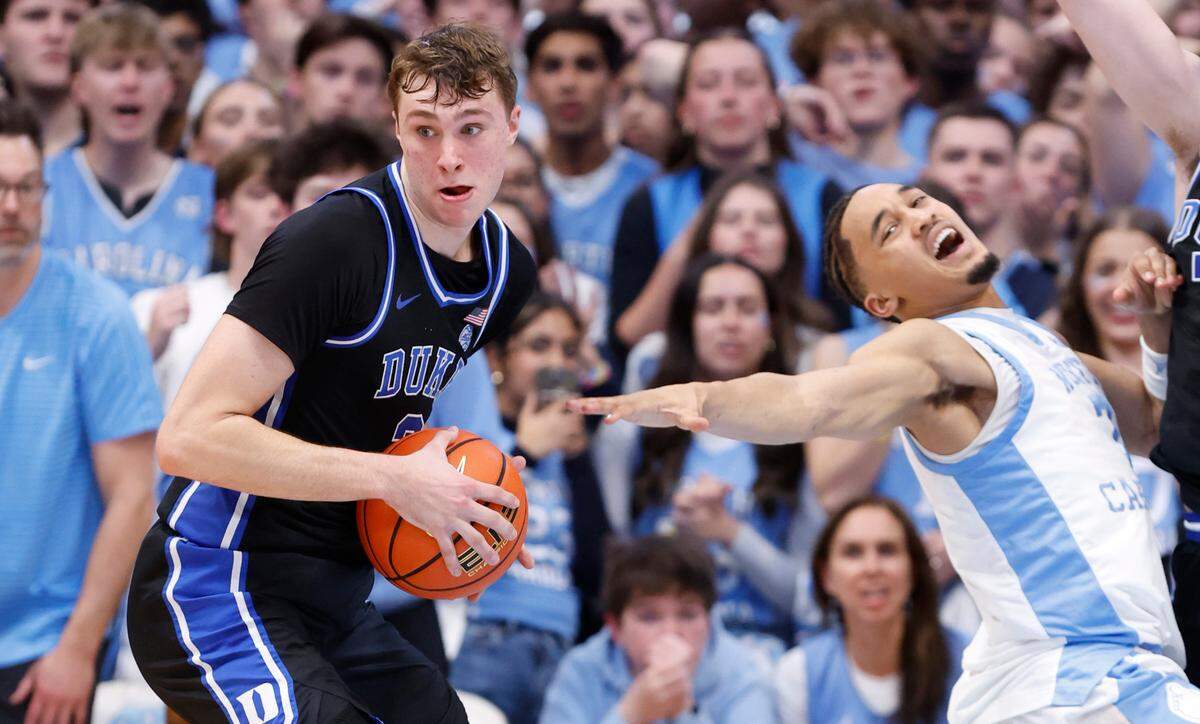
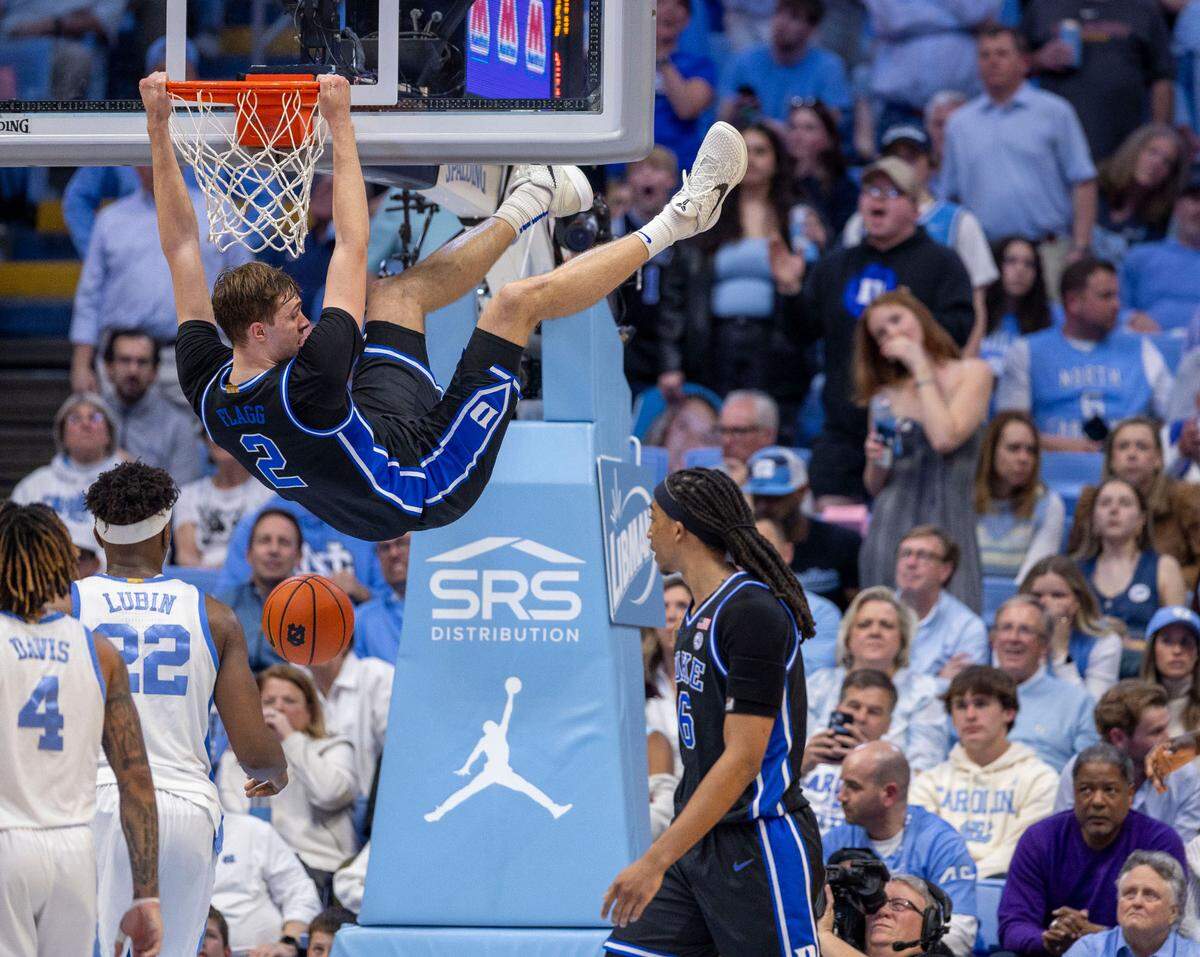
“It was a great atmosphere,” said Duke’s Cooper Flagg, who finished with 15 points, nine rebounds, seven assists and one memorable late dunk, which resembled something of a chin-up, late in the second half. Flagg, destined to the be the top pick in the NBA Draft, was experiencing a road game in this rivalry for the first and only time.
“It was really loud in there. They made a bunch of big runs; we were able to weather the storm and stay focused.”
Scheyer liked that it came with some degree of difficulty. The Tar Heels, in desperate need of a postseason resume-enhancer, led by as many as seven early in the second half and Scheyer came to a wild thought in that moment, similar to the one he had at halftime after UNC had cut a 15-point deficit to one. That thought, from Scheyer: This is good, actually.
At halftime, moments after Duke had played through its poorest stretch, Scheyer told his players: “This is great.”
“I knew we needed it,” he said later. “You test your trust in those moments.”
Consider the test passed. After the Tar Heels built that seven-point lead, Duke outscored them 26-8 over the next 11 minutes. The raucous atmosphere dimmed at first during that run, and then the place was all but silent. There was no classic finish; only the packed aisles of emptying sections while the Blue Devils imposed themselves, and then ran out the clock.
Memorable as it wasn’t, the 264th iteration of Duke-Carolina still delivered, in moments. It pretty much always does, at least for a little while. In this era of college athletics, and amid a different kind of madness, it’s worth wondering whether that will continue as it has, or for how long.
This story was originally published March 9, 2025 at 9:21 AM.