Why funding football, men’s basketball are top priorities for NC universities
AI-generated summary reviewed by our newsroom.
- Football and men's basketball fund Olympic sports at UNC, Duke and N.C. State.
- N.C. State led Triangle schools in 2023-24 with a $49.1M profit from two sports.
- New financial models and buyouts will reshape athletic budgets through 2026.
College coaches, athletic directors and conference commissioners have all discussed the importance of heavily funding football and men’s basketball, a move that typically ensures the remaining programs are supported.
In 2023-24, Duke, North Carolina and N.C. State’s athletic departments reported financial surpluses, according to Equity in Athletics Disclosure Act reports, required by the NCAA and the U.S. Department of Education. These include statistics regarding a program’s number of participants, expenditures, coaches and staff by sport and gender.
The three schools generate most of their revenue through football and men’s basketball, which is enough to not only cover their own expenses, but also to cover the costs of fielding teams in Olympic sports. Expenses include budget items such as scholarships, coaching salaries, support staff salaries, travel costs, recruiting efforts and gameday operations. These reports do not include capital projects or debt service, according to the Department of Education.
Media rights deals, donations, ticket sales, cost for appearances and contributions from a university’s general fund are considered revenue.
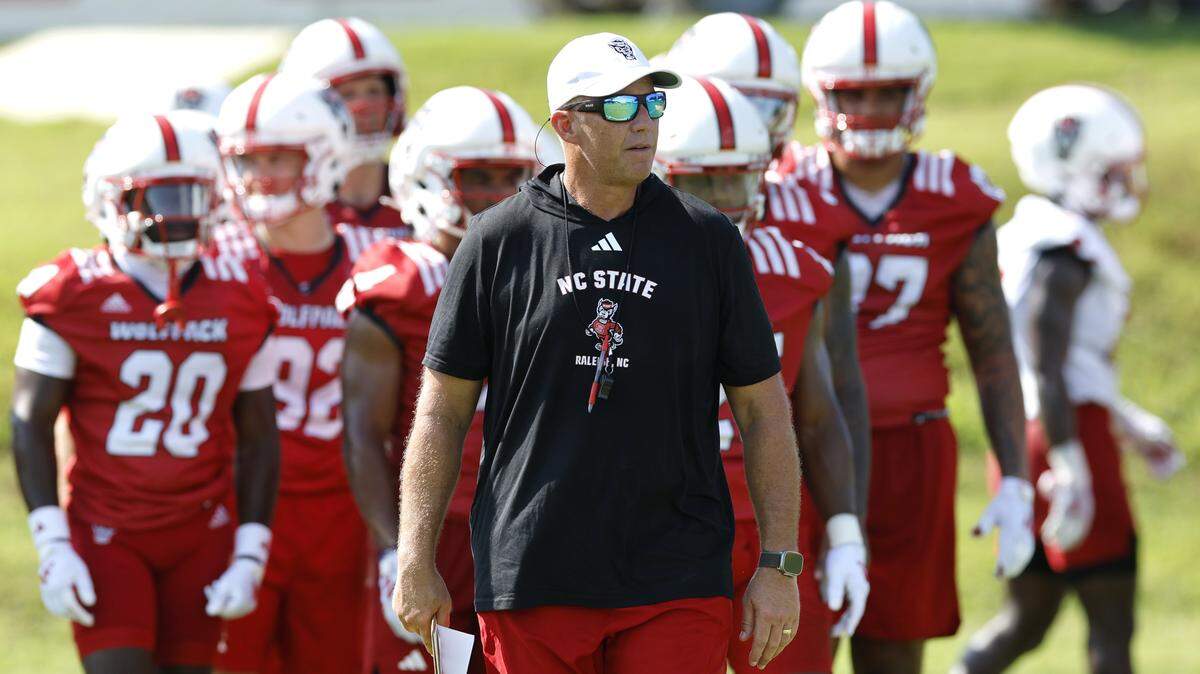
N.C. State Director of Athletics Boo Corrigan said on Friday that the entire athletic department and coaches in other sports understand the importance of football and men’s basketball.
“The best thing that we can do is be really good in football and basketball,” Corrigan said. “It’s a very frank conversation with our coaches.”
UNC made this year the most significant investment in football, which will be reflected in future reports, through the hiring of Bill Belichick. Athletic Director Bubba Cunningham has said publicly and in internal emails that the administration believes the university will receive a positive return on its investment.
“Our intention is to invest in (football) with the expectation the return will outweigh the investment, thereby allowing us to continue to support our Olympic sports,” Cunningham wrote in an email this spring addressing criticism about football spending.
NC State financial update
Every sport at N.C. State generated revenue in 2023-24, but football and men’s basketball were the only two sports to operate in a surplus, according to the school’s EADA report. The Wolfpack spent approximately $124.9 million in expenses and brought in $133.2 million in revenue last year.
Football and men’s basketball generated a combined $97.5 million in revenue and finished with $48.4 million in operating expenses, leading to a $49.1 million gain. Football alone finished with a $41.3 million profit.
The gains from football and basketball allowed the Wolfpack athletic department to finish with an $8.3 million surplus and support the remaining sports within the athletic department.
When looking at football salaries for the reporting period, the Wolfpack football staff lands around the Power Four average with $12.3 million total. Dave Doeren’s $5.5 million salary falls into the average range for major coaches and his assistant salary pool was roughly $6.8 million. Football paid its support staff an additional $4.7 million.
After firing former offensive coordinator Robert Anae, the Wolfpack was on the hook for his $900,000 buyout.
Former men’s basketball coach Kevin Keatts made $3.3 million in his final season, which included bonuses for the team’s 2024 ACC Championship and Final Four appearance. His contract was automatically extended two years following the conference title and March Madness run. He was fired in March with five years remaining and a $7.8 million buyout attached.
New head men’s basketball coach Will Wade signed a six-year deal worth $17 million and $2.5 million in Year 1.
Buyouts and new salaries will be included in the 2024-25 and 2025-26 reports. Corrigan emphasized the importance of supporting the two main revenue drivers in order to create a robust athletic department.
“We care about everyone’s experience as they come through, whether you’re a women’s tennis player, volleyball, cross country, wrestling,” Corrigan said. “We want you to have the best experience you can have as you’re here.”
N.C. State holds approximately $40.8 million in athletic-related debt as of 2024, according to the Knight Commission on Intercollegiate Athletics. That is $56.6 million below the ACC average.
Duke’s 2023-24 athletic finances
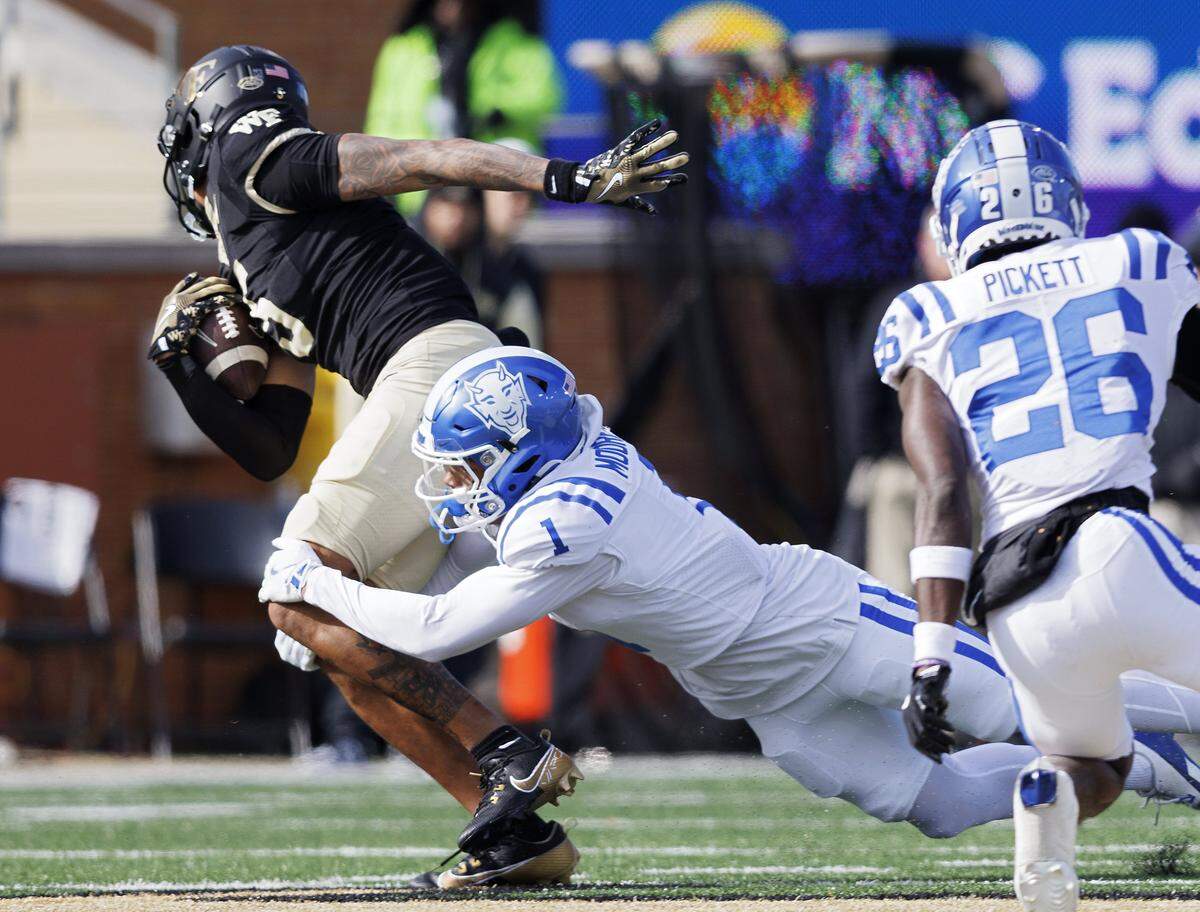
The Blue Devils topped the Triangle in total revenue but also led the trio in expenses. Duke reportedly finished with a slim $107,000 surplus, according to its EADA report, after spending $166.7 million and bringing in $166.8 million.
The program reported six sports finished with a profit, but football and men’s basketball generated the most funding.
Football ended the fiscal year with a $24.2 million profit, while men’s basketball topped $19.4 million.
Duke’s report states the university paid $9.2 million for salaries to head coaches of men’s sports.
Former football coach Mike Elko received $3.8 million while current men’s basketball coach Jon Scheyer’s base salary was $2.3 million, according to the school’s latest IRS 990 form for the fiscal year ending in June 2024. More specific numbers, including current head football coach Manny Diaz’s base salary, will not be available until the university’s next IRS 990 form is released.
As a private university, Duke is not subject to open records laws.
Field hockey, women’s soccer, softball and women’s track and field/cross country reported positive margins, though these all finished with a surplus under $200,000, according to its EADA report. For the reporting year, softball won the ACC Championship and advanced to the Women’s College World Series. Field hockey made the NCAA Tournament.
Despite the seemingly positive status, the university is facing a $5.6 million deficit in athletics for 2025-26, according to its annual athletic department review.
Duke athletic director Nina King declined in July an interview request to discuss the school’s financial standing.
North Carolina’s 2023-24 spending reflected local average
As previously reported, Carolina finished with similar numbers to N.C. State in 2023-24. It boasted $157.6 million in revenue and $149 million in expenses for a surplus of $8.5 million in 2023-24. That was an increase from prior years due in part to media rights deals.
Football and men’s basketball, however, were the only two sports that finished with financial excess. They combined for roughly $45.5 million, with football accounting for $26.8 million and basketball contributing $18.7 million.
Mack Brown received a $4.8 million salary, while his assistant coaching salary pool was worth $8.3 million. Upon his dismissal, the university owed Brown $2.8 million.
Comparatively, Carolina will pay Belichick a $10 million salary annually and another $10 million for his assistant coaches. The front office staff pool is worth $5.3 million.
Head men’s basketball coach Hubert Davis earns roughly $3.2 million per year, according to his contract signed last year. The university supports 28 sports, including 26 Olympic sports. Carolina remains committed to funding the programs, which accounted for a women’s soccer national championship, men’s and women’s track individual national championships, three ACC Tournament titles and six individual ACC titles.
Erin Matson (field hockey), Danna Durante (gymnastics), Joe Breschi (men’s lacrosse) and Jenny Levy (women’s lacrosse) won ACC coach of the year honors for their respective sports.
UNC’s athletic-related debt sits at $105 million — $7.6 million more than the ACC average.
How much will college athletics spending change?
New spending reports for 2024-25 — to be released at the end of 2025 or early in 2026 — for all three universities will likely be similar to the 2023-24 reports. They will, however, include the buyouts for the terminated coaches and part of the contracts for the new coaches.
UNC budgeted $9.2 million in severance pay across the 2024-25 and 2025-26 fiscal years for Brown and his coaching staff. This number could decrease if coaches receive employment elsewhere.
The ACC implemented a postseason success payout model, which will provide more money for teams that make deep runs in their respective postseasons. This was implemented for the 2024-25 reporting period.
More significant shifts, however, are expected for this upcoming year. The 2025-26 reports will include multiple changes.
First, it will see an increase in spending for revenue sharing with student-athletes thanks to the House settlement. This can be up to $20.5 million for the first year, and all three schools are expected to meet the amount. N.C. State has given each team a specific amount of money to divide as it sees fit. Corrigan said it was important to give coaches flexibility to build their teams to have the most success.
Second, schools may see a change in the ACC revenue payouts following the league’s settlement with Florida State and Clemson. The league paid, on average, $45 million to its member schools in 2023-24. In addition to the postseason success initiative, the league’s unequal distribution model will now include a viewership initiative, providing programs with more money based on television metrics. This goes into effect this year as part of the settlement.
Finally, women’s basketball will begin seeing more revenue for its success. In addition to the ACC’s performance model, the NCAA also announced in January it would implement a performance-based revenue model to award conferences “units” for tournament participation and wins, which is similar to the model already used in men’s basketball.
Starting this year, conferences earn shares of a $15 million fund, which will grow to $25 million by 2027-28, based on how far their teams advance. Payouts will begin in 2026.
The NCAA originally approved 132 units, worth approximately $113,636 for this year and $251,000 for three years. A team that advanced to the 2025 Final Four, playing five games, could earn its conference $1.25 million.
This week, it approved three additional units for men’s and women’s basketball for participating in and winning the national championship, bringing the total to 200 units for men’s basketball and 135 for the women.
Corrigan did not express any issue with the funding model changes. As players often say, N.C. State can control its own destiny, and ultimately its pocketbook.
“It goes back to being as good as you can be,” Corrigan said. “The better you are, the better the slot, the better the ratings.”
He said the flex games in football, which can be difficult to plan for, are actually a positive thing. Depending on how a team does, it has a chance to get better TV opportunities, more viewers and more money.
“It’s in our wheelhouse,” Corrigan said. “We have the opportunity to do that, to get better slots. … A lot of it is in front of us. What opportunities do we have?”
Universities face uncertainty on education funding
The athletic financial numbers paint a stark contrast to the funding cuts and freezes in other areas of higher education. UNC System President Peter Hans announced in June a “personnel cap,” requiring restrictions on salary spending, employee headcounts and hiring. Hans cited changes in state and federal funding as the reason for the changes. He advised chancellors to evaluate existing contracts
In May, Hans told chancellors to reduce administrative costs at their campuses.
UNC recently announced a $70 million reduction due to federal funding cuts. The largest portion of the cuts come to financial aid for out-of-state students. The Carolina athletic department is evaluating possible reductions, which it will present to the Board of Trustees.
Duke, meanwhile, began layoffs this month after offering voluntary ones in July, with notifications going out to employees until Aug. 19. It also requested university departments to identify “non-personnel budget cuts” that could be made.
N.C. State froze hiring at the end of February, also due to concerns about federal funding. Colleges and departments were advised to conserve funds in the event of lost grant funding.
Corrigan, a member of Chancellor Kevin Howell’s cabinet, addressed the funding concerns for higher education Friday. He acknowledged the difficult decisions that other university leaders are facing. N.C. State’s situation is different from what UNC and Duke are facing, as it does not operate a hospital, but budget concerns are still present in Raleigh. The athletic department continues to seek alternative funding sources, including naming rights opportunities, having success that leads to additional dollars through the new financial models, other sponsorships and fundraising.
“We’re in those meetings, bleeding with, feeling for the other people on campus,” Corrigan said. “We want to be a good campus partner every way we can be. That’s why the importance of everything we can do to find our own revenue, everything we can do to be a good steward of our resources and make sure that we’re holding up our end of the bargain.”
The News & Observer’s Inside Look takes readers behind the scenes to illuminate the people and places in our community.