Despite everyone working from home, Triangle tech companies continue planning new HQs
Thanks to the pandemic and the advances of remote-work technology, almost everyone with an office job in the Triangle is working from home.
Water coolers have been traded for Google Hangouts, and lunch meetings are now taken over Zoom.
The quick — and relatively seamless — transition to virtual work has some wondering whether their office is even necessary.
“The impact of COVID-driven technology on the demand for office space has been the great unknown of 2020,” said Paul Zarian, a director at the Raleigh office of Hines, a real estate developer.
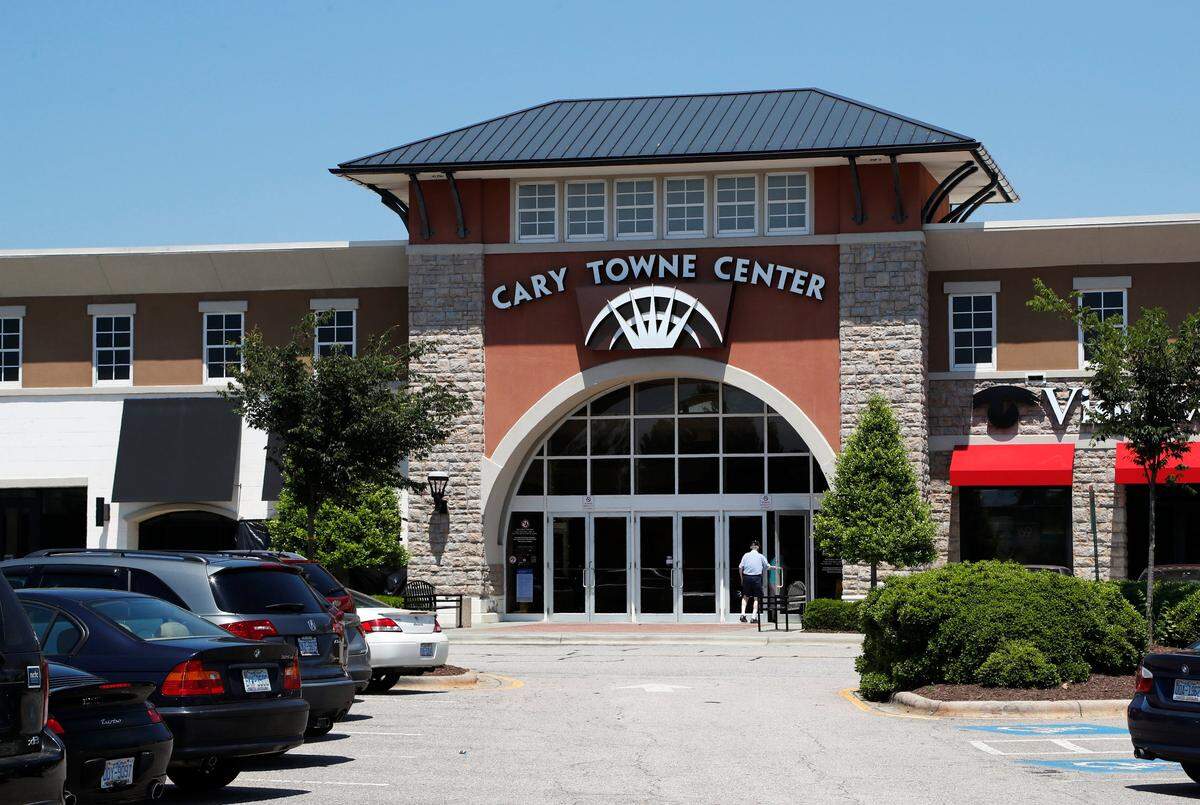
Yet this week, offices got a huge boost when Epic Games announced it would buy Cary Towne Center for $95 million, promising to redevelop the dying mall into a world-class headquarters for potentially thousands of workers.
“Epic Games would not spend $95 million to have their employees work from home,” said Zarian, who is helping build the nearby Fenton development. “Even though they are building their own campus, it is a sigh of relief for the future of office space to see large companies make these commitments.”
It’s not just Epic making this bet.
Pendo and Bandwidth, two of the Triangle’s fastest-growing technology companies, are also going full-speed ahead with their new headquarters.
Their leaders have called office-based work a big part of their culture, and are eager to gather their employees again.
To be sure, commercial real estate took a beating in 2020, and it’s unclear how quickly it might recover.
In the third quarter of last year, the Triangle had negative absorption — meaning more commercial space was vacated than was leased up — for the first time since 2010, according to a report from JLL. And most of the transactions that did happen were in the life science industry.
But many are looking for positives.
“Does that mean ... no one will ever work from home again?” Zarian said. “That is not what we believe. But there is a role for office space in the future. What you are seeing with Epic, Bandwidth and others shows that.”
Committed to in-person work
Epic declined an interview request about its new headquarters, but said it plans to eventually return to its Cary offices.
“We are prioritizing the health and safety of our employees and contractors and will return to the office when it is safe to do so,” the company’s spokeswoman, Elka Looks, said in a email. “But we don’t yet know when that time will come.”
Pendo CEO Todd Olson, who leads one of the few Triangle startups to achieve a billion-dollar valuation, has said in previous interviews that gathering in the office is important for the young company.
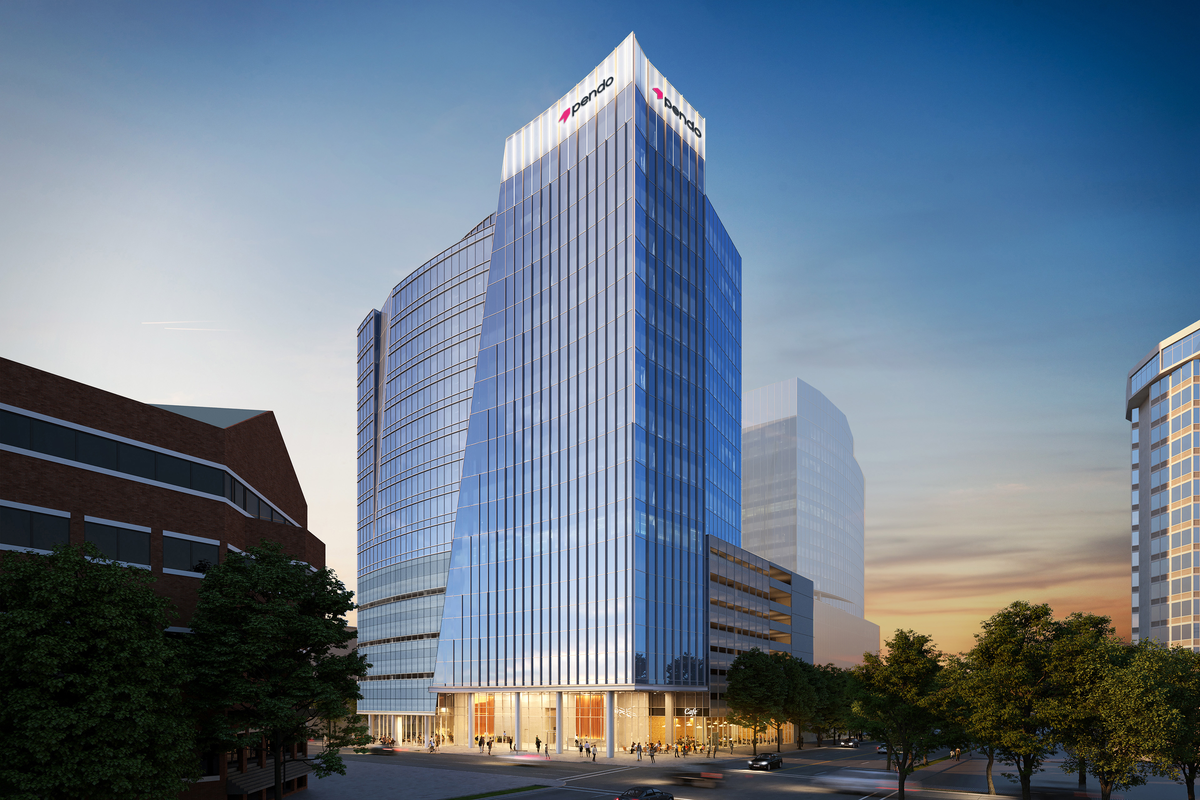
Pendo is hiring hundreds in downtown Raleigh and is signed on to be the anchor tenant of the Raleigh Crossing tower, which began to rise over downtown during the pandemic.
Laura Baverman, a spokeswoman for the software startup, said it still plans to move into the tower when it is completed.
With so many new employees signing on, the company views an in-person office culture as critical to building a cohesive team.
“What is easy to lose sight of is how you build relationships in this time,” Olson told The News & Observer in November.
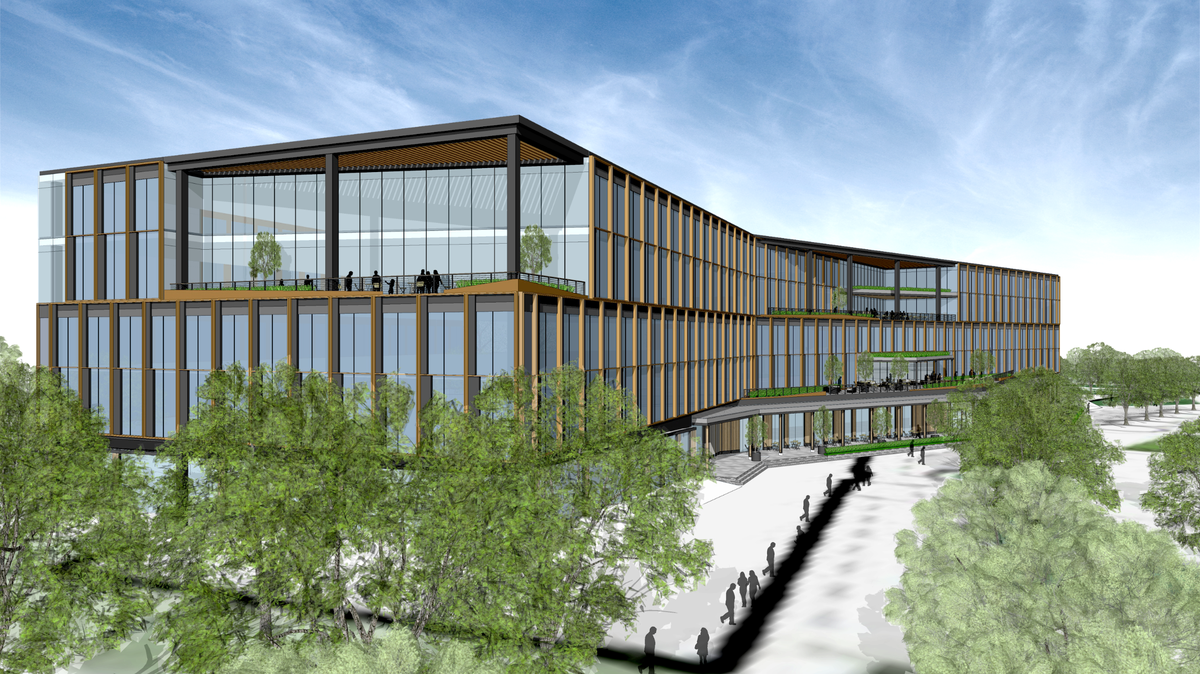
Bandwidth, which is building a new headquarters in Raleigh and has pledged to hire 1,100 more employees, feels similarly.
“When we think about our company culture we are committed to in-person work,” Bandwidth’s director of facilities, Matt Shelton, said in an interview.
He argues that while tools like Zoom and Google Hangout — both of which use Bandwidth’s technology to operate — are vital, they still can’t replace in-person collaboration.
“At the same time, the bar has been raised for what in-person work will be,” he said. “If you are going to do it, you better double down on it to make sure (workers) want to come to the office.”
For Bandwidth that means the addition of a Montessori School for the children of employees with no waiting list, a state-of-the-art gym, acres of outdoor space and nearby access to Umstead Park.
Those types of amenities, he said, help Bandwidth not only recruit talent but retain the workers it already has.

Remote struggles
To Arvind Malhotra, a professor at UNC’s Kenan-Flagler School of Business who studies the future of work, it makes sense that fast-growing companies would still invest in real estate.
“Physical signals of growth still matter,” Malhotra said, especially for those trying to recruit lots of new employees.
The growth also exacerbates some of the problems of a remote workforce.
Building a specific culture and mentoring the next generation of workers remains hard to do virtually, he said.
While the pandemic will give researchers plenty to study, it still remains to be seen what sort of impact the pandemic will have on employees just starting their careers or those who joined during the pandemic.
Jillian Grennan, a professor at Duke University’s Fuqua School of Business, said performance will vary by company.
An older and less creative company might do well virtually, while others might not.
“The biggest challenge is the ability to coordinate and be creative,” she said in an interview. “A game company (like Epic) I could see wanting to have these face-to-face interactions and think creatively.”
And while productivity of most firms has remained strong during the pandemic, she added, there’s other impacts to be considered.
She pointed to one study of a Chinese company called Ctrip.
Ctrip experimented by sending 1,000 employees to work from home for nine months.
The move boosted productivity, but after nine months only half of the employees wanted to continue working from home.
The reason, Grennan said, was the employees felt isolated and lonely.
It’s not a direct comparison to today’s remote work. Employees could come into the office one day a week, and they didn’t have to deal with children attending virtual school.
But it showed that people do like interacting with their colleagues, even if it meant the extra expenses of commuting.
Ultimately, the pandemic could give workers more autonomy over their schedules, while also highlighting the importance of in-person work, both Grennan and Malhotra said.
It’s something each company will have to grapple with, especially as workers start to feel more comfortable trading jobs as the economy recovers.
Zarian said that reality is already on the minds of his clients.
One of the most frequently asked questions at the moment, he said: “How do you differentiate yourself from your competition if everyone is working from home?”
This story was produced with financial support from a coalition of partners led by Innovate Raleigh as part of an independent journalism fellowship program. The N&O maintains full editorial control of the work. Learn more; go to bit.ly/newsinnovate
This story was originally published January 6, 2021 at 9:00 AM.