Triangle gambling cafés are sketchy, dark, sometimes kind, and very much illegal
READ MORE
Inside the Triangle’s illegal gaming cafés
The News & Observer visited a dozen area electronic gaming businesses and found their continued, unregulated existence is due less to any legal loopholes and more to authorities in Raleigh, Durham and Cary choosing not to close them.
Expand All

.jpg)
.jpg)
I’m Brian Gordon, tech reporter for The News and Observer, and this is Open Source, a weekly newsletter on business, labor and technology in North Carolina.
Maybe my surreptitious photo taking was too obvious. Maybe I stood out for being the only person that day (week, month, ever?) who attempted to log onto the nonfunctioning internet at this purported “internet café.”
Or perhaps management recognized I wasn’t a regular.
Whatever the reason, after I played a round of slot machines and sweepstakes contests at south Durham’s The Phoenix this summer, a man who didn’t identify himself — but who approached with the confidence and concern of someone with a stake in the business — asked for my game receipt.
He then ripped it to pieces. You know, normal internet café behavior.
Across the Triangle, there are internet cafés that only take cash. Some never close. Their windows are blacked out, and armed guards search each patron. These are internet cafés in name, small unregulated casinos in practice. Over the past five months, I entered a dozen across Durham, Cary and Raleigh to find out how they continue to exist despite state gambling laws.
What I found: While aspects of their operations attempt to exploit legal loopholes, other parts are blatantly illegal. There’s little gray area when it comes to operating 30 or more slot machines. Police and sheriff’s offices elsewhere in North Carolina have raided internet cafés; authorities in Raleigh and Durham stopped a decade ago.
Why? And does it matter at a time when legal gambling in North Carolina continues to grow? And when online gambling, plus the mobile state lottery, is at our fingertips?
My search for answers led to conversations with unregulated gaming operators, sheriffs, local district attorneys, the State Bureau of Investigation and one UNC professor, who has become a go-to witness for the sweepstakes industry. I looked at curiously timed campaign donations to a state Supreme Court candidate and North Carolina’s long cat-and-mouse pursuit of gaming parlors. And yes, I gambled (for journalism!).
.jpg "Fun Zone - 2000 Chapel Hill Rd Suite 40, Durham, NC 27707(1).jpg")
The receipt-ripping incident at The Phoenix was my only confrontation. Some of the mini-casinos were friendly. On my way out of Fun Zone, another Durham internet café, several months ago, the security guard called after me. I braced for an argument but was instead informed that a raffle for a flat screen TV was about to begin, if I wanted to stick around.
But The Phoenix stood out for another reason. Inside a strip mall on University Drive, this electronic gaming business violates the neighborhood zoning ordinance. And unlike Durham sheriffs or police, the local city-county planning department is enforcing the law.
Durham has issued a $500 civil citation. The Phoenix, planning officials told me, has agreed to end gaming on the premise by next Friday or face further daily fines.
I’ve been back to The Phoenix twice to see if anything changed from my initial visit. Outside, a mural of Las Vegas landmarks near the entrance has been replaced with a blank white wall. But inside, The Phoenix still looks the same, with rows of slot machines, rectangular fish tables, and sweepstakes computer terminals. During a late August visit, I stepped up to an Ultimate Fire Link slot machine, put in a dollar, pressed a button, and won back $7.
This time, I made sure to keep the receipt.
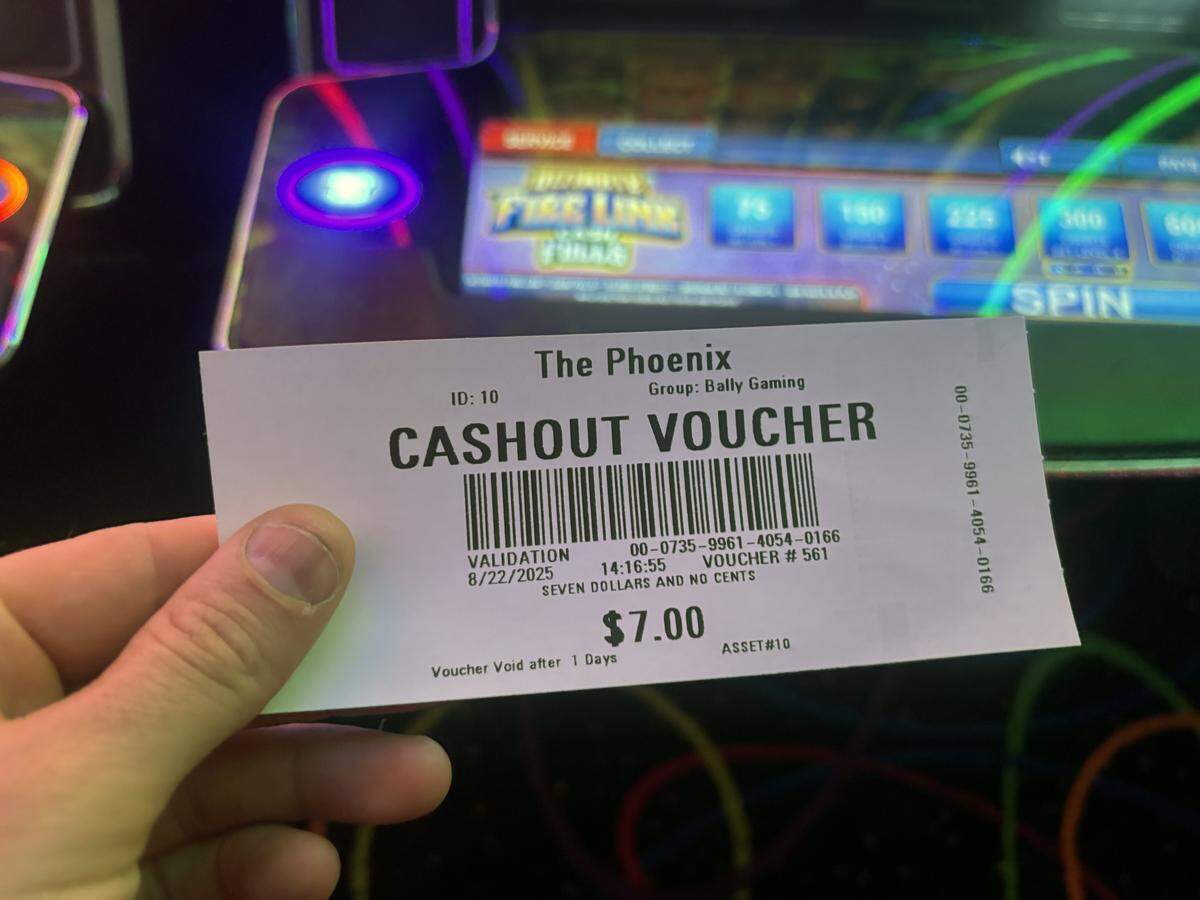
Clearing my cache
- A new study labels Durham’s RTI International “ground zero” for Trump administration cuts (or savings if you’re a DOGE fan) among a network of 76 research nonprofits.
- Raleigh’s First Citizens Bank continues to acquire, buying BMO Bank and its 138 U.S. branches.
- Third-party data centers account for 80% of the wattage Duke Energy estimates it would need to power all prospective economic projects in the Carolinas, the company told the N.C. Utilities Commission. That data centers are only 30% of projects in this pipeline emphasizes their energy consumption. Prospective projects, Duke notes, can range from those farther along to those “more speculative in nature.” But interest in future data centers is clear. So too is local pushback. Shout out to my former colleague Adam Wagner, now at WUNC, for highlighting this data on X.
- Durham’s publicly traded rare disease company BioCryst Pharmaceuticals has acquired Boston’s Astria Therapeutics in a $700 million deal. Buying Astria gives BioCryst “a perfect second product candidate” in treating people with hereditary angioedema, or HAE, its CEO Jon Stonehouse said in a statement.
- Unicorn alert. North Carolina has another $1 billion-plus startup after Wilmington’s Vantaca, which provides software for HOA management, raised $300 million. Shout out to the Triangle Business Journal for highlighting this news.
- You’ve heard it here before: Most corporate jobs projects that North Carolina backs with its main state tax incentive, the job development investment grant, never reach their original hiring goals. If they hire at all. On Oct. 1, N.C. Commerce posted its annual grant report with the latest numbers: Since the state began awarding JDIGs in 2002, it has completed 50 projects, ended 103 with some money distributed, ended 103 with no money distributed, had 16 projects withdrawn by the companies, and has 177 grants still active.
- Neither MrBeast nor East Carolina University are providing updates on their content creator program, three years after the partnership was announced, USA Today reported. I discussed this seemingly stalled collaboration in a recent Open Source — and delved into the misconception around where the world’s most popular YouTuber actually briefly attended college (hint, not ECU).

National Tech Happenings
- The government shutdown has entered Week 3. Thousands of federal workers have been laid off, but then a federal judge halted these latest dismissals. President Donald Trump says active-duty military won’t miss paychecks, and he has promised to end what he deems “Democrat programs.”
- China’s latest restrictions on rare earth metals rattled industries after President Trump vowed retaliatory tariffs. One RTP startup, Vulcan Elements, says it is the answer to America’s rare earth magnet problem.
- The future, it seems indeed, is data centers. An investor group featuring Nvidia and BlackRock is buying a major data center developer for $40 billion.
Thanks for reading!
This story was originally published October 17, 2025 at 6:30 AM.