Why this Wake County neighborhood keeps fighting new homes
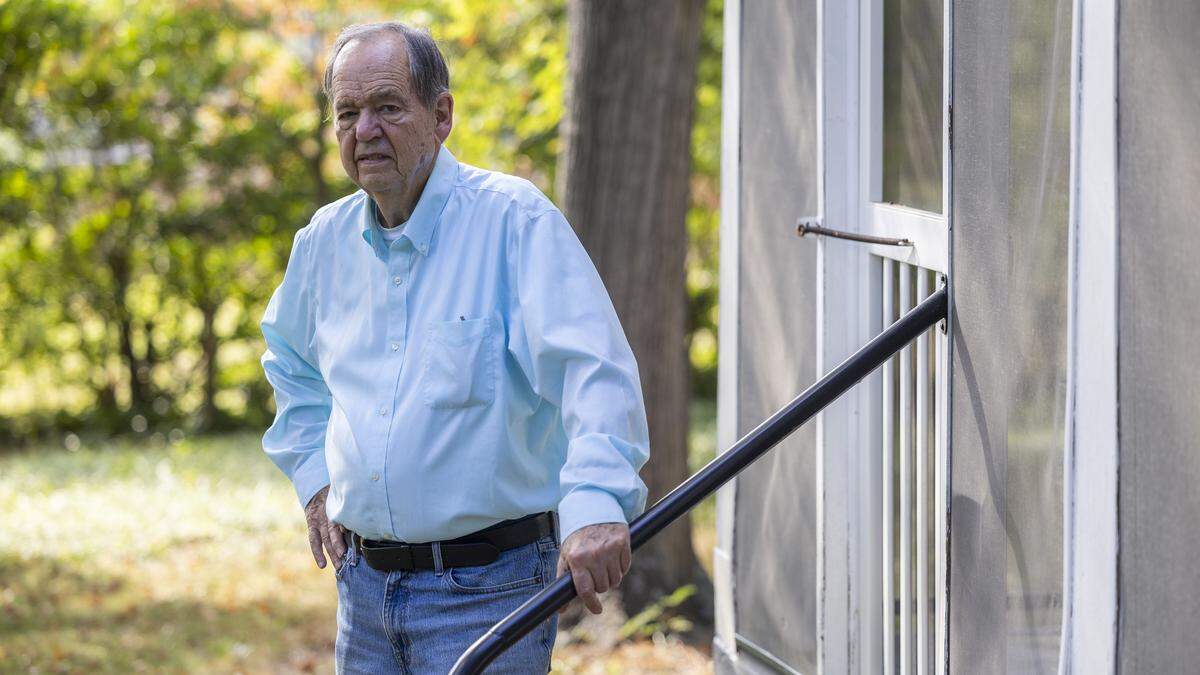
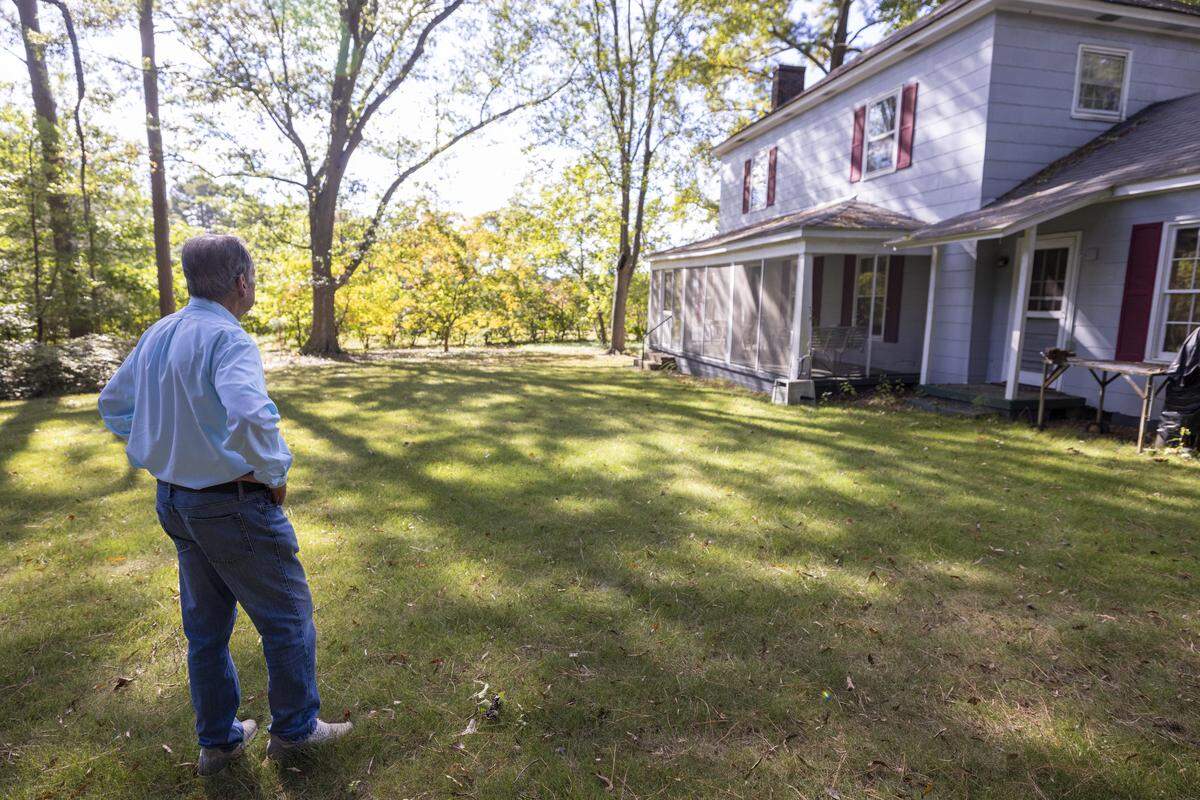
Raleigh resident Larry King doesn’t hide his disgust at the view from his backyard: a sprawling heap of splintered tree trunks and rotting timber, left behind by a developer who cleared the land last summer but hasn’t finished the job.
“The neighborhood is still a disaster zone,” said the 87‑year‑old retiree. He’s lived on Lorimer Road in southwest Raleigh’s Avent West subdivision since the early 1980s. “It’s sad to see so many magnificent oak trees cut down.”
Next door, Evergreen Construction Company plans to raze a cluster of 1950s ranch homes. In its place, the Raleigh-based firm wants to build a 60‑unit affordable housing project on a three‑acre site near Lorimer Road and Garland Drive. In August 2025, it filed a site plan and bulldozed a swath of trees — but left the debris piled in place.
Amid a chronic housing shortage, experts say it’s exactly the kind of development Raleigh has been trying to encourage under its 2021 “missing-middle” housing reforms: a three-story apartment building for seniors earning below the area median income (AMI), built without a rezoning or public hearing. It also sits along Western Boulevard and the future bus-rapid-transit corridor. But in Avent West, a historically blue-collar subdivision known for its mid-century homes and wooded lots, it’s ignited fierce pushback.
“It’s rezoning without representation,” said King, founder of the Lorimer and Garland Neighborhood group, which is working to block the project.
“We weren’t even notified of the development,” he adds. “We learned about [it] by chance from a real estate broker.”
This clash is playing out across Raleigh and the Triangle. As the region loosens zoning rules to allow more duplexes, townhomes and small apartment buildings — especially in frequent transit areas (FTAs) — residents like King say they’re being blindsided by projects they can’t influence and impacts they’re left to absorb. Prior to 2021, these housing types were prohibited in many neighborhoods.
Supporters argue the reforms are essential to easing the region’s housing shortage and mounting affordability crisis. Opponents say the process shuts them out, strains infrastructure, and invites development that feels out of scale with the existing neighborhood.
In Avent West, that tension has spilled into organized resistance.
Over the past year, King and his neighbors have launched a website, posted essays on slow‑growth platforms like Livable Raleigh, lobbied council members and held their own citizen advisory meetings. It’s one of several groups to form in the wake of the city’s reforms.
They insist they are not anti-housing, but opposed to what they call an “illegal,” oversized project that bypasses public scrutiny. They also worry it will strain infrastructure — roads, schools, stormwater — and erode the character of a quiet, wooded subdivision.
In a traditional rezoning case, King noted, neighbors receive notices, attend meetings, and can voice concerns. “The same protocol should be used in FTAs,” he said.
Their fight echoes similar battles across the city, where missing-middle projects have landed in court and fueled a wave of slow-growth activism. Separately, Raleigh Country Club is suing the city and local businessman Mark Thompson to reverse approval of a 16‑unit townhome project adjacent to its property in the King Charles neighborhood. It’s asking the court to declare the city’s frequent transit ordinance invalid.
But for developers like Evergreen, the rules are clear: the zoning allows the project, the need for affordable housing is urgent, and the city’s administrative review process leaves little room for debate.
“Existing zoning allows for our intended use by right,” Timothy Morgan, Evergreen’s president, said in an email. The firm is also building Lake Haven, a 56‑unit affordable senior housing project in northeast Raleigh, and Abbey Spring, an 84‑unit senior complex in Apex.
Morgan said he acknowledged residents’ concerns at a required neighborhood meeting late last year, the first step in the city’s rezoning process. But he argues the project meets all city requirements.
“Sidewalk improvements will be made along our property,” he said. “Traffic also won’t be a problem. Historically, roughly two-thirds of our residents have a vehicle, so traffic is light.”
Meanwhile, demand is high, he said. “A market study projects a three-month lease-up period.”
A post‑war subdivision meets ‘missing middle’
In June 2025, Evergreen Construction paid $3.2 million for six parcels off Western Boulevard, according to Wake County deed records.
The assemblage — 1104 Lorimer Road; 4307 and 4309 Western Boulevard; and 4310, 4318 and 4322 Garland Drive — totals 2.95 acres, at a price of $1.08 million per acre. Two single‑family homes and a triplex currently sit vacant on the site.
The previous owner had acquired the lots over time and used the homes as rentals.
According to site plans, the $17.8 million project, called Lorimer Spring, will include 60 rental units — a mix of one‑ and two‑bedroom apartments — for residents 55 and older earning 60% or less of the area median income. That’s around $27,900 to $55,740 for an individual and around $39,800 to $79,620 for a family of four.
At least six units will be set aside as supportive housing for people with disabilities or experiencing homelessness.
It’s part of a wave of affordable housing funded through a mix of public and private sources. Wake County will provide $1.7 million in gap financing; the city of Raleigh will contribute $1.25 million; and the developer will receive $11.3 million in low‑income housing tax credits.
City officials say the project is proceeding exactly as the law requires. “This case has met all the standards,” said Julia Milstead, the city’s public information officer.
“It’s being reviewed through an administrative development review process,” she added, “which does not include a public hearing.”
In an Aug. 5 email to the Lorimer and Garland group, Council member Mitchell Silver reiterated this message. “Administrative approvals (i.e. site plans and subdivisions) as listed in the unified development ordinance (UDO) do not require public input,” he wrote.
“Residents can always speak during the public comment portion of city council meetings,” he said.
Eric Braun, a retired land-use and litigation attorney and founder of RaleighForward, a pro-housing development coalition, said he understands neighbors’ concerns. But the debate should reflect the project’s actual design: a limited number of senior units with on‑site stormwater retention and reduced parking, located on a major corridor.
“It’s a relatively modest proposal,” he said. “We’re running out of land. Our community has to learn how to be more open to evolving land uses.”
Raleigh’s aging population and shortage of income‑restricted senior housing make developments like this an important part of the city’s “missing middle” mix, he added. “It’s exactly the kind of place Raleigh should be adding — housing for seniors.”
A sense of resignation
Back on Lorimer Road, opponents say they’re not convinced. They argue the reforms have created a two‑tiered system: developers can build large projects “by right,” while neighbors have little recourse beyond public comment sessions that carry no legal weight.
Jane Fenn, a retired librarian who has lived in Avent West since 2013, said the policy has created a “climate of favoritism.” In a recent post on Livable Raleigh, she wrote that developers “come out on top” while longtime residents are “left, literally, in the nasty red dust.”
Evergreen says it’s preparing its final site plan review. It expects permits by late 2026 with construction slated to begin in early 2027.
Standing on his corner lot this week, staring at the tangle of trees and abandoned homes, Larry King says he knows the odds are against them. He’s watched the city change around him and believes the project will eventually be built on the site next door.
But he still hopes it won’t be this one.
“Our efforts are to assure that a smaller number of units will be allowed,” he said.
This story was originally published April 9, 2026 at 5:00 AM.