Triangle’s new growth war: Need for housing versus neighborhood preservation
From her one-story ranch house on Lassiter Mill Road, a retired Raleigh physician has spent two decades watching North Hills’ Main District rise around her.
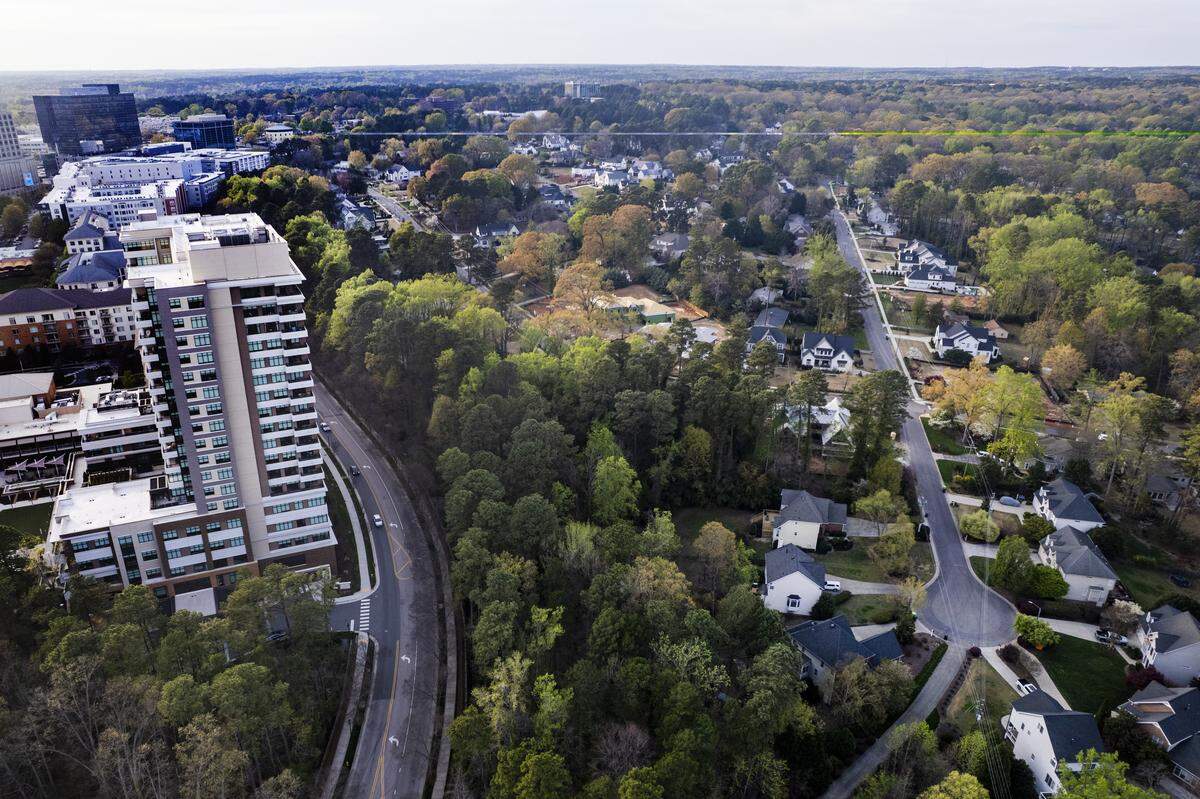
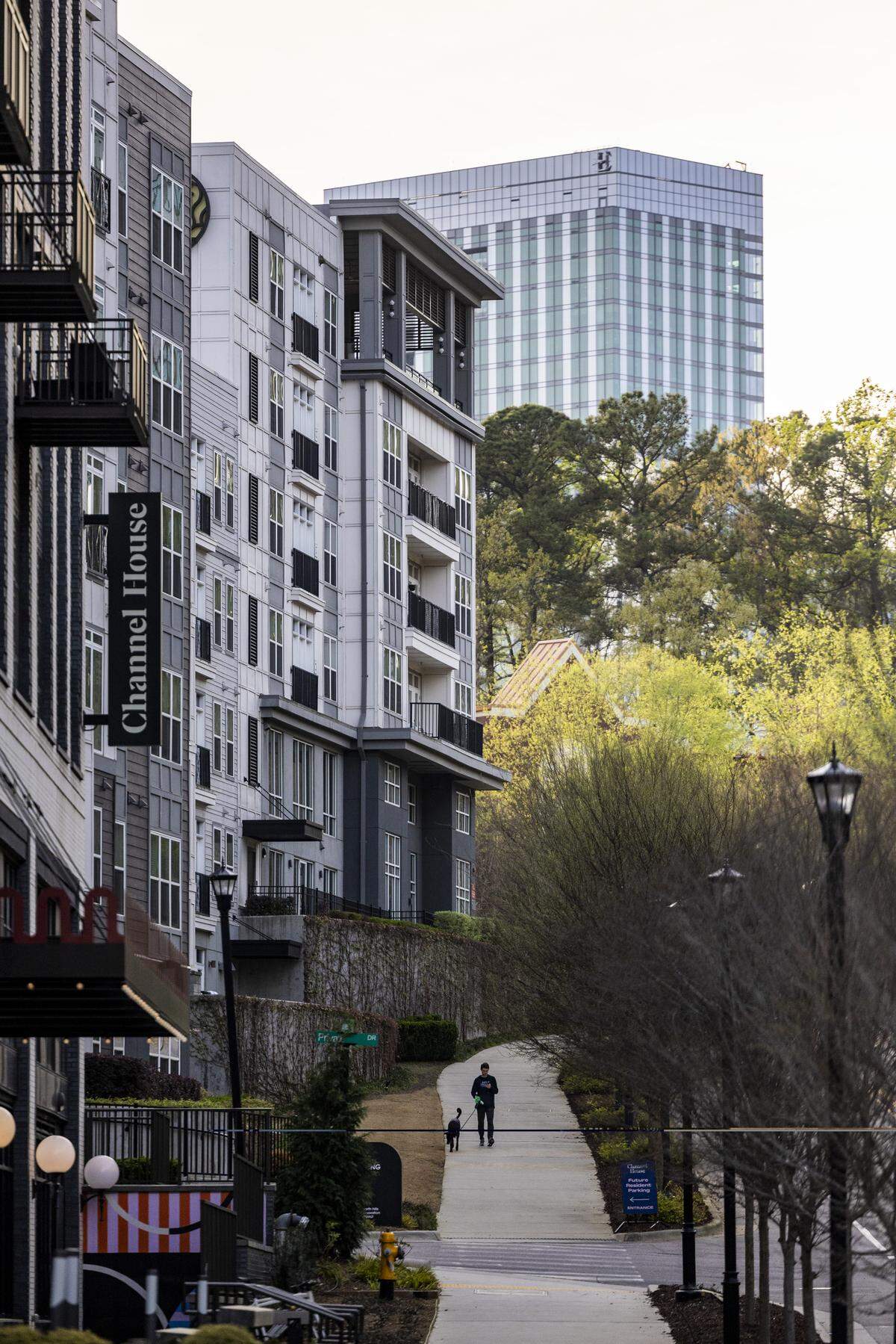
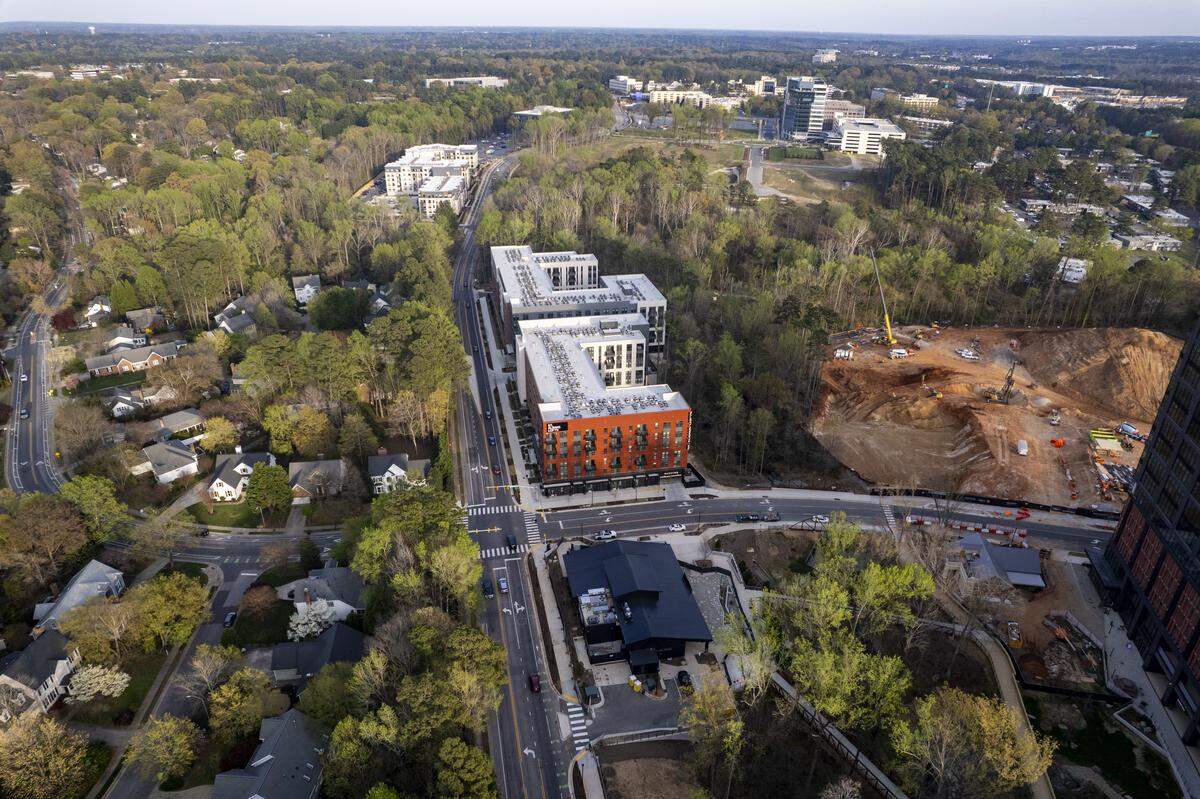
What began as a 1960s enclosed mall has become a dense, 12‑story district with offices, apartments and retail. From her front yard, she’s also observed the churn of trucks and dust remake her block into what she calls “an extension of the construction site.”
The physician now fears the next phase will push her out entirely. Her anxiety has spiked after Raleigh’s recent 6-2 vote to allow developer John Kane to build up to 37 stories on 11.4 acres in the Main and Lassiter districts. Across the street, on a vacant lot she once considered part of her neighborhood’s buffer, Kane is proposing a 15‑story luxury apartment tower — just a few hundred feet from her front door. She asked that her name not be used out of fear of repercussions.
“We didn’t sign up for this,” the physician said, pointing toward the lot on a recent Thursday morning. “The quality of our lives has devolved.”
“This was my investment property. I finally paid it off,” she added. “And now it’s about to become uninhabitable and unsellable.”
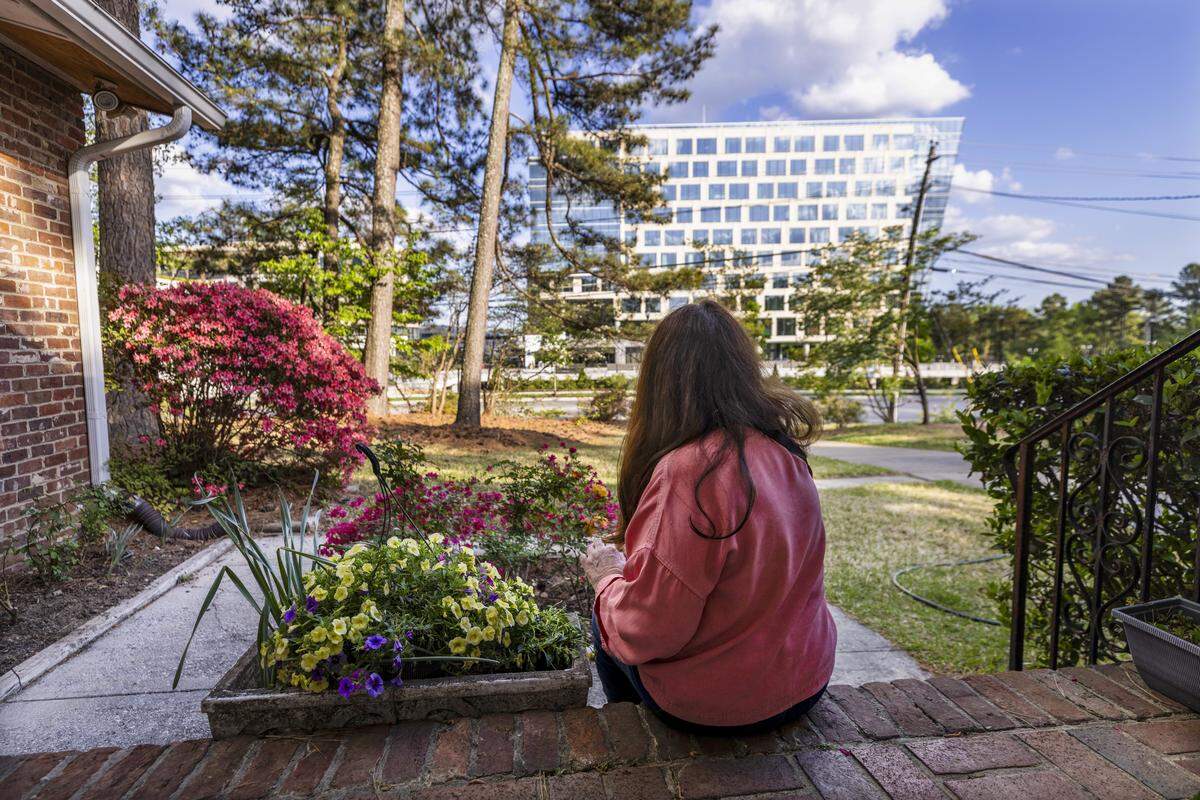
At a required neighborhood meeting last July — the first step in Raleigh’s rezoning process — she took her case directly to Kane himself. “He listened and politely ignored my concerns,” she said. “In reality, they refuse to acknowledge our grievances.”
Raleigh’s rapid shift toward taller, denser development — fueled by “missing middle” zoning reforms and a worsening housing shortage — has triggered a wave of public anger. Longtime residents say they’re being steam-rolled by rezonings that accelerate traffic, overshadow neighborhoods and erode local influence. Pro‑growth housing advocates argue the city has no choice: Without more density, Raleigh will remain unaffordable for all but the wealthy.
The result is a city locked in a fight over how to grow, who gets a say, and whether Raleigh can meet its housing needs before the crisis deepens.
Kane declined to comment for this story.
The debate is playing out across the Triangle and the state as lawmakers weigh Senate Bill 497, which would require every municipality to allow “missing-middle” housing — duplexes, townhouses, apartments — in all residential districts, including those currently limited to single-family homes.
The bill is currently stalled in the Senate.
A neighborhood revolt takes shape
In Raleigh’s North Hills, the retired physician is a member of a growing coalition of residents organizing under the banner of Midtown Neighbors United. It’s one of several new slow‑growth groups mobilizing to oppose large‑scale redevelopment here and beyond.
Their concerns echo across Midtown: worsening traffic on Six Forks Road, the shadow of high‑rises over single‑family streets, and frustration that the city is ignoring the 2020 Midtown‑St. Albans Area Plan, which capped heights at 20 stories.
“We’re the canary in the coal mine,” said Randy Jones, 69, a retired asset manager and the group’s founder. “The current city leadership is doing the same thing all over Raleigh.”
Jones, a Delaware transplant, has lived in Midtown since 1998. Until a few years ago, he had no interest in local politics. But as the skyline crept closer, he says he felt compelled to act.
“I’m all for responsible development,” he adds. “But this is lipstick on a pig. They call them ‘landmark towers.’ From a distance, they’ll look pretty. But try to live and drive around them.”
In recent months, Jones has helped build an online presence, published essays on slow‑growth sites like Livable Raleigh, lobbied council members and hosted citizen advisory meetings. The group is also raising money for attorneys and experts — including “legal action if appropriate,” Jones said.
“We’re just getting started,” Jones said.
Other groups are joining the fray. Raleigh Neighbors United, Lorimer and Garland, and the Glenwood‑Brooklyn neighborhood have all formed or expanded in the wake of the city’s reforms. Glenwood‑Brooklyn residents are threatening to sue over a planned high‑rise; a fundraiser for legal fees has surpassed $36,000.
The vacuum left by CACs
For decades, Raleigh’s Community Advisory Councils (CACs) — hyperlocal, volunteer‑run bodies created in the 1970s — served as the city’s neighborhood feedback loop. They were imperfect, observers say, often dominated by homeowners. But they provided a formal venue for residents to debate rezonings and influence planning decisions outside the formal public hearing process.
That changed in 2020, when the city council abruptly dissolved all 18 CACs in a surprise vote with no public notice. The decision eliminated the primary platform a small group of residents once used to organize around development issues. Pro‑growth development groups gained influence and developers faced fewer procedural choke points.
However, long-simmering tensions remained. In 2024, under pressure, the city reversed course. It’s now working with residents to restore a version of the CAC system.
But the political landscape has shifted. Five years on, Raleigh’s “growth wars” have hardened into two rival camps: neighborhood groups like Livable Raleigh and Midtown Neighbors United, fighting to slow the city’s rapid transformation, and pro‑development coalitions such as RaleighForward and CITYBUILDER, pushing to reshape zoning, so the city can grow up, not out.
The conflict is reshaping not only rezonings, but also elections, neighborhood politics and the city’s long‑term growth model. It’s also triggered a wave of lawsuits, creating uncertainty and delays.
Since 2022, Hayes Barton residents have fought a proposal to build 17 townhomes, valued at $2 million each, in one of Raleigh’s most historic neighborhoods. Separately, Raleigh Country Club is suing the city and local businessman Mark Thompson to reverse approval of a 16‑unit townhome project next door in the King Charles neighborhood.
Both cases are pending.
Robert Mulder, a vocal critic and former planning commission chair, said the litigation reflects deeper dysfunction.
“It certainly indicates to me that there’s something seriously wrong,” he wrote to Mayor Janet Cowell in a Jan. 4 letter. “Most citizens do not want to go through an expensive legal process.”
Cowell pushed back. “I don’t believe we’re ignoring the comprehensive plan,” she wrote. “Growth brings a lot of tension and change. People with money will sue.”
In her annual State of the City address on March 19, Cowell said Raleigh has added 100,000 residents since 2009 and can expect another 250,000 in the next two decades.
Her message was clear: “We’re going to have to keep building.”
Cowell declined to comment for this story.
A region in crisis
The conflict comes as the Triangle faces a severe housing shortfall. Builders have failed to meet demand since the 2008 mortgage crisis, and rising land costs — combined with zoning rules requiring large lots — have pushed prices higher, experts say.
Wake County is projected to be 110,000 homes short of demand by 2029, according to Bowen National Research. Meanwhile, the affordability gap is widening: in 2026, nearly 28% — 128,370 out of 452,767 households — are paying an outsized share of income on housing, according to a new report by the NC Housing Coalition.
Defined as “cost-burdened” by the federal government, these households spend more than 30% of their income on housing costs, like rent or mortgage payments, property taxes, insurance and essential utilities. Among them: 48% of renters (76,916 households) and 18% of homeowners (51,455 households) who are struggling to afford their homes. That’s up from 27% in 2025, the coalition reports.
“The housing need in our state is growing faster than our response,” said Stephanie Watkins‑Cruz, the coalition’s director of housing.
Reductions in federal safety‑net programs are forcing state and local governments to fill the gap. “The most effective tool is zoning reform,” said Eric Maribojoc, a UNC professor focused on affordable housing.
New units — even at market rates — give higher-income households somewhere to go, he explained, easing competition for older homes that eventually become the region’s more affordable stock.
The effect is incremental. “Without such strategies, prices and rents will continue to rise.” Even when density doesn’t directly produce affordable units, he argued, it increases supply — and “makes the whole community more affordable by definition.”
Side One: Livable Raleigh and the slow‑growth coalition
Stef Mendell has lived in Raleigh since 1964. She’s a retired international communications executive and former one-term Raleigh City Council member.
She calls it “trickle down” and rejects the idea that density alone will improve affordability.”
“More housing is needed, yes,” she said. “But we need more housing at every price level, not just more McMansions, million‑dollar townhouses and $4,000‑a‑month apartments.”
Shortly after the city dissolved CACs, Mendell founded Liveable Raleigh, an all-volunteer community advocacy group aimed at ensuring what she calls “sustainable, responsible” growth.
From her home office, she’s built a mailing list of 18,000 and a core advisory committee that meets weekly on Zoom. The group mobilizes residents for public comment, publishes critiques of rezonings and promotes lawsuits challenging city decisions.
Their core arguments: that Raleigh is approving too much height and density too quickly; neighborhoods have lost influence in planning decisions; and developers and pro‑housing groups wield outsized sway.
They want the city to double its proposed affordable housing bond to $200 million and require developers to offer public benefits when seeking rezonings, something the city says it can’t do under state law. They also want at least 20% of homes in major projects along transit corridors reserved for families earning 30%–60% of the area’s median income.
“There are ways to do this with the right incentives,” she said in an interview. “It can’t just be for the people who are moving here from other places, who can afford luxury. What about the people who grew up here?”
Larry Helfant, 80, has lived in Hickory Hills, a tree-lined enclave in Northeast Raleigh just north of Midtown, for over 45 years. For him, the fight is not just about affordability or traffic. It’s about identity — the sense that North Hills is changing faster than he can recognize it.
“You can’t just have density, density, everywhere without looking to see if city resources can support it,” he said. “It has to be planned and compatible with the surrounding environment.”
Side Two: Raleigh Forward, CityBuilder and the pro‑housing coalition
On the other side of the debate, pro‑growth advocates argue that Raleigh cannot afford to slow down.
Eric Braun, a retired land‑use attorney, launched RaleighForward in 2021 to counter what he calls “defenders of the status quo.” The group partners with WakeUp Wake County and CITYBUILDER to promote sustainable land‑use policies and hosts forums and candidate meetups — sometimes in Braun’s own home.
“There’s no magic‑bullet solution,” he said. “But these reforms will lead to more inventory. That will eventually make housing more affordable across the state.”
The alternative — slowing or stopping development — would worsen the affordability crisis and push more residents into long commutes from Johnston, Franklin or Harnett counties, he argues.
Braun points to the region’s surging population and shrinking supply of developable land.
“If we’re going to continue to grow and be a dynamic community, we’ve got to find ways to have more variety of housing,” he said.
Jenn Truman, an architect and founder of CITYBUILDER, said she understands neighbors’ fears. But given pending litigation, it’s having a chilling effect on potential small-scale developments, she said.
“It’s risky for a builder to put up multiple buildings they might have to tear down.” Until the legal climate stabilizes, she added, “we won’t see the full effect.”
Still, she remains optimistic. After rents skyrocketed during COVID-19, a post-pandemic construction boom, both nationally and in the Triangle, has triggered a “renter’s market.”
In Raleigh, the median rent for a one-bedroom dropped 1.6% from February, to $1,250 in March, according to Zumper’s national rent report. That’s down 3.1% year over year. Rent for two-bedroom units dropped to $1,550. That’s down .6% since February and .6% year over year.
“The Raleigh metro area topped the country in inventory built last year. Rents are falling. We’re moving in the right direction,” Truman said.
What comes next
Whether the city can meet housing demand under the current political dynamics remains to be seen.
The risk of continued legal challenges could further slow development. There’s also the possibility of new coalitions or a shift in public sentiment as the affordability crisis worsens.
So far, the city is on track to add nearly 5,000 units of missing‑middle housing since easing zoning rules five years ago, Emila Sutton, the city’s housing and neighborhood director, told city council in February. That includes duplexes, backyard cottages, townhomes and small apartment complexes, about 40% of which is built or planned for southeast Raleigh.
But she acknowledged that many of those homes are not affordable to lower‑income residents.
Council member Christina Jones said “she loves the theory.” But she needed more data to defend the reforms. “Without better data,” she said, “I can’t defend missing middle against critics.”
Council member Jonathan Lambert‑Melton put it more bluntly.
“Folks are still feeling priced out,” he said. “We still have folks living on the street. We still have folks who can’t find an affordable home. There’s still a lot more work to do. We have to get supply up.”
Back on Lassiter Mill Road, the retired physician is not convinced. She will soon be living in the shadow of another North Hills tower. She watches neighbors pack up and leave and acknowledges she’s tempted. She considers the looming towers and sees a city she no longer recognizes.
“I fear living in the perpetual shadow of a building and losing all my sunlight. It will be like the dark side of the moon,” she said. “This is not how I planned to spend my retirement.”
Reporter Anna Roman contributed to this story.
This story was originally published April 9, 2026 at 5:00 AM.