Protesters remove 2 Confederate statues from Capitol, hanging 1 from Raleigh lightpost
READ MORE
20 News & Observer stories to read from 2020
A sampling of the News & Observer’s journalism from 2020.
Expand All
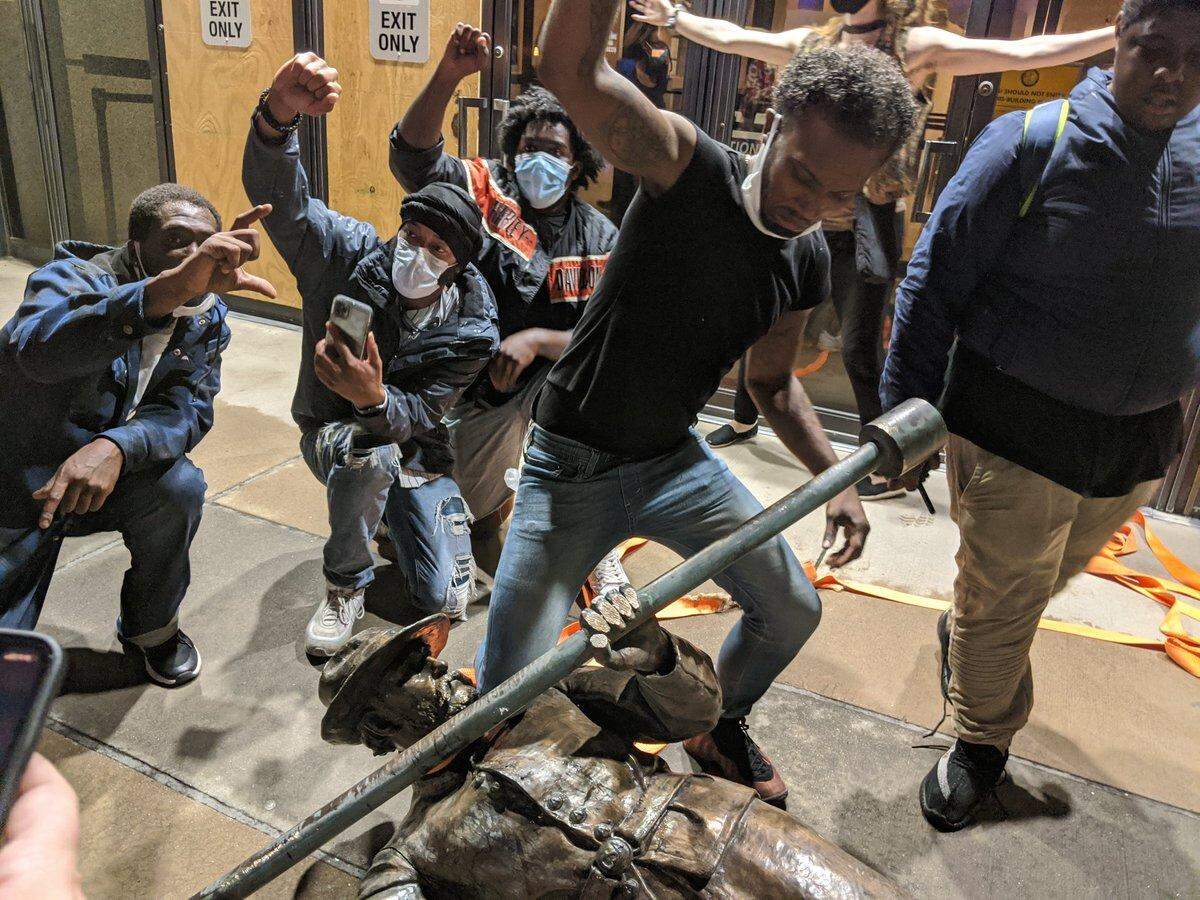
Protesters pulled down the bronze soldiers on the 75-foot Confederate monument at the state Capitol Friday night, then hung the statue of a cavalryman by its neck from a streetlight.
The other statue, an artilleryman, was dragged through the streets to the Wake County courthouse, and later carried away by police in a golf cart.
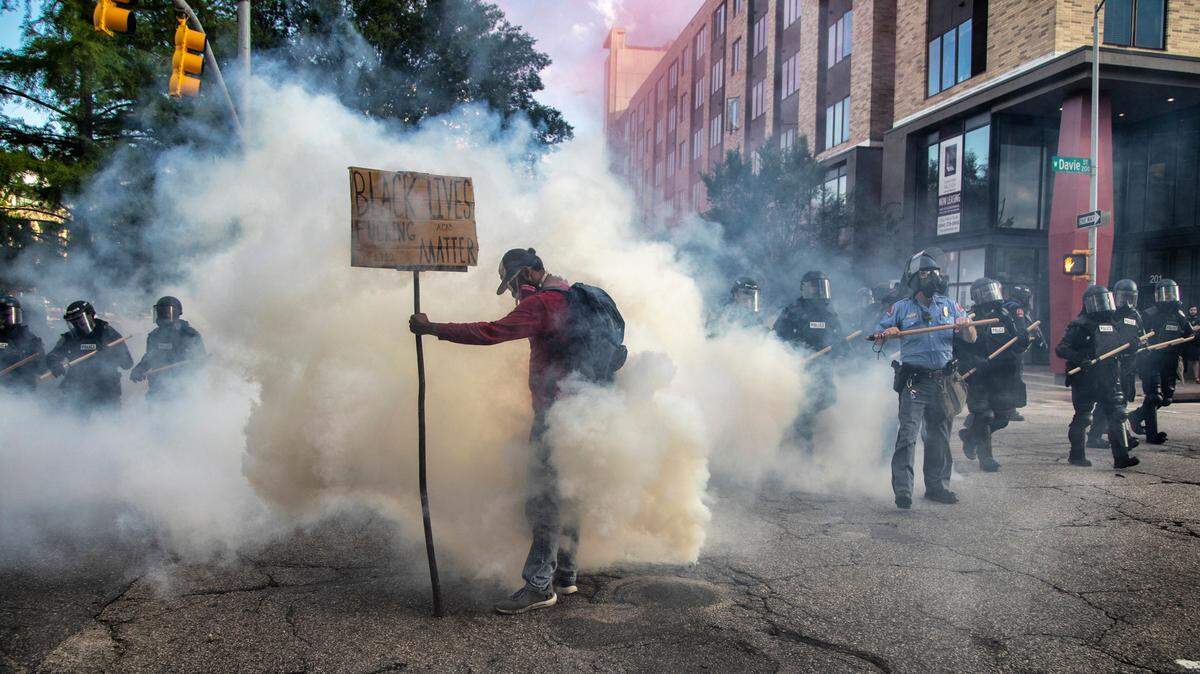
At one point, a protester pressed a knee into the neck of the statue at the courthouse, a reference to George Floyd, who died May 25 after a Minneapolis police officer took the same position for more than eight minutes. Protesters put a Black Lives Matter sign listing the names of black people killed by police on the statue’s chest.
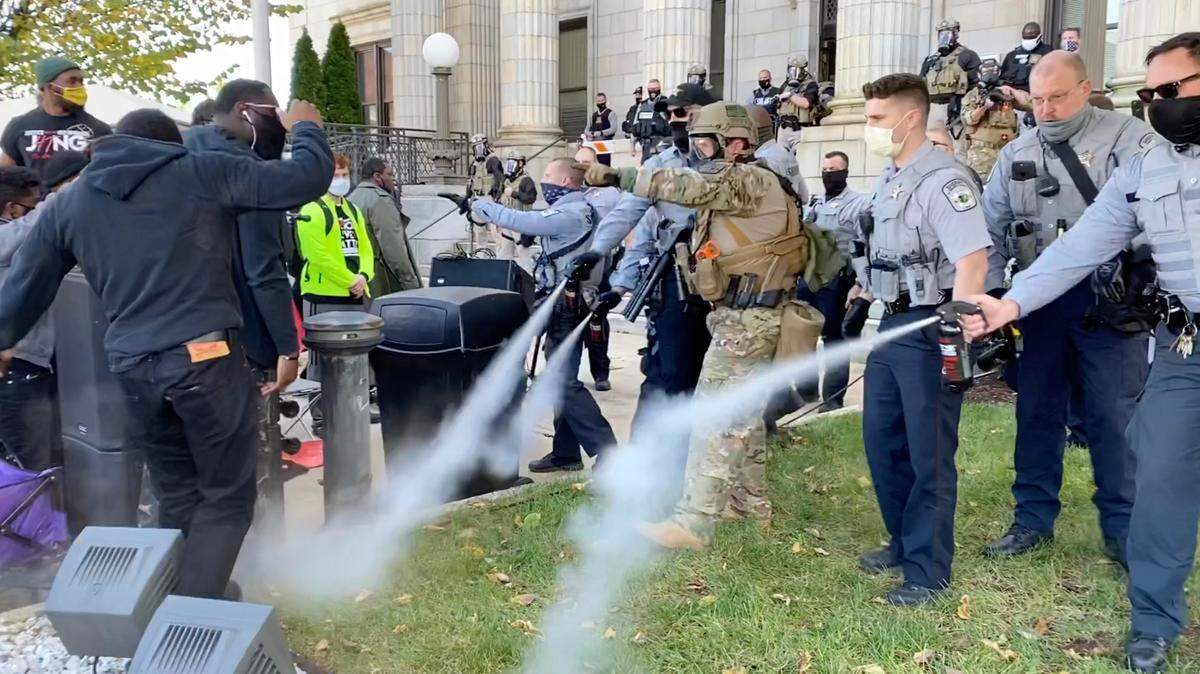
Before dark, protesters had wrapped yellow rope around the necks of the figures, but police intervened. Officers removed the ropes and then cleared out after about a half hour, allowing protesters to mount the base of the 125-year-old memorial to Confederate soldiers and sailors.
As a protester climbed up to where the statues stood, another group approached the scene and tried to convince people not to take the statues down. That lead to some skirmishes.
On top of the monument, the protester rocked one statue, then the other, back and forth as hundreds of protesters shouted encouragement from the ground.
Minutes later, the demonstrators looped an orange strap around the statues and pulled.
This time, the statues fell to the ground.
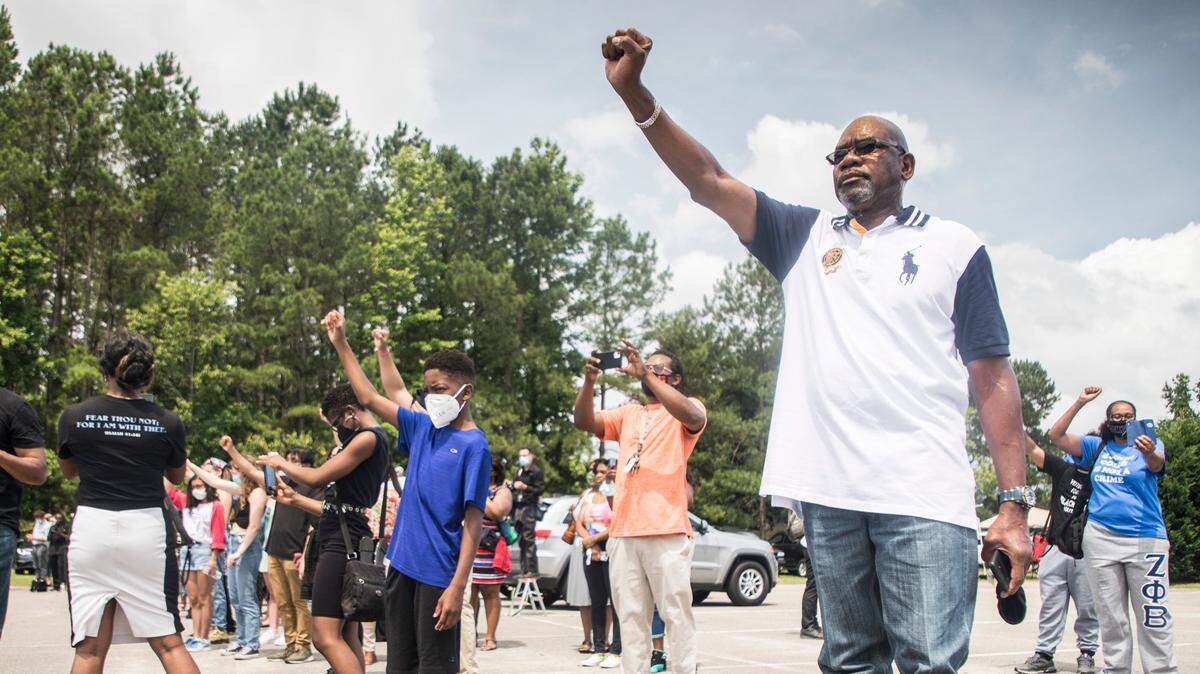
Earlier in the day, groups convened in Raleigh and Durham to celebrate Juneteenth, the commemoration of the end of slavery in the United States, and to remind politicians that demands for true equality for African Americans remain unmet.
“It’s very significant that we tie together Juneteenth and the current climate of what’s going on right now,” said Raleigh Demands Justice organizer Kerwin Pittman, referencing the protests that have rocked cities across the country since George Floyd was killed by police.
“We really must tie those things together because it’s the same thing yesterday as it is today. We’re still fighting for liberation. We’re still fighting for emancipation from a racist, biased criminal justice system.”
Police arrested at least one person in connection with the effort to bring down the statues Friday.
The State Capitol Police, which falls under the N.C. Department of Public Safety, is tasked with keeping the Capitol grounds safe, where the statues were damaged Friday night.
State Capitol Police Chief Chip Hawley was overseeing the Capitol Police response to the protesters and consulting with Department of Public Safety Secretary Erik Hooks, said Pamela Walker, a spokesperson for the department, in an email to The News & Observer Saturday afternoon.
Officers stopped an initial attempt to pull down parts of the memorial Friday, and several officers were injured, Walker wrote.
After dark, the crowds grew and the situation escalated again.
“In working to strategically balance the public’s safety and the safety of the officers, the chief determined it was best to not re-engage on the statue and as a result no one was seriously injured,” Walker wrote.
Monuments removed across the country
Raleigh is not the first city to see monuments representing white supremacy downed by protesters. In recent years, Confederate monuments have been toppled by protesters in Durham and Chapel Hill.
In Richmond, Virginia, last week, protesters pulled down a statue of Jefferson Davis, the president of the Confederacy, from its pedestal and dragged it across historic Monument Avenue.
.JPG "RAL_061920_JWALL18 (1).JPG")
In Montgomery, Alabama, protesters removed a statue of Confederate Gen. Robert E. Lee outside a school bearing his name.
Protesters have taken down statues of historical figures not related to the Confederacy too. In Boston, Massachusetts, a statue of Christopher Columbus was beheaded. Protesters in Portland, Oregon, toppled a statue of George Washington.
In England, protesters threw a statue of a slave trader into the river.
Some governments have moved to take down statues and monuments before protesters could get to it.
In Louisville, Kentucky, for example, a statue of Confederate officer John Breckinridge Castleman was taken down after a judge ruled that the city was allowed to do so.
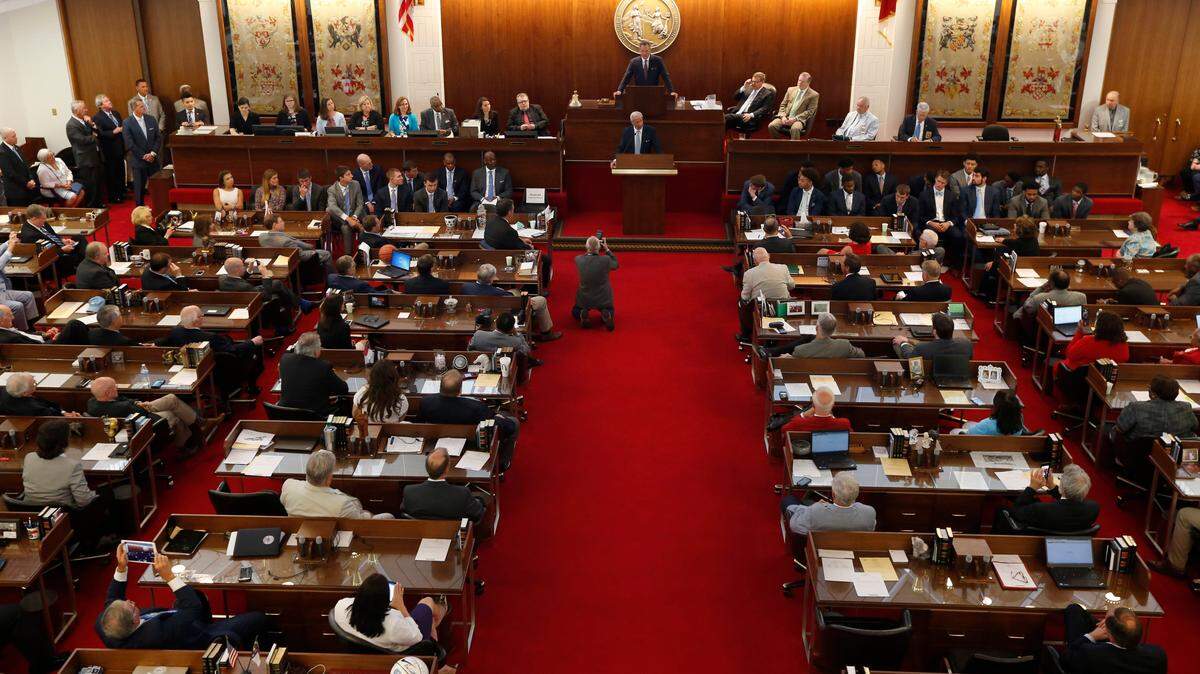
Some North Carolina cities have recently voted to remove Confederate monuments, but state lawmakers passed a law in 2015 that made it illegal to remove monuments from public property in most cases.
Among the removals stymied by the law was the 1895 monument that protesters stripped of two statues on Friday night.
Gov. Roy Cooper proposed relocating that monument, along with two others on Capitol grounds, in 2017.
.JPG "RAL_061920_JWALL15 (1).JPG")
In Raleigh, a march and a party
Protest events in Raleigh started around noon Friday outside Duke Energy Center. People played music and read poetry before Taari Coleman, an organizer with NC BORN, a group that describes its aim as dismantling all oppression, took the mic to address what was on many people’s minds: her arrest the night before.
Coleman and a minor were taken into police custody during a march in downtown Raleigh along McDowell Street. Police Chief Cassandra Deck-Brown said in a news conference Friday that charges would not be pursued against the two after reviewing videos posted to social media and body-camera footage. The incident was initially reported as an assault on an officer, Deck-Brown said.
Coleman didn’t provide her account before the crowd Friday, but she said it was good that no one was in jail and no one had been hurt.
“There’s a really weird, somber mood out,” she said, and the crowd reflected that. People passed around Sharpie pens to write the number of the North Carolina National Lawyers Guild on their arms in case of arrest, and a guild attorney gave the group a short “Know Your Rights” talk.
Once the 75 or so people who had gathered began marching to the Executive Mansion, the mood began to lift.
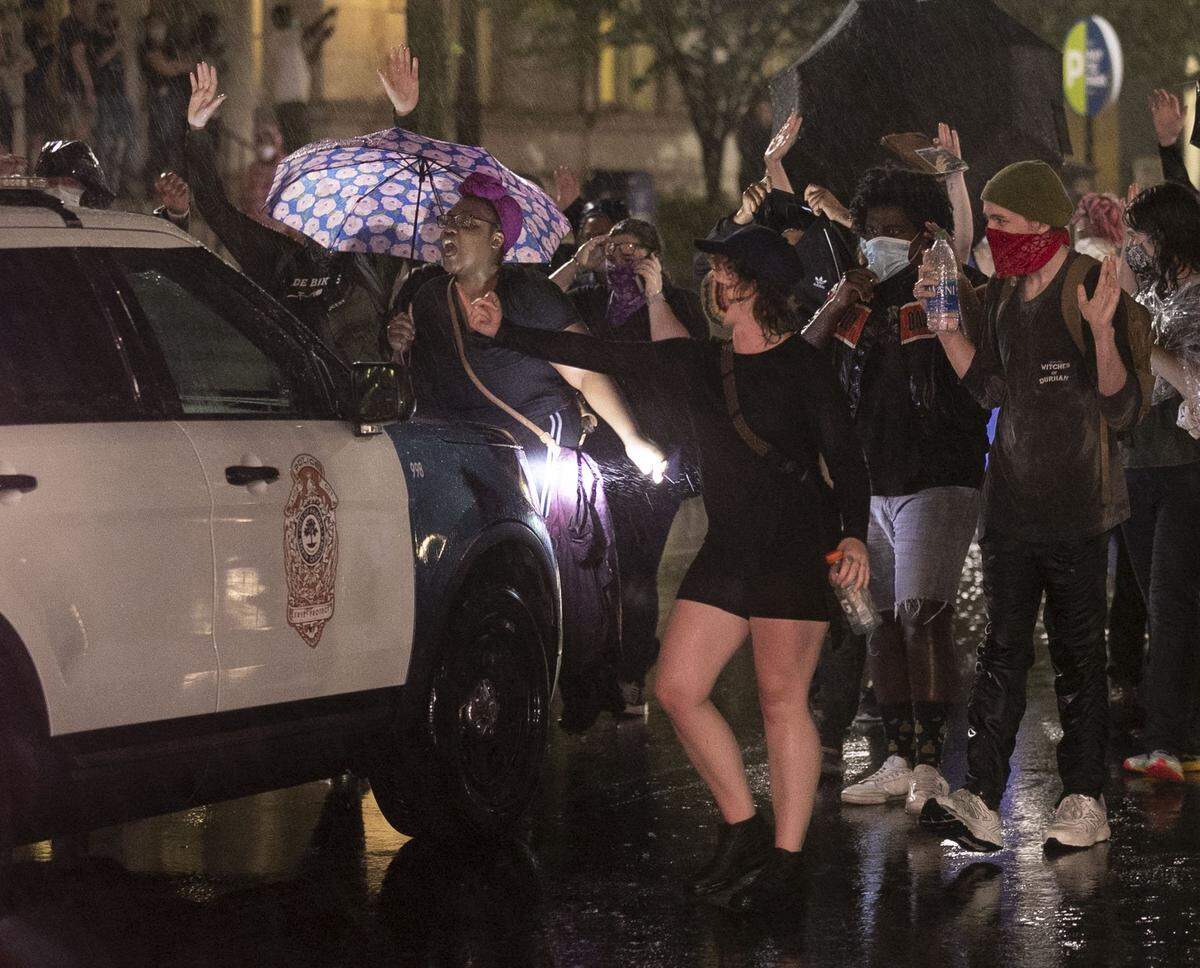
Protesters danced to a revamped version of the now-familiar “No justice! No peace!” chant. They have made near-nightly appearances in Raleigh’s streets since May 30, calling for drastic changes to policing and an end to white supremacy.
In front of the mansion, Lauren Howell, an organizer with NC BORN, spoke about the obstacles facing North Carolina voters.
“Republicans right now are trying to cut the number of early voting days,” Howell said, “trying to cut the number of polling locations.”
A woman in the crowd called out several times that “no vote is a vote for Trump.”
The crowd swelled as marchers kept moving, reaching about 150 people by the time they arrived in front of the Wake County courthouse, where Howell spoke to the crowd about cultural appropriation.
“When you think about freedom and when you think about blackness, I want you to think about the fact that Black people contribute and create American culture,” she said.
Howell said that words like “ratchet” and “ghetto” were used against her in a derogatory way, but they have been co-opted and made into trends without people understanding what they mean.
In front of the courthouse, Raleigh-Apex NAACP president Gerald D. Givens Jr. described being racially profiled by a group of law enforcement officers while shopping at an Old Navy store.
“To our law enforcement agents, no matter what agency that you work in, we know that you a human being too,” Givens said. “But when you see us, recognize that we’re human too.”
Rain caused a temporary lull in the action, but by around 6:30 p.m., roughly 200 people were gathered near the intersection of Bragg and Bloodworth for an event that felt more like a party.
In Durham, a message memorialized in paint
About 500 protesters met in front of the Durham police headquarters, where some people had been camping out to protest increased spending on law enforcement. They painted the word “defund” on the asphalt in giant yellow letters.
The word is a reference to a growing movement across the country to shift resources from police departments into social programs such as education and mental health services.
Organizers from BYP100 called on the City Council to “invest in community and divest in the police.”
Near a series of tents, protesters set up a handwashing station. The smell of hamburgers wafted from the grill. Children swung at a piñata.
“This is a day of mourning and-or celebration,” Marcella Camara, a member of Spirithouse, a black organizing group that has developed an alternative to policing called “harm-free zones,” said while taking a break from painting the “defund” mural.
“It’s a reminder for black people that we are beautiful. We have all we need to get free. We have all we need to take care of our communities.”
Organizers led the crowd in call and response chants.
“I love being black,” the crowd called back. “I love the color of my skin. It is the skin that I’m in. I love the texture of my hair. I rock it everywhere.”
In front of the jail, protesters called out a message to the people held inside. “We see you, we love you,” they chanted.
Robert Willett, Ashad Hajela and Adam Wagner contributed to this report.
This story was originally published June 19, 2020 at 7:48 PM.

.JPG)

.JPG)