‘Scared and excited’: Greg Fishel’s ‘leap of faith’ leads him away from North Carolina
READ MORE
20 News & Observer stories to read from 2020
A sampling of the News & Observer’s journalism from 2020.
Expand All
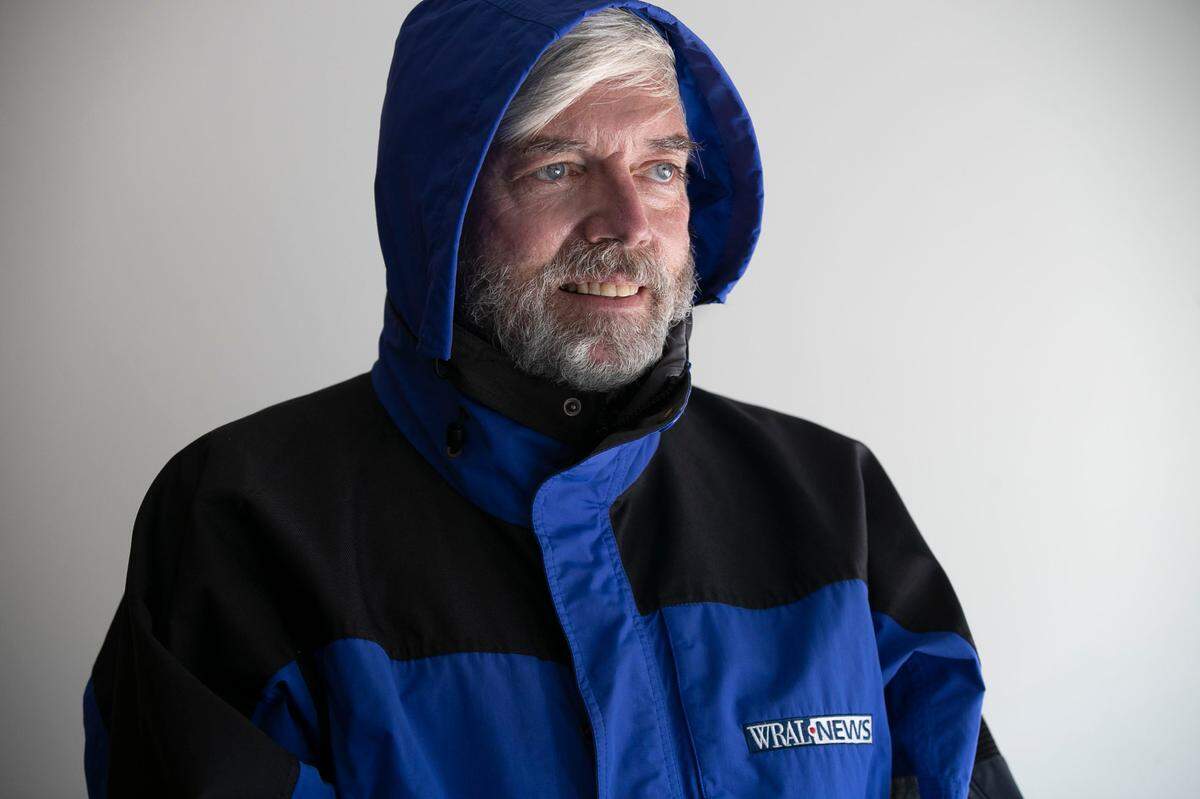
In the almost 18 months since his departure from WRAL, Greg Fishel has reflected, readjusted and pretty much hit the reset button on his life.
Now, newly divorced and in the middle of a global pandemic, the Triangle’s most famous weatherman is about to take a huge leap of faith.
At the end of July, Fishel, 63, will leave Raleigh — his home for nearly 40 years — and move to West Palm Beach, Florida, to start a new life. He has friends there, but there’s no job or family waiting, just a strong sense that this is the right thing for him at this point in his life.
“Well, here’s a chance to really — if I have the faith I’ve been claiming to have my whole life — to just go down there and try to find work one way or another, but just trust that God is gonna provide for me. Not make me into a rich tycoon, but just provide,” Fishel said in an interview with The News & Observer.
“I really think this is the first time in my life I’ve taken a leap of faith like this, and I’m scared and excited at the same time.”
After his abrupt departure from WRAL in February 2019, Fishel took a job with Priogen Energy in October, but the job ended in July — a “victim of COVID,” he said, though he admits it was never a good fit.
Fishel’s job at Priogen was to help energy traders make decisions on when to buy and sell on the energy market. The job was about much more than forecasting the weather, he said, it was also about trying to anticipate human behavior with regard to the market.
“To be honest with you, I never felt like I got to the point that I felt like I was of any value, that I was actually helping them make money, because it was such a foreign concept to me,” Fishel said. “I met some really nice people that I’m gonna be friends with for life, but it just wasn’t my cup of tea.”
But his visits to West Palm Beach, during one period of time when the company wanted him to relocate there, convinced him that the city just might be his cup of tea.
‘Personal issues’ and a separation from WRAL
As this story publishes, he is about a week away from closing on a condo near the water, and from there he can walk almost everywhere he wants to go, and he can play golf year round.
Fishel still isn’t comfortable going into a lot of detail about why he left WRAL last year.
At the time, the Capitol Broadcasting Company station called it a “personnel matter.” WRAL vice president and general manager Joel Davis declined to give specifics then, but said that “the way it played out it would have been impossible for him to continue here, but he offered up his resignation.”
When contacted for this story, WRAL declined to comment.
Fishel said at the time that he was facing some “personal challenges” that impacted his ability to work effectively and professionally.
To rehash it now, Fishel says, would only make things more difficult for his family, so he’d like to let it be. His words today echo his official statement from 2019, citing personal challenges that got in the way of his work.
“I had a number of personal issues which were resulting in me not doing my job up to the standard that I had held for myself for so many years, and it was starting to get in the way,” Fishel said.
“So it wasn’t fair to the station and it really wasn’t fair to me to try to juggle that and at the same time produce a quality product for them. … My work ethic did suffer.”
A popular presence and an ‘O-Fishel Forecast’
During Fishel’s time at WRAL, no one on Triangle television was more popular.
Each fall at the N.C. State Fair, fans would line up at the WRAL booth hundreds-deep just for his autograph. One year, the station passed out masks of his face, complete with eye holes and an elastic band. Everywhere you went at the fair that year, there he was.
His face was all over WRAL TV commercials, posters and billboards. In the years before he left, the station dubbed its weather report the “O-Fishel Forecast.”
The Pennsylvania native shared a kindred spirit with his Southern audience, delighting in forecasts that might possibly produce snow — sometimes visibly giddy as he ran through weather models. Once, when his prediction for snow was wrong, he sat in the WRAL fountain, as he promised he would on-air, wet and shivering in shorts and a Hawaiian shirt in the middle of winter. He once did the entire weather forecast dressed as a mattress to help promote an Athens Drive High School fundraising event.
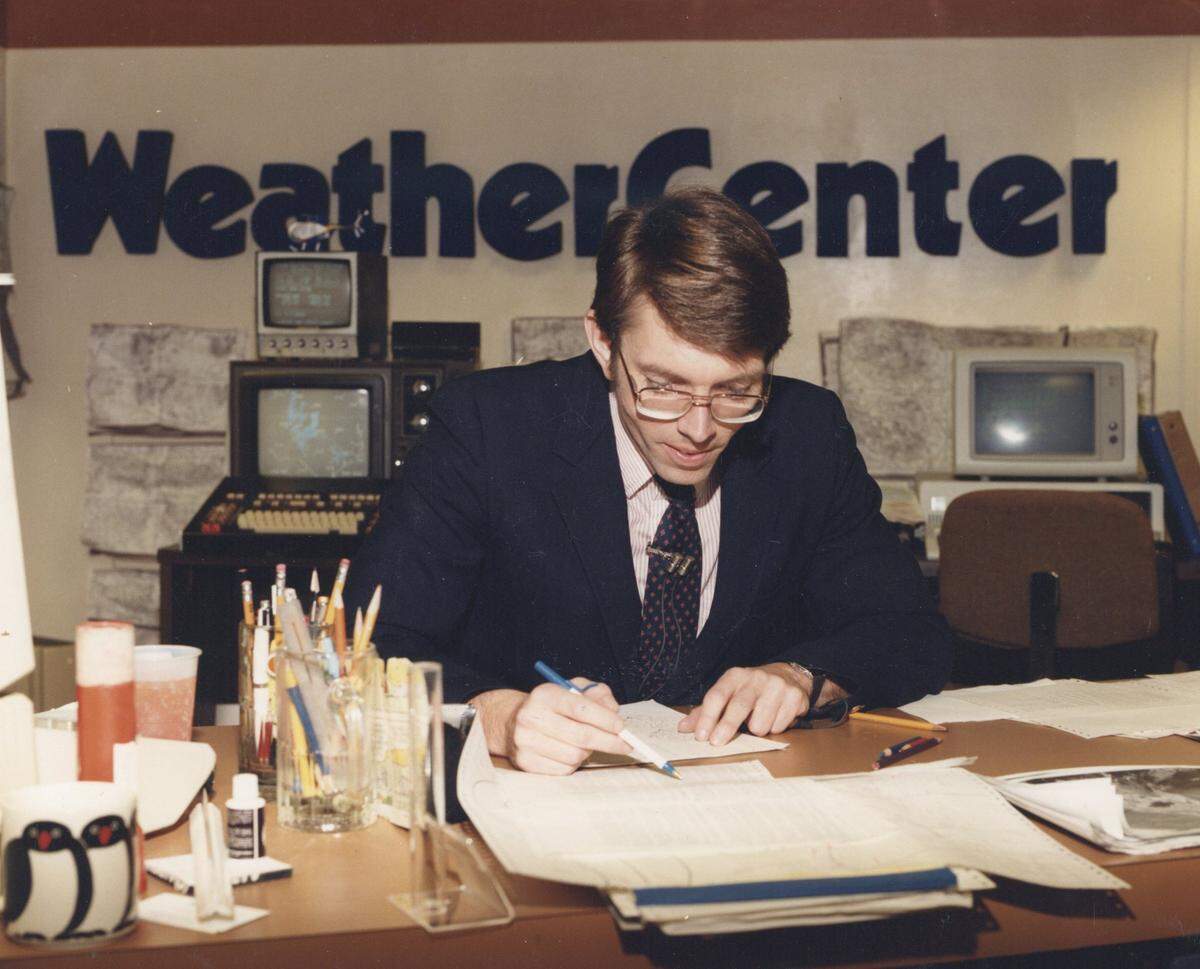
Fishel started at WRAL in 1981 after two years at WMDT in Salisbury, Maryland. He became WRAL’s chief meteorologist when another local weather icon, Bob DeBardelaben, retired in 1989.
Fishel says those early years at WRAL were difficult for him.
“I was an introvert and I did not like the public aspect of the job,” he said. “I didn’t like being kidded about being paid to be wrong every day, and you know, I took it very personally.”
But it turns out that the best cure was more of the poison. The longer he was on television and the more he was able to bond with his audience, the more he grew to appreciate the interaction.
“The TV industry actually taught me how to be more of an extrovert,” he said. “So I felt like no matter where I went, to give a talk or to do a story or whatever it was, that I had friends out there, even though I never met them.”
In fact, those broken connections — meeting and talking to people after public appearances — are among the things Fishel misses most since leaving WRAL.
“It got to the point that I actually looked forward to giving talks and interacting with people and having a Q&A session,” he said. “And in later years there were a couple of topics that I felt very passionate about. I actually looked forward to that and I miss that dearly. I really, really do, because I haven’t done any of that since I left.”
A change of opinion on climate change
One of the topics Fishel frequently spoke on publicly in his later years at WRAL was climate change.
Fishel, a conservative, made news in 2015 when he changed his opinions on climate change, telling a group of journalists and scientists at a climate change conference in Beaufort that year that he had been a “hard core skeptic,” but that several years earlier he had decided he had not been open-minded about the topic.
His new view is that it’s likely that humans are changing the chemistry of the atmosphere in ways that increase temperatures.
“Why have we chosen to turn our back on science when it comes to basic chemistry and physics?” Fishel wrote in a blog post following the conference. “It is time to stop listening to the disingenuous cherry-pickers and start taking responsibility for learning the truth about climate change.”
Gary Lackmann, a professor in the Department of Marine, Earth and Atmospheric Sciences in the College of Sciences at N.C. State University, says Fishel “showed remarkable leadership” and “courage” on the topic of climate science.
“He would go speak to conservative groups who probably didn’t want to hear him say that his views had changed, but when he would say that, I think he moved the needle (of opinion) in some of those groups,” Lackmann said. “Because if a liberal Democrat were to go say that, those people would be less likely to listen. But when Greg, as a conservative, was saying it, they respected and listened to him.
“The science should speak for itself and be independent of your political ideology, and Greg really embraced that,” Lackmann said. “And also that science is not incompatible with religion. You can believe in science and still be a deeply religious and spiritual person.”
In fact, religion is very important to Fishel, and he sees an almost symbiotic relationship between religion and science.
“Science was the discovery of God’s creation,” Fishel said. “That every time we discovered a new law or equation or principle, we were unpeeling one more layer of the onion of knowledge.
“So science to me glorifies God’s creation because it is so complex and it works so well most of the time. However, there are some people in my line of work in the science end that make me mad when they say ‘I can’t believe in anything I can’t prove,’ and to me what they are saying is their level of intelligence is as good as it gets in the whole universe, and that’s arrogant as heck.”
‘Remarkable’ innovations in weather
Meteorologist Mike Moss, who retired from WRAL at the end of 2018, worked with Fishel for 25 years and credits him — and the station — with his entry into broadcast meteorology.
Moss was a wing weather officer stationed at Pope Air Force Base in the early 1980s when he noticed the big changes WRAL was making with the addition of Fishel, one of the first meteorologists with a degree at a Triangle station.
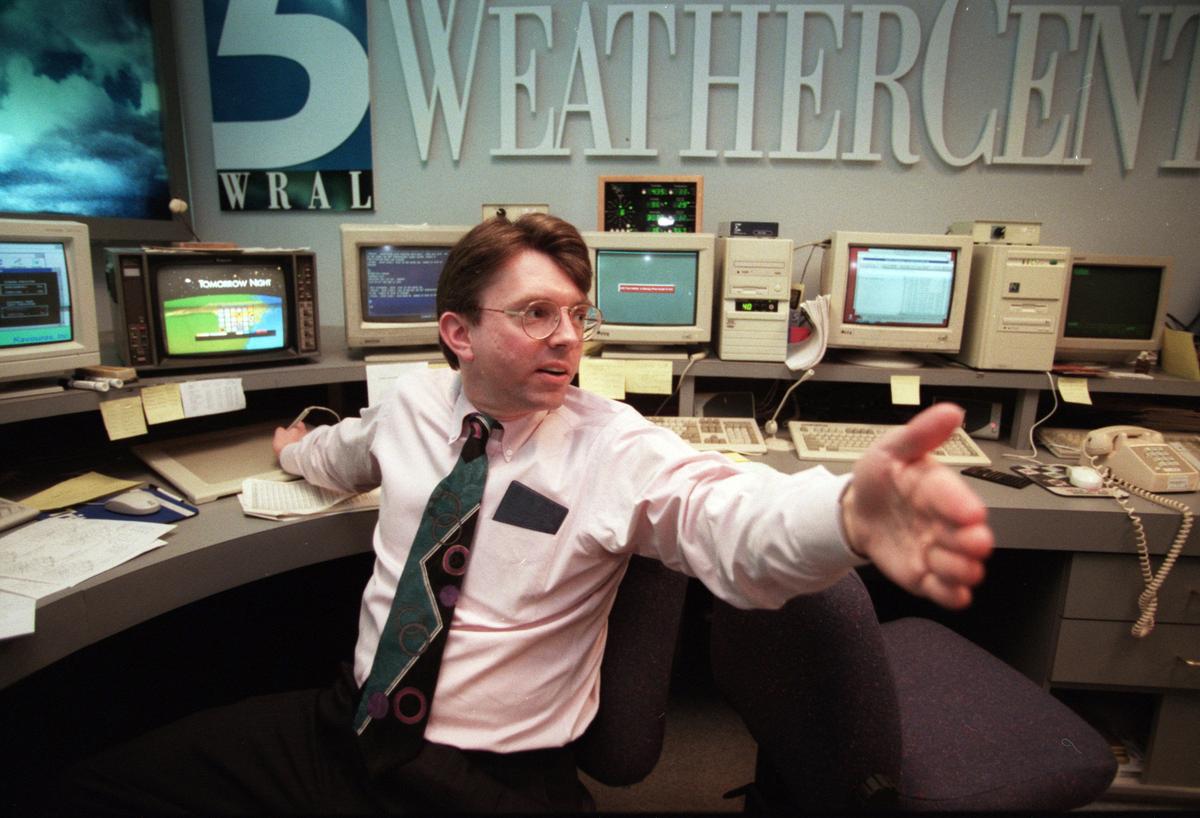
Fishel and the newly formed WRAL Weather Center were part of the very first wave of TV stations transitioning from having someone with a friendly face delivering the National Weather Service forecast to becoming something that was a lot more serious, Moss said.
“He came here and started making in-house forecasts,” Moss said. “He started getting the kind of data that a real meteorologist uses.”
Fishel pushed to get a Doppler radar at WRAL in the late ‘90s, and 10 years later, Moss said it was Fishel’s idea to get that upgraded to a dual polarization radar.
“Both of those were the first in the area and among the first in the country,” Moss said. “He pushed for a lot of that, and of course you have to give a lot of credit to Capitol Broadcasting, bringing in great meteorologists and investing in the radar systems and modeling systems and display systems we used during the years.”
But it wasn’t just Fishel’s nerdy obsession with science that made him a great TV meteorologist, he was also a bit of a teacher to his audience.
“He’s so good at that business of just communicating concepts and tidbits about weather,” Moss said. “Some people have a real knack for teasing those things out and then translating it into something people want to hear in a way they’ll really understand — or at least think they understand.”
Not dumbing the weather down for TV
Lackmann, who has known Fishel for about 20 years, said Fishel often “pushed the envelope” in regard to getting more science into his TV forecasts.
“He viewed his audience as one that was interested in learning about the weather,” Lackmann said. “Instead of dumbing it down for them, on the contrary he would take steps to try to educate his viewers about the science and the methods and the uncertainties that are involved in making a weather forecast.
“I think with the fairly well-educated audience in Triangle, with a lot of people who are interested in learning about science, he found a very receptive audience for that,” Lackmann said. “That really set him apart.”
And one of the reasons Fishel was able to do that when many others could not, Lackmann said, was because of his popularity. Often, producers urge broadcast meteorologists to “keep it simple,” Lackmann said.
“He was so popular that he had clout and was able to bring these innovative weather graphics to the air, and I think that’s remarkable and very unusual.”
One of the broadcast innovations Lackmann most admires in Fishel’s career at WRAL is his early use of ensemble forecasts — and actually showing them on the air.
Lackmann explains that with ensemble forecasts, “you run a whole set of computer models and look at how well they agree or disagree, and that tells you something about how much confidence you could have in the forecast.”
Moss credits Fishel with not just continuously pushing his fellow WRAL meteorologists to stay sharp (because he certainly did, Moss said), he also helped raise the standards for broadcast meteorologists across the country.
As a member of the American Meteorological Society’s board, Fishel chaired a committee to develop a certification exam that eventually replaced the previous AMS Seal of Approval, which only required the submission of tapes.
The new certification process meant not only an exam, but an evaluation by a panel and a continuing education program requiring seminars, conference attendance, online training, community service and more, to keep certification.
Moss checked the database and found that more than 800 AMS Certified Broadcast Meteorologist credentials have been awarded since the program started in 2005, and all of those meteorologists are assigned a number.
CBM #1 is assigned to Greg Fishel.
Life after WRAL
Life after spending 40 years on television — nearly all with the same employer — has been an adjustment.
Fishel says he doesn’t miss being on TV, but there are things about the job he misses. Mostly, it’s the people, he said.
“I mean, David (Crabtree) and Debra (Morgan) and Gerald (Owens) and the weather team, you know, those are people that I had relationships with that went beyond just work. And I miss that. ... There have been a number of people who have reached out to me and have been very supportive during this transition, so I’m very grateful for that.”
Despite having one of the most recognizable faces in the area, Fishel insists he doesn’t get recognized too often when he’s out — especially now that he wears a face mask everywhere.
Fishel says the thing people do recognize, even with the mask, is his voice.
“This happened just today,” he said. “They said, ‘Yeah, I knew I knew that voice from somewhere!’”
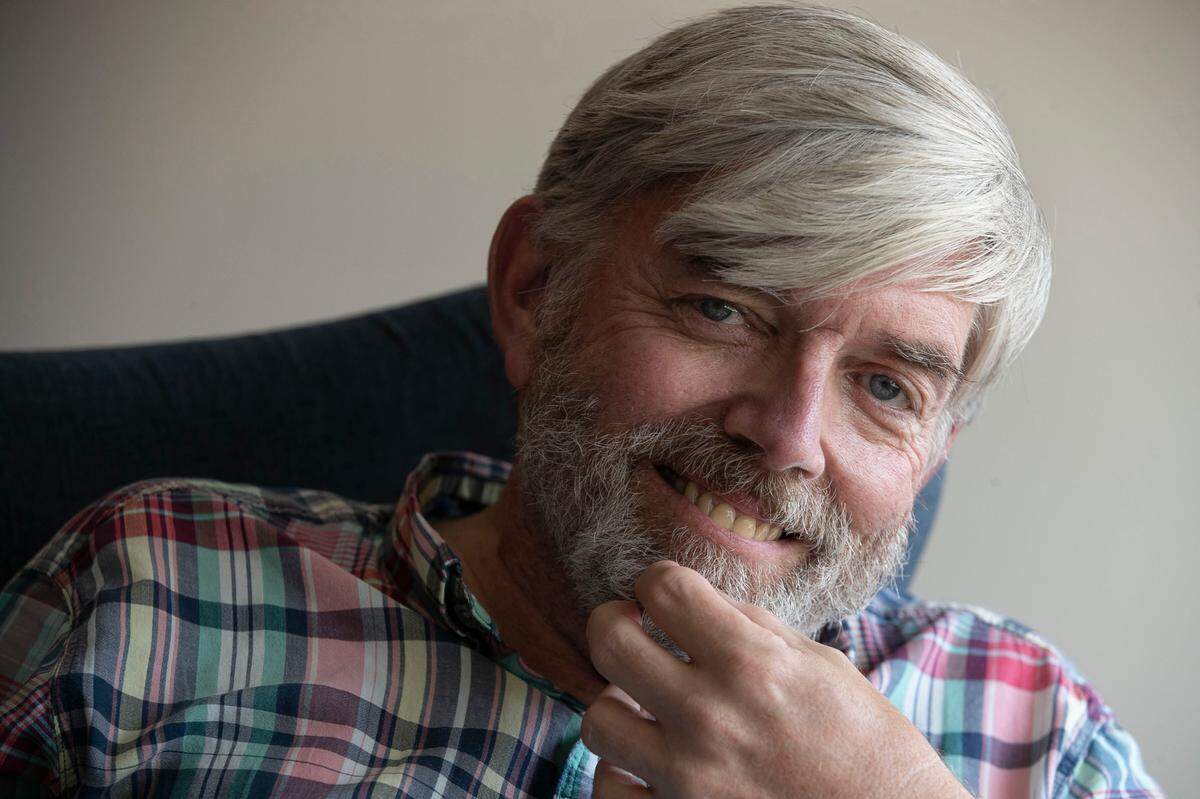
If he ever doubts he still has fans and supporters out there, he need only turn to Facebook.
Fishel’s Facebook awakening came in the summer after leaving WRAL, when he was at Emerald Isle helping a church build a deck on a retreat center as Hurricane Dorian starting creeping up the North Carolina coast.
“I thought, ‘Oh Dorian’s coming up the coast. I never had a chance to experience one of these things without being under pressure on television, so why don’t I?’” Fishel recalled.
He stayed with some friends on Emerald Isle and decided to try Facebook Live “and see what it was like.”
It was like a bit of his old world opening back up.
“It was way more than I thought,” Fishel said.
After his first Facebook Live session, someone sent him a note through Facebook Messenger and told him that he didn’t have his settings so that people could follow him. He had no idea what they meant, but he tinkered with the settings until he figured out how to allow followers.
“Once I turned that on, then the floodgates opened,” Fishel said. “As of the time of this interview I think my followers are like 36,000. And I thought obviously I would get some, but never in my wildest dreams did I think it would be that. So this has sort of been a way for me to stay in touch with the community even though I’m not on television any more.”
As for what’s next? He’s not sure, but says he’s not looking to make a TV comeback.
“I really don’t think I want to do television anymore,” he said. “The business was starting to move in a direction that I was not all that comfortable with. I think the wonderful thing about WRAL, for the time I was there, is they gave me an immense amount of freedom to incorporate way more science into my weather forecast than most people in the country were allowed to do. ... I don’t know that I would ever find another TV station that would give me that much freedom.”
His dream job, he said, would be doing weather on an all-news radio station, “because you don’t have to worry about your hair being parted correctly or if the pinstripes in your suit match the one color in your tie.” But he’s not even sure such a station exists where he’s going.
He does have one potential job opportunity in Florida, but says if came to fruition, it wouldn’t be until fall.
In the meantime, he’s living life the way many of the rest of us are: staying in more, eating out less, and wearing a mask (“do it because you care about your fellow man and woman,” he said).
He has missed watching live sports (especially the New York Mets) and he misses playing the tuba in the Cary Community Band.
He doesn’t watch much Netflix and he hasn’t taken up jigsaw puzzles (“I really need to diversify my boredom reduction efforts,” Fishel said when asked about his quarantine hobbies), but he has continued to play a little golf and took some golf lessons this summer.
And as July progressed, he became busier with packing and with all of the chores associated with a big move.
He officially rolls out of Raleigh on July 31.
“I’ve got some oars in the water that I hope will work out, but there are no guarantees,” he said. “So this is really the first time in my life that I can think of that I’m trusting God to provide for me . . . That doesn’t mean I’m gonna sit on the couch and expect stuff to just roll in. No, I’ve gotta do my part. I’m literally going to go down there without any guarantees of anything.
“And that’s why I say I’m scared and excited at the same time.”
This story was originally published July 27, 2020 at 11:22 AM.
.JPG)
.JPG)