UNC clinic offers hope and support for those battling long COVID’s mysterious symptoms
READ MORE
How to help COVID long-haulers
While there is much physicians and therapists can’t yet explain about what’s now known as long COVID, long-haul COVID or post-acute COVID-19, they can assure patients of two things: The syndrome is real and there are treatments that might help ease the mysterious, frustrating and fatiguing side effects. And medical professionals are working toward a third assurance: Better days are ahead.
Expand All
UNC clinic offers hope and support for those battling long COVID’s mysterious symptoms
Long COVID patients work to regain control of their breathing — and their lives
‘I remain faithful’: Therapists and patients learn that recovery can’t be rushed
‘My mind just goes blank’: When ‘brain fog’ comes, patients find that therapy helps
Of the litany of spooky symptoms she’s experienced after a bad bout with COVID-19 more than a year ago, one of the worst for Joni White was the recurring fear that she might be going crazy.
“It’s like everybody else that got it, got over it and got back to normal,” said White, who didn’t immediately associate debilitating brain fog and exhaustion that hit last April with the COVID infection she had in January 2021. “But months later, you’re still having all these problems. Every day, it’s something new. Sometimes you feel like you’re losing your mind.”
Physicians and therapists have heard that a lot since opening UNC’s COVID Recovery Clinic in Chapel Hill in March 2021.
And while there is much they can’t yet explain about what’s now known as long COVID, long-haul COVID or post-acute COVID-19, they can assure patients of two things:
▪ the syndrome is real.
▪ there are treatments that might help.
“In the medical community, there still isn’t clear agreement on why people would get long COVID,” said Dr. John Baratta, founder and co-director of the clinic, which has seen more than 800 patients so far.
Researchers are trying to determine whether genetics play a role, along with preexisting conditions. There are theories about “microclots” in the blood of long-COVID patients, and of fragments of the virus remaining in the body after the primary infection has cleared.
In many patients, COVID-19 appears to cause inflammation that can damage organs and cause pain nearly anywhere in the body, though standard medical tests and screens often show no irregularities. The virus appears to be able to attack muscles as well as the nervous system.
More common in women
Women are diagnosed with long COVID twice as frequently as men, similar to the rate of auto-immune disorders such as chronic fatigue and lupus. That leads some to believe the virus triggers a different immune response in women. People who get very ill with the initial infection also are believed more likely to develop long COVID than those with milder cases.
But the UNC clinic and others in Raleigh, Greensboro and Asheville have seen male and female patients, from teenagers to the elderly, some of whom were sick enough to have been hospitalized with COVID-19 and others who showed no symptoms while they were known to be infected with the virus.
From one of those patients to the next, long COVID almost never manifests exactly the same, though some complaints are more common than others: respiratory issues, cognitive dysfunction, neurological problems and a level of fatigue so intense that getting out of bed and taking a shower can leave a patient unable to do anything else the rest of the day.
Patients have reported muscle pain and weakness; headaches; anxiety; depression; wild, unexplained fluctuations in heart rate and blood pressure; tremors, tingling, pin-prick or crawling skin sensations; mood swings, including irritability; insomnia; hair loss; tinnitus; complete loss of smell and taste, or phantom smells, such as smoke or animal feces; incontinence; vocal dysphonia; and vision problems.
“Sometimes, you think you’re getting better, that one symptom is gone and you’re over that. Then you wake up one morning and the room is spinning 360 degrees and you realize, well, the vertigo is back,” said Jill Williams of Sanford. Williams tested positive for COVID-19 in February 2021, and while the original illness was bad, the torrent of mostly neurological symptoms she’s had since then is much worse.
She’s had a non-stop headache for more than year. Sometimes she wakes up “feeling like I rolled in a cactus all night.” A neurologist told her that her post-COVID vision problems were caused in part by brain inflammation so severe it changed the shape of her eyeballs.
‘Primary care physicians are the front line’
It isn’t clear yet whether all variants of the virus produce the same percentage of long COVID cases.
Current research, Baratta said, suggests that between 10% and 30% of people infected with COVID-19 develop lasting symptoms as a result, meaning that in North Carolina alone, more than three quarters of a million people may have experienced problems. Most, Baratta said, are being cared for — if at all — by primary care physicians, some of whom don’t believe in long COVID and others of whom don’t know how to treat it.
“Primary care physicians are the front line,” Baratta said. “They’re the ones managing this condition,” even if they don’t know that’s what’s causing their patients to suffer.
Late last year, the National Institutes of Health awarded UNC a grant to participate in a project with 70 medical systems across the nation to use electronic medical records to try to determine if long COVID is one illness or several different ones, and what it looks like.
Emily Pfaff, an assistant professor in the division of endocrinology and metabolism at UNC and co-director of Informatics and data science at NC TraCS, is helping oversee the work at UNC. Using records stripped of direct personal identifiers, the research looks for similarities and differences that eventually could help clinicians more accurately diagnose long COVID and help researchers plan trials that could find more effective treatments.
Just as there are no solid explanations for long COVID and no two identical cases of it, treatment for the syndrome varies from one patient to the next. The UNC clinic begins by identifying the symptoms that are most degrading the patient’s quality of life, then looking for ways to alleviate those.
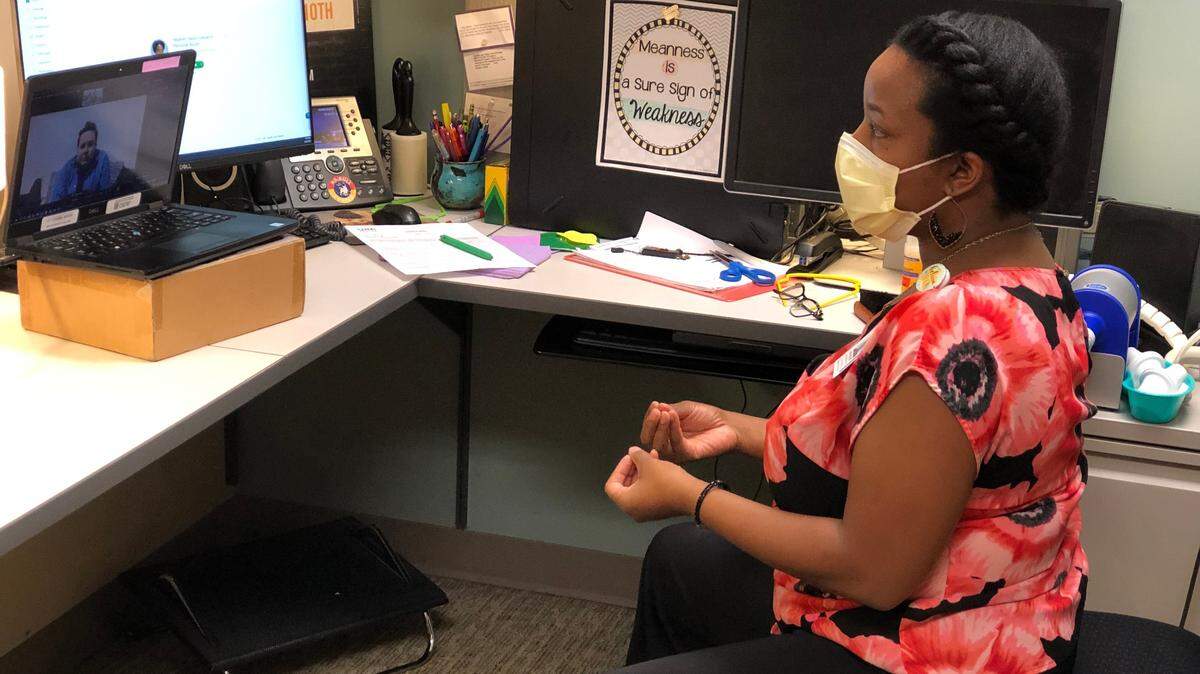
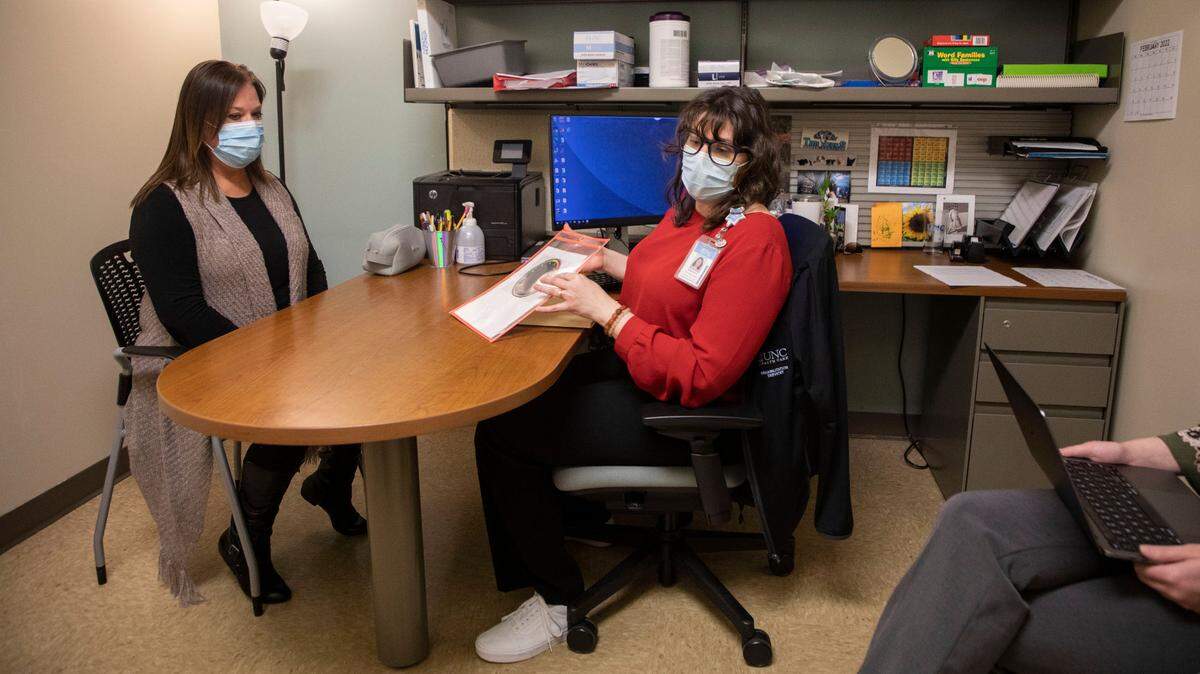
Patients need referrals from their doctors to be seen at the clinic. Once scheduled, they come to Chapel Hill or meet online for an assessment by a team that includes a physical therapist, occupational therapist, rehabilitation physician, internal medicine physician, psychiatrist and neuropsychologist.
Baratta says this collaborative, multi-disciplinary approach came out of the Department of Physical Medicine and Rehabilitation’s historic work with patients recovering from traumatic brain injuries, concussions, stroke, spinal injuries and other events or ailments that result in some of the same symptoms seen in patients with long COVID.
‘I thought maybe (she had had a stroke),” Jody Eimers said she suspected when White, her partner for 25 years and wife since 2013, began to falter at tasks that once come so naturally to her. Or maybe it was just the normal effects of aging, Eimers thought, perhaps accelerated by White’s bout with COVID.
Quarantined and miserable
White believes she was exposed to COVID over the Christmas holidays in 2020. While traveling with family, the group made a pit stop at a crowded convenience store, hoping to get a quick meal. While White was masked, many others who came into the store were not, she said. The in-and-out stop stretched into a 40-minute wait.
She developed symptoms soon after and tested positive on New Year’s Eve.
White spent the next several weeks in a basement bedroom at her sister’s house at the coast, quarantined and miserable, with fever and chills and a headache she said felt like something was eating her brain. Several times, she said, she thought the virus would kill her.
When she finally felt well enough to drive, she headed back to the house she and Eimers share on a hilly, wooded lot in Hillsborough. White, 63, who is retired from the U.S. Department of Homeland Security, has made a project of the home since the couple bought it in 2015, doing the work herself or overseeing tradespeople. They took down an interior wall, rebuilt the kitchen and bathroom, and tore apart the fireplace and refaced it.
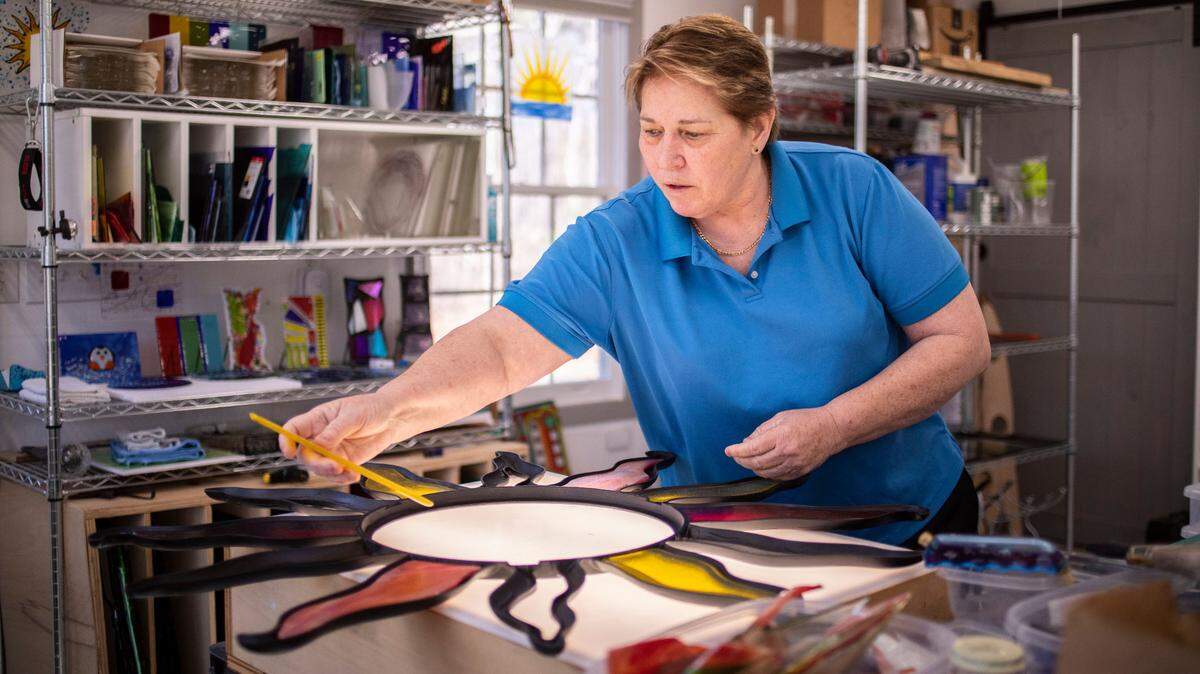
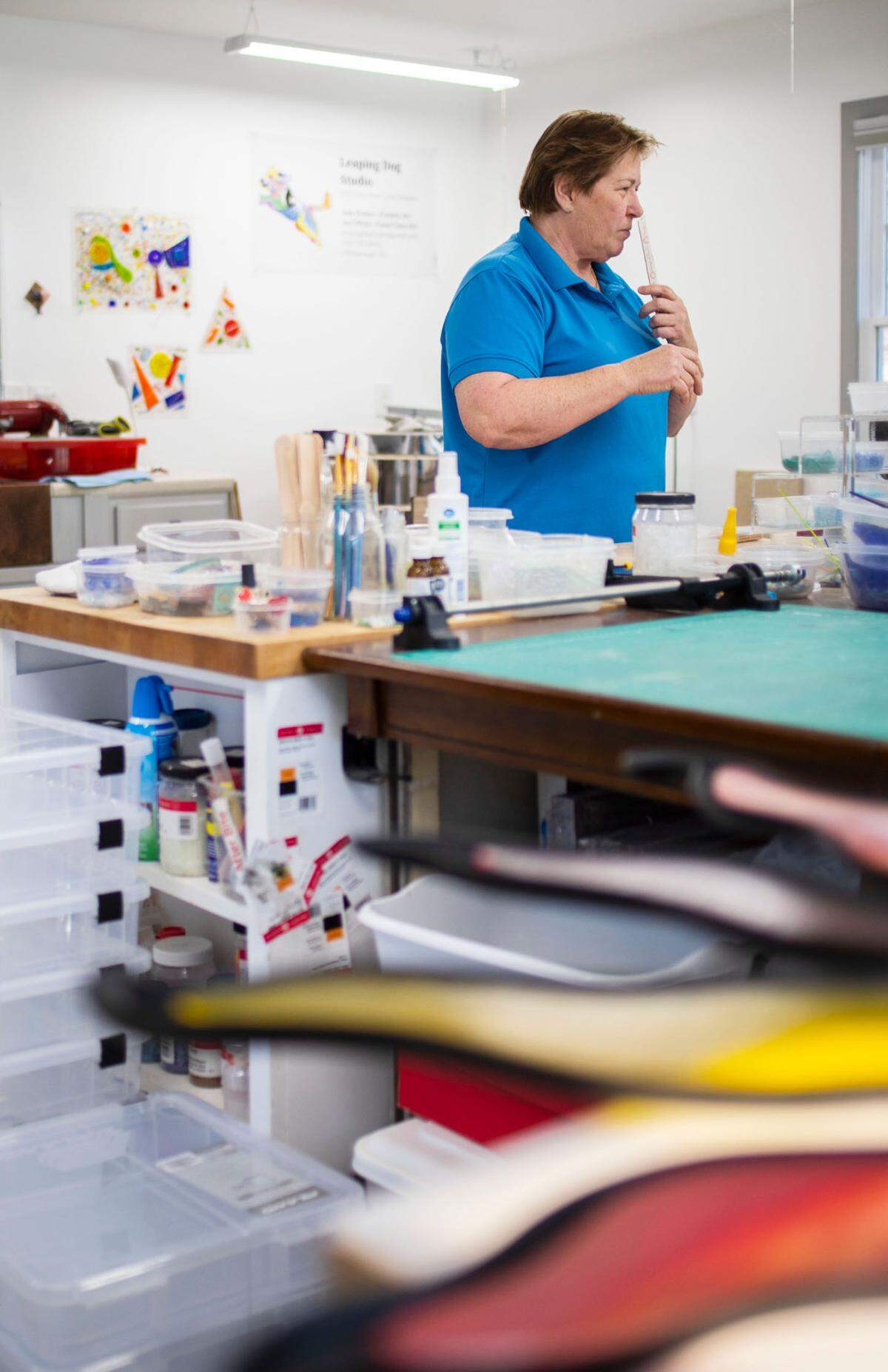
When not working on the house, White often could be found in the two-car garage she and Eimers converted into a sunlit studio for working on White’s fused glass and Eimers’ ceramics, or playing with their young grandchildren who live nearby and come to visit several times a week.
Before COVID, White was a whiz at calculating and designing changes to the house, figuring out the complex temperature formulas for fusing different thicknesses of glass and thinking up activities with the grands. Eimers, a scientist emeritus with the U.S. Geological Survey, had always deferred to White on managing household finances as well.
But in April, four months after she thought she was over COVID-19, White began to find herself unable to do basic math, for instance. Working on an improvement to an outside deck that required adding some measurements, White sat down at the kitchen island with paper and pencil and found that, “I couldn’t add 2 plus 2.”
She talked to herself constantly. She became short-tempered with Eimers and others. She developed pain that seemed to migrate to different joints. She would get in the car to drive to her stepdaughter’s house — a short trip she had made a thousand times — and forget the way.
Then the fatigue hit, and sometimes, she barely got out of bed for days at a time.
Last fall, White heard about the UNC clinic through her stepdaughter, who works at UNC. She got a referral and was able to schedule an assessment for October. It was a long wait, but she said that just getting that far felt like validation that what she was experiencing wasn’t just in her head.
Her first visit to the clinic was overwhelming, White said, and the mental, emotional and physical exertion of it sent her home to bed. But in subsequent visits, she began to focus especially on a type of speech therapy aimed at regaining cognitive skills. The way physical exercise targets muscle groups, cognitive speech therapy works the brain, seemingly retraining the pathways through which people retrieve words, names and concepts they have learned but somehow lost access to.
Mental exercises on a worksheet
At her therapy sessions now, usually conducted online, White asks for homework. Though it can be exhausting, she has learned to pace herself to reduce setbacks and “flares” that might put her back in bed for a day or more.
She sits at the kitchen island and goes through the exercises on a worksheet, like a middle-schooler tackling word problems.
Gradually, the fog has been lifting.
She can keep her train of thought long enough to hold a conversation. She has learned to recognize the warning signs of overstimulation or overwork and takes a break, sometimes just to calm her mind in the silence of the bedroom, or maybe take a restorative nap.
“I’ve learned to respect it,” she said, knowing that if she pushes too hard, long COVID might push back.
Though she didn’t think she would benefit at first, White now says that talking about her experience in a support group through the UNC clinic has been medicinal for her. In her own family, she said, not everyone believes COVID-19 is a real illness, so there is no point in trying to tell them how long COVID disrupted her life. Sharing her experience and supporting others as they talk about theirs has eased that sense of isolation, she said.
Doctors Isabel Roth and Jessica Barnhill started the support group, an online forum modeled after one they launched in person in 2020 for sufferers of chronic pain and moved online when the pandemic hit. Starting a similar group for long COVID patients seems a natural extension of their work and research, as long COVID patients get treated by many practitioners for problems that aren’t easily explained.
“The groups are nice because you get together with others who are going through something similar,” Roth said. “Just to be in a room with someone who believes you, who knows what you’re talking about, and to have a physician lead the group who validates you and has ideas for ways to help you — that is really valuable. Just the piece of being validated ... just that element of it is a bit of relief for some folks.”
Support and strategies
In the group, Barnhill said, patients discuss strategies that have helped them, including stress reduction, getting good sleep, eating healthful foods and testing an anti-inflammatory diet. A nationwide Facebook group called Survivor Corps shares similar tips and provides a place where people can talk about their experience with long COVID.
White also said she’s especially grateful for Eimers’ patience and support over the past year and says that without her, she would never have made it.
“I can easily see people getting divorced over this,” White said, though Eimers is quick to say that was never a consideration.
Besides the often debilitating symptoms, long COVID can create a financial crisis for patients and their families. Baratta says about half those getting treated at the clinic have had to cut their work hours or quit their jobs.
And though the Biden administration has said long COVID can be considered a disability under federal civil rights laws, Kate Cardoza, a clinical social worker at UNC who works with patients in the long COVID clinic, said many patients don’t apply for disability because they hope and believe they will get better. As they do improve, she said, patients benefit from having understanding employers who can allow them to build up their endurance and accept that they will have setbacks when they can’t work at all.
In December, for the first time since she tested positive for COVID-19, White woke up and was shocked to think, “I feel really good today.”
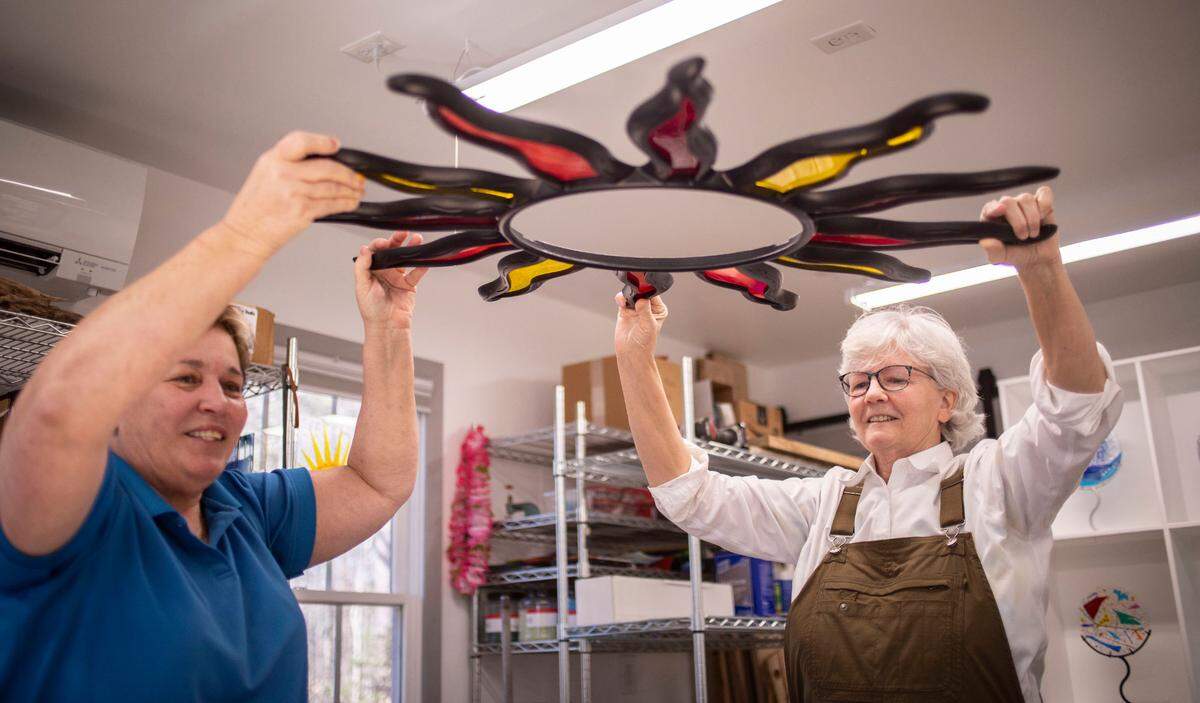
In January, she ventured out to the glass studio, “my happy place,” which she had not visited since falling ill. The last two projects she was working on before COVID, a glass disc featuring a curling ocean wave and a huge, colorful sunburst, were sitting on a light table where she left them. The wave is one of the signature pieces she used to sell through a gallery in Manteo before she got sick.
Picking up the pieces of the sunburst last month, White set them loosely into their metal frame, each wavy piece into its spot, like a fragile puzzle. She held it up, careful not to tip it and send the glass crashing to the floor.
For the first time in a long while, she could see some light shining through.
This story was originally published March 30, 2022 at 6:00 AM.