‘My mind just goes blank’: When ‘brain fog’ comes, patients find that therapy helps
READ MORE
How to help COVID long-haulers
While there is much physicians and therapists can’t yet explain about what’s now known as long COVID, long-haul COVID or post-acute COVID-19, they can assure patients of two things: The syndrome is real and there are treatments that might help ease the mysterious, frustrating and fatiguing side effects. And medical professionals are working toward a third assurance: Better days are ahead.
Expand All
UNC clinic offers hope and support for those battling long COVID’s mysterious symptoms
Long COVID patients work to regain control of their breathing — and their lives
‘I remain faithful’: Therapists and patients learn that recovery can’t be rushed
‘My mind just goes blank’: When ‘brain fog’ comes, patients find that therapy helps
Stephanie Tilley knows her friends and nursing colleagues mean well when she runs into them around Mebane and they say, “You look great! Why aren’t you back at work?”
If they spent a day with her, they might see how out of breath she gets doing what might seem like the least thing — such as taking a shower — even though her lungs test normal.
But her most troubling long-COVID symptom is one they might not notice when they see her at the grocery store. It’s what clinicians call cognitive dysfunction, but most long-COVID patients know it as brain fog.
“For me, I liken it to a pit of mud,” said Tilley, 49. “There are times where someone is talking to me and my mind just goes blank. And it’s like I have to reach into a pit to pull any words out. It’s just blank.”
Like other long COVID patients, Tilley remembers the exact date she got her positive COVID-19 test results: April 19, 2021.
During the course of her illness, she contracted double pneumonia, then was diagnosed with blot clots. She thought she might die and worried about leaving her husband and their three daughters. They all got COVID too, but made full recoveries.
The brain fog sets in
Tilley, who had no preexisting conditions, said she noticed the brain fog setting in about three weeks into her illness. She might be having a conversation with her girls or her mom, or some of the members of the church her husband pastors who brought food for the family when Tilley was too weak or nauseous to cook. In mid-sentence, she would forget what she was saying or what the conversation was even about.
“I thought maybe it was the lack of oxygen” caused by the virus attacking her lungs, she said. Weeks later when she started feeling better, she was able to improve her breathing through pulmonary therapy. The nausea abated. Her sense of smell, which she had lost, came back. She was able to taste again, though the flavor of salt is still absent.
“But the brain fog stayed at what it was,” Tilley said. “My husband would even notice that simple things would frustrate me. Before COVID, I had the mentality of, ‘Let’s stick it through, let’s get it done, no matter how long it takes.’
“But since COVID, I just didn’t have that drive anymore or the mental capacity.”
Fatigue makes the fog worse, Tilley said.
“It’s as if when I get tired, my brain almost stops.”
Before COVID, Tilley worked as a bedside nurse in a busy hospital, able to care for several patients at a time. While she hopes to work again one day, she would never return to patient care when her struggle for words might interfere with patients getting what they need.
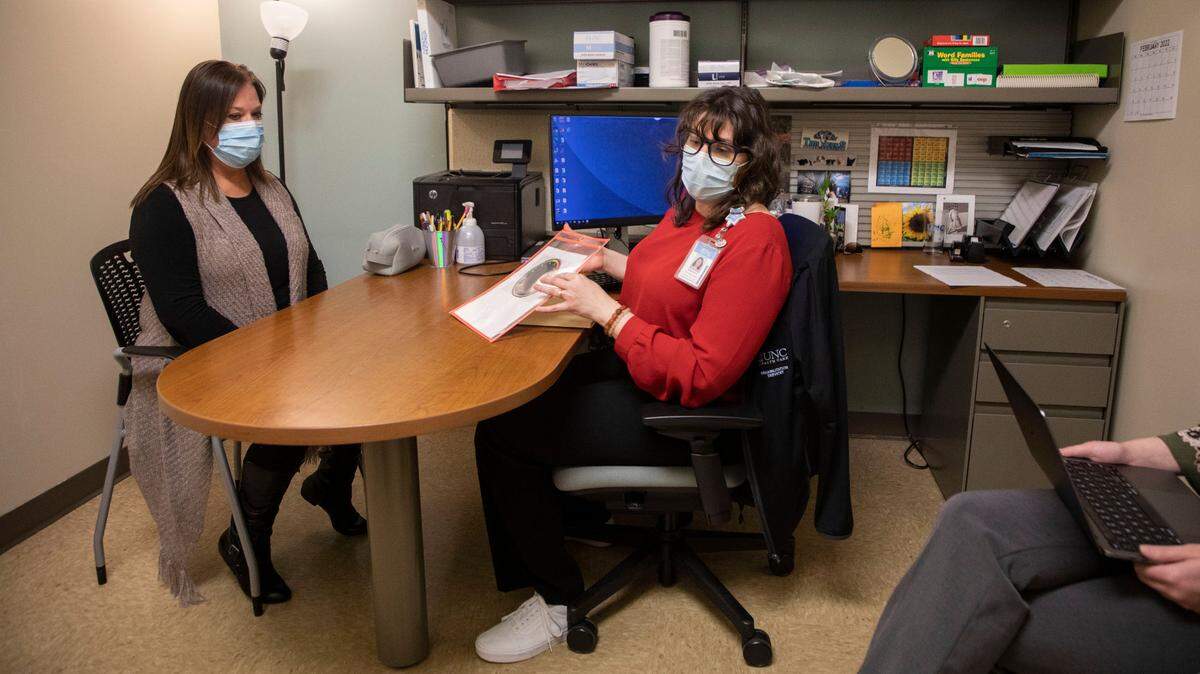
In the meantime, she is working out her brain in regular sessions with Kristen Peet, a speech therapist for cognitive rehabilitation who has been helping patients at UNC’s Covid Recovery Clinic.
Treatment sessions take place in Peet’s office in a building off of U.S. 15-501 between Durham and Chapel Hill.
Tilley arrived for a recent session a little tired from the stress of the drive and took a seat across the desk from Peet. The building was relatively quiet, and Peet had dimmed her office lights to help keep Tilley from being overstimulated.
They chatted. Peet asked Tilley how her week had been, what challenges she had faced and which ones were upcoming. Tilley said she planned to cook dinner for some extended family that night, a rare treat for her since COVID.
While she was excited about the prospect she also knows she has to pace herself.
Patients must pace themselves
If she overtaxes her brain or her body, she might cause a “flare” or setback, common to long-COVID patients. After feeling unable to do daily activities for weeks or months, when they finally begin to feel better they are tempted to overdo it, which can land them in bed for days.
Dr. John Baratta, co-founder and director of the UNC clinic, said therapists coach patients to take frequent short breaks and to listen to their bodies for signs of fatigue before they cross that threshold.
Peet asked Tilley what she was planning to cook for the family. Baked ziti, Tilley said, but the sauce would come from a jar and everything would be simple.
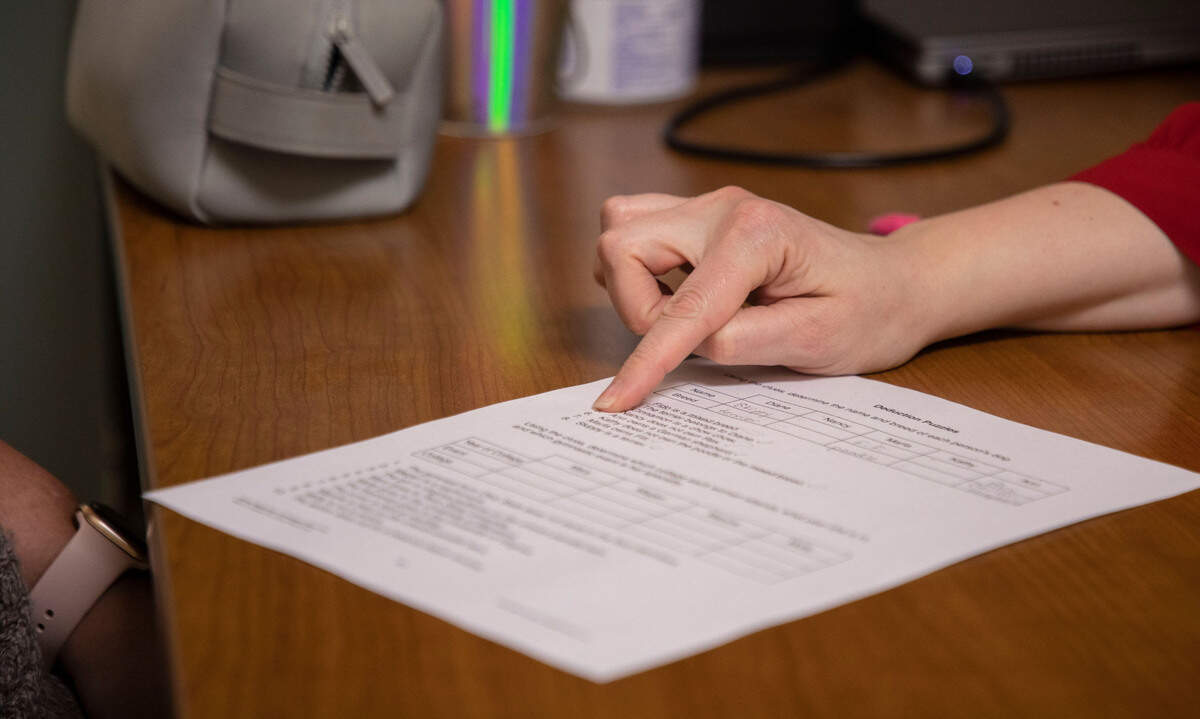
They began a series of exercises, using worksheets Peet provided, building on skills from previous sessions. One was a memory-building task in which Tilley had to find associations between random objects — a nail and a men’s suit, or a tape dispenser and an alligator. Creating associations is a trick she can employ as she tries to build a grocery list or remember chores or errands she needs to run.
Peet has worked for almost a decade helping rehabilitate patients who have had strokes, brain injuries or concussions from falls or accidents. Patients with long COVID have the same kinds of struggles, she said: they have trouble remembering things and paying attention.
Peet works with each one on what their recovery goals would be, including activities they want to resume. She and Peet talk a lot about nursing, recalling the names of medications and patient procedures.
Managing fatigue is a big part of recovery, Peet said, and patients have to be diligent not to rush back too fast, despite their own or others’ expectations.
“In our society, the idea of taking breaks is kind of shunned,” Peet said. “Like, ‘No, we can’t take breaks.’ But those pauses bring us back down to a state of more clear thinking and then we can complete tasks and skills in more effective ways.”
Another exercise had Tilley using different bits of information about fictional dog owners to try and deduce which one owned what breed of dog.
Between each challenge, Peet checked in with Tilley to make sure her frustration level stayed low and her energy didn’t flag too much. When she needs it, Tilley knows from her therapy to take a minute or two, breathe deeply, calm her nervous system, then start again.
Tilley said her therapy through the UNC clinic is helping, though not as fast as she would like. She isn’t sure she’ll be able to return to nursing, but said if she does, she will have a new understanding of patients whose ailments don’t always show.
“People who live with chronic illness, I do empathize with them,” she said. “In order to still function in society, you have to just make that part of who you are. It can be tough some days.”
This story was originally published March 30, 2022 at 6:00 AM.