Where are you safest during a tornado? A guide for being prepared in NC storms
READ MORE
A newcomer’s guide to the Triangle
We want to help you navigate life in the Triangle, whether you’re new here or you’ve been here a bit and just need a refresher on some aspects. So we’ve compiled tips to navigate the area’s roads, survive the constantly changing weather (including the truly dangerous stuff), find the best food and entertainment, use our education system to excel, learn to respect our history (good and bad), pronounce local icons properly and — most importantly — understand just what “the Triangle” is, anyway.
Expand All
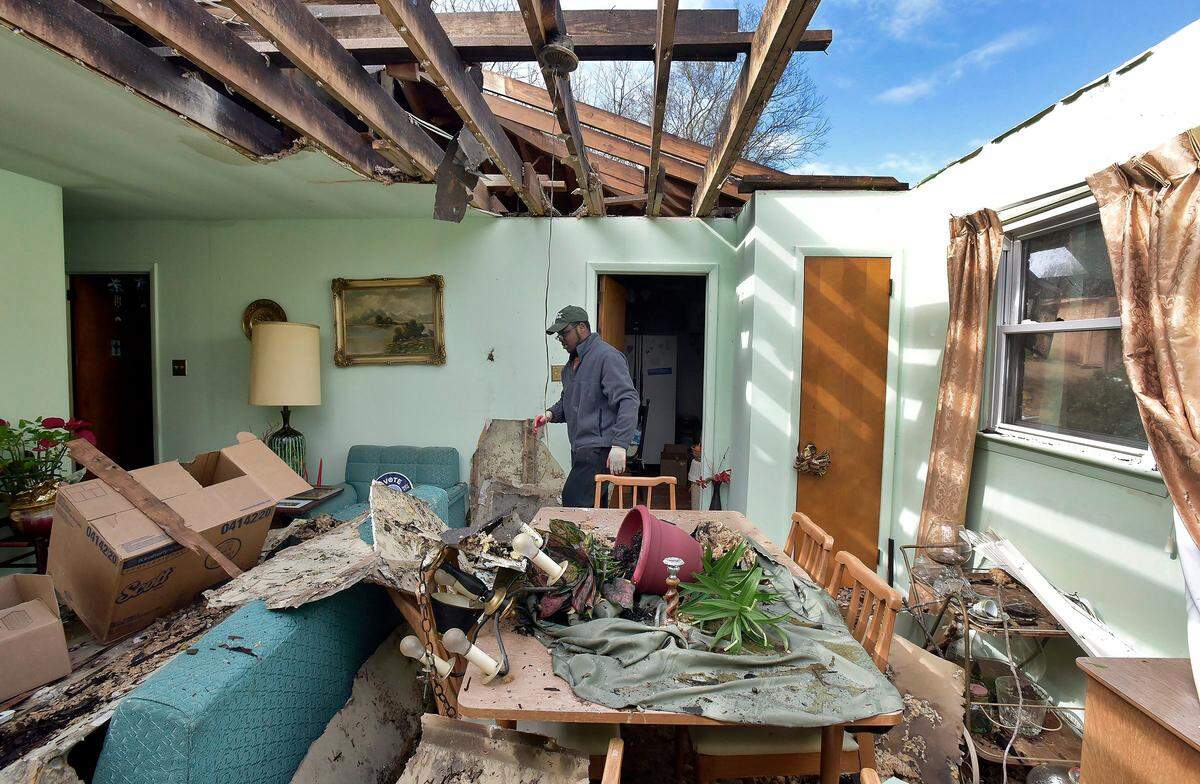
North Carolina Emergency Management calls tornadoes “nature’s most violent storms.”
These powerful storms “can occur with little or no warning at any time during the year,” making it important to be informed about tornadoes and be prepared in case one strikes.
With the help of information from ReadyNC and the National Weather Service, we’ve compiled this guide with information for what to do before, during and after tornadoes, plus information on when the powerful storms might occur and more.
Here’s what to know about staying safe in North Carolina when tornadoes are possible.
What is a tornado?
The National Weather Service (NWS) says a tornado is “a violently rotating column of air touching the ground, usually attached to the base of a thunderstorm.”
The NWS also provides these characteristics of tornadoes and the storms that accompany them:
▪ Tornadoes spawn from powerful thunderstorms. They generally form “near the trailing edge of a thunderstorm.”
▪ Winds of a tornado may reach 300 miles per hour.
▪ The path of damage caused by tornadoes can be one mile wide and 50 miles long.
▪ Some tornadoes are clearly visible, but others may be obscured by rain or nearby low-hanging clouds. “A cloud of debris can mark the location of a tornado even if a funnel is not visible,” the NWS says.
▪ Tornadoes develop very quickly, and they may dissipate quickly, too. Most tornadoes are on the ground for 15 minutes or less.
▪ Before a tornado develops, “the wind may die down and the air may become very still.”
▪ It is not uncommon to see clear, sunlit skies behind tornadoes.
When are tornadoes likely to form?
Tornadoes can occur with little or no warning, day or night, at any time of year in North Carolina, but ReadyNC says peak tornado season in the state is March to May.
Tornado watches vs. tornado warnings
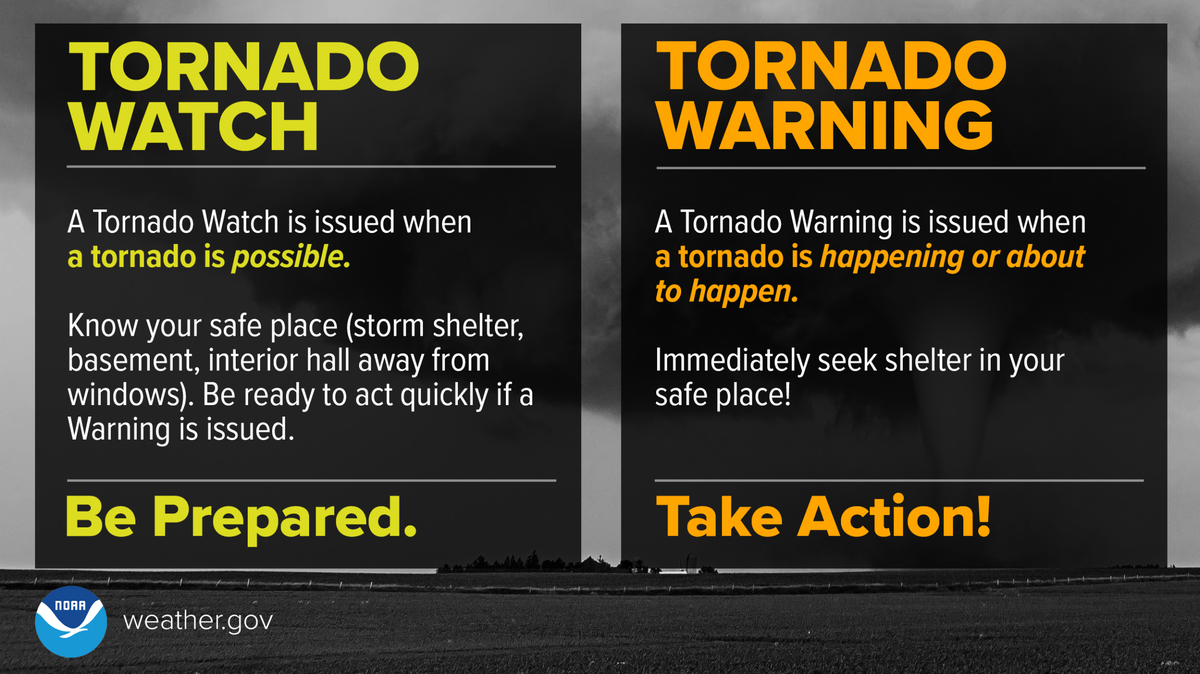
When weather conditions bring the possibility of tornadoes to your area, you may see or hear the National Weather Service issue a tornado watch or tornado warning, depending on whether an actual tornado has been sighted or indicated by weather radar.
▪ A tornado watch means that tornadoes are possible in and near the area for which the watch was issued.
When you hear that a tornado watch has been issued for your area, you should take time to prepare in case a tornado is spotted and a warning is issued.
Review and discuss any emergency plans with your family or those you are with at the time. Identify where you will go to take cover if needed. Be ready to take action if a warning is issued.
▪ A tornado warning means that a tornado has been sighted in your area, or one is indicated by weather radar.
When a tornado warning is issued, there is imminent danger to your life and property. You should immediately move to a safe, sturdy shelter and avoid windows.
Warnings are typically issued for a smaller area than watches, generally the size of a city or small county, that may be impacted by a tornado, as identified by a forecaster on radar or by a trained professional who is watching the storm.
Before a tornado hits: Staying informed
Staying informed about the weather is a key way to be prepared for whenever a tornado might hit.
You can stay informed by:
▪ Checking the forecast regularly for any threat of severe storms or tornadoes. You can check weather forecasts on your phone using a variety of apps, or tune into local news — whether that’s by radio, TV or online. As bad weather arrives to your area, you’ll want to continue tuning in to these trusted sources in case tornado watches or warnings are issued.
▪ Ensuring that your mobile phone is opted in for Wireless Emergency Alerts (WEAs). WEAs are short emergency messages sent directly to your phone, in the form of a push notification, from authorized alerting authorities, including the National Weather Service.
There is no cost to receive WEAs, but you’ll want to ensure that your phone is set up to receive them. Most phones should opt-in to the alerts automatically, but you can check in your phone’s settings to make sure you’re signed up. Learn more about WEAs at ready.gov/alerts.
▪ Monitor watches and warnings issued for your area. While you should get a WEA sent to your phone if a tornado warning is issued for your area, you can also stay in the loop about watches and warnings by monitoring local forecast offices of the National Weather Service. In the Triangle, that’s the Raleigh NWS office (weather.gov/rah).
Before a tornado hits: Creating a plan
You can always stay prepared for tornadoes and other severe weather events by thinking through and creating a plan for yourself, your family and those you live with.
Since tornadoes can happen so quickly, being prepared with an emergency plan at all times is key to staying safe if one hits.
When you create an emergency plan for tornadoes, think about:
▪ Where will you go to take shelter if a tornado warning is issued? Think about safe, interior rooms on the lowest level of a sturdy building. You might not be at home during a tornado, so think through scenarios for if you happen to be at work or in your car.
▪ How will you stay informed about weather conditions before, during and after a tornado?
▪ How will you communicate with your family and loved ones during or after a tornado?
▪ Is your emergency kit well-stocked? You can find information on what to include in an emergency kit at ready.gov/kit. It’s a good idea to keep a kit in the location you’ve designated to take shelter if a tornado hits.
More information about creating an emergency plan is available at ready.gov/plan.
Before a tornado hits: Danger signs
In addition to staying tuned in to local news and being aware of tornado watches or warnings that are issued, ReadyNC offers several “danger signs” that indicate a tornado could be on the way to your immediate area.
▪ If there is a tornado watch or warning issued, ReadyNC says, falling hail — frozen balls or lumps of precipitation that sometimes accompany thunderstorms — is a danger sign that a tornado could be coming.
▪ Even if you cannot see a tornado funnel, a cloud of debris could indicate a tornado.
▪ Before a tornado hits, the wind may die down and the air may become very still. That does not mean that all is clear, and you should continue to take shelter until the watch or warning is lifted.
▪ Dark, often greenish skies could indicate a tornado, though they could also have sunlit skies present behind them. Do not mistake this as the weather clearing up.
▪ Dark, low-lying clouds, especially if they’re rotating, could also indicate a tornado is forming.
▪ Tornadoes are often accompanied by a loud roar, which many say sounds like a freight train.
If you see or hear any of these danger signs, or if a tornado warning has been issued for your area, be ready to take shelter quickly.
During a tornado: Seeking shelter
When a tornado warning has been issued for your area, you will need to take shelter in a safe location — but exactly where that location is will depend on where you are at the time of the warning. You could be at home or at work, or maybe in a store or in your car.
Wherever you take shelter, if possible, you should assume a safe body position to shield yourself from flying debris.
▪ Get down on your knees, lean forward and tuck your head with your hands covering your neck and head.
▪ You might remember this position from tornado drills when you were in school, or from safety drills in your workplace.
ReadyNC offers the following recommendations for taking shelter depending on where you are when a tornado is approaching.
If you’re at home:
▪ Seek shelter in an interior room on the lowest floor of your home or in a basement. Sheltering under stairs or in a bathroom or closet tend to be good options.
▪ Stay away from windows. Do not open or close windows.
▪ If you live in a mobile home, you will want to find a sturdier shelter. If you do not have a sturdier shelter, go outside and try to find a ditch or low-lying area.
If you’re at work:
▪ Seek shelter in an interior room on the lowest floor of the building or in a basement, if your work building has one. Stairwells, hallways, bathrooms and closets are good options.
▪ Stay away from windows.
▪ As a last resort, if you are unable to get to a safer location in the building, you can crawl under your desk and shelter there.
If you’re at a school:
▪ Seek shelter in inside hallways, bathrooms and closets.
▪ If your school has mobile classrooms, move to the sturdy building instead.
▪ Do not shelter in gymnasiums, auditoriums or other rooms with large expanses of roof.
▪ Stay away from windows.
If you’re at the mall or in a store:
▪ Seek shelter against an interior wall. Enclosed hallways or fire exits leading away from the main part of the store or mall are also good options.
▪ Stay away from skylights or other large open areas.
If you’re in your car:
▪ Never try to outrun a tornado in your car.
▪ If you see a funnel cloud forming or hear a tornado warning is issued, get out of your vehicle and find a safe, sturdy shelter.
▪ If you cannot find a sturdy shelter, find a ditch or low-lying area and assume the safe body position.
▪ Do not shelter underneath bridges or overpasses. They could collapse on top of you.
If you’re outside:
▪ Find the closest sturdy shelter to you. If no shelter is available, try to find a ditch or other low-lying area.
▪ Assume the safe body position and cover your head.
▪ Do not shelter underneath bridges or overpasses. They could collapse on top of you.
After a tornado: Safety precautions
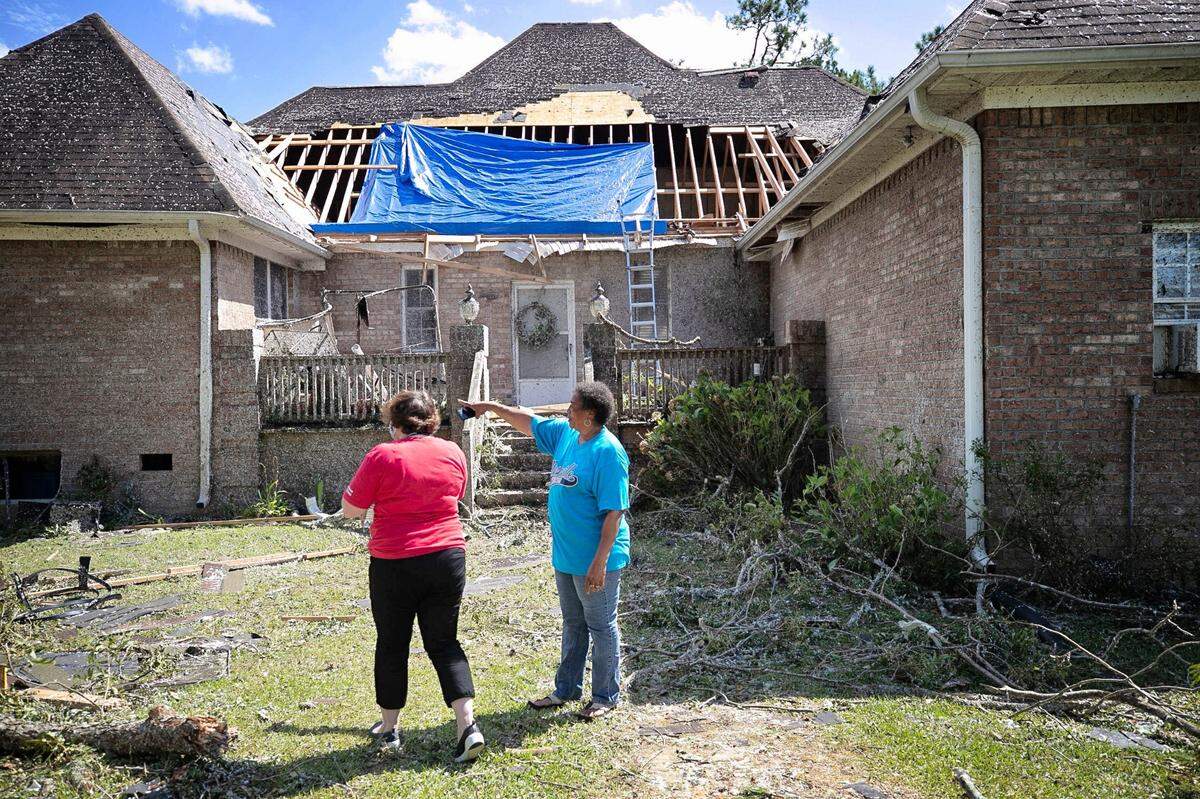
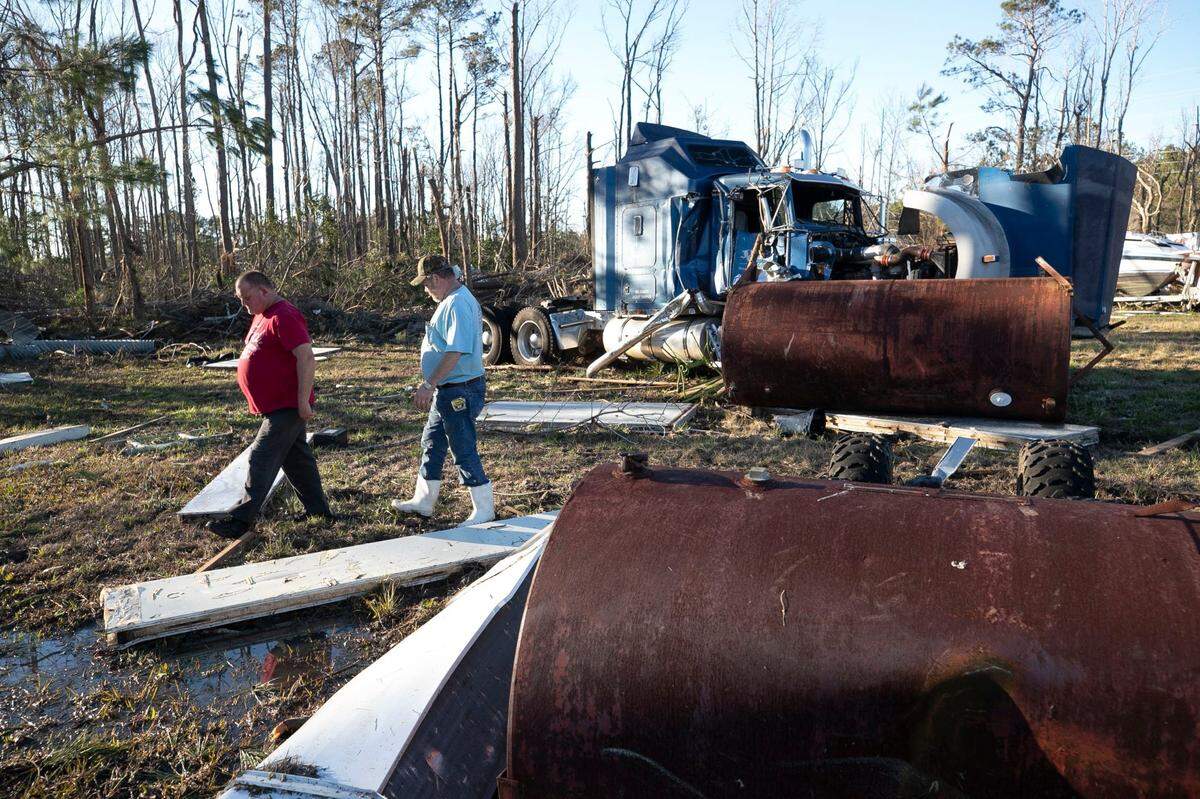
After a tornado has passed through your area, you will need to continue to take precautions to avoid injuries, especially if structures near you have been damaged.
Use these safety tips from ReadyNC:
▪ You should continue to tune in to local news and weather alerts for any emergency information.
▪ Be careful when entering any structures that have been damaged. Wear sturdy shoes, long pants, long-sleeve shirts and gloves when moving debris.
▪ Watch out for exposed nails and broken glass.
▪ Do not touch downed power lines or objects that are touching them. Report these instances to your electric company or emergency authorities.
▪ If you lost power during the storm, use battery-powered flashlights or lanterns to light your home. Try not to use candles, but if you have to, keep them away from flammable objects, including curtains. Do not leave a candle burning if you leave the room.
▪ Do not use generators, pressure washers, grills, camp stoves or other gasoline, propane, natural gas or charcoal-burning devices inside your home, basement, garage or camper.
▪ If you think there is damage to your home, turn off electrical power, natural gas and propane tanks to stop any fires, electrocutions or explosions.
▪ If you think you smell gas or suspect a leak, turn off the main gas valve to your home, open all windows and leave the house quickly. Call your gas company, the police or fire departments. Do not return home until you are told it is safe to do so.
▪ Listen to emergency authorities, local officials and relief groups for information on any relief efforts related to the storm. Do not go to damaged areas unless help has been requested.
Find more information about what to do after a tornado at readync.gov.
Additional resources
Learn more about preparing for tornadoes and stay informed using these resources:
▪ ReadyNC — readync.gov/stay-informed/north-carolina-hazards/tornadoes
▪ National Weather Service — weather.gov/safety/tornado and weather.gov/rah
▪ Ready.gov — ready.gov/tornadoes
This story was originally published March 23, 2022 at 10:57 AM.