Living in the Triangle: The basics on schools, voting, libraries and the DMV
READ MORE
A newcomer’s guide to the Triangle
We want to help you navigate life in the Triangle, whether you’re new here or you’ve been here a bit and just need a refresher on some aspects. So we’ve compiled tips to navigate the area’s roads, survive the constantly changing weather (including the truly dangerous stuff), find the best food and entertainment, use our education system to excel, learn to respect our history (good and bad), pronounce local icons properly and — most importantly — understand just what “the Triangle” is, anyway.
Expand All
We know life can’t always be barbecue and basketball, sometimes you have to deal with the boring stuff — like how to change your driver’s license (or car registration) and where to register to vote. Or knowing when local elections take place and how the school systems work.
Here’s a little of that info, but we have more online at newsobserver.com.
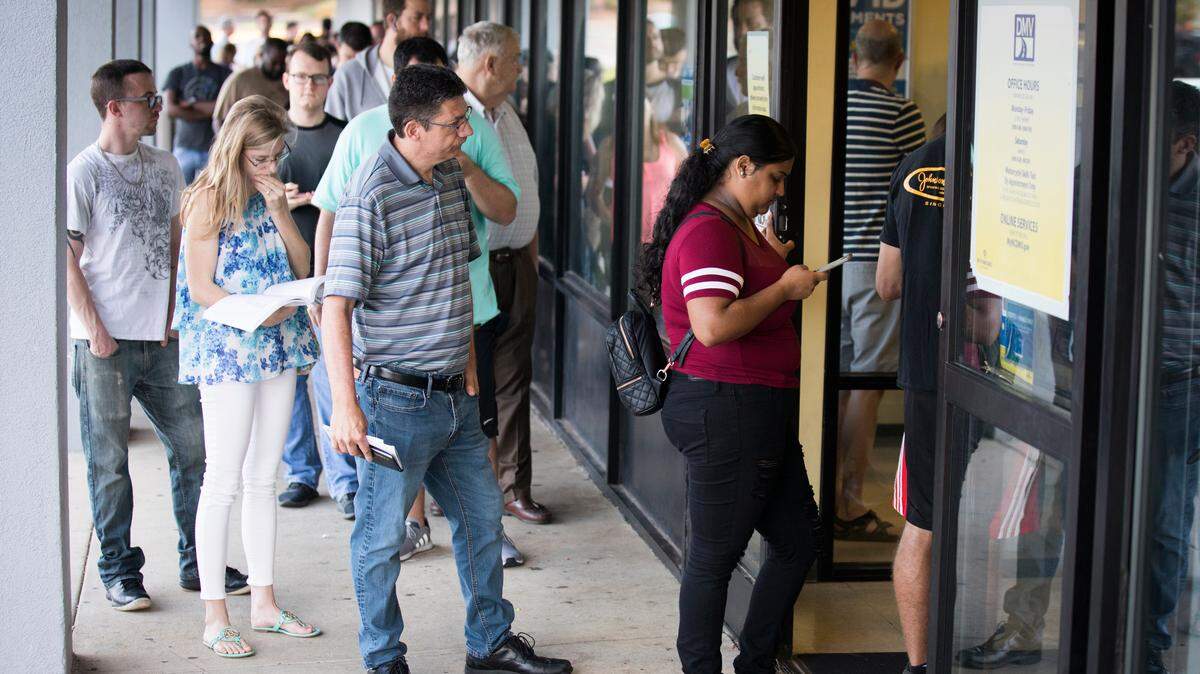
Navigating the DMV
Here are a few things to know about getting what you need at the NC DMV.
To get an NC driver’s license you must go through the state’s graduated licensing program (for ages 15 to 17) or you must be at least 18 years old. And you’ll have to do it in person. You may also need to take a couple of tests to prove you’re a qualified driver.
Here’s what you’ll need to take with you:
One document (with full name) proving identity and date of birth
A Social Security card or one document proving you have a Social Security number
One document verifying physical address in NC (two if getting an NC REAL ID)
For those not born in the U.S., one document (with full name) proving legal presence/lawful status
One document proving liability insurance coverage from a provider licensed to do business in NC
And if you travel at all, it’s probably a good idea to go ahead and get the NC REAL ID. It will help you board a commercial flight or enter federal facilities, including federal courthouses and military bases.
More details at NC DMV: ncdot.gov/dmv.
Voting in North Carolina
Registering to vote is a similar process, but without any tests.
North Carolina offers two primary ways to register to vote: online or in person through the Department of Motor Vehicles, and by mail through NC Board of Elections.
Online via the Department of Motor Vehicles: Here are the main takeaways from registering to vote using the DMV, which can be done by visiting ncdot.gov/dmv.
Registration can be done online or in person.
You can complete a new voter registration application, or you can update your address or your party affiliation.
There is no fee to apply to register to vote.
By mail via State Board of Elections: Here are the main takeaways from registering to vote by mail, which can be done by visiting ncsbe.gov/registering.
You can download and complete voter registration applications in either English or Spanish. Both can be found at the website listed above.
You must sign the application “ink to paper,” meaning the application must be printed out and signed by pen.
Mail the form to your county board of elections, which can be found by visiting vt.ncsbe.gov/BOEInfo.
Since we just mentioned registering to vote, we’ll give you a heads-up on elections.
Most partisan elections, including federal, state and county elections, are in even-numbered years, while most nonpartisan elections — including municipal and school board races — are in odd-numbered years.
A notable Triangle exception is the city of Raleigh municipal elections, which are held in even-numbered years. Always gotta be different.
We have a statewide primary election coming up on May 17.
What to know about the Triangle’s public schools
The N&O’s education reporter Keung Hui has some quick hits on things newcomers need to know about local schools.
County districts. Most newcomers might be surprised to learn that their children won’t attend a city school system. That’s because most of the state’s public schools are organized along county lines, with districts such as the Chapel Hill-Carrboro City Schools being the exception.
The best? Chapel Hill-Carrboro City Schools is often considered to be one of the best districts in the state. The Wake County school system (though crowded) performs above state average, but academic performance can vary widely across the district.
Where’s your school? If you haven’t done so already, you’ll want to confirm that the schools you live near are the ones your kids will actually attend. Some Wake County addresses are assigned to schools that are further away for a variety of reasons, such as to promote diverse enrollments or to control overcrowding.
When do you go? Most of the state’s public schools follow the “traditional calendar,” with classes starting in late August and ending in early June. But some schools operate a year-round calendar where the summer break is significantly shortened to provide short breaks throughout the school year.
Follow on Twitter: Nobody covers schools like Keung Hui. If you have a kid in school (especially in Wake County), you’ll want to follow him: @nckhui
Understanding North Carolina’s college system
There are tons of colleges in the Triangle, and most of them are part of the University of North Carolina system.
It can be confusing at times, when you hear UNC referenced as the college in Chapel Hill, and also the UNC system, which oversees 17 schools.
The Triangle colleges in the UNC system are: NC Central, NC State and UNC-Chapel Hill.
Other schools in the UNC system: Appalachian State, East Carolina, Elizabeth City State, Fayetteville State, NC A&T, UNC Asheville, UNC Charlotte, UNC Greensboro, UNC Pembroke, UNC School of the Arts, UNC Wilmington, Western Carolina and Winston-Salem State University.
The UNC system also oversees the NC School of Science and Mathematics, a prestigious public high school based in Durham and Morganton.
Duke is a private university.
There is also a rich tradition of historically black colleges and universities (HBCUs) in North Carolina and in the Triangle.
Shaw University, in Raleigh, was the first college for Black people in the South, opening just eight months after the Confederate surrender at Appomattox. It was also the first college in the nation to offer a four-year medical program and the first HBCU to admit women.
Raleigh’s other HBCU is St. Augustine’s University. St. Aug’s and Shaw are both private schools. NC Central in Durham, though a public university and part of the UNC system, is also an HBCU.
Follow on Twitter: Follow N&O higher education reporter Kate Murphy for the latest goings-on in Triangle colleges and in the UNC system: @KateMurphyNews
Don’t forget your public library
One of the often-unsung heroes of daily life in Triangle is the public library. If you haven’t visited your local library yet, plan some time to go check it out.
A local library just feels like the heart of a community, and librarians are the best. Get to know them and all the stuff their libraries have to offer.
For instance, N&O service reporters Korie Dean and Kimberly Cataudella put together a guide to using Triangle public libraries, and found that in addition to the basics — like checking out books and audiobooks, reading magazines and using computers — you can do this other cool stuff at your local library:
Check out cameras, tech equipment and projectors
Reserve conference rooms
Get help finding a job
Take classes or get access to practice tests
Watch movies
Attend storytimes (kids) or bookclubs (adults)
Check out wifi hotspots (Orange County)
So much more!
BONUS: At North Carolina’s State Government and Heritage Library, you can get online access to historical and current newspaper databases, do genealogical research and much more. You don’t have to be a state employee to use this library, which is located on Jones Street in downtown Raleigh, you just need to be a North Carolina resident.
Staff writers T. Keung Hui, Kimberly Cataudella and Korie Dean contributed to this report.
More to come!
There’s more to come in our Triangle Living series. On May 11, we’ll continue our look at life in the Triangle with stories about food and weather. On June 1, we’ll look at things to do in the Triangle and the best day trips and getaways.
This story was originally published April 27, 2022 at 6:00 AM.