What is a Tar Heel? How about a Blue Devil? The history behind UNC and Duke’s nicknames.
Duke and North Carolina have one of the most intense sports rivalries in the nation.
Let’s get to know the history of the teams’ nicknames. Where did the Tar Heels and Blue Devils come from?
What’s a Tar Heel?
If you’ve spent time driving around North Carolina, you’ve probably seen a windshield sticker or two of a blue foot with a blackened heel.
But where did the Tar Heel name come from? Here’s what the UNC Alumni Association says:
North Carolina used to be a leading producer of naval industry supplies. Workers, moving barefoot during summer’s sweltering heat, would distill turpentine from pine trees’ sticky sap, burning pine boughs to make tar.
As workers moved shoeless while making so much tar, some got on the bottoms of their feet. To call someone a “tar heel” was an insult, implying they worked a lower-class job.
But during the Civil War, North Carolina soldiers took ownership of the phrase, wearing it as a badge of pride. They called themselves “tar heels,” shouting their state pride. North Carolina became known as the “Tar Heel State.”
UNC teams, when they began competing in intercollegiate sports in the 1880s, called themselves the Tar Heels, shouting state pride for all to hear.
Alumni and current students have protested this name in recent years, stating “Tar Heels” has ties to the Confederacy and white supremacy, The N&O previously reported, as the term was re-appropriated during the Civil War to represent Confederate soldiers.
In recent years, a group publicly called on UNC’s chancellor, the UNC Board of Trustees and the UNC System Board of Governors to immediately rename the Tar Heels to the Rams, allowing the university to keep its mascot Rameses.
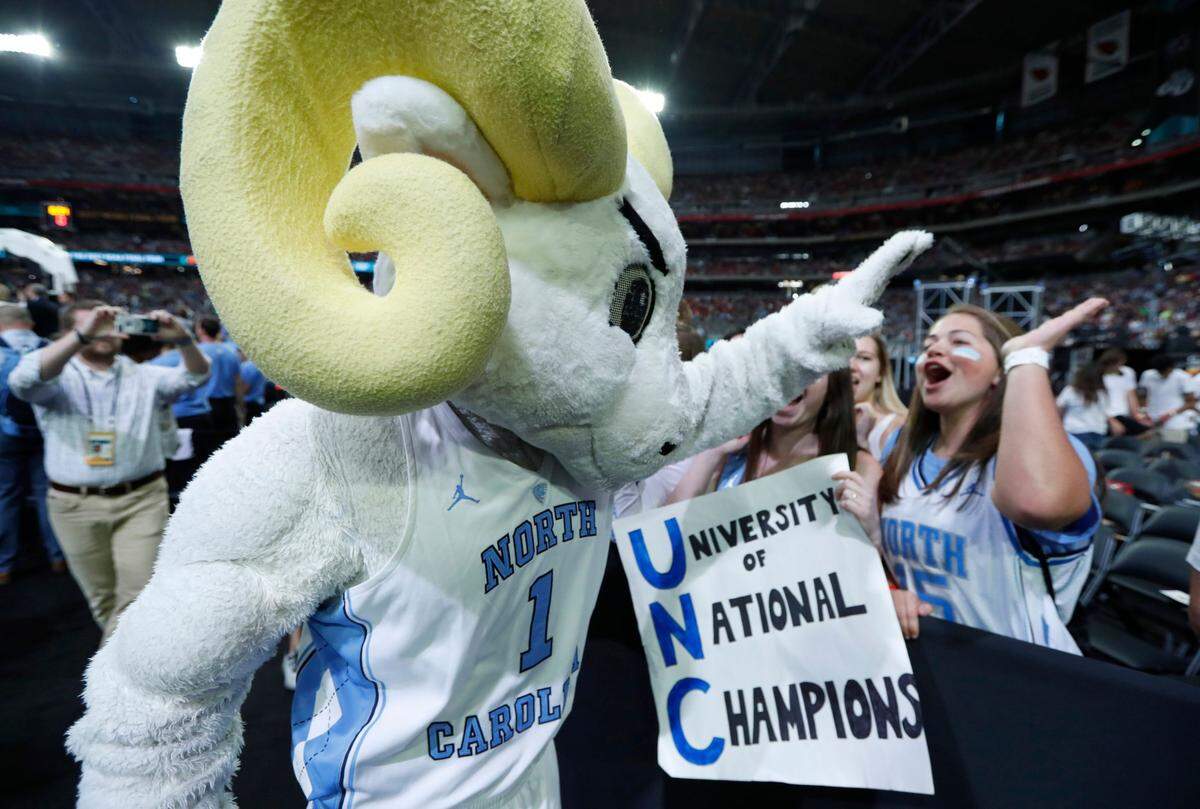
The history of Rameses the ram
UNC’s mascot is a ram named Rameses.
Technically, he’s a Dorset Horn sheep. But UNC students call him a ram.
Here’s the story behind the mascot, according to UNC Campus Life:
In the 1920s, UNC’s head cheerleader acquired a live ram, inspired by the team’s star football player Jack “The Battering Ram” Merritt.
The original Rameses made his debut in November 1924 against Virginia Military Institute. After losing the first two games of the season, the team won with Rameses in the stands.
A tradition was born.
UNC football went a few seasons without Rameses in the early years, but the live ram made a comeback in 1933.
Today, Otis has the throne. He’s Rameses XXII (the 22nd of the beloved mascot). He took over in November 2020, The N&O previously reported, when Rameses XXI retired after nearly a decade of representing the Tar Heels.
When Rameses became a costumed character for indoor events and basketball games in 1987, the ram costume was furry and friendly. But students thought he looked “real wimpy,” according to UNC’s University Libraries. In 1989, a tougher, more muscular version with angry-looking eyebrows shaped the Rameses we see at games today.
In 2015, the Tar Heels debuted Rameses Junior, a kid-friendly mascot for those who find Rameses a little too scary.
What’s a Blue Devil?
So where did Duke’s nickname, the Blue Devils, and mascot come from?
He’s called “the Blue Devil.”
Here’s the history, according to Duke Today, a university publication:
Duke University used to be called Trinity College. In 1921, an editorial by the Trinity Chronicle’s editor-in-chief asked the campus community to come up with team names, as football had just been reinstated after the end of World War I.
The team’s nickname was “Methodists,” after the school’s Methodist roots, and the “Blue and White,” the team’s colors.
A few names popped up: Blue Titans, Grizzlies, Blue Eagles, Polar Bears and more. But none of these names won out.
The following year, the new editor-in-chief and his newspaper staff started using the name “Blue Devils.” There’s some history and context here.
The freshman class was the first post-World War I class to enter Trinity College, and many people knew the phrase “Blue Devils,” as it was a military term. It was the outfit of French soldiers, who wore blue uniforms and berets.
Former Duke archivist William King said that the French soldiers were well known for their special training and alpine knowledge, according to Duke Today. They worked to break trench warfare stalemates in the French Alps.
After referring to Duke’s football team as “the Blue Devils” in a Chronicle headline in 1922, the name began to stick.
Soon after, a mascot was born. The Batman-eqsue mask and cape appeared in the 1970s, according to the 2014 article in Duke Today magazine, although a video attached to that article shows the Blue Devil in the cowl-style mask in a photo dated 1966.
What’s the history behind the Blue Devil’s headband?
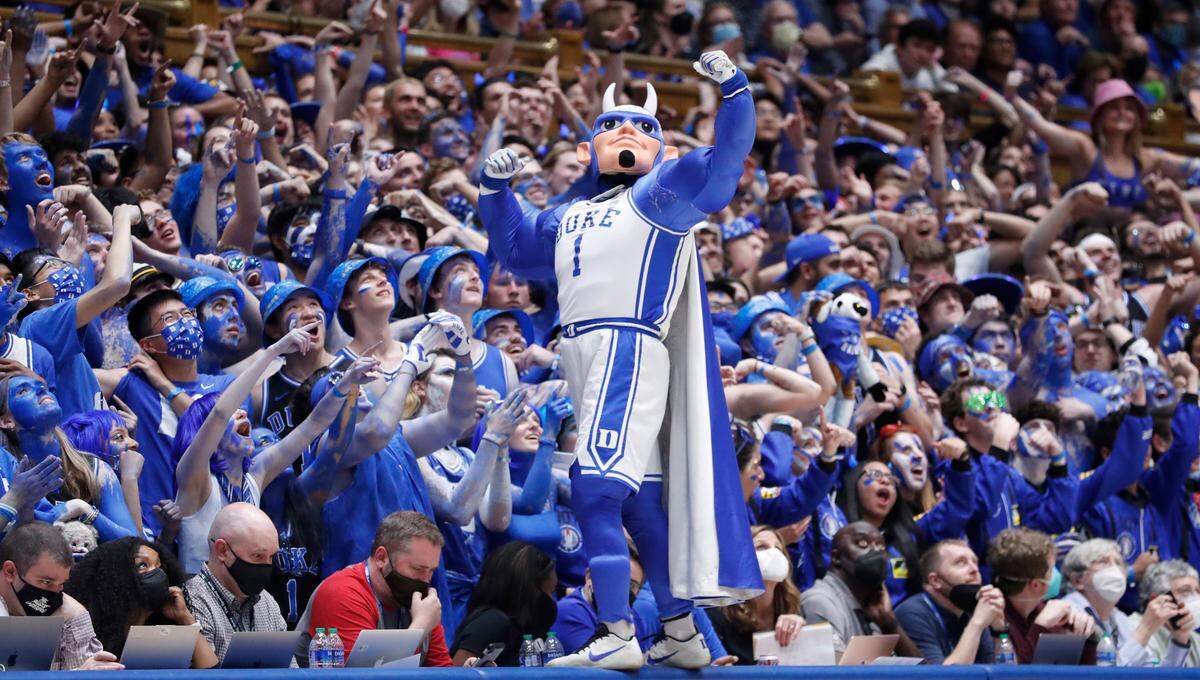
There is one part of the costume that’s constantly changing: the Blue Devil’s headband. It’s a strip of tape with a short message written by hand that gets plastered over the Blue Devil’s forehead. Usually, the message trash-talks another team.
Against UNC at Cameron Indoor Stadium on March 5, the Blue Devil’s message read, “UNCapable of winning.”
This tradition began in the 1980s, a Blue Devil mascot, who was not allowed to reveal his identity, told CBS Sports.
In 1986, Jim McMahon, then the Chicago Bears quarterback, wrote the NFL commissioner’s name on his headband after being fined $5,000 for wearing one with an Adidas logo. The tradition has carried on at Duke since.
The Blue Devil’s “headbands” aren’t thrown out after each game. Most of them are preserved in a room reserved for mascot costumes and band storage. Strips of tape are plastered all over half the room, and the unnamed mascot said most “headbands” on the wall are from the past 15 years.
This story was originally published April 1, 2022 at 6:00 AM.