Get to know rivals Duke and UNC: Famous alums, storied traditions and legacy of winning
Two college campuses eight miles apart on Tobacco Road have given North Carolina decades of legendary basketball and a fierce rivalry that splits households and causes heartaches, headaches and unparalleled jubilation.
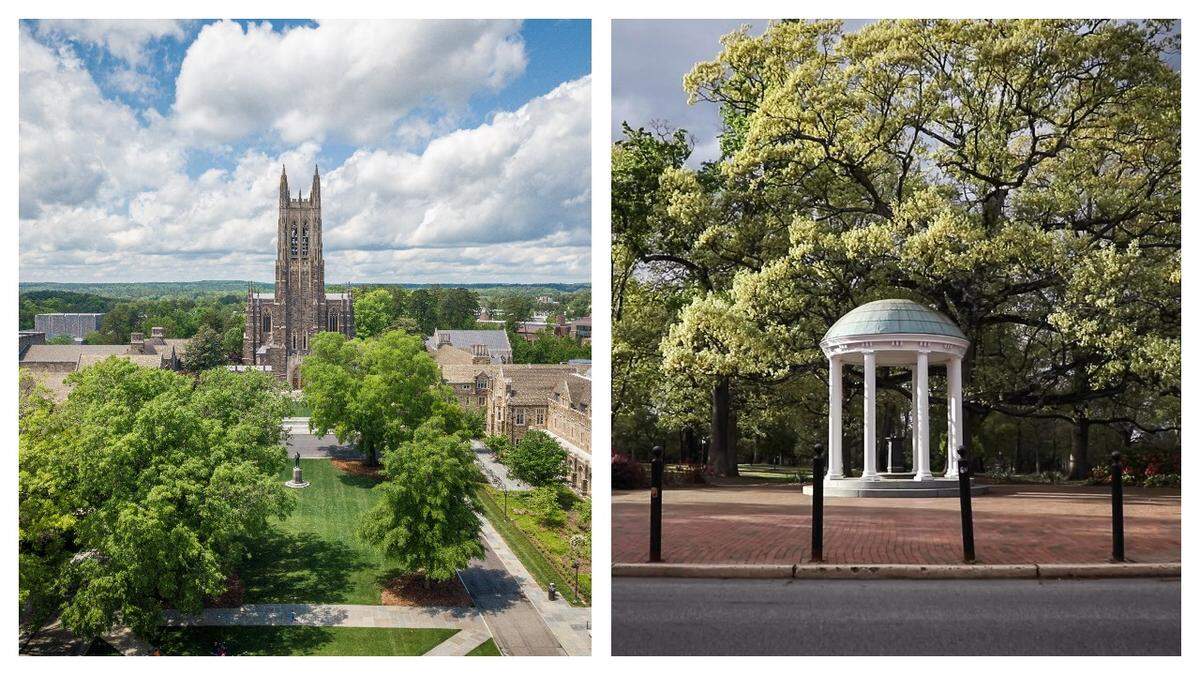
But UNC-Chapel Hill and Duke University weren’t always just down the road from each other. And there are a number of other interesting things you might not know about the two schools and their alumni, mascots and athletic teams.
Here’s a quick history lesson: (sponsored by Duke and UNC libraries)
What is history of UNC, Duke?
The University of North Carolina at Chapel Hill, the first public university in the nation, was established in 1789 by the state legislature. William Richardson Davie wrote the act that established the university, then he and fellow trustees laid the cornerstone of the first building in 1793. The early structures on campus, many of which are still in use, were built by enslaved people. The school welcomed students in 1795 and was the only public university in the country to award degrees in the 18th century, according to UNC.
Decades later, and about 60 miles away, a preparatory school exclusively for young men called the Union Institute Academy opened. What is now Duke University started as a tiny schoolhouse, built in 1838 in Randolph County by Methodist and Quaker communities.
Over time, the school reorganized as Normal College, then Trinity College and eventually became Duke University. In 1892, Washington Duke and Julian S. Carr offered land and money for the school to move to Durham, a more urban setting to attract more students and faculty. The wealthy Duke family “built a worldwide financial empire” manufacturing tobacco products and developing electricity production in the Carolinas, according to the university. Carr was also a tobacco magnate and a “virulent white supremacist.”
Duke University was officially created in 1924 under an endowment by James Buchanan Duke in honor of his father, Washington Duke.
So, that’s how the two universities ended up just eight miles apart.
Here are some other fun facts about the schools.
Games between Duke and UNC
The 2022 NCAA Final Four matchup between the Tar Heels and Blue Devils was arguably one of the biggest games in basketball history.
The game was the 258th meeting between the two programs, but the first time they had met in the NCAA tournament.
Duke lost, capping the career of longtime head coach Mike Krzyzewski as he had announced his retirement last summer. It was Hubert Davis’s first NCAA tournament as the head coach of UNC. He replaced Roy Williams, who retired in April 2021.
- The first time the two schools competed was on the football field on Thanksgiving Day in 1888. Duke (then Trinity) beat UNC 16-0 in one of the first modern football games played in the South.
- Duke’s basketball program started in 1905, followed by UNC in 1910.
- The two basketball teams first met on Jan. 24, 1920, according to the NCAA. The winner? UNC with a final score of 38-25.
- UNC leads in head-to-head match-ups 142-115.
National championships
UNC men’s basketball won the school’s first NCAA national championship in 1957 and has since won five other national titles in 1982, 1993, 2005, 2009 and 2017.
While men’s basketball won the first, the dominant women’s soccer team has won 21 of the university’s NCAA national championships. UNC’s field hockey team won its 11th championship in program history in November 2023.
Duke men’s soccer team won the university’s first NCAA national championship for any sport in 1986. Since then, Duke has won 17 national championships, according to the NCAA.
Duke men’s basketball won its first national title in 1991, after advancing to the Final Four eight times. The team won again in 1992, becoming the first team in 19 years win back-to-back national championships. All under Coach K, the Blue Devils has five championship wins in 1991, 1992, 2001, 2010 and 2015.
Storied basketball arenas
When Duke’s indoor stadium opened in 1940, it was the largest basketball arena south of Philadelphia. It was rededicated as “Cameron Indoor Stadium” on January 22, 1972 to honor longtime basketball coach and athletic director Eddie Cameron.
The stadium’s hardwood floor was dedicated to Krzyzewski and renamed Coach K Court in November 2000.
At UNC, the Dean E. Smith Center or “Dean Dome” has been home to Carolina men’s basketball since 1986. It was named after former head coach Dean Smith and has kept UNC as a national attendance leader every year it’s been open.
In 2018, the arena’s hardwood floor was named for then-coach Williams who retired after the 2020-21 season.
Each of the four coaches whose names are associated with the athletics facilities have been inducted into the Naismith Memorial Hall of Fame.
Famous alumni from Duke
When it comes to famous alumni — or infamous, depending on who you ask — both Duke and UNC have impressive lists to boast. Here is a short list from each school, but obviously, there are more.
▪ Leaders and politicians: President Richard Nixon, Apple CEO Tim Cook, NBA commissioner Adam Silver, philanthropist Melinda French Gates and former U.S. Senator Elizabeth Dole
▪ Olympic and pro athletes: Nancy Hogshead-Maker, Ibtihaj Muhammad, Shane Battier, Grant Hill and Christian Laettner
▪ Innovators: Cancer researchers Dr. Kimberly Blackwell and Dr. William Kaelin Jr.
▪ Entertainers and media professionals: Retta Sirleaf (who goes just by Retta), Judy Woodruff, Ken Jeong, Mike Posner, Jay Bilas and Jay Williams, filmmaker Ryan White
Famous alumni from UNC
▪ Political leaders: President James K. Polk, Former Gov. and Sen. Terry Sanford, N.C. Gov. Roy Cooper and former U.S. Sen. John Edwards
▪ Professional athletes and coaches: Michael Jordan, Mia Hamm, Vince Carter, Larry Brown and Julius Peppers
▪ Media and entertainment industries: Andy Griffith, Stuart Scott, Lewis Black, Thomas Wolfe, Nikole Hannah-Jones and Brooke Baldwin, Jenny Han, Billy Crudup, Peyton Reed
▪ Science and medical greats: Former NIH Director Dr. Francis Collins and COVID-19 researcher Dr. Kizzmekia Corbett
Campus traditions
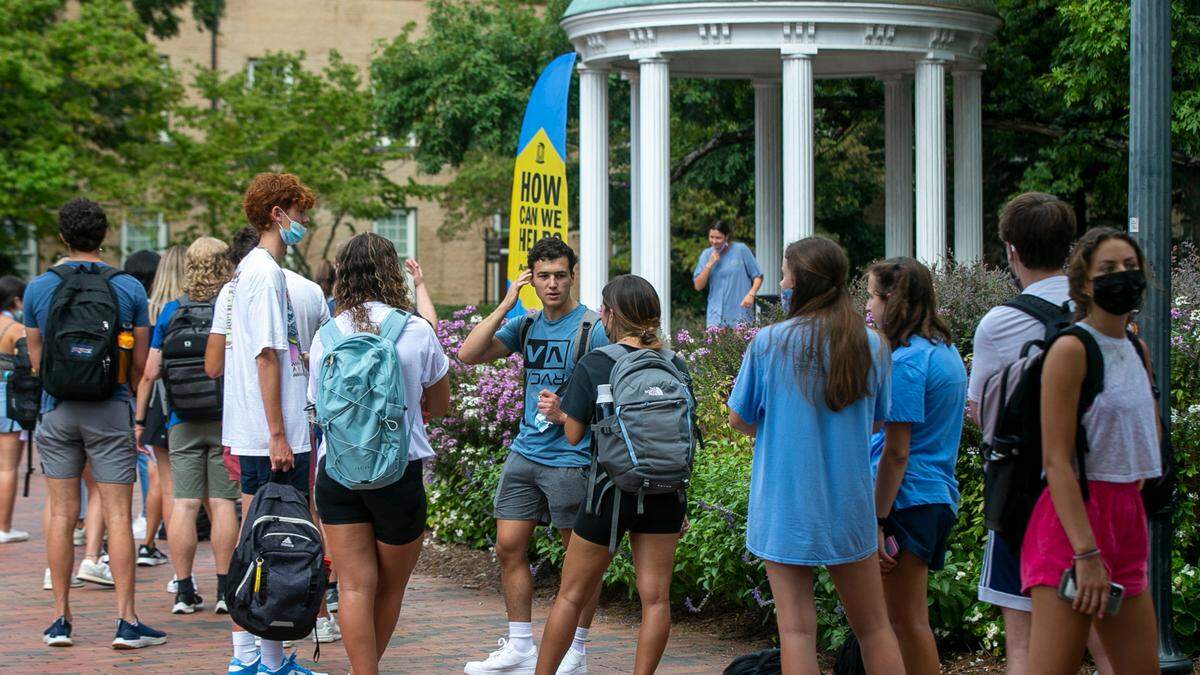
One of Carolina’s biggest traditions has nothing to do with basketball. For years, students have stood in line on the first day of classes to take a sip from the Old Well, which, according to UNC, “brings students luck in the form of good grades.”
But the one tradition students come to Carolina dreaming of is the chance to rush Chapel Hill’s Franklin Street.
Thousands of students and Tar Heel fans pour out of bars and dorms to celebrate on the edge of campus after big basketball wins — especially wins over Duke. The streets flood with fans in white and Carolina blue, many holding the famous “He’s Not Here” cups. It even happened during the COVID-19 pandemic. And you can usually count on seeing a mattress lit on fire and at least a few students climbing street lights.
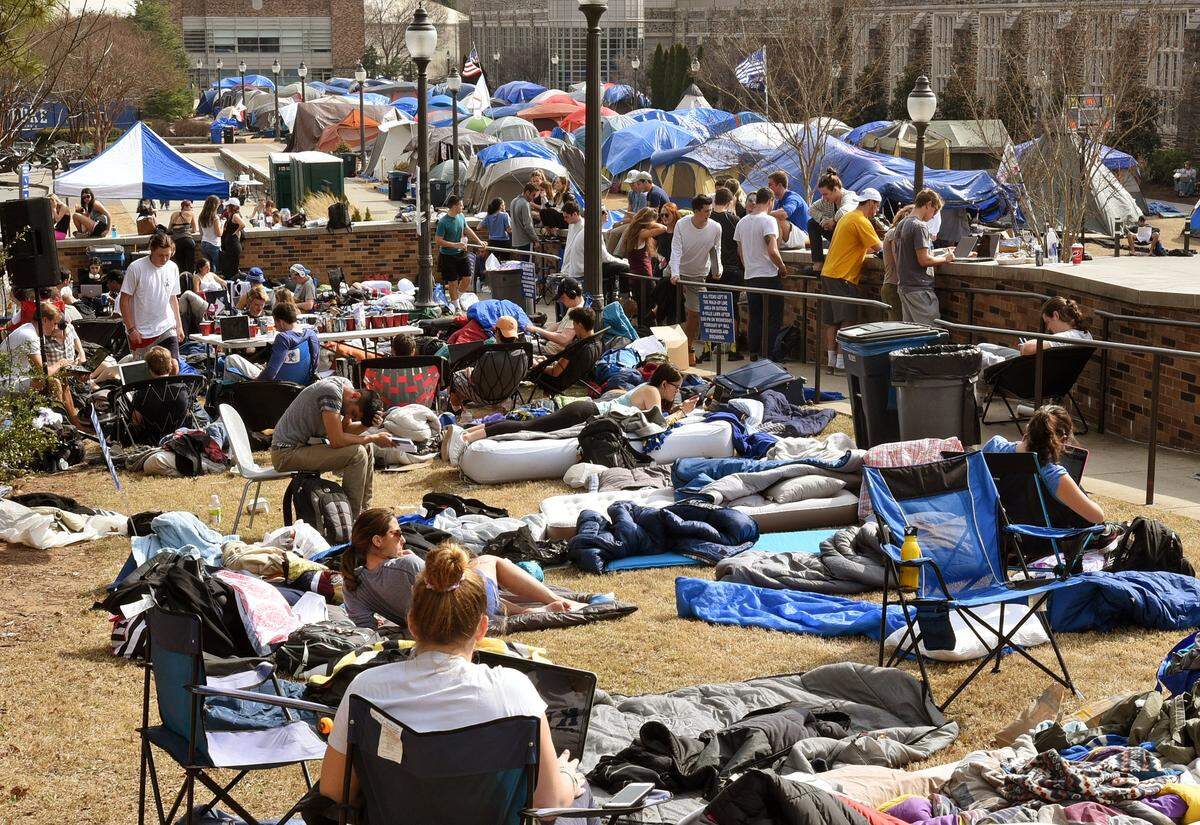
In Durham, the madness starts before the game even begins, in the legendary Krzyzewskiville.
In the middle of winter, Duke students pitch tents next to Cameron Indoor Stadium. They sleep outside for weeks to secure tickets in the student section for that season’s home game against UNC. It’s one of the reasons those Duke students and fans are called “Cameron Crazies.” Tenting in K-Ville started in 1986, leading up to that year’s rivalry game when No. 1 Duke beat North Carolina.
That decades-old tradition has continued after Coach K retired.
Tar Heels vs. Blue Devils mascot
UNC athletes have been known as the Tar Heels since the 1880s when students began participating in intercollegiate sports. It wasn’t always controversial, but some want it changed because of its ties to the Confederacy.
The term “Tar Heel” comes from North Carolina’s economic history as a top producer of turpentine supplies for the naval industry, jobs typically done by slaves or poor people. Calling someone a tar heel was an insult until it began being used as an expression of pride by North Carolina soldiers during the Civil War, according to UNC.
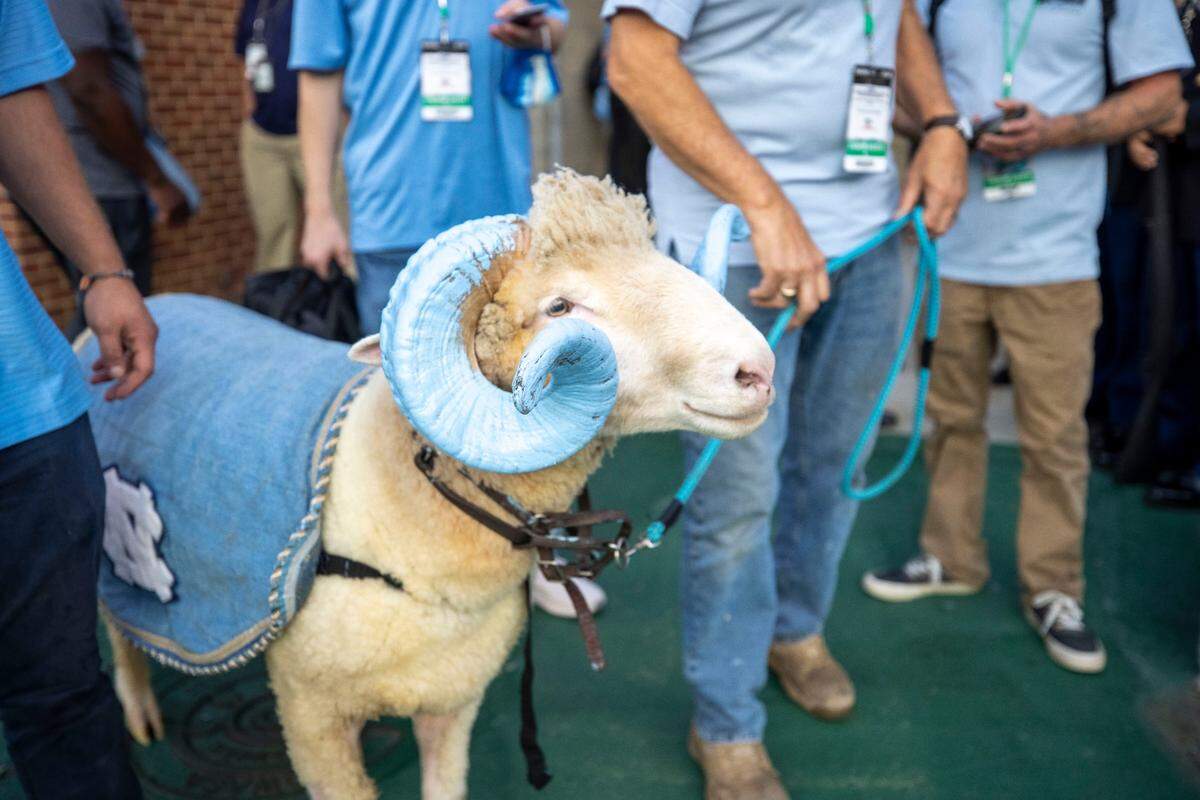
While the university’s nickname is Tar Heels, its mascot has been “Rameses” the ram since 1924. The rams come from a long line of “ovine royalty” and first attended a game thanks to an idea from head cheerleader Vic Huggins who was inspired by football star Jack “The Battering Ram” Merritt.
Duke’s nickname and mascot is the Blue Devils.
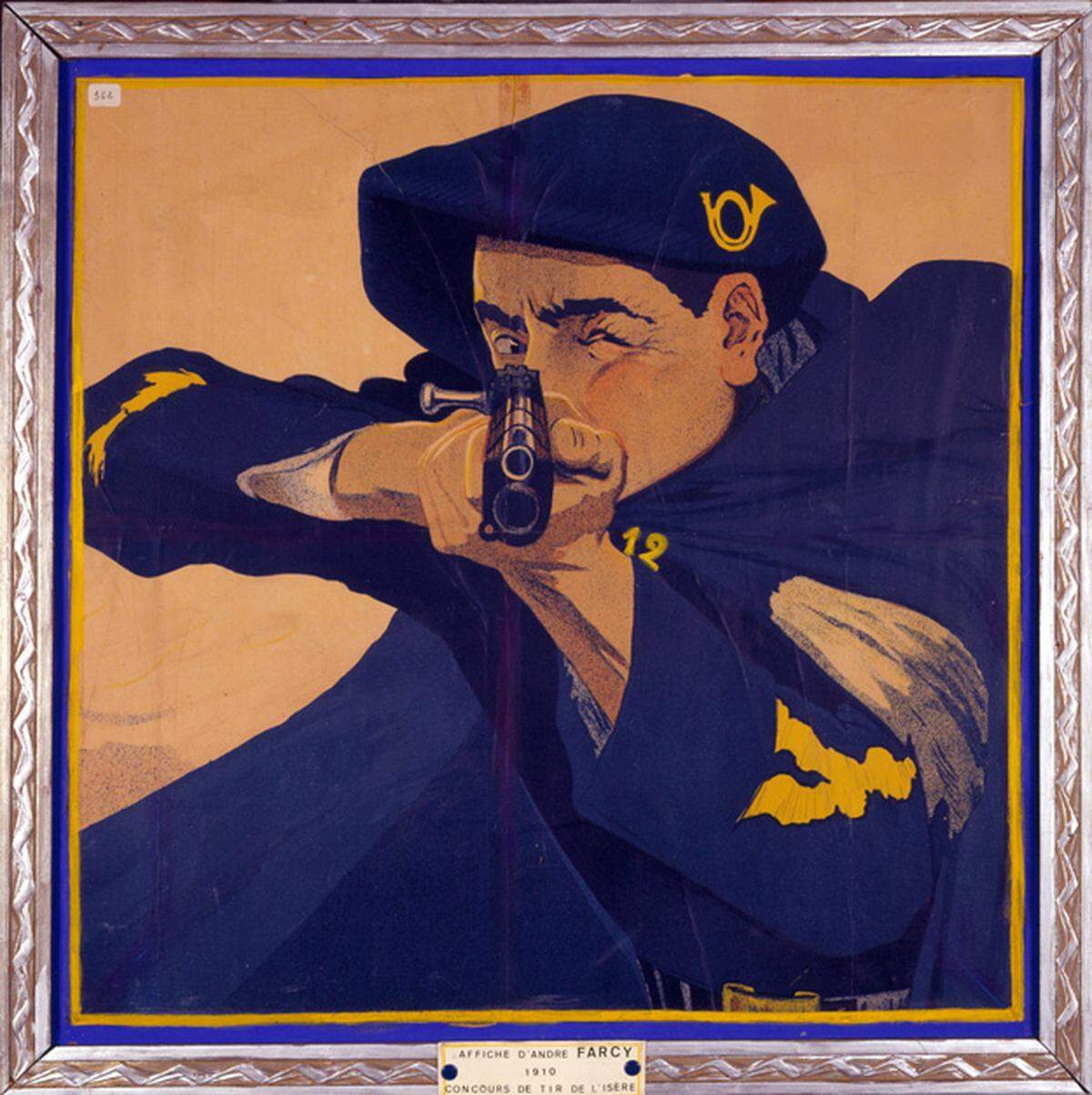
In 1922, editors of Duke’s student newspaper, The Chronicle, started using the nickname “Blue Devils” for the athletic teams. It’s based on “Les Diables Blues,” the nom de guerre of World War I French alpine troops. The Blue Devil mascot made its first appearance at the Duke-Pittsburgh football game in 1929.
This story was originally published April 1, 2022 at 6:00 AM.