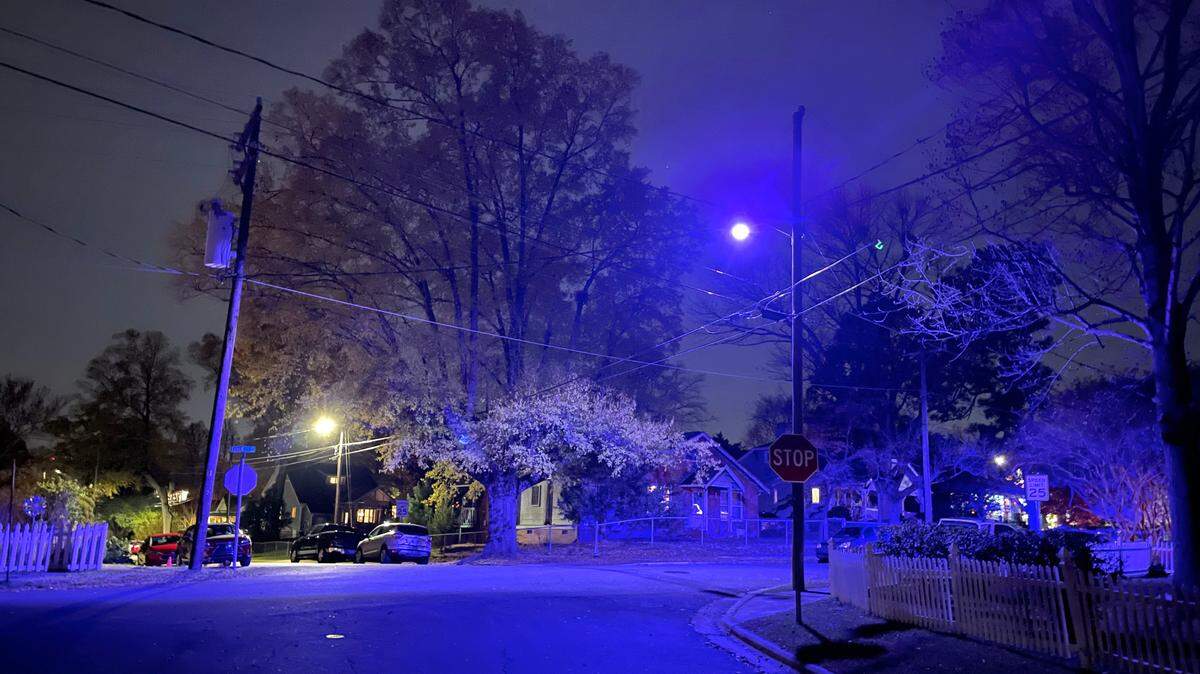
We noticed purple streetlights in the Triangle. Here’s why — and what to do about it
READ MORE
Read more Triangle Asked & Answered stories
This series from The News & Observer’s Service Journalism team answers questions from readers about the Triangle region (and North Carolina). Here are some of the questions we have answered so far.
Expand All
We’re kicking off our Triangle Asked & Answered series with a question that came from News & Observer photojournalist Ethan Hyman, who wanted to know why some of the streetlights he’s seen in Durham have a purple or blue tint.
“I actually think it’s interesting. Is Durham playing up Duke by making their street lights blue?” he wanted to know.
Alas, the real reason is less exciting. And it turns out you can find purplish-blue street lights throughout the region, so it’s not even Durham-specific.
Here’s what we learned.
Why does NC have purple (or blue) street lights?
Some older streetlights in the Carolinas turn purple because of a manufacturer error, said Keith Richardson, senior communications manager at Duke Energy.
The defect in the light causes the light to gradually turn purple, though the light continues to work.
This defect is limited to one batch of lights manufactured in 2018, INDY Week reported in April 2021. The white laminate wears off, but the light keeps shining — it’s just purple.
Duke says there aren’t any safety issues associated with the blue-ish lights, but they want customers to help them identify where they should replace the malfunctioning bulbs with LED ones, which they’ve been doing for the past few years, Richardson said.
The NC Department of Transportation has already replaced some purple lights on the Triangle Expressway near Holly Springs. A contractor has had to replace “dozens of defective lights over the past year or so,” said Aaron Moody, DOT’s public information officer.
Last June, DOT had the manufacturer replace the lights all along that corridor, not just the ones that changed color.
How to report a purple or blue streetlight in NC
If you see a streetlight that’s purple or otherwise not properly working, let Duke Energy know so they can make sure it’s replaced.
Lights are under manufacturer warranties, which covers the cost of replacements. Customers do not pay for these repairs, Richardson said.
“Typically, repairs are completed within a few days after an issue is reported and entered into the system,” he said.
Here’s how you can report a purple (or otherwise malfunctioning) light to Duke Energy:
1. File a report using the online Street Repair Tool. The webpage is duke-energy.com/OutdoorLightingRepair. You can make a request on your desktop or mobile device.
2. Call Duke Energy’s Customer Service Center. The phone number is 1-800-452-2777.
This story was originally published January 11, 2023 at 7:45 AM.