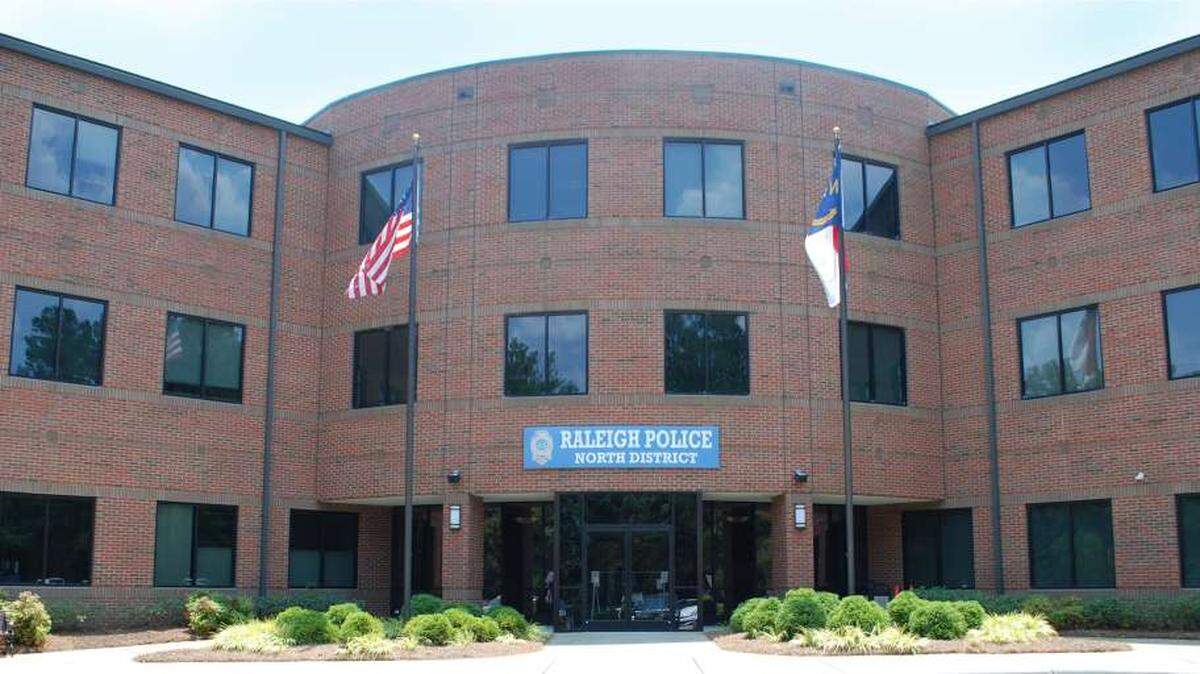
Can you drive a golf cart on the streets of Raleigh? Here’s what the law says.
READ MORE
Read more Triangle Asked & Answered stories
This series from The News & Observer’s Service Journalism team answers questions from readers about the Triangle region (and North Carolina). Here are some of the questions we have answered so far.
Expand All
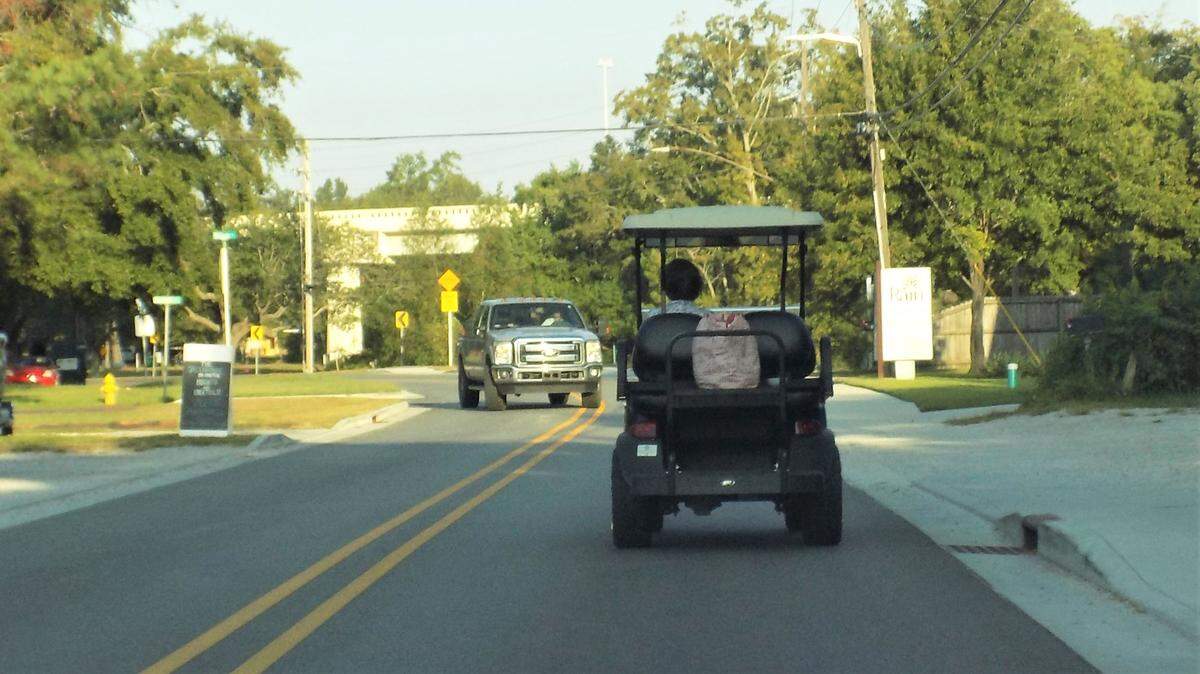
It’s common to see golf carts on streets in North Carolina coastal communities or in golf course neighborhoods, but to see a golf cart driving through downtown Raleigh — or any local, non-golfing neighborhood — might come as more of a surprise.
That was the reaction of one reader, at least, who submitted a question to The News & Observer’s new Triangle Asked & Answered initiative about it’s even legal to drive golf carts on Raleigh streets.
So, what do North Carolina law and Raleigh’s local ordinances say about driving golf carts on the road?
Here’s what to know.
Want to get to know the Triangle better? Enter your email address below to start receiving our Expert Guide to the Triangle directly in your inbox.
What’s the difference between a golf cart and LSV?
First, it will be helpful to understand that there are two main types of vehicles that look like what you might consider to be golf carts — but there are important distinctions between them in the eyes of the law.
▪ Under state law, a golf cart is defined as “a vehicle designed and manufactured for operation on a golf course for sporting or recreational purposes and that is not capable of exceeding speeds of 20 miles per hour.”
State law gives municipalities the authority to regulate the use and operation of golf carts “on any public street, road, or highway where the speed limit is 35 miles per hour or less within its municipal limits or on any property owned or leased by the city.”
That means it’s up to each local town or city.
“Golf carts are only authorized to be operated on streets that are permitted by local ordinances,” Marty Homan, communications manager for the N.C. Department of Transportation, told The N&O by email.
Under state law, golf carts may not be issued title certificates or registrations, and are not considered street-legal passenger vehicles like normal cars.
Why do golf carts have those restrictions? “Golf carts are not manufactured to meet Federal Motor Vehicle Safety Standards and North Carolina statutory equipment requirements,” Homan said.
▪ State law separately defines low-speed vehicles, or LSVs. An LSV is “a four-wheeled electric vehicle whose top speed is greater than 20 miles per hour but less than 25 miles per hour.”
LSVs, which are electric by definition, may look like or even be upfitted from golf carts, but are considered passenger vehicles, meaning they are fit to carry and transport passengers. As with passenger vehicles, there is an age requirement for driving an LSV on roadways. Under state law, a driver operating a passenger vehicle must have a regular Class C license. The minimum age to hold a Class C license is 16.
LSVs must meet certain requirements in order to be considered street legal and safely operate on roadways.
Standard golf carts, while useful for driving around a golf course or other recreational activities, may not meet these additional requirements, and — depending on the exact make or model — may not meet the requirements to be street legal, unless they’ve been upfitted to become an LSV.
Upfitting a golf cart to an LSV
If a golf cart is going to be upfitted to meet the street-legal requirements of LSVs, the modifications must be performed by a licensed manufacturer, according to the N.C. Department of Motor Vehicles.
That process must include the manufacturer issuing a 17-digit and character vehicle identification number (VIN), a Manufacture Certificate Origin, and the modifications must “meet all National Highway Traffic Safety Administration, N.C. General Statute and N.C. Administrative Code requirements for a low-speed vehicle.”
State law says that the Department of Transportation can “prohibit the operation of low-speed vehicles, mini-trucks, or modified utility vehicles on any road or highway if it determines that the prohibition is necessary in the interest of safety.”
Is it legal to drive a golf cart on Raleigh streets?
Since state law leaves the legality of driving standard golf carts on streets up to local ordinances, what do Raleigh city ordinances say about the issue?
In Raleigh, there is no city ordinance that allows the operation of golf carts on city streets, city of Raleigh public information officer Julia Milstead told The N&O by email.
“Accordingly, a golf cart may not be operated on city streets” in Raleigh, Milstead said.
Is it legal to drive a low-speed vehicle on Raleigh streets?
Remember, though, there are legal differences between standard golf carts — which are not street-legal — and low-speed vehicles.
LSVs that meet the requirements set forth under state law are allowed on roads “where the posted speed limit is 35 miles per hour or less.”
Local ordinances may further restrict the use of LSVs on city streets, but municipalities are not required to do so. If there is not a local ordinance addressing the issue, the vehicles are allowed on streets under state law.
So, is there a ordinance in Raleigh about LSVs? Are the vehicles allowed on city streets?
“There is no city ordinance concerning the operation of low-speed vehicles,” Milstead told The N&O. “The operation of low-speed vehicles is permitted under state law, provided that the vehicle meets the statutory definition and other requirements that are set forth” in the law.
What features must a golf cart/LSV have to be street legal in NC?
State law directly addresses the qualifications and requirements LSVs must meet in order to be street legal.
The law provides rules and regulations for operating a “low-speed vehicle, mini-truck, or modified utility vehicle on certain roadways” in the state, including where the vehicles can be driven and equipment that the vehicles must have to be considered street-legal.
▪ First, the law addresses where LSVs can be driven.
The vehicles can only be driven on “streets and highways” in the state “where the posted speed limit is 35 miles per hour or less.” LSVs may cross a road where the speed limit is higher than 35 mph, but must continue onto a road with a speed limit of 35 mph or less after crossing the road with the higher speed limit.
▪ The law also addresses the equipment and specifications an LSV must meet in order to be street-legal. The vehicles are required to have the following equipment “maintained in proper working order:”
- Headlamps
- Stoplamps
- Turn signal lamps
- Tail lamps
- Reflex reflectors
- Parking brakes
- Rearview mirrors
- Windshields
- Windshield wipers
- Speedometer
- Seat belts
- Vehicle identification number (VIN)
▪ LSVs must also meet federal safety requirements, state law says.
▪ LSVs, like other vehicles that operate on the state’s roadways, must also be registered with the state and insured. LSVs must also be inspected and photographed by the N.C. DMV.
▪ Remember, you must hold a regular Class C license to legally operate an LSV or any other passenger vehicle.
If an LSV meets all of the above criteria, and there are no further restrictions put in place at the local level or by the state DOT, it is legal to drive the vehicle on roadways in the state with appropriate speed limits.
NOTE: If you have a question for The News & Observer’s Triangle Asked & Answered series, please email ask@newsobserver.com.
This story was originally published January 12, 2023 at 7:45 AM.