Undercover videos ‘not helpful’ to free speech on UNC campuses, faculty leader says
Twice in less than a month, UNC System employees found themselves out of a job following the release of undercover videos by an activist group against diversity, equity and inclusion programming.
Accuracy in Media — which describes itself as using “investigative journalism and citizen-led activism to expose government corruption, public policy failures, and radical activists” — in recent weeks posted videos of employees at UNC Charlotte and UNC Asheville.
In each, the employees implied that their universities were not complying with the UNC System’s repeal of DEI initiatives last year. And both universities announced that the employees who were interviewed were “no longer employed” at the campuses.
Accuracy in Media posted a third video from another UNC System campus last week. But the employee interviewed at Western Carolina University had retired in mid-April, a spokesperson told me.
The videos fit with Accuracy in Media’s history of publishing similar content of university employees in Texas and Florida following DEI bans in those states. The conservative organization is also known for controversial and provocative tactics that in recent years have included displaying an image of Adolf Hitler raising his arm on a truck intended to denounce antisemitism.
In North Carolina, the clips come as UNC System campuses in recent months have doubled-down on scraping references to DEI from university materials and websites, among other measures. That’s against the backdrop of the UNC System’s DEI repeal last year, and President Donald Trump’s renewed crackdown on DEI since returning to office in January.
That made me question: Is there a line between ensuring campuses are complying with DEI restrictions, and using undercover videos to insinuate such compliance isn’t happening? (Reminder: It’s generally considered unethical for journalists to report undercover.)
To get thoughts on those questions and more, I turned to Wade Maki, chair of the UNC System Faculty Assembly.
Welcome to Dean’s List, a higher education newsletter from The News & Observer and me, Korie Dean.
This week’s edition includes:
- Maki’s thoughts on the recent undercover videos and their fallout;
- A significant scoop about an elite UNC-Chapel Hill researcher;
- News about restrictions on hiring and salary spending in the UNC System;
- and more.
Let’s dive in.
Faculty leader’s thoughts on DEI videos
Maki began his comments on the videos by saying: “No one looks good when secretly recorded under false pretenses and selectively edited — not staff, not faculty, not board members or legislators.”
“Everyone has reason not to support these tactics,” he added.
Among Maki’s concerns about the videos and their implications is that he fears they could create a “chilling” effect on free speech across the university system.
“What we need on campus is more free speech, and that includes ... speaking against progressive orthodoxy and the fear that people have against violating conservative legislators’ expectations,” Maki said. “These tactics are not helpful in having more speech about things.”
Maki contended the videos distort the full breadth of efforts campuses have taken to comply with DEI restrictions.
“We are in compliance, right? If you actually look, there have been people whose jobs have changed significantly. There are programs we are no longer offering,” he said, referring to substantial changes to DEI-related jobs and programming that campuses implemented after the Board of Governors enacted the restrictions last year.
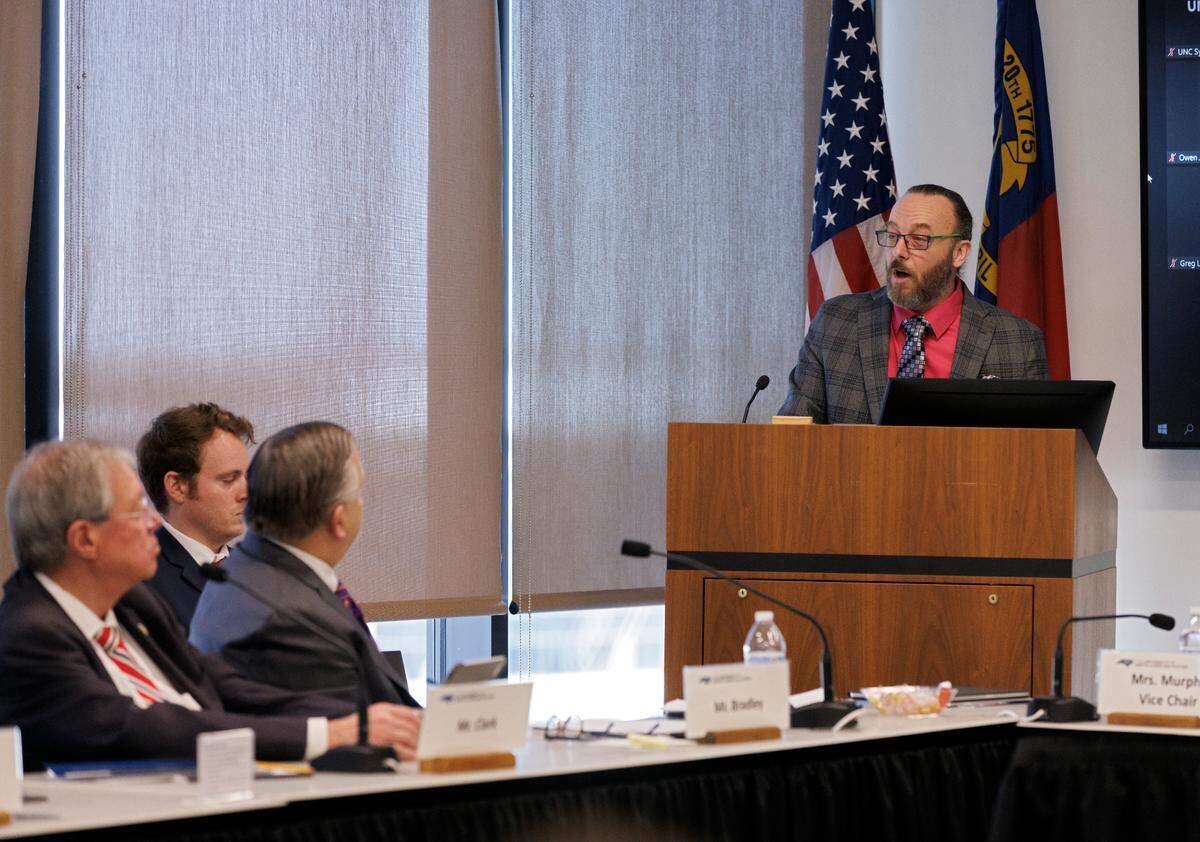
Across the system, nearly 60 DEI-related positions were eliminated and more than 130 jobs were “realigned” — or purged of their ties to DEI — as a result of the repeal. The policy change also resulted in universities closing their DEI offices or units with similar purposes or names.
Campuses are required to report their compliance annually to the Board of Governors, on Sept. 1.
Given those ongoing changes, Maki questioned the true motives behind the undercover videos, saying it seems like they are intended “to just make people look bad.”
“In any organization, if you cherry pick who you talk to, right, you can set an impression that things are one way, when it’s just not,” Maki said. “And that’s really what’s happened here.”
The videos also “follow a pattern where higher ed is increasingly politicized,” Maki said. While the employees who were filmed at UNC Charlotte and UNC Asheville were not members of the faculty, the videos raise concerns about how professors might be impacted in this landscape, Maki said.
Faculty expected their research and teaching efforts to be “pretty much exempt” from the DEI repeal — as Maki described it to me last fall — though there have been several instances across the system where that hasn’t been the case. Now, with these videos and other instances in which higher education has seen more of the limelight recently, Maki said faculty are more wary of what they say in the classroom.
“Under the policy, faculty are treated differently than staff, when we’re engaged in our teaching and learning role,” Maki said. “But when you have these undercover videos and someone is immediately let go from an institution, it scares everybody, and that’s just not helpful.”
Accuracy in Media is expected to release at least three more undercover videos of UNC System campuses as part of its current anti-DEI campaign, according to the organization’s president.
ICYMI: Catch up on these headlines
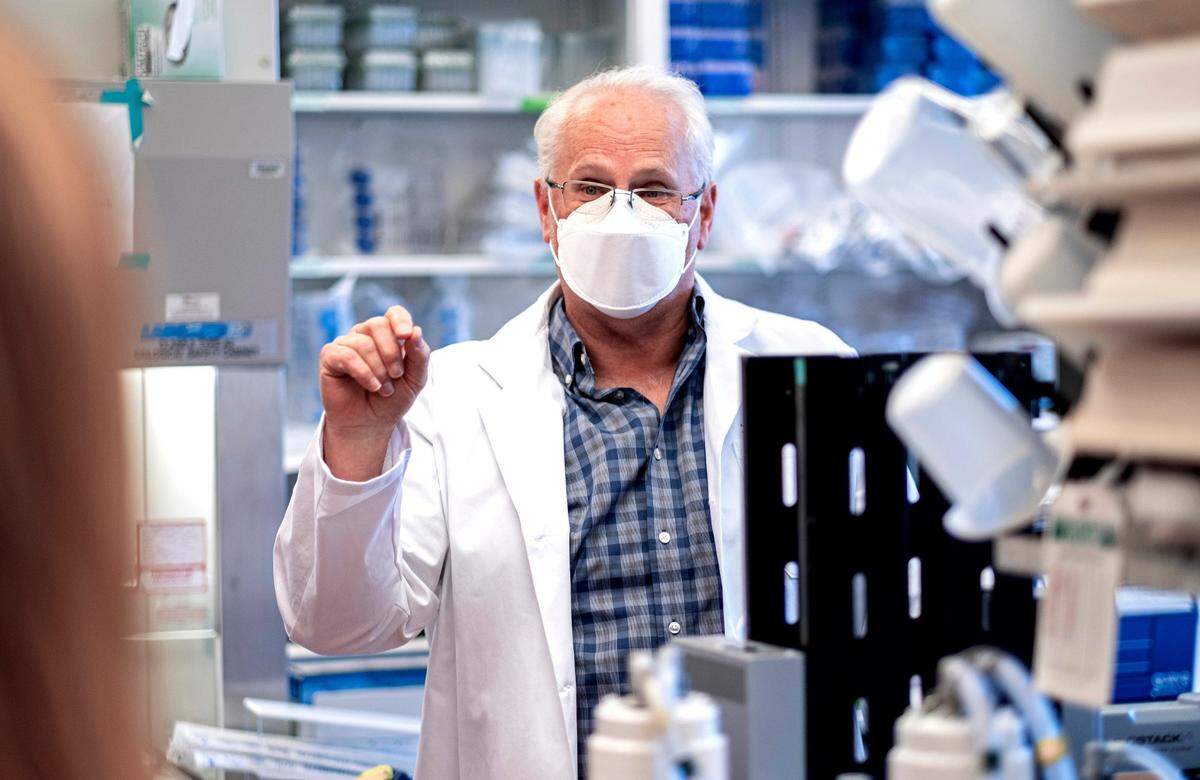
My colleague Dawn Baumgartner Vaughan and I broke a significant story about UNC-Chapel Hill coronavirus researcher Ralph Baric, who in recent years has become the target of questions — and conspiracy theories — about the origin of COVID-19.
More than five years after the pandemic began, North Carolina Speaker of the House Destin Hall, a Republican, is now asking UNC for extensive records related to Baric’s work. That’s per a letter we obtained exclusively from Hall’s office.
In the letter, Hall directed UNC Chancellor Lee Roberts to deliver the slew of records to House majority staff of the Joint Legislative Commission on Governmental Operations by noon Wednesday.
The inquiry comes at a time when the debate over the true origin of the COVID-19 pandemic is highly politically charged, with the Trump White House now promoting an unproven theory that the virus was born of “gain-of-function” genetic engineering and released due to a laboratory accident.
For more, read the full story: NC lawmakers launch ‘fact-finding mission’ into UNC coronavirus researcher Ralph Baric
And for a deeper look at Baric’s career and work, here’s an additional story from several of our colleagues: From pandemic hero to GOP lawmakers’ target. Who is UNC scientist Ralph Baric?
In other news, all UNC System campuses now have new limits on hiring and salary spending amid threats to university funding at the state and federal levels.
System President Peter Hans announced the restrictions in a memo to campus chancellors on Thursday.
Per the directives, universities must keep their total administrative employee headcounts and total, permanent salary spending at their April levels.
Chancellors will also be required to sign off on all new hires under Hans’ directives. When making those approvals, campus leaders should consider the “long-term costs of hires” based on “realistic research, enrollment, and tuition levels,” Hans said.
The memo does not state how long the caps and restrictions will be in place.
For more, read the full story: UNC System president restricts campuses’ salary spending, hiring amid funding threats
Comings and goings
I have a couple of leadership changes to share this week:
On the academic side of things, Masud Chowdhury will be the next dean of the Joint School of Nanoscience and Nanoengineering at NC A&T State University and UNC Greensboro.
Chowdhury is currently founding director of the Division of Energy, Matter and Systems at the University of Missouri-Kansas City, where he was previously associate dean for Research and Innovation, New Program Development and Faculty Affairs at UMKC’s School of Computing and Engineering.
Chowdhury will also serve as professor of nanoengineering in the joint school. He will start Aug. 15.
And on the athletic side of things, N&O sports intern Caroline Wills reports that Duke head baseball coach Chris Pollard is headed to Charlottesville to be the next head coach at the University of Virginia.
Pollard’s departure comes after a 13-year tenure with Duke in which he became the school’s winningest baseball coach.
For more, read the full story: Duke baseball’s Chris Pollard leaving to take head coaching job with ACC rival

Higher ed news I’m reading
- Central Piedmont Community College in Charlotte is accused of violating North Carolina’s open meetings and public records laws and the First Amendment in a lawsuit that moved to federal court last month, Carolina Public Press reports.
See you next time
Thanks for reading Dean’s List. I’ll see you right back here next week.
Not a subscriber? Sign up on our website to receive Dean’s List in your inbox each week.