As school closures loom, CHCCS targets 23 admin jobs for cuts by June

AI-generated summary reviewed by our newsroom.
- Superintendent Trice proposes cutting 23 central office positions to save $1.5–$2M.
- Board will vote April 9 as district balances staffing amid steady enrollment decline.
- District prioritizes classroom staff and reviews contracts, software and services.
Chapel Hill-Carrboro Superintendent Rodney Trice announced Tuesday that the district’s continuing pressure to tighten its belt could cut 23 central-office positions by June.
Affected employees, including 17 central administration and leadership staff, plus six central-services employees who work in the schools, have been told about the pending decision, Trice said in a letter to staff, parents and students.
The Chapel Hill-Carrboro City Schools Board of Education will be asked to approve the cuts on April 9. It may be possible to move some of the employees into other district jobs, Trice said.
The cuts could save the district $1.5 million to $2 million a year, and staff members are also reviewing contracted services and spending on classroom software and technology, he said.
The news comes as the board weighs which two of three elementary schools to close in 2027: Ephesus, Glenwood or Seawell. The board approved criteria for staff to use in making a recommendation earlier this month.
A public hearing on the school closings is planned for May, followed by a June 4 vote.
Smaller districts, shrinking budgets
Chapel Hill-Carrboro is not the only district facing cuts and budget pressures, according to a News & Observer report that found 105 of the state’s 115 school districts are enrolling fewer students.
Local officials have cited multiple reasons for the decline, from increasing charter, private and homeschool options to fewer births since 2015 and state and local budget cuts.
The CHCCS system has 1,545 fewer students than in 2020 — hitting elementary schools the hardest. The roughly 11,000-student district could lose 277 more students next school year, officials have said.
The trend could continue for the next decade, leaving the district with roughly 9,500 students by 2035 and cutting thousands of dollars from the budget for every classroom seat that goes unfilled, they said.
“There is nothing inherently negative about being a smaller district. However, we cannot continue to structure and staff ourselves as though we are still serving 12,000 students,” Trice said. “Aligning our central staffing model to the size of our student population is a necessary step toward fiscal responsibility.”
Trice warned about hard choices
This week’s decision reflects a desire to protect staff working directly with students and in the classroom, and to maintain a priority of “direct instruction, student support, and the daily learning experiences that take place in our classrooms,” Trice said in his letter.
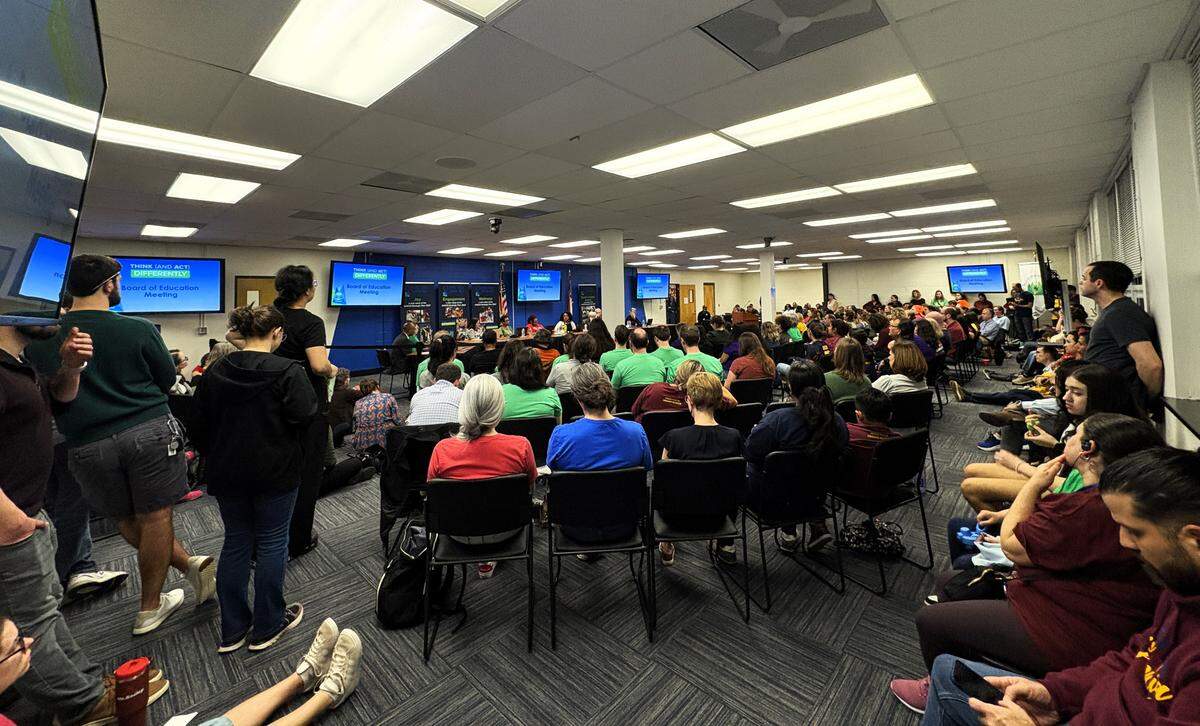
Parents and staff at the board’s March 9 meeting praised Trice for his transparent approach, including updates about the district’s “hard choices” since being promoted to superintendent in June. Late last year, he held a series of community meetings to share his plan for creating a smaller but stable and innovative school district and presented the school board with a master plan.
He has also emphasized giving parents and staff adequate notice about possible cuts so they have time to prepare, unlike previous cuts that he said caught many off guard. A previous cut that eliminated over 100 positions in the schools and central office was announced just as the 2024-25 school year started.
“Looking ahead, we will be a smaller, stronger, and more focused CHCCS. That does not diminish the impact of this moment for colleagues whose roles are affected. My thoughts are with them. They have responded with professionalism and grace during an incredibly difficult time. I know our community will extend support and compassion in the days ahead,” Trice said.