Why budget challenges could lead to school closures, job cuts across NC
AI-generated summary reviewed by our newsroom.
- Budget stalemate and enrollment drops prompt districts to consider cuts, closures.
- Rising vouchers and school choice tie to enrollment loss and funding pressure.
- Advocates call to shift voucher funds to public schools and pass a budget.
School districts across North Carolina are facing financial challenges that are forcing them to consider steps such as closing schools, eliminating jobs and making other budget cuts.
District leaders are dealing with rising costs to build and operate schools at a time when the state could potentially not adopt a budget for the second year in a row. Add growing competition from private school vouchers and charter schools as many school districts are losing students or seeing their enrollment stay flat.
“Two decades ago, we were in a much better place in North Carolina, and there is no reason other than humans that we can’t go back to that,” Heather Koons, a spokesperson for Public Schools First NC, said in an interview. “Those are policy decisions that our lawmakers are making.”
But it’s part of the new reality that North Carolina public schools must accept, according to Bob Luebke, director of the John Locke Foundation’s Center for Effective Education.
“The changes, they’re a result of some expanded school choice,” Luebke said in an interview. “They’re a result of just declines in population that a lot of districts in North Carolina are experiencing. So that’s not a surprise.”
School districts making cuts across the state
School budget cuts have been announced across the state in recent months. Here are just some of the cuts that have been in the news:
- Wake County is backing off from a plan to eliminate 130 special education teaching positions after teachers and parents held protests and school board members complained. But Superintendent Robert Taylor says they’ll have to find some other way to cut the $10 million that would have been saved from eliminating those jobs.
- Charlotte-Mecklenburg Schools may cut $6.6 million, including in central office positions, The Charlotte Observer reported.
- Chapel Hill-Carrboro City Schools could cut 23 central office jobs by June and close two elementary schools in 2027, The News & Observer previously reported.
- Durham Public Schools may close some small, older schools to save on infrastructure costs, The N&O previously reported.
- Cumberland County Schools is considering closing several schools amid heated public protests.
Public school cuts amid private school voucher expansion
Koons of Public School First noted that the cuts and school closures are occurring at the same time that spending on the state’s private school voucher program has reached record levels. As of March, the North Carolina Opportunity Scholarship program has awarded $579.3 million to help pay for the private school costs of 106,587 students.
The expansion of the Opportunity Scholarship program came as state lawmakers opened it up to all families, including affluent households and those already attending private schools.
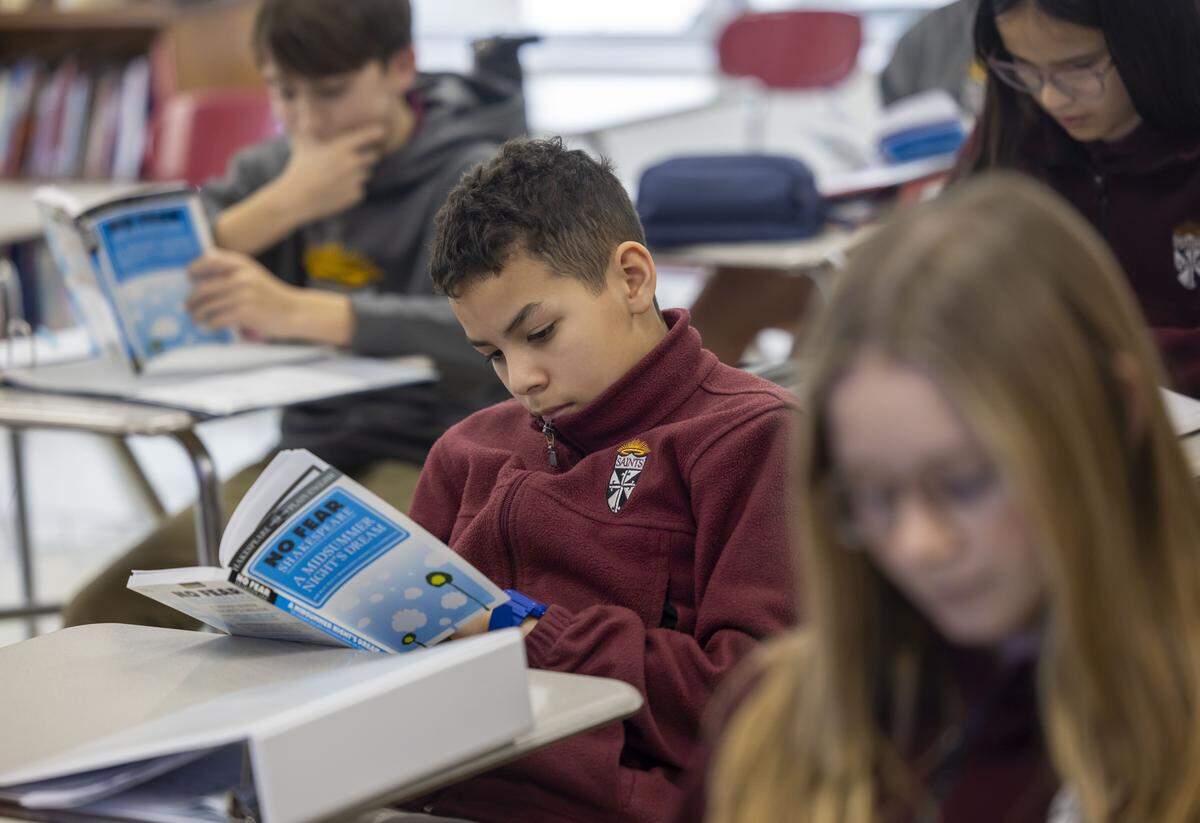
Wake County private schools received $56 million in tuition vouchers last school year, Public Schools First notes in a recent newsletter. The group says that a fraction of that voucher funding would fully pay for the Wake County school system’s special education shortfall this year.
Cumberland County school officials have said that closing eight schools could save on $31 million in repair costs. Public Schools First points out that private schools in Cumberland County got $28 million from the Opportunity Scholarship program last school year.
“Quit funding private school education for people who already have the funds to send their kids to private school and just roll back the voucher program,” Koons said.
Koons says state lawmakers should reallocate the private school voucher money to help fund the education plan in the long-running Leandro school funding lawsuit. On Thursday, the state Supreme Court threw out the Leandro plan and overturned a 2022 ruling authorizing the transfer of money to public schools.
“Just stop spending that money on private schools and put it back where it belongs — in public schools,” Koons said.
Fewer students in public schools
Durham Public Schools says it’s considering school closures even though it’s projecting enrollment growth over the next decade. But 107 of the state’s 115 school districts saw enrollment declines this school year.
In a trend that started before the pandemic, enrollment has been falling in school districts but increasing in charter schools. Private school enrollment has also been increasing since the state began the voucher program.
Enrollment is critical because the state funds schools based on how many students they have.
“School district consolidation is never a happy discussion to have,” Luebke said. “It’s oftentimes the last possible option. But the reality is a lot of these districts are losing population.”
Chapel Hill-Carrboro City School is among the top-scoring school systems in the state. But it’s been steadily losing enrollment, leading to the potential school closures and budget cuts.
Budget cuts should be the reality when a school district has fewer students, according to Luebke.
“If you’re not educating students, what are you there for?” Luebke said. “What is the facility there for?”
Uncertainty over state budget
What Luebke and Koons agree on, though, is that the General Assembly should adopt a state budget this year. North Carolina was the only state not to approve a budget in 2025 due to House and Senate Republicans being unable to agree on a plan about future tax cuts.
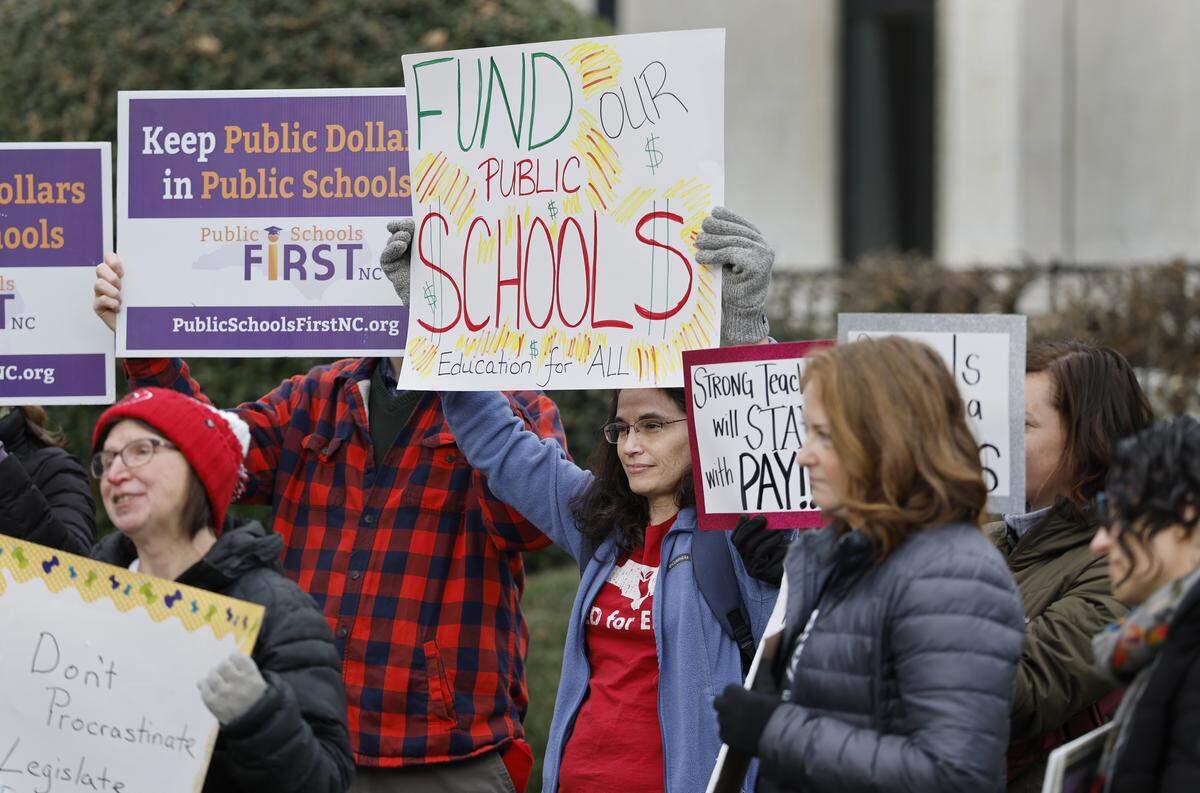
As one result of the budget stalemate, average teacher pay dropped this school year for North Carolina teachers. The Education Law Center ranks North Carolina at the bottom nationally in spending on public education.
“It’s the elephant in the room that people are talking about, but probably not enough, is the lack of funding,” Koons said. “For goodness sakes, we’re worst in the country. That’s affecting things.”
Luebke says he can sympathize with school leaders who don’t know what to expect from the state on a budget this year.
“I hate what’s going on,” Luebke said. “I think it’s wrong. Legislators are paid to make decisions like this, and nobody said it’s ever going to be easy. But those decisions should be made because a lot of people are depending on them.”
This story was originally published April 2, 2026 at 9:55 AM.