
Who is Fort Bragg named after? Meet the man who stole a Nazi ambulance to save a soldier
Roland Bragg was a 21-year-old paratrooper from Maine when he found himself pinned down by artillery fire near the end of World War II, out of ammunition as the Germans closed in.
He hunkered down inside an old stone barn, while all around him, his fellow paratroopers lay wounded on stretchers, some barely conscious, none with any medical supplies on hand.
As the shells exploded around them, Bragg stole a Nazi ambulance, loaded four men inside and drove a harrowing 20 miles to an allied hospital, bullets whizzing past the whole way. He never saw those men again and assumed them all dead — until 50 years later.
In 1993, the old paratrooper got a letter from John Martz, a soldier he’d saved that day, who could only remember German shells knocking him down six or eight times. He’d written every survivor in his unit asking for answers, until his letter found Bragg.
“I’m forever grateful to Roland Bragg for saving my life,” he told the former North County Times in California, where the former paratroopers met as old men. “We thought that was the end of it for us.”
In honor of Bragg’s service, U.S. Defense Secretary Pete Hegseth ordered Fort Liberty renamed Fort Bragg — this time for the Maine paratrooper with the 17th Airborne Division and not for the Confederate General Braxton Bragg, its original namesake.
For the first time, the Cumberland County Army post where thousands of paratroopers have served will carry the name of a soldier experienced at jumping out of airplanes, and who served in a war fought during its existence.
“The only thing I got was a burn on the side of my head where a bullet went by,” Bragg told the California newspaper 50 years later. “The Lord was looking after me that day.”
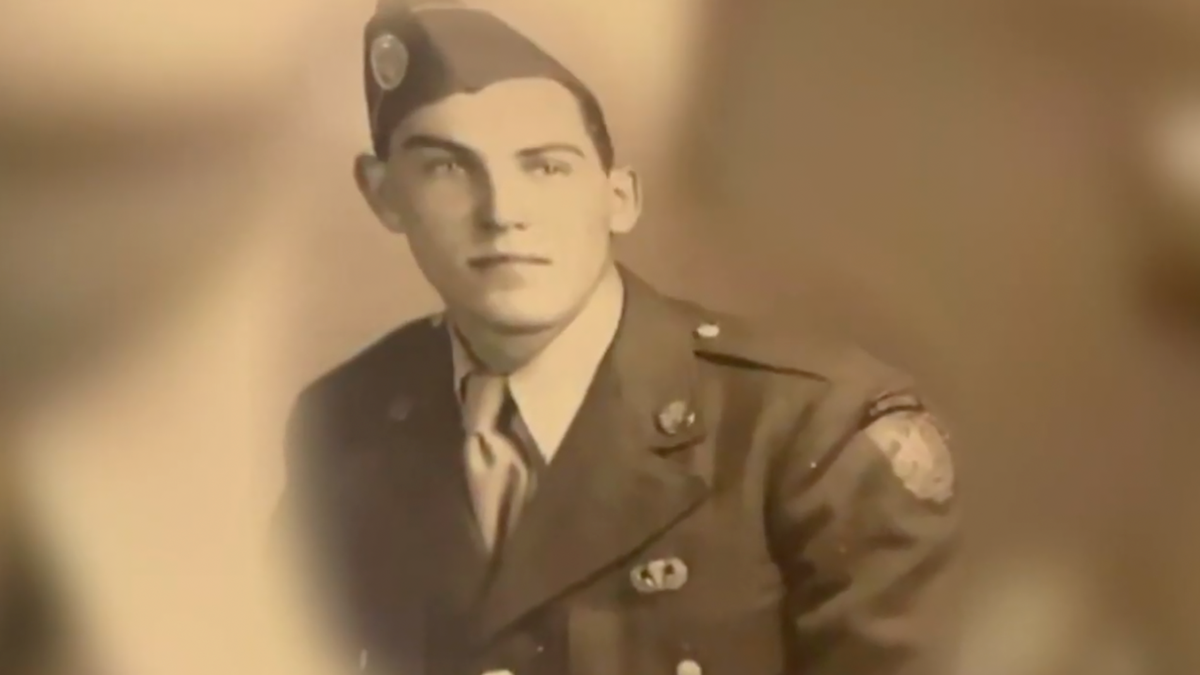
Roland Bragg’s life and death
Bragg, who earned the Silver Star and a Purple Heart for his service, returned to Maine and died of cancer in 1999 at 75. Like many soldiers of his generation, he rarely spoke about combat. Details of his ambulance rescue and escape didn’t surface until he got the letter from Martz.
“The only reason he got away was that he was a Mason,” Bragg’s daughter, Linda French, told the Portland Press Herald for his obituary. “The German soldier was a fellow Mason. The guy said, ‘Hit me over the head and take off,’ and he did, and took off with an ambulance.”
Born in 1923, Bragg grew up in the Great Depression and peddled vegetables from the family’s farm. He returned to Maine after the war and joined his father’s auto parts business, then became a well-known fixture in the community around Nobleboro for starting a house-moving business when the practice was less common.
A newspaper in Kennebec interviewed Bragg in 1983 after he carried a 25-ton, 19th-century house for 5 miles.
“To us, it’s just routine stuff,” he said.
A letter about a stolen Nazi ambulance leads to a reunion
Bragg had good reason for assuming his fellow paratroopers had all died from their wounds. John Eisenhower, son of the U.S. president who commanded allied forces in Europe, recounted the heroic ambulance ride in his book about the Battle of the Bulge, “Bitter Woods.” He reported no survivors.
Then came Martz’s letter.
“I remember sitting at the kitchen table, reading that letter, and the chills went up and down my spine,” he told the North County Times. “I thought everyone died.”
The two old paratroopers reunited at Martz’s home in Oceanside, Calif., where they filled in the gaps together.
“We were spearheading our battalion,” said Martz, who became a machinist for Westinghouse Electric after the war. “We were way up in there, and the Germans just came in around behind us.”
Cut off from the main body of troops, the able-bodies made plans to leave the wounded behind.
They were going to leave us for prisoners,” Martz said.
Bragg is buried in Nobleboro, Maine.
This story was originally published February 11, 2025 at 1:26 PM.