Wake schools chief wants $25M increase from county. NCAE says that’s not enough
AI-generated summary reviewed by our newsroom.
- Superintendent requests $25.3M increase, proposing a $2.3B operating budget
- Teachers and NCAE protest, urging a larger funding ask; district plans $5.2M cuts
- Budget funds new school costs, teacher raises, and sustaining expiring magnet grants
Wake County Superintendent Robert Taylor called for a $25.3 million increase in local school funding on Tuesday even as teachers protested outside the meeting, saying he should ask for more money.
Taylor unveiled a $2.3 billion operating budget for the 2026-27 school year that includes a request for the Wake County Board of County Commissioners to increase funding by 3% to $768.2 million a year. Taylor called it a responsible budget given the county’s funding situation after having given average annual increases of $49.7 million over the last four years.
“This proposal reflects careful consideration of the local financial landscape and what I believe to be a responsible ask from our commissioners, who have been super advocates of the Wake County Public School System,” Taylor told the school board.
More than 200 people picketed outside the school board meeting in a protest organized by the Wake County chapter of the North Carolina Association of Educators. The microphone volumes for school board members and administrators was elevated in an effort to be heard over the chanting outside.
Wake NCAE members said that the district has the responsibility to ask for what it needs, even if it doesn’t think it will get it from the commissioners.
“The school board knows we need more, and they need to step up to the plate, rise to the occasion, and then not ask for less,” said Jeff Fuss, a civics teacher at Enloe High School in Raleigh, said at Tuesday’s protest.
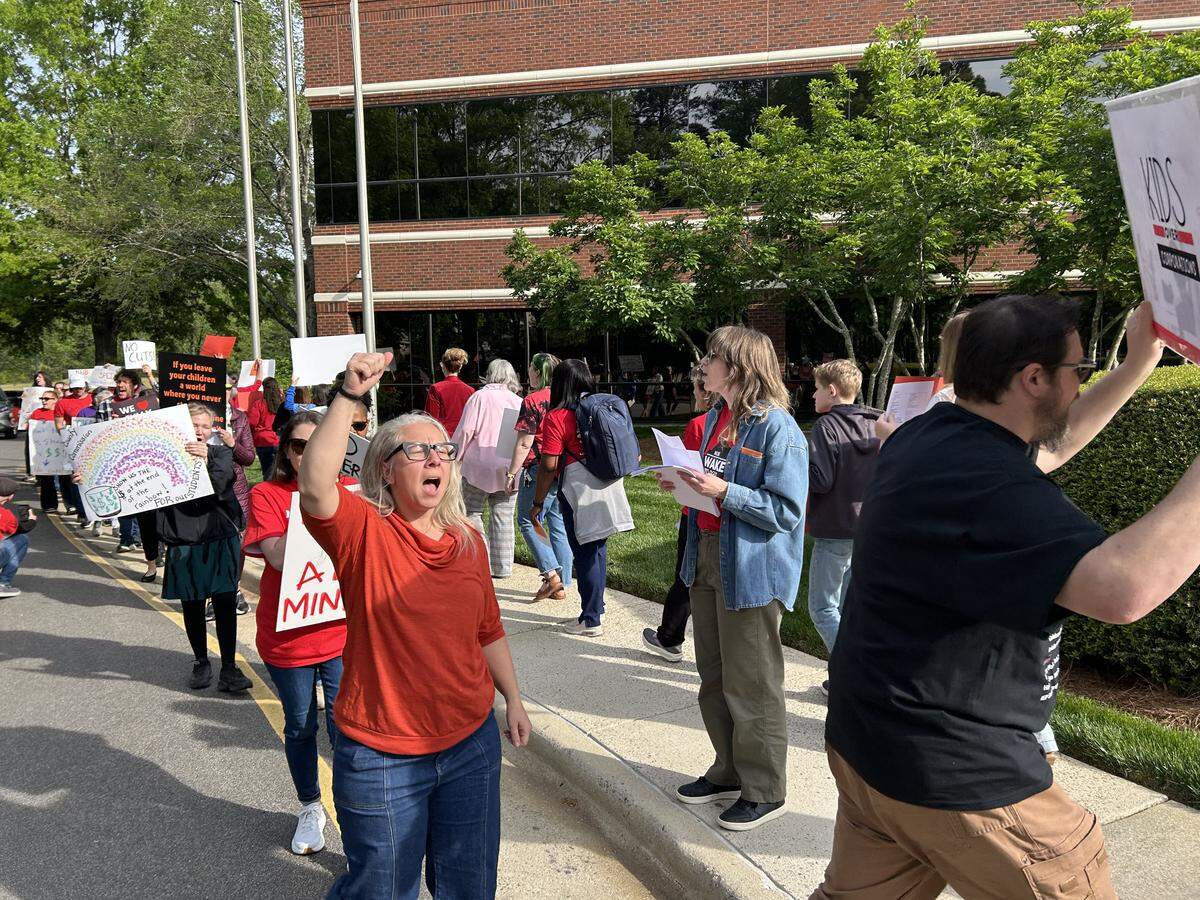
Special education cuts opposed
Budget tensions have been elevated since the district announced last month a proposal to eliminate 130 special education teaching positions. Cutting the jobs would save Wake more than $10 million, but it drew Wake NCAE protests outside of several schools.
The school board complained, prompting Taylor to say a week later he would drop the elimination of the special education positions.
Taylor said there wasn’t enough time to remove the special ed job cuts from the budget book presented Tuesday. But Taylor said that he knows that the board doesn’t want them as part of the budget they’ll vote on in May to send to commissioners.
Chief Business Officer David Neter said alternative reductions to the special-ed positions will be presented to the school board at the April 21 budget work session..
Budget cuts will be needed
The repeated message from Taylor and Neter is that cuts will be needed this year due to uncertain budget conditions. Wake is expecting a reduction in federal funding while not knowing if there will be a state budget after the General Assembly failed to approve one last year.
“This budget is going to be a year of making some difficult fiscal decisions that require giving some things up or doing less,” Neter told the board.
On Tuesday, Taylor announced $5.2 million in new “strategic realignment” cuts.
The biggest cut was $2.5 million in transportation spending. But Neter said they believe they can make the cut without impacting transportation services.
There’s also a proposed $2.2 million in how the district allots positions for literacy coaches at elementary schools..
The budget comes at the same time that the district’s enrollment came in 2,000 students lower than projected this school year. Wake is citing factors such as competition from the state’s private school voucher program and a drop in foreign-born migration for the enrollment drop.
Planners are only projecting the district will grow by 48 students this fall.
The superintendent’s proposed budget cuts come as school districts across the state are considering job cuts and closing schools to save money.
No new programs in budget
Taylor said the $25 million in requested new county funding would pay for things such as the cost to open a new school, the district’s share of projected state pay raises for teachers and maintaining magnet school programs as federal grants expire.
Neter said the district also expects it will have to turn over more local funding to charter schools.
But the district says they’re not paying for things such as new programs or expanding existing programs.
Multiple school board members said they need the state to pass a budget that provides schools with what they need.
“I don’t think any of us ran to get elected and to serve to make cuts, to get rid of programs, or to reallocate funding elsewhere,” said board chair Tyler Swanson. “But when the reality is facing us and we do not have the funding that we need, we are forced to make tough decisions.”
Protesters at school board meeting
Picketers assembled outside the entrance to the school district’s headquarters. They held up signs with messages such as “No Cuts To Spec Ed,” “Save Special Ed” and “Teachers Need More Than Apples.”
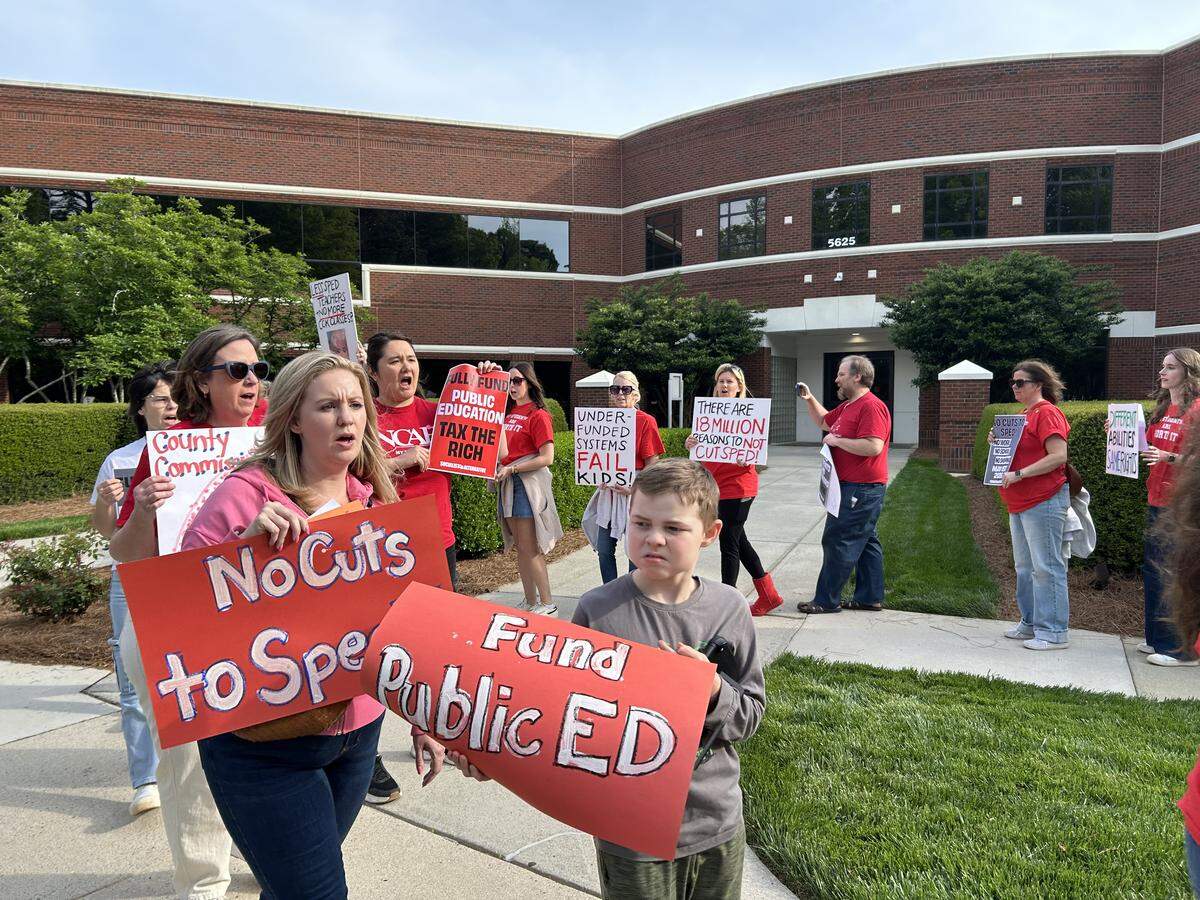
Chants such as “whose schools, our schools” and ‘we are the union, the mighty, mighty union” could be heard by people inside the board meeting room.
“If the district does not invest now and invest more, our most vulnerable students are going to be experiencing lifelong consequences,” said Jessica Boone, an Enloe High special education teacher who spoke at the protest. “But even more than that, every single student in this district will have lifelong consequences of not getting the education they deserve.”
Twenty people spoke out against budget cuts during public comments at the board meeting.
“To hear this news about budget cuts is just disheartening,” said Brian Grimes, a Wake County parent. “We live in one of the richest counties in the nation. We should never be discussing cuts.”
Christina Cole, the president of Wake NCAE, told the board she appreciates that they won’t cut the special education teaching positions. But Cole, who is a special education teacher, said the district should be expanding funding on special education and other needs instead of making cuts.
‘”Alternative budget reduction options’ will undoubtedly impact student learning conditions regardless of the department,” Cole said. “If the district and school board decide to make preemptive cuts, that is a choice. It will be a choice to prioritize what’s been said in closed-door meetings rather than making clear the urgent needs of our students and staff.”
This story was originally published April 7, 2026 at 6:56 PM.