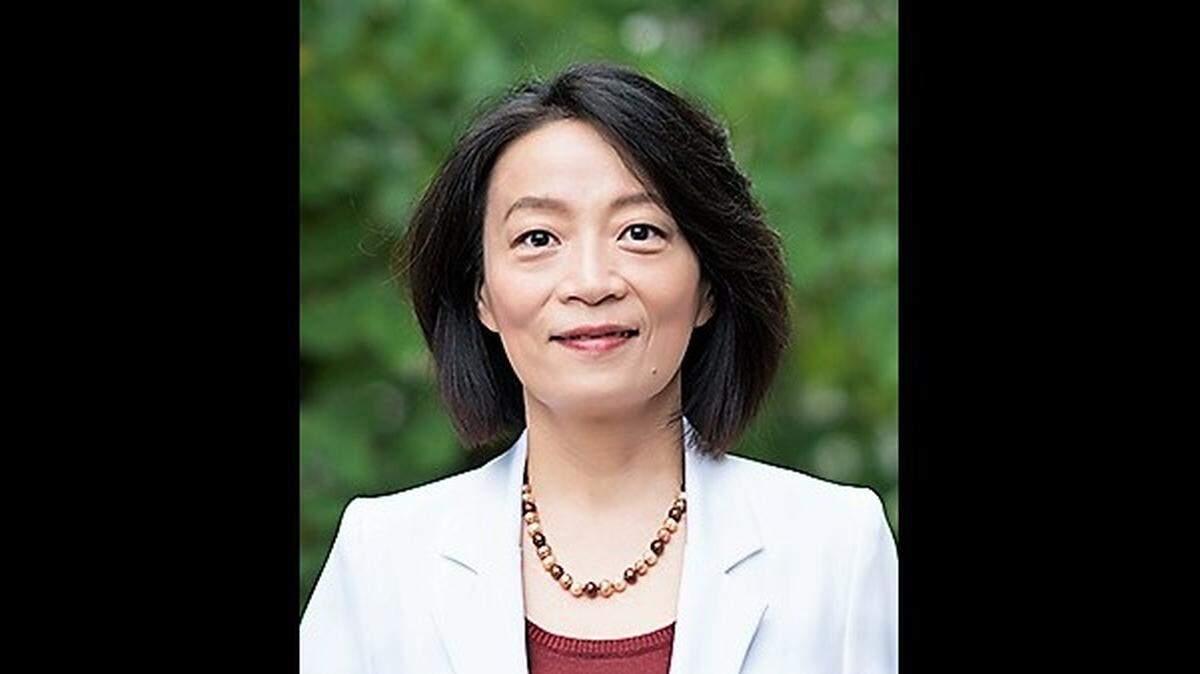
Hongbin Gu, candidate for mayor of Chapel Hill
READ MORE
Chapel Hill mayoral and Town Council candidates
Who are the candidates running for mayor and council in Chapel Hill? Get to know your candidates with our Voter Guide.
Expand All
Three people are hoping to win the Nov. 2 race to become Chapel Hill’s next mayor.
Hongbin Gu, a first-term Chapel Hill Town Council member and quantitative research scientist is challenging incumbent Mayor Pam Hemminger for the town’s top post. UNC-Chapel Hill law student and legal assistant Zachary Boyce also is mounting a mayoral challenge.
Early voting in the nonpartisan election begins Oct. 14 and runs through Oct. 30.
To find polling places and full details on early voting, visit co.orange.nc.us/1720/Elections or contact the Board of Elections at 919-245-2350 or vote@orangecountync.gov.
Name: Hongbin Gu
Age: 53
Residence: I’m a Chapel Hill resident of 27 years.
Occupation: Quantitative research scientist in medicine
Education: Doctorate in quantitative psychology; Master of Science in statistics, UNC-Chapel Hill
Political or civic experience: Current Chapel Hill Town Council member, served on Environmental Steward Advisory Board, Transportation and Connectivity Board, Public Transit Committee, Climate Change Committee; former president and current board member of the Chinese American Friendship Association; founder of Youth4Change; organizer of Chapel Hill LightUp and other community cultural events
Campaign website: Hongbin4Mayor.org
Endorsements: Chapel Hill Alliance for a Livable Town
What do you think the town’s top three priorities should be? Choose one and describe how you will work to address it.
▪ Diversify housing and economic development opportunities
▪ Invest in low-carbon mobility and green climate infrastructure
▪ Build strong and healthy community by strengthening parks, greenways and arts/social programs.
These are interconnected components of my Chapel Hill Green Recovery plan. We need a comprehensive plan and a whole-community approach to bring system-wide changes for a more green, inclusive and resilient future.
The misplaced priorities of the past decade have failed us, when we dehumanized our housing strategy to maximize units of luxury apartments instead of the housing needs of essential workers, people under 30% AMI (area median income), starters and young families. We provided incentive packages and an opportunity zone for large corporations, but have offered limited support for local small businesses who are leaving the town in significant numbers.
My economic development strategy does not rely on the “one-big-thing” promised by corporations or on the myth of “trickle-down housing“ pitched by luxury apartment developers, but will level the barriers for homeownership and economic development and create a system that will empower people to achieve their aspirations.
To enable all to make Chapel Hill their home, I will promote gentle density, allowing townhomes and backyard cottages in our communities. This will diversify our housing supply while preserving the character of our neighborhoods. On the transit corridor, condos and townhomes provide opportunities for homeownership, mobility at a reasonable cost.
In the area of economic development, my main focus will be on innovation and small businesses. The year of pandemic is also the year of historic new startups and small business applications. I would love to see a small business incubator, a shared restaurant space, a maker’s place, a media lab ... and training programs for people in the community who want to try their ideas but need a place and handhold to get started. A vibrant economy is a diverse economy. By partnering with university faculty and researchers, we’d like to create an ecosystem with the funding, mentor networks and flexible shared workspaces to make Chapel Hill a vibrant hub of entrepreneurial activity. I will make a special effort to nurture young, female, minority and immigrant entrepreneurs to create the economic diversity that provides vitality and resilience.
The plan does not follow a “top-down” approach to grow the economy; rather, it will grow our town’s economy from ground up and middle out, strengthening the local community and encouraging upward mobility.
What is the town doing right, and wrong, about development and growth?
Chapel Hill is part of the hot spot for economic development in our region and will be under significant growth pressure in the foreseeable future. The three universities in the region attract significant resources of innovations, talents and knowledge workers that are the key for economic development for the future.
However, our development and growth have been poorly managed in the past decade. The lack of leadership and comprehensive planning has failed to meet the housing needs of our community, causing damage to our environment, and creating polarization and factionalism that has plagued our local politics and prevented us from moving forward in recent years.
My diagnosis of our town’s development and growth is inconsistent with the housing report recently commissioned by the town. Here is a list of what’s wrong with the current development/growth and what needs to be done to correct it:
▪ We need good data and analysis of Chapel Hill’s housing situation with a clear understanding of the housing products in our community, their age, price range, occupancy, ownership, investment property status, as well as tenant information with regard to the locations for employment and patterns of transportation. Without a clear understanding of supply and demand in our housing market, we have been “flying blind” in the past decade.
▪ We need housing diversity, especially middle/moderate housing. The new developments in the past decade are mostly large apartments, creating the polarization of newer houses that are predominantly rental, and older single-family houses that are owner occupied. In the meantime, our teachers, nurses, civil servants, newcomers, and young families can’t find stable housing or build wealth through property ownership in our town. Many live miles away and travel to town, creating congestion in daily commutes. We are losing vibrancy and resilience as a community with the middle hollowed out.
▪ We need COMPREHENSIVE planning. Housing goes hand in hand with mobility, economic development AND climate action/environment protection. There needs to be a good balance of residential and commercial development. Higher density needs to be supported by transit and bike/walk connections to reduce auto-dependence and excessive need for parking. High-density community needs green infrastructure (TREES, greenways, parks) and social infrastructure (public meeting/gathering places, playgrounds, amphitheater, farmer’s market, museums, arts center, arts/culture programming) to meet the complete humanity needs of residents.
Finally, we need a good urban planner who sees the big picture with the focus on creating “good places” and good community, not individual houses/buildings. Our current “splitting-baby” approach of reacting to “project to project” is the worst way of managing our growth/development.
What is special about Chapel Hill now that people don’t know or what you would like the town to be known for in the future?
Chapel Hill is a progressive, forward-thinking community. I want us to be known for pursuing innovative and balanced solutions to our intertwined challenges, to develop an economy that benefits everyone, to take climate actions that restore nature and environment, and to invest in public spaces and green infrastructure that support healthy, inclusive and vibrant communities.
I want Chapel Hill to emerge as the leader in a green recovery that addresses housing and economic inequality. As communities around the country cope with accelerating extreme heat, drought, flooding and other disasters caused by the climate crisis, we need a smart approach that results in a stronger economy and healthier citizens.
Some call this vision unrealistic, as we have been led to believe that the “green” initiatives are in contradiction to housing or economic development, and we have to choose one or the other. This is a very old-school way of thinking.
In reality, the old way of developing the economy by building huge parking decks and packing people in one office building doesn’t attract tech companies or young knowledge workers anymore. The pandemic and technology advancement have shifted work arrangements, and more young workers prefer a community with a well-preserved natural environment, multimodal connectivity, and vibrant/inclusive community. Companies follow them. Green economy makes sense, especially considering the long-term savings of reduced health care costs and reduction in climate disaster mitigation cost.
We can improve resilience by increasing people’s access to nature and creating environmentally-friendly places, easily reached by walking, biking or transit, while civic engagement is all about building a sense of community that brings people of all backgrounds back together to shape our collective future. We believe strategic planning and innovative management can develop economy, improve climate resilience, and connect people to nature and to one another, so that our shared civic commons can be a platform for collaboration and critical changes.
Affordable housing, healthy community, emission reduction, climate resilience and a robust, nature-rich public realm can all be accomplished through thoughtful and co-created comprehensive planning, and Chapel Hill should be the one leading the way.
What skill or life experience do you have that would bring diversity to local government?
Growing up in a working-class neighborhood, I experienced urban flooding and gentrification due to mismanaged development. As an immigrant, I understand the barriers marginalized people face in their struggle to be heard and included. As a longtime volunteer, I have witnessed the great needs in our community for housing, food security, and mental health.
As a data scientist, I am trained to establish facts, evaluate risks, examine assumptions and adapt best practices from around the world to craft the unique [solution] for Chapel Hill. As an investigator in medicine and biotech, I see tremendous resources and untapped economic development opportunities in our region through partnership.
As a mom living and raising two daughters in this community for 27 years, I want to make sure the world we leave to our kids, our neighbors’ kids, and to all future generations is a world they can thrive in, enjoy, and be proud of.
This story was originally published September 28, 2021 at 10:51 AM with the headline "Hongbin Gu, candidate for mayor of Chapel Hill."

.jpeg)