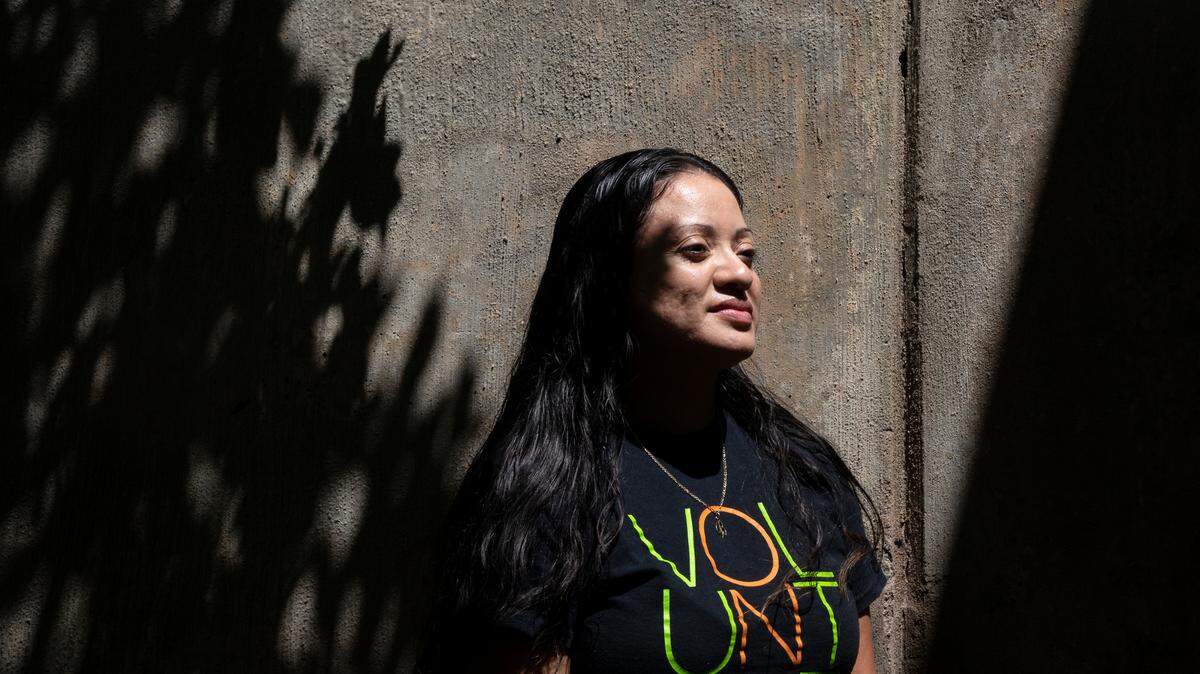
Moms raising kids in poverty hold onto hope. Advocates want NC to give them more help.
READ MORE
Women and Children First?
Single mothers raising children under the age of 18 make up more than a third of the families meeting the federal poverty definition in North Carolina. That’s $20,030 a year, before taxes, for a mother with two children working 40 hours a week. This new project brings together advocates, public policy experts and others, while giving moms across the state a platform to tell their stories. Over the coming months, we hope to identify policies that N.C. and local government can enact to help families in need, including those that the official poverty definitions miss.
Expand All
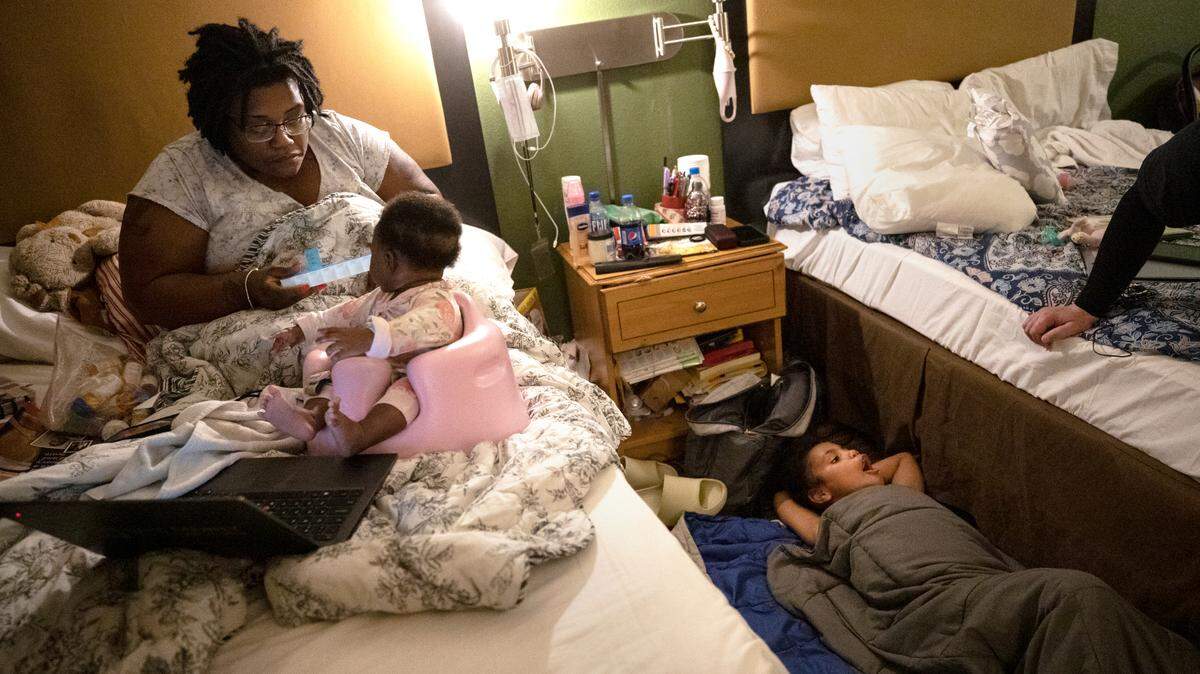
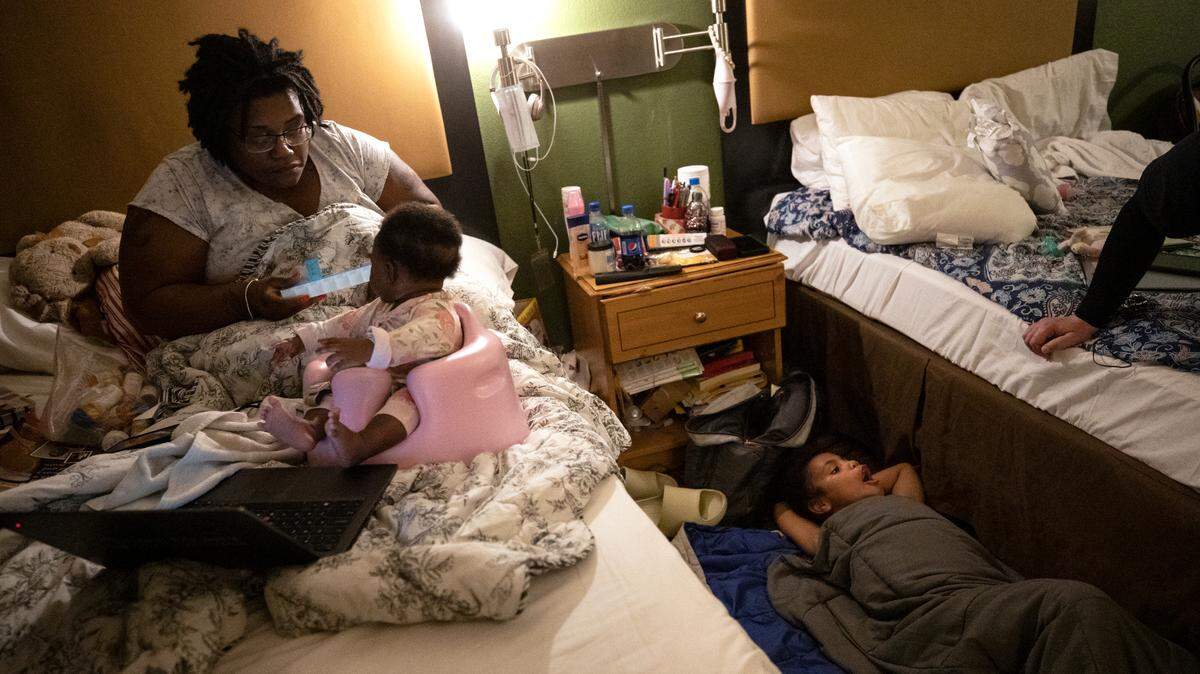
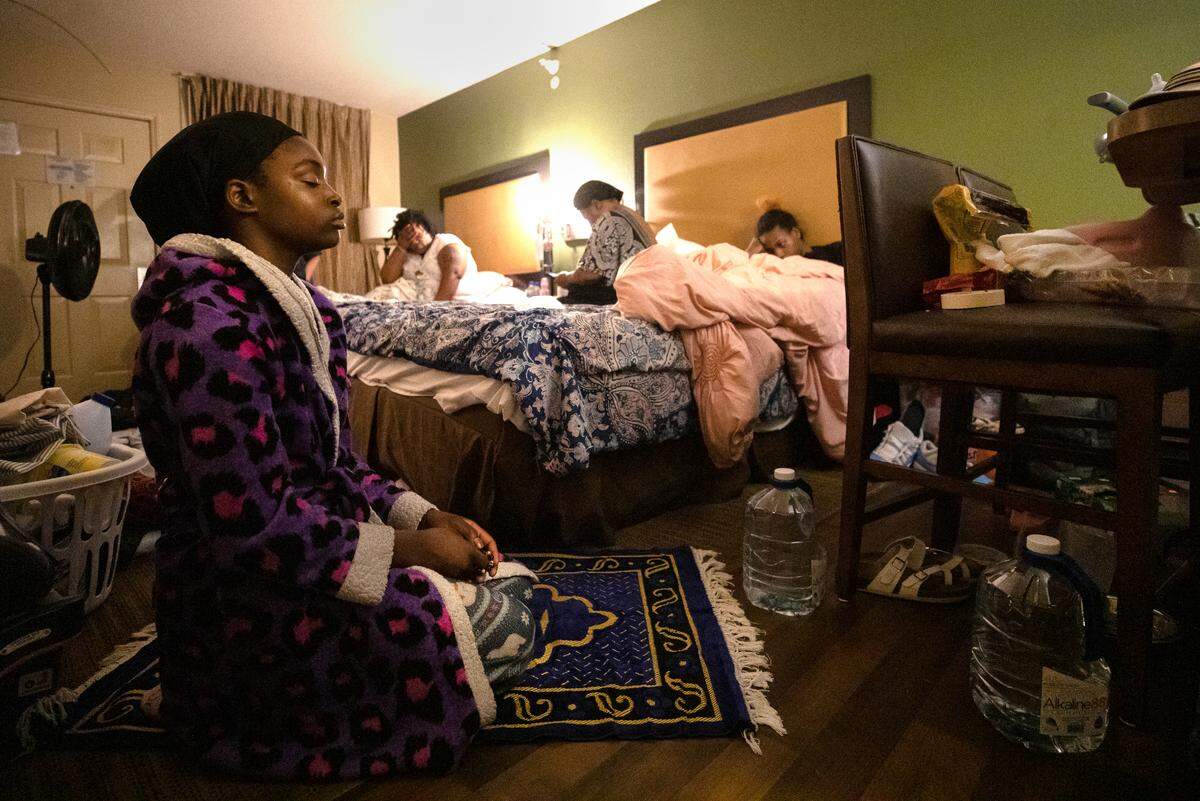
The move into the extended-stay hotel suite was supposed to be temporary, LaSherron Geddie said, glancing over at the young girls quietly reading their books on the other double bed.
More than two months later, the 37-year-old single mother and four of her five children are still seeking safe, affordable housing. Her oldest daughter is attending college at UNC-Greensboro.
At night, the youngest three curl up in the narrow passage between blankets, beds, and tall stacks of food and family belongings filling the 270-square-foot space. The smell of chicken and Campbell’s Soup in a slow cooker hints at the next day’s meal.
The last time they were homeless was in 2013 while Geddie earned college degrees in health science and behavioral health, she said. They got a Section 8 federal housing voucher, but the search took them from Raleigh to Fayetteville and then to Wilmington.
She found a job with Strategic Behavioral Center, but financial stability didn’t last long. In 2020, after extended medical leave for blood cancer and fibromyalgia, and with COVID on the rise, Geddie was permanently laid off.
With no steady income and increasing concerns about safety in their Wilmington neighborhood, the family returned to Wake County, finding an apartment in Cary through a private housing assistance agent. New Hanover County kept their voucher, but they made it work, in part with pandemic rental assistance from House Wake, Geddie said.
That all changed in January, when they learned the agent and the property owner had a disagreement, and her family would be evicted. In February, Geddie paid the agent $4,000 from her federal tax return toward rent on a new apartment.
In March, they got another eviction notice. The landlord denied receiving rent from the agent, Geddie said, and because the landlord didn’t think she could pay both the back rent and the current payments, the judge allowed the eviction.
She packed up her kids and the dog, dropping off her daughter at college, and moved into the hotel. When money is tight, they stay in her 2005 Chrysler van.
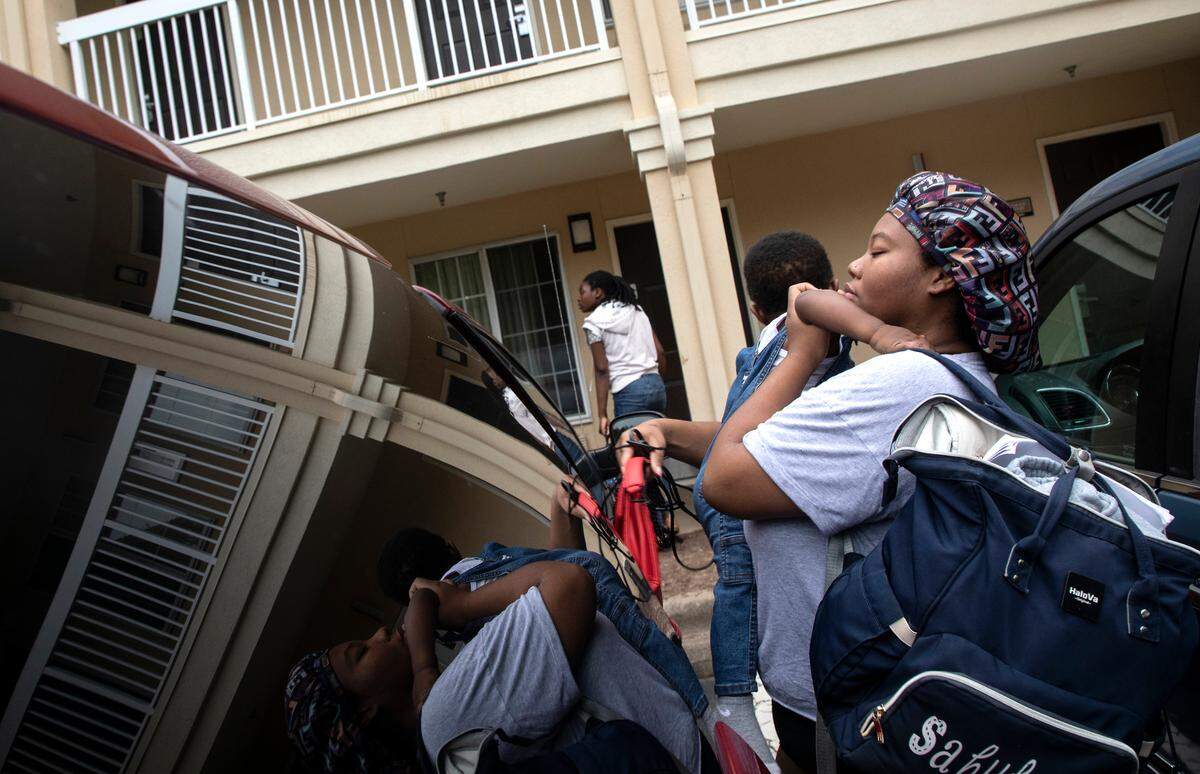
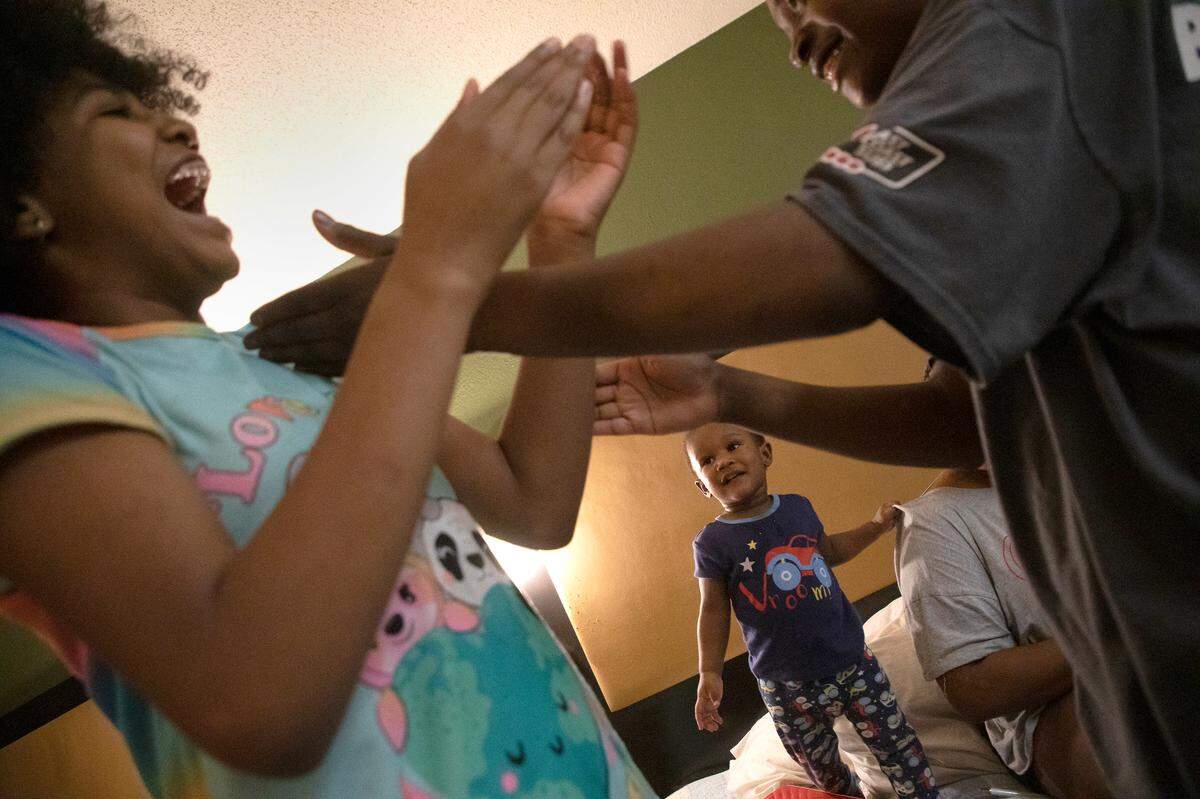
She promised her children — two of them her nieces, and three with autism — that they would never be homeless again, Geddie said, but they are losing hope. One daughter has started hoarding her food in a backpack and under the bed in case they have to leave, she said.
“The only thing that makes me keep pushing is seeing my kids and saying the day that I don’t answer this phone, that could be our house. The day that I ignore this call, that could be it. That could be our way out, and that’s the only thing. I can’t give up on my kids, but I know people personally that have. They’ve given up on everything.”
Single moms, children most affected
Single moms, both above and below the federal poverty line, are living in the moment, many handling crises that fall like dominoes one after the other, said Beth Messersmith, state director for MomsRising North Carolina. The grassroots group brings women and families together to share resources, advocate for their needs and push for better government policies.
“When we start talking to someone, they may be reaching out to us because their child was sick and they lost their job, which means that they can’t afford child care, or it means, if they’re not working, they could lose their subsidy,” she said. “Or it means that they have been working, but now all of a sudden, they don’t have a job and they need to figure out how to get food support. They’ve never had to rely on a food bank, so how do they navigate that?”
Census data shows roughly 1 in 6 — or about 16% — of North Carolina’s 1.2 million families with children under age 18 lived below the federal poverty line — the income below which a household qualifies for assistance programs — in 2020.
This year, the federal poverty guideline is $23,030 for a family of three.
Over 38% of single women with children in North Carolina lived below the federal threshold, with the highest poverty rates reported among Black, Hispanic and American Indian women, according to the N.C. Tax and Budget Center report, “Status of Women in North Carolina: Poverty & Opportunity.”
That was nearly twice the percentage of single men who were raising children in poverty (19.5%) and nearly six times the percentage of two-parent households with children below poverty levels (6.5%), the report said.
The challenges are numerous, starting with low-wage jobs that fail to keep up with the rising cost of food, gas, housing, child and health care. Others face additional hurdles because of substance abuse, crime, generational poverty, domestic violence, citizenship status and racism, experts said.
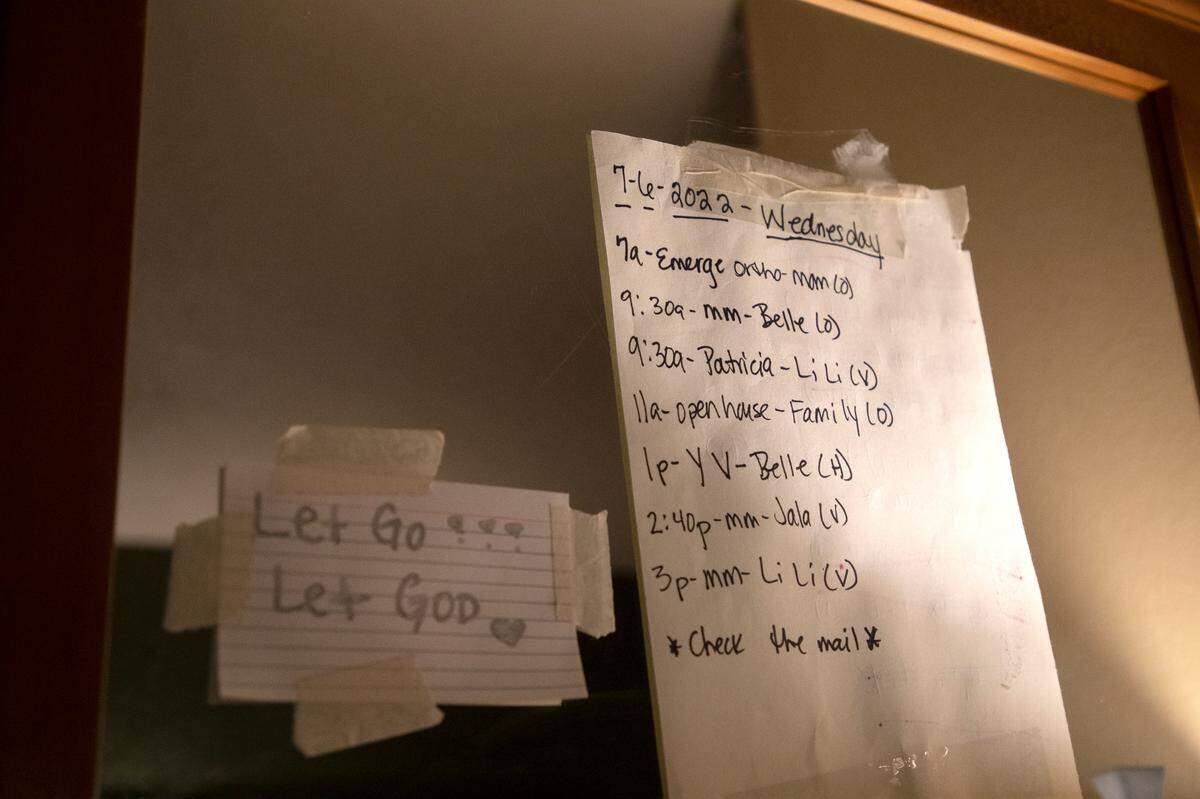
Parents are responsible for helping their children thrive, Messersmith and others said, but North Carolina also has a vested interest in seeing that those children are healthy, educated and successful.
“It shows up in the labor force, it shows up in how well prepared North Carolina is going to be to compete, because kids living and struggling with poverty are going to have a much harder time in school, a harder time staying in school,” she said.
Mothers, especially, need to know they are not alone and that by telling their stories they can help lawmakers make better decisions for North Carolina families, she said.
“A really big part of the work we do is talking with families about this concept, that it’s not a series of individual failings,” Messersmith said.
“We have systemic problems we have to address, and what we find is when people hear other people telling their stories, it makes them more comfortable to share their own. And it makes them think, oh, well, if they can do it, maybe I can do it.”
BEHIND THE STORY
MOREWhy we're doing this project
Single mothers raising children under age 18 make up more than a third of the families meeting the federal poverty definition in North Carolina. That’s $23,030 a year, before taxes, for a mother with two children working 40 hours a week.
The News & Observer’s “Women & Children First?” project will bring together advocates, public policy experts and others, while giving moms across the state a platform to tell their stories. We hope to identify policies over the coming months that North Carolina and local governments can enact to help families in need, including those that official poverty definitions miss.
If you think we are missing something, have information to share or ideas for our next stories, contact reporter Tammy Grubb at 919-829-8926 or tgrubb@heraldsun.com or deputy metro editor Mark Schultz at mschultz@newsobserver.com.
Better jobs, sick leave, housing, childcare
The News & Observer asked women this year to share their stories. Nearly all who responded said affordable and safe housing is their biggest need, followed by child care and flexible employers who pay more.
Read more stories from the “Women and Children First?” project at newsobserver.com or heraldsun.com.
Wake County is a wealthier county with more resources, Geddie said, but programs can be challenging to access. Homeless shelters, if you get a bed, are “chaotic,” she said.
Her own family gets by on $500 in food stamps and $3,364 a month in disability payments for the kids. The 13-year-old’s father also helps out, she said, but the hotel is $95 a night and gas takes a lot of money, especially when you’re shuttling four kids to doctor’s appointments for autism services, the library for books and the orthodontist because they have braces.
Then there’s the car payment, insurance and repairs, the phone bill for herself and her three oldest children, medical co-pays, rental application fees, life insurance, and day-to-day expenses, like hygiene products, that aren’t covered by SNAP food benefits. When the kids outgrow their clothes, she alters them for the next until they can’t be used anymore, she said.
It doesn’t leave enough money for an apartment, deposit and first month’s rent, even if they could find three or four bedrooms renting for less than $1,800 a month, she said.
The average cost of housing in North Carolina has been rising steeply. In June, the N.C. Budget & Tax Center reported that fair market rents for a two-bedroom apartment in North Carolina ranged from $690 in rural counties to over $1,200 a month in more urban areas.
Since financial experts recommend spending no more than 30% of a family’s income on housing and utilities, a rural family in Caswell County, for instance, would have to earn $28,000 a year, or over $13 an hour working 40 hours a week, to afford a two-bedroom apartment. That’s nearly twice the minimum wage.
A family living in Raleigh would have to earn three times the minimum wage — over $23 an hour, or $48,000 a year — to afford the same-size apartment.
But as society’s caretakers and nurturers, many women still work in low-paying, sometimes dead-end jobs, even as more earn college degrees.
Women comprised only 20% of the national workforce in 1920, when the top three jobs for women were domestic worker, teacher, or stenographer and typist. By 2020, women comprised 47% of the nation’s workforce, including more than 75% of single mothers who were working full time while raising children.
The top 10 jobs in 2019 — in teaching, health care, retail, food service and administrative fields — were filled by a third of working women, most requiring little more than a high school diploma or associate’s degree.
Access to paid sick leave was a significant consideration for working mothers during the pandemic, with nearly half saying they took unpaid leave when their child’s school or daycare closed, the Kaiser Family Foundation reported. The percentage rose to 65% for low-income mothers and 70% for those working part-time jobs, the report said.
Affordable, safe child care was difficult to access long before COVID, mothers and family advocates told The N&O.
The average cost of child care in North Carolina is roughly $9,000 a year — the equivalent of a year’s in-state tuition at UNC-Chapel Hill, and the state’s waiting list for a child care subsidy, based on family size and income, has roughly 5,800 names on it, down from more than 20,000 last year.
That could be temporary, advocates warned, since some of those families got child care subsidies paid for with one-time federal COVID recovery grants.
The other catch: Moms who apply for the subsidy must already be working, looking for work or in school, even though it’s hard to do that without having somewhere to leave their kids.
Better lives for children
Bertha (pronounced Berta) Mena says her son Johan’s speech was delayed after she put him in private child care while she worked. It was affordable, but the caregiver gave the children little social interaction and no educational instruction.
Now 4, he attends a better program with a state subsidy they got because of his speech delay, and because Mena left her job and went to college, putting her family’s income below the poverty line.
“In my childhood growing up and even as a young parent, I had to put my kids [and others] first, so I never had an opportunity to be able to go to school,” Mena said. “I just had to really recognize and know that you’re doing this for the long run, for something better for you and your kids, and also I’m showing that you can grow up in a tough environment, but you can persevere.”
She was an administrative assistant with the Durham Public Schools, before being promoted to data manager — a $34,968 job that paid the bills but was not the right fit and left little time to be a parent to her sons, she said.
She started classes part time at Durham Tech for an associate’s degree in business administration, saving her federal stimulus checks and any money left after her federal Pell Grant paid for school.
Last year, she left her job to study full time, taking a part-time work-study job with Durham Tech’s Campus Harvest Food Pantry to pay the rent. She’s since been approved and is waiting for a vacant apartment in public housing. This summer, she is working as a part-time program assistant with Durham’s YouthWorks program.
SNAP assistance helps buy food for her sons, ages 4 and 15, she said, and her 15-year-old also gets $500 a month from Social Security that’s put into an account for his needs, because his father was killed several years ago in a drive-by shooting. The 4-year-old’s father pays what he can and, in the past, took his son to weekly therapy sessions.
“I just took a leap of faith,” Mena, 32, said about quitting her job. “I cut out a lot of things, and I applied for scholarships and different opportunities [as] a Hispanic student — and a lot of that money, I saved.”
She’s proud to be the first in her family to finish high school and college, after earning her GED when her son Gio was 5. His father was in a gang, like her brothers, one of whom went to prison, Mena said. She wasn’t in a gang; just hanging with that crowd.
“Once I got pregnant, it all changed,” Mena said.
Poverty creates a poor mindset, and that’s not her story, she said.
She hasn’t been homeless or struggled to the extent that other low-income moms do. Instead, she dealt with her personal issues, took responsibility for her life and raised her sons with the positive guidance and support that she rarely got growing up, she said.
“I almost think the stereotype of me is I’m supposed to have five or six kids and be on welfare,” Mena said. “I’ve worked really hard to get out of that. Not necessarily to be labeled, I don’t care about that. It’s doing what I have to do for the kids.”
A better definition of poverty
A critical concern of single moms and those trying to help them is how the federal government defines poverty.
The current definition dates to 1965 when it assumed a family would spend one-third of its income on food and multiplied it times three to cover total household expenses. The only data available at the time, however, was a 1955 survey of how families spent their grocery dollars during a financial crisis, without considering the cost of housing, taxes and other bills.
The poverty level is adjusted for inflation each year.
Advocates instead want new federal poverty guidelines that more accurately measure the income at which a family has true need. They also point to the positive impact that COVID-related bumps in food, housing and cash assistance had on families.
And some are pushing for the more realistic Living Income Standard, which the N.C. Budget & Tax Center defines as a modest income that pays the bills but doesn’t cushion against job loss or other unexpected expenses. Heba Atwa, the center’s advocacy manager, is not aware of any North Carolina agencies using that standard yet.
Some state and federal programs, such as Temporary Assistance to Needy Families (TANF), already do serve families earning up to 200% of the federal poverty level. That includes a family of three earning up to $46,060 a year.
It’s important to be practical about what it takes for someone to make ends meet, and how those costs are growing, Atwa said.
“The reality is that the federal poverty level doesn’t give us a full picture of hardship, and it limits the ability of people who are struggling to get access to the supports that they need to truly thrive,” she said.
Effects of COVID aid, policy choices
It wouldn’t take much to lift thousands of North Carolina families out of “deep poverty” — defined as less than 50% of the federal poverty level — and to keep others from treading water, advocates said.
Food stamps and other government programs helped half of the state’s neediest families leave poverty between 2014 and 2017, according to the nonpartisan Center on Budget & Policy Priorities. Another 306,000 North Carolina children and their families were lifted out of poverty last year when parents received the expanded child tax credits, it found.
The tax credit gave families six monthly payments equal to half of the child tax credit they claim on their annual tax return — $300 a month for every child age 5 and under, and $250 for every child age 6 to 17.
Atwa pointed to statistics showing that 93% of families earning less than $35,000 a year spent last year’s tax credit payments on their children’s education and basic needs, such as food, housing and utilities. Only 7% of families, down from 11%, had a severe need for food while the payments were being disbursed.
The fear is that as pandemic-related money runs out, families will be thrust again into a precarious financial situation, advocates said.
“Despite a very persistent narrative, the truth is that poverty is not a choice,” Atwa said. “There are policies — enduring policies — that have directly and effectively kept people, especially communities of color in our state, from opportunity and therefore in poverty.”
One such program is TANF (Work First in North Carolina), which was established by the 1996 Welfare Reform Act.
Since states decide how their share of TANF money is used, they also can create additional eligibility rules. In North Carolina, Work First families can get help for two years, but must wait three more years to reapply. The lifetime federal limit on benefits is five years.
Family size is capped, providing no additional benefits for children born while a family receives help, and people with drug felonies, undocumented immigrants and children with Social Security benefits can be excluded.
The rules reinforce stereotypes about Black people and attempt to control women’s choices, the nonpartisan Center on Budget and Policy Priorities reported. The rules reflect a foundation in slavery and Jim Crow, it continued, using reproduction and labor “to exploit control and punish” Black women for economic gain.
In particular, TANF programs increased the number of Black and Hispanic children in deep poverty, the report said.
The shift in how government approaches the fight against poverty “is resulting in barriers to supports that end up pushing people deeper and deeper into poverty,” said Alexandra Forter Sirota, N.C. Budget & Tax Center executive director.
“The anti-Black and anti-women ideology that continues to pervade the policy discussions about fighting poverty cannot get us to a system that will work well for anyone,” she said.
Financially unstable but not poor
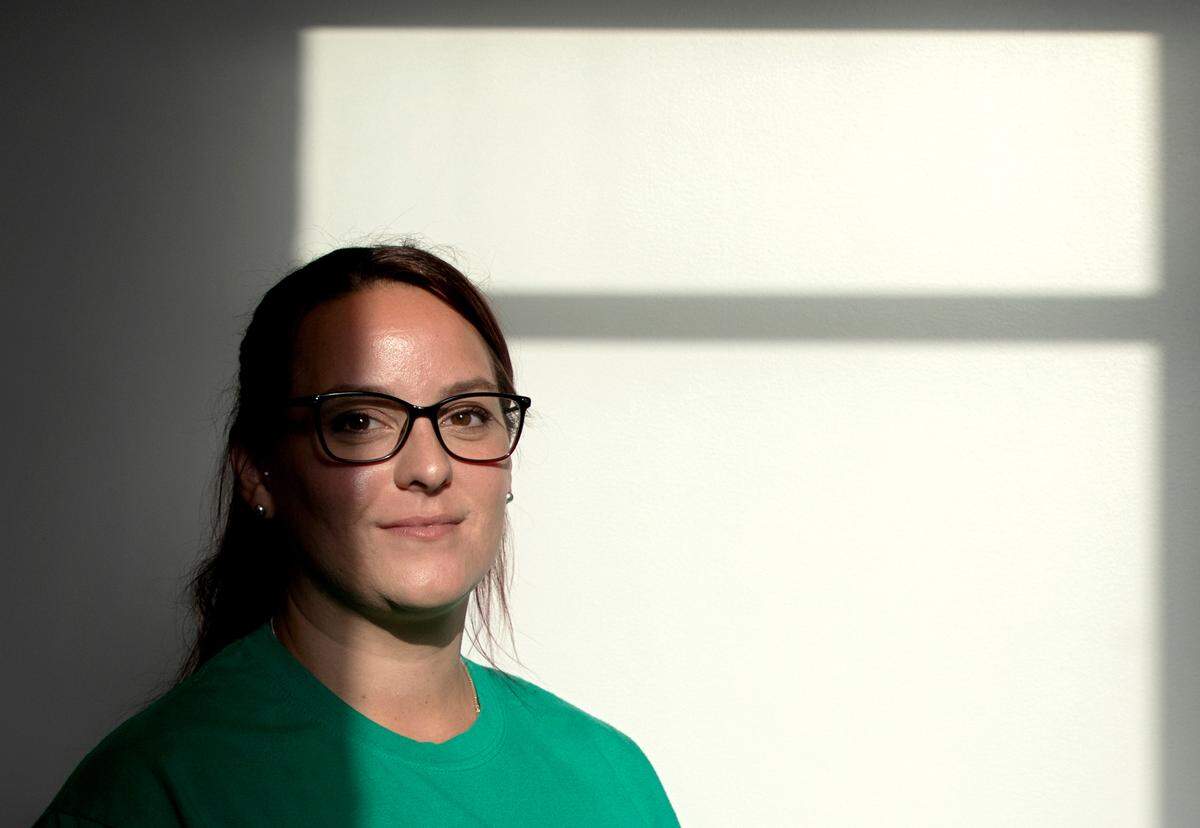
Katie Williamson had doubts about court-ordered drug treatment, but it gave her family a fresh start.
Now, she’s got a job that could keep them financially afloat and is thankful for her mother, who was there to help, and the government food assistance that helps feed her children.
“It’s scary, and it’s overwhelming,” the 34-year-old Carrboro mom said after spending a Sunday afternoon playing with her children, ages 2, 5 and 6. Any kind of support, no matter how small, is “monumental,” she said.
Williamson grew up in Carrboro and slid into poverty after marijuana turned into pills and harder drugs. She got hooked on heroin, because it was cheaper and easier to find.
In an attempt to get clean, she took Suboxone, a medication for managing opioid withdrawal symptoms, but it didn’t break the addiction.
After two charges of driving while impaired, a judge ordered her into the UNC Horizons substance use treatment program for women last year. She moved into Horizons housing with her youngest child.
“Seeing the difference in me when I first went and when I left — I was like, wow,” she said. “Not only did they save my life; they gave me a new life and helped me get back to who I was and even a better version of that person.”
It was during her stay that she learned about Hope Renovations. The three-month program taught her masonry and the construction trade, and in May, she found a job earning $18 an hour as a construction site manager.
Williamson now lives with her mother, who kept her oldest children while she was in Horizons. Her new paycheck will help with the rent and allow her to pay back her mother for her legal bills, she said. She also gets monthly food assistance through the federal Women, Infants and Children (WIC) program, although it only allows her to buy specific items, often in specific amounts.
Her children’s fathers — one an Iraq war veteran who lives with post-traumatic stress disorder and addiction, and the other, who also struggles with addiction — are not really involved in their lives, she said.
Williams doesn’t consider herself poor, since she has more family support than a lot of mothers, but sometimes, “it’s too much for one person.”
“I’m below the poverty line right now because I just started working,” she said. “I don’t have a big bank account with anything in it. I’m stressing about being able to pay bills and feed my kids. I think I’m in an OK spot right now, but there’s always a need for resources.”
Read more stories from the “Women and Children First?” project at newsobserver.com or heraldsun.com.
This story was originally published July 29, 2022 at 6:00 AM.