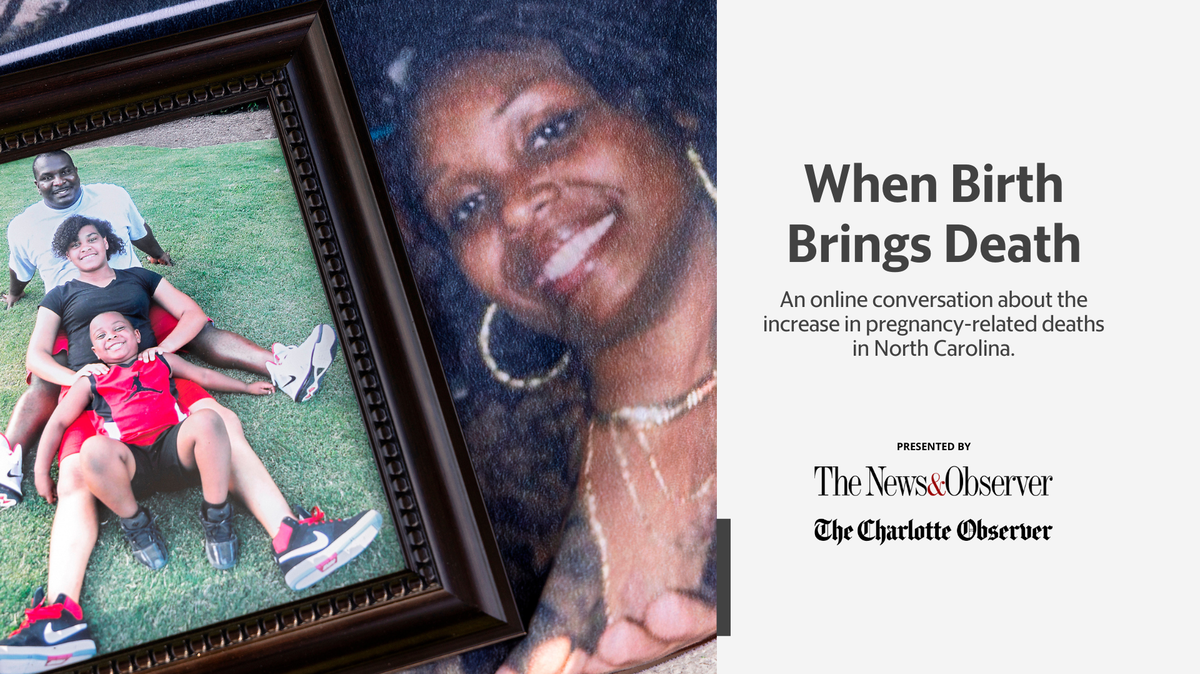
Maternal deaths just ‘one part of the story’ in NC. Pregnancy complications are rising
READ MORE
When Birth Brings Death
In a country that has one of the worst maternal mortality rates among wealthy nations, pregnant women in North Carolina are particularly vulnerable. The troubling situation was exacerbated by the COVID-19 pandemic. While there’s been a slight decline in pregnancy-related deaths and severe injuries since their pandemic peak, health experts remain concerned. This News & Observer and The Charlotte Observer investigation explores the data and the emotional impact.
Expand All
The number of women who nearly die from pregnancies in North Carolina has continued to hover around the highest level in five years, down slightly from a mid-pandemic peak.
That’s according to the latest state health data obtained by The News & Observer on severe maternal morbidity — serious complications like sepsis and organ failure that put the lives of new mothers in danger.
More than 1,000 women in North Carolina narrowly survived these complications in 2022, preliminary data show, a figure that jumped by more than 30% compared to 2018.
The upward trend in severe maternal complications largely follows increased rates of pregnancy-related deaths in North Carolina and across the country, where expectant mothers fare worse than other wealthy nations.
In relative terms, the number of these deaths is small: less than 100 for most states. And that can make identifying trends and potential fixes tricky.
“The death data is one part of the story,” said Belinda Pettiford, who heads the Women, Infant and Community Wellness Section of the state Division of Public Health. “We have really tried to step back more recently and look at the severe maternal mobility data … which are like the near misses.”
Tracking these “near misses” is critical, experts say, because there are so many more cases to analyze.
At their peak in 2021, for example, 1 out of every 100 deliveries in the state resulted in a close call that almost claimed a woman’s life.
Pregnancy is the most dangerous thing most young, healthy women have ever done, says Dr. Alan Rosenbaum, an obstetrician-gynecologist at UNC Rex Hospital in Raleigh.
“Especially — and unfortunately — in this country,” Rosenbaum said.
To save lives, he said, patients need ready access to high-quality care throughout their pregnancies, whether they live in a rural county or an urban center.
Because even in the most ideal conditions, things can go wrong fast.
It’s a reality Rosenbaum now understands more deeply than ever.
‘An image that certainly will never leave your head’
By all accounts, Stefanie Wisda’s pregnancy in the early months of 2022 was going great.
It helped, of course, that she was married to Rosenbaum, and worked as a physical therapist at UNC Rex alongside a cadre of other healthcare professionals.
“I always joke that one of the perks of marrying a doctor is a lot of your friends are doctors, and you get free consults — on demand,” Wisda said.
In her mid-30s, she was in the best shape of her life, the result of a beach-body workout she figured would avoid any possibility of gestational diabetes. She developed none of the food aversions common among pregnant women. For months, her regular doctor’s appointments revealed nothing abnormal.
“It was uneventful. I was just tired. I had no morning sickness. I was like, ‘This is gonna be a breeze,’” Wisda said. “I think that was when I triggered the universe.”
About seven months through her pregnancy, she noticed that her hands and feet were getting a little puffy. Her blood pressure started to rise, triggering a diagnosis of preeclampsia.
There’s a lot about that condition that’s not understood, Rosenbaum said, but it’s part of a spectrum of disease preceded by pregnancy-induced hypertension. At its core it is an “abnormal interaction” between the placenta and the mother’s body, he said.
Patients with preeclampsia experience a range of symptoms, like headaches, vision changes and elevated blood pressure. The condition can be serious without treatment and monitoring.
“You can end up with liver or kidney injuries in more severe forms of the disease,” he said.
In its most recent report, the N.C. Maternal Mortality Review Committee reported that preeclampsia and eclampsia — a potential later stage of the disease — accounted for about 10% of pregnancy-related deaths from 2014 to 2016.
Most cases don’t result in serious health problems during pregnancy, though.
“It’s something that is extremely commonly seen,” Rosenbaum said. “Almost every single shift when I go to work, I have a patient with preeclampsia.”
But in the days that followed Wisda’s diagnosis, she saw more swelling. She had numbness in her hands. Her endurance took a hit, and she had stopped exercising to avoid spiking her blood pressure.
At nearly 37 weeks, she was exhausted, and felt terrible at work.
The day before her planned induction, they drove to UNC Medical Center. But by the time she was checked into her hospital room, she was feeling better.
A few hours later, Wisda could sense something wasn’t right.
“I said, ‘Something’s happening with my hand,’” Wisda said. “It felt like a full muscle hand spasm. That is the last thing I remember.”
Rosenbaum watched his wife’s eyes roll back. Her face locked in a grimace as her body rocked with a grand mal seizure.
“It’s an image that certainly will never leave your head,” he said.
What happened next, happened fast.
The first round of seizures was followed by a second. With Wisda unconscious, her husband consented to an urgent C-section as soon as doctors got the convulsions under control.
“Her blood pressures were also sky high while this was happening,” Rosenbaum said. “One of the things that I was fearing the most was that she’d have a stroke.”
There was a real possibility his wife could die or suffer irreversible injuries.
Recovering, as a new mom
Wisda doesn’t remember giving birth.
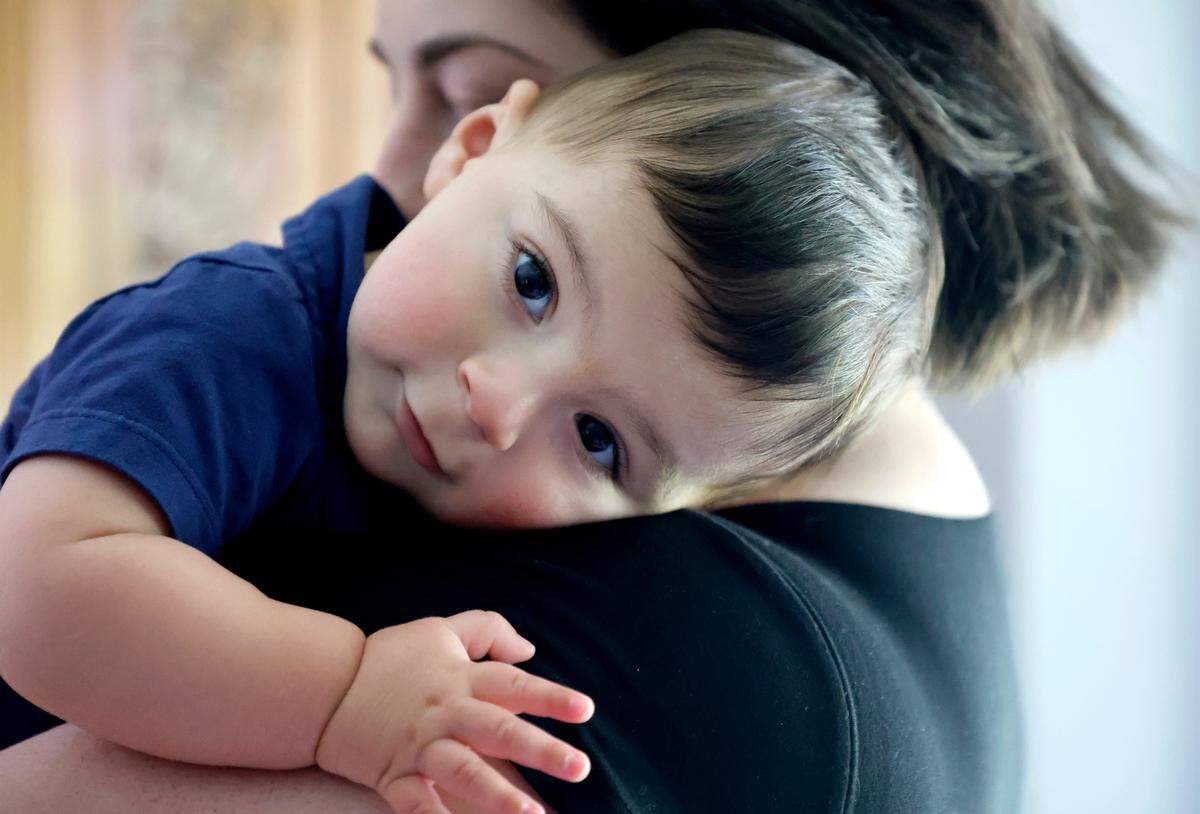
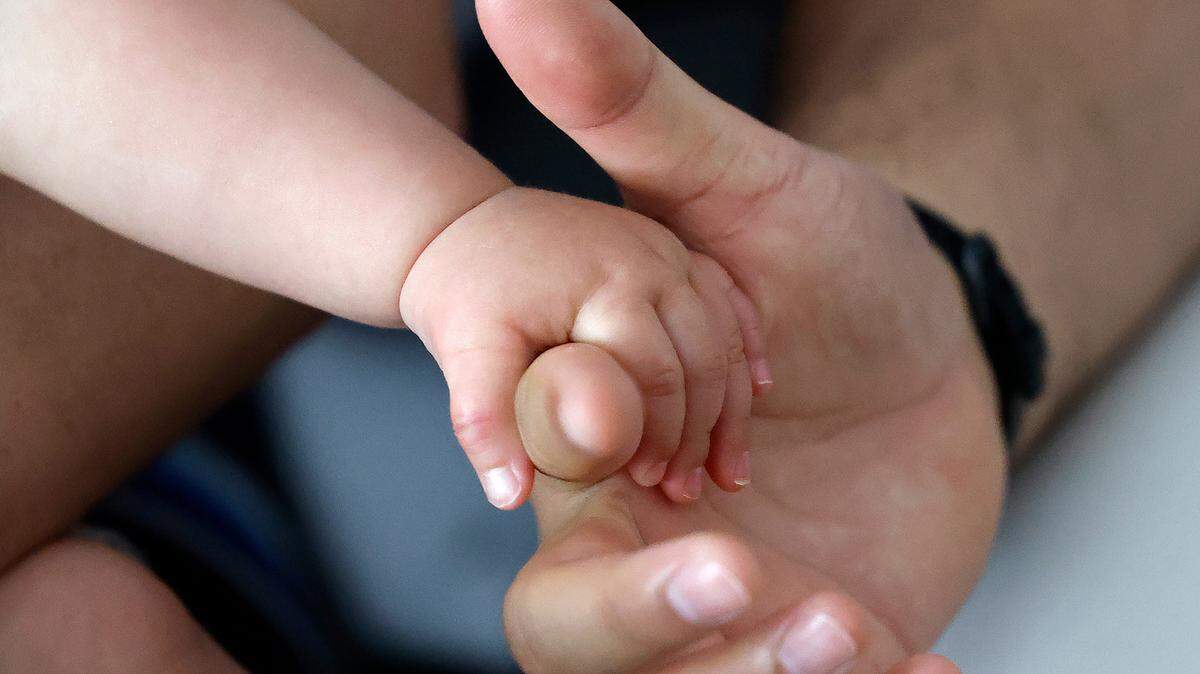
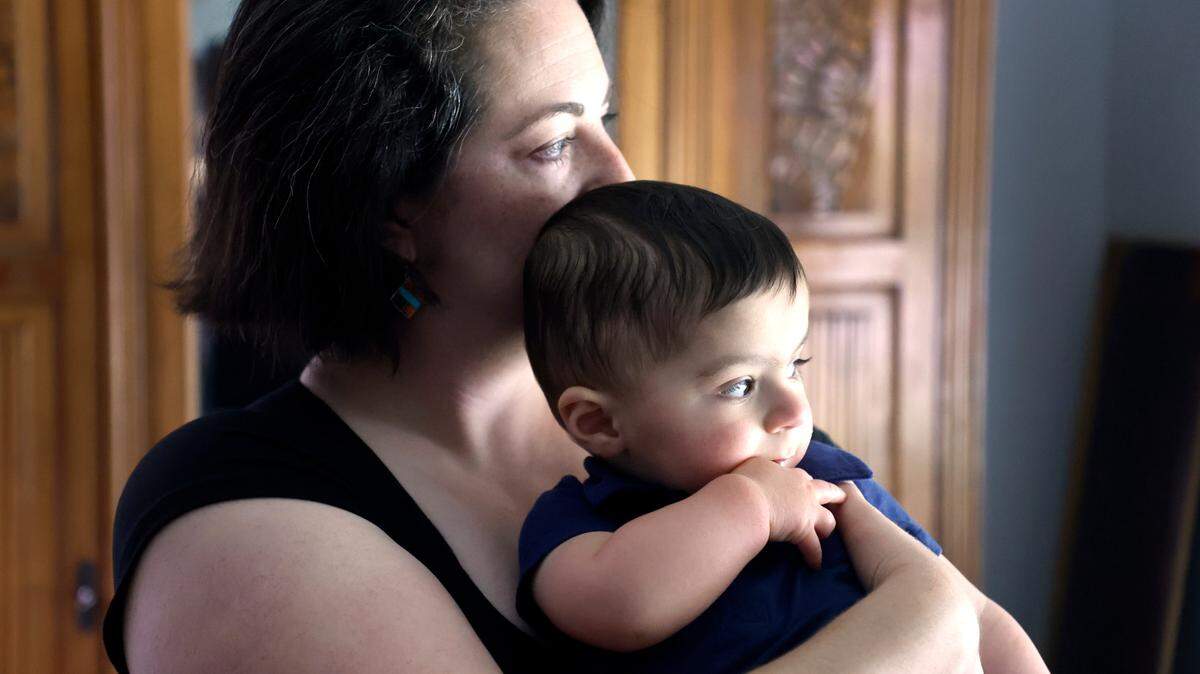
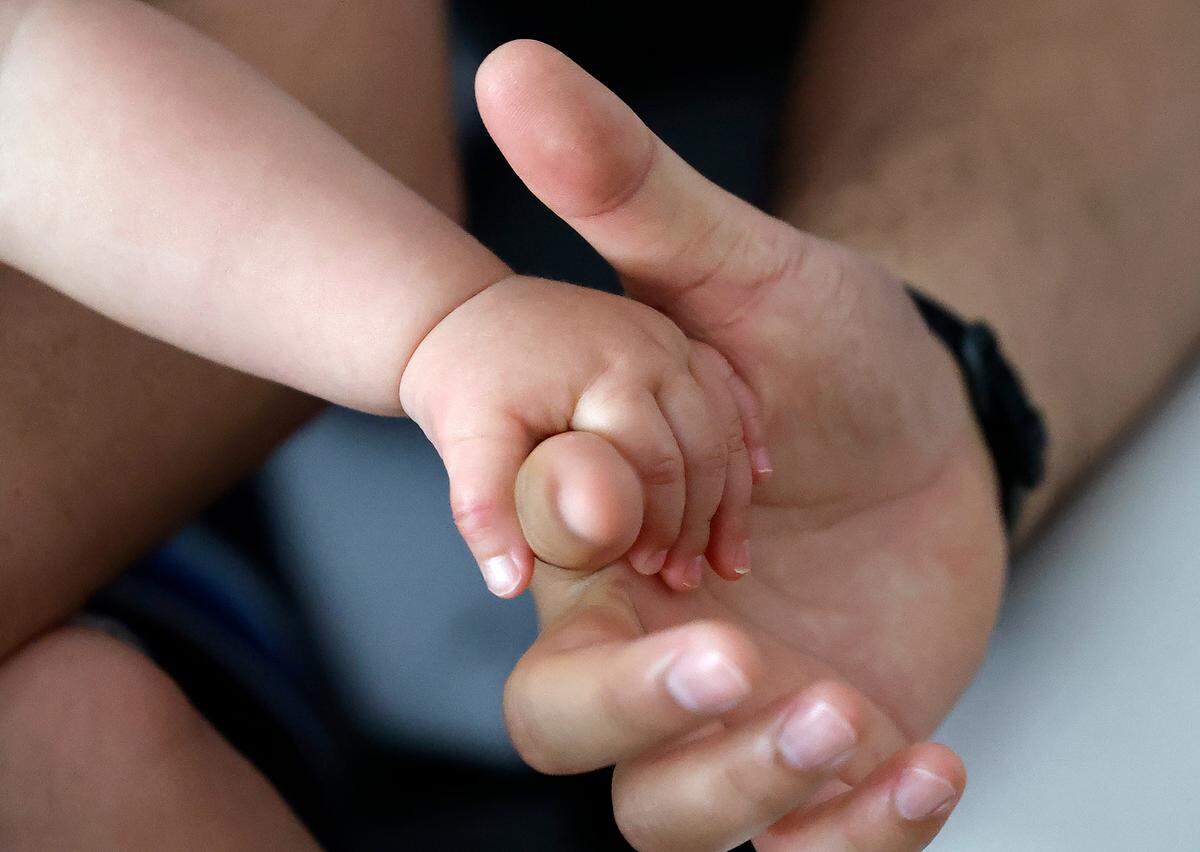
On a May afternoon, Wisda and Rosenbaum sat together on the sofa of their Cary home as she tried to recall the details, occasionally passing their grinning baby boy, Eli, between them. She does remember a room with lots of lights. Wires. An oxygen line in her nose.
“And then, like, a baby on my chest,” she said during an interview, pausing when Eli quietly cooed on her lap. “Yeah. That’s you.”
Aside from being born a little underweight, he’s healthy and happy.
“We’ve been working to try to get fat rolls on him for the last several months — and are slowly succeeding,” Rosenbaum said.
Wisda has recovered physically too, although she’s still working through the heavy emotional toll with the help of counseling.
“When people ask, I say it was traumatic. They look at me horrified — no, but it was,” she said. “It was not rainbows and sunshine.”
A year later, Wisda is slowly piecing together memories from the end of her pregnancy. But sadness over missing her son’s birth — and the trauma over the ordeal — lingers.
She knows it’s OK to be sad.
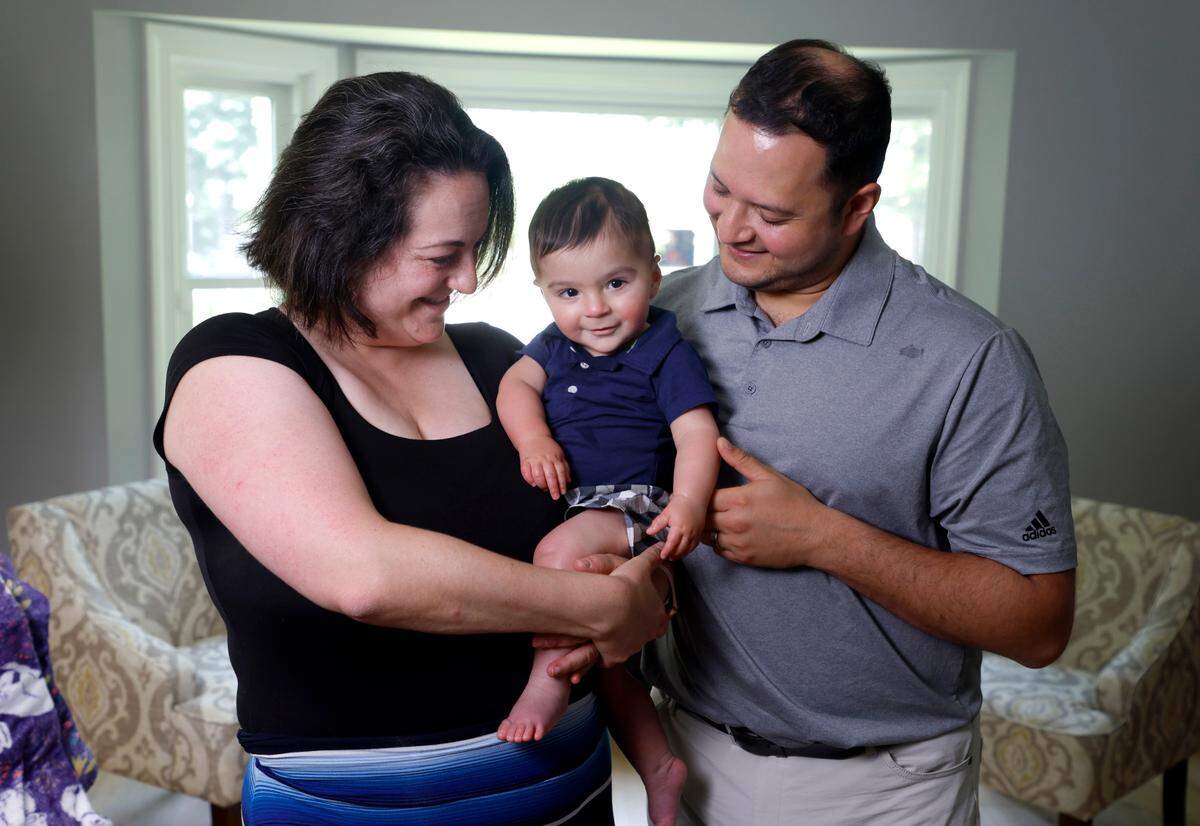
But surviving that “near miss” granted her so many more moments, ones she tries to focus on. Seeing Eli roll over for the first time. Hearing his first word — “mama,” not “da-da” — which he murmurs into the baby monitor when he wants her.
She loves being his favorite person.
“When he smiles, it kind of helps me to forget everything.”
Rosenbaum is well aware their story could have been different.
What if his wife hadn’t worked in health care, where she could get her blood pressure checked regularly? What if she couldn’t text her OB-GYN, a family friend, any time she had a question or concern? What if they lived hours from a hospital? Or had trouble with transportation?
“This was something that happened just so suddenly to somebody who had amazing access to health care and resources,” Rosenbaum said. “And yet we still had this near miss.”
BEHIND THE STORY
MOREHow we analyzed the data on pregnancy-related deaths in North Carolina
Prompted by work from the nonprofit journalism organization MuckRock, News & Observer reporters in early March set out to examine why more North Carolina women are dying of pregnancy-related complications.
There are several ways to count a death as “pregnancy-related.” The N&O used a process from the Centers for Disease Control and Prevention and Marie Thoma, an associate professor at the University of Maryland School of Public Health. It includes deaths within a year of pregnancy where the cause is attributed to one of several pregnancy-related medical codes.
N&O reporters obtained 2018 to 2021 data on these deaths from an online CDC database on the national level and for several states where data was available.
Pregnancy-related death rates are calculated per 100,000 live births, according to CDC vital statistics.
The N&O used the same method to examine racial disparities in these deaths using both CDC data and finalized state death certificate data from the N.C. Department of Health and Human Services through 2021, and preliminary death certificate data from 2022. These numbers differ slightly due to the way they’re counted on the state vs. national levels.
The N&O also obtained data from N.C. DHHS on “near miss” cases – when a pregnant woman almost dies from a list of serious maternal injuries or illnesses.
This story was originally published July 19, 2023 at 6:00 AM.