‘Forced into homelessness.’ Across North Carolina, medical debt exacts a heavy toll

READ MORE
Confronting Medical Debt in North Carolina
Expand All
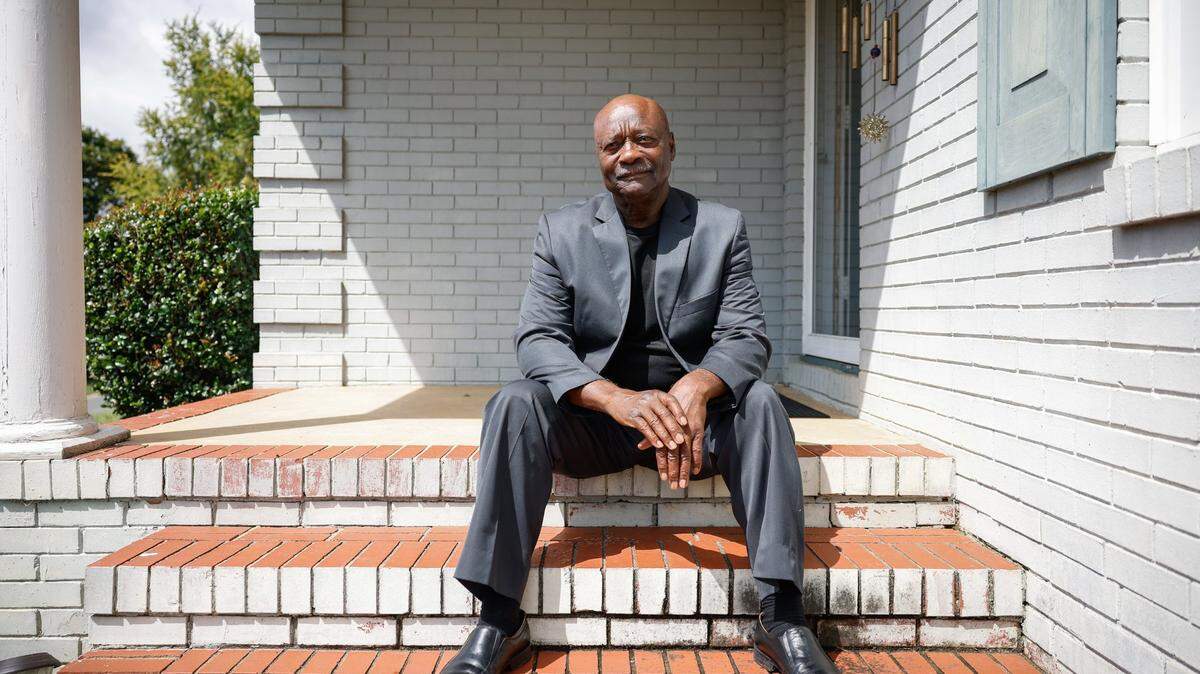
On March 30, 2019, a swerving car upended Tom Burke’s life.
Severely injured after the crash, Burke was airlifted from the Fort Liberty U.S. Army base to UNC Medical Center where doctors performed surgeries to rebuild his leg.
Medicaid covered most of the cost, but Burke was still left with more than $10,000 in bills. He was confined to a wheelchair for two years after the accident, unable to work his car sales job. As a result, he said, he couldn’t pay the outstanding hospital bill and his account was turned over to a collection agency.
Since then, he and his wife have tried to buy a house. But because of the damage to his credit score, mortgage companies repeatedly turned them down.
“We were forced into homelessness for a time,” said Burke, whose family moved from North Carolina to Missouri in 2020. “For everything we need credit for, we’re screwed.”
Burke is among millions of people burdened by medical debt, a nationwide problem that surveys and data suggest is particularly acute in North Carolina.
Using credit bureau data, the nonprofit Urban Institute calculated that more than 8% of North Carolina consumers had an unpaid medical bill on their credit report, compared to 5% nationally.
In fact, only Oklahoma, Wyoming, South Carolina, and Texas had higher levels of medical debt than North Carolina, researchers found.
Nationally, 41% of adults — or about 100 million people — have some kind of health care debt, according to a 2022 survey by KFF, a health information nonprofit that includes KFF Health News.
The KFF survey was designed to capture not just bills patients couldn’t afford and that end up on credit reports, but also other debt patients incur to pay for health care, including credit cards, payment plans and loans from friends and family.
The KFF survey didn’t include state-specific findings, but if North Carolina’s debt burden precisely matched the national rate — meaning 41% of adults in the state had health care debt — then approximately 3.4 million North Carolinians would be in debt.
This is probably a low estimate, however, since the credit bureau data and other sources suggest that medical debt is higher in North Carolina than nationally.
The credit bureau data also indicates that medical debt is highest in Anson and Cleveland counties, along with a band of counties in the eastern part of the state.
Mecklenburg County’s rate is slightly higher than the state rate. And as is the case nearly everywhere, there are large racial disparities in medical debt, with debt burdens significantly higher in nonwhite communities.
Burke, who earns less than $1,000 a month from Social Security disability, said his family is now forced to rent, which has dramatically increased their living expenses.
His family of five shares tight quarters — a 980-square-foot rental home with just two full-sized bedrooms. They moved to Missouri because the cost of living is lower there.
Hospitals, he said, need to change their priorities.
“They’re not for patient care,” he said. “They’re for patient profit.”
This story was originally published September 23, 2024 at 5:30 AM with the headline "‘Forced into homelessness.’ Across North Carolina, medical debt exacts a heavy toll."
.JPG)